Updated November 2, 2026 · reading data through October 2026
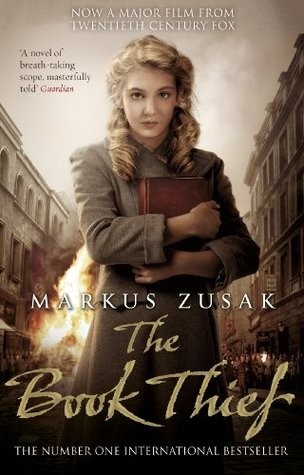
The Book Thief
by Markus Zusak
★ Top 5 book of 2006 · #2 on Best Books of 2006
In Nazi Germany, a young girl steals books and shares them with those hiding from the war, and Death himself narrates. Moving, lyrical, and widely loved. Read the full description
Best for: Readers who like moving historical fiction
The Book Thief last appeared on BookWard's Top 100 in October 2026, at #95.
BookWard review of The Book Thief
4 of 5 stars 4.1 out of 5, from 145 reader ratings
BookWard rates The Book Thief 4.1 out of 5. That is the average of 145 reader ratings on Open Library (4.16), adjusted toward the typical book so that a small number of ratings cannot inflate it. Beyond the rating, 2,518 readers want to read it, 151 are reading it right now and 274 have finished it. Its adjusted rating is higher than 58% of the books on the Top 100.
How this rating works
BookWard’s rating is calculated, not hand-scored. We take the average rating readers have given the book on Open Library and adjust it toward the typical book: adjusted = (n × average + 25 × 3.8) ÷ (n + 25), where n is the number of ratings. A book needs at least 50 ratings to be rated. The rating reflects how readers received the book, not whether it is right for you. Your own ratings on your shelf are private and are not part of this number.
The Book Thief on the Top 100: rank history
| Month | Rank | Score |
|---|---|---|
| October 2026 | #95 | 48 |
| September 2026 | #100 | 47 |
Is The Book Thief rising or falling?
Cooling It ranks lower this week than over the past year, so interest is softening from its recent level.
On Open Library, The Book Thief ranks outside the top 200 this week, #142 this month, and #151 over the past year. A longer bar means a higher position. Comparing the three windows shows whether readers are arriving faster than the book's long-term pace. Readings as of 2026-10-02.
Why The Book Thief made the Top 100
The Book Thief made the list mainly on reader love (+14.3 points) and momentum (+13.2 points). Its smallest contribution is rising (+0.3). The BookWard Score blends five public signals, each scored from 0 to 100 and weighted as shown.
The reading-now, rating and rank signals come from Open Library’s public data, not from BookWard’s own readers. The score measures reading interest, not quality or sales. How the score works.
Open Library reader stats for The Book Thief
Source: Open Library public reading logs, as of 2026-10-02. BookWard’s own monthly snapshots are added to the picture, and anonymous BookWard reader data will be layered in as the community grows.
More readers have The Book Thief open right now than 14% of the other books on this list. These counts come from one public source, so they show relative interest rather than total readership.
About The Book Thief
What it’s about
In Nazi Germany, a young girl named Liesel Meminger goes to live with foster parents, Hans and Rosa Hubermann. The story is narrated by Death, who watches her with unusual attention. Liesel takes her first book in a graveyard, after her brother's burial, and from there her life becomes tied to words. Hans helps her learn to read and write, and she steals more books, sometimes alongside her best friend Rudy.
The Hubermanns also shelter a Jewish man, Max Vandenburg, in their basement, where he and Liesel trade stories. Ilsa, the mayor's wife, lets her read in her library and gives her blank paper to start her own writing.
Zusak's 2005 novel is poignant and lyrical, with a somber backdrop of bombing raids. It explores death, literature, and love, and how kindness and courage persist in a frightening time. It has sold over 17 million copies in 63 languages.
At a glance
- First published
- 2006
- Genre
- Literary fiction
- Also described as
- young adult fiction, historical fiction, Holocaust fiction
- Length
- about 556 pages (the median across its editions)
- Original language
- English
- Languages
- editions in 18 languages listed on Open Library
- Editions
- 123 on Open Library
- Setting
- Germany
- Characters listed
- Mark Owens, Liesel Meminger, Death
From Open Library and Wikidata public records. Missing rows mean the records do not list that fact.
Themes
- The power of words and books
- Death as narrator
- War
What reading it is like
Lyrical, narrated by Death.
At about 556 pages it is a long read: roughly 11 hours at an average reading pace (about 250 words a minute, 300 words a page). Audiobook and edition lengths vary.
Good to know
Set in Nazi Germany. Heavy subject matter.
The premise
In Nazi Germany, a young girl named Liesel steals books and shares them with the people around her, including a Jewish man hidden in her basement. Death narrates.
What you’ll get
- A moving, unusual narrator
- Beautiful language
- An emotional story
You might skip it if you find sad war stories hard.
Pairs well with: The Kite Runner · A Thousand Splendid Suns
Keep exploring the chart
The Book Thief on the Best Books of 2006
The Book Thief came out in 2006. Of the 47 books first published in 2006 that met BookWard's data bar, it ranks #2 on our Best Books of 2006 list.
Why it made the list: 2,980 readers have shelved it on Open Library; readers rate it 4.1 out of 5 (147 ratings); 153 are reading it right now. The list ranks each year’s books on how many readers have picked them up, how highly readers rate them, and how many are reading them right now.
It earns Being read right now.
Nearby on the 2006 list
- The Sea of Monsters Rick Riordan, #1
- Half of a Yellow Sun Chimamanda Ngozi Adichie, #3
- The Boy in the Striped Pyjamas John Boyne, #4
See all Best Books of 2006 Best books by year
More years: Best Books of 2005 Best Books of 2007.
Questions about The Book Thief
What rank is The Book Thief on the Top 100 books?
The Book Thief last appeared on BookWard's Top 100 in October 2026, at #95.
Is The Book Thief rising or falling?
Cooling. It ranks lower this week than over the past year, so interest is softening from its recent level. On Open Library, The Book Thief ranks outside the top 200 this week, #142 this month, and #151 over the past year.
Why is The Book Thief on the Top 100?
The Book Thief made the list mainly on reader love (+14.3 points) and momentum (+13.2 points). Its smallest contribution is rising (+0.3).
How many people are reading The Book Thief right now?
Open Library's reading logs show 151 readers currently reading The Book Thief, 2,518 who want to read it and 274 who have logged it as read (as of 2026-10-02). These are counts from one public source, not all readers.
Who is The Book Thief best for?
Readers who like moving historical fiction.
Ask a question about The Book Thief
Ask about this book's chart history, reading interest, or who it is for. Answers come from this page's data and can be wrong.
Answers are AI-written from BookWard’s own help content and can be wrong. Please do not share personal information: questions and answers may be saved and, if they are useful, shown on this site without your name.
How we know
This page is built from public data: Open Library’s dated reading-log and ratings dumps, Wikipedia page views, Wikidata, and BookWard’s own monthly Top 100 snapshots. The interest rank blends shelf adds (45%), Wikipedia page views (30%), rating activity (10%) and, for months where a snapshot exists, BookWard’s own score (15%), each as a percentile among the Top 100 books. Every month shown is real data; nothing is estimated. Rankings reflect reading interest, not quality or sales, and can be affected by data gaps. Last updated October 2026. Read the full methodology.
Often read by teens and adults alike; it is widely shelved as young adult as well as general fiction.
556 pages, about 9 to 13 hours.
Death narrates a foster girl's war, and the book earns it. 54% taste match
 BookWard’s take
Death narrates a foster girl's war, and the book earns it
Markus Zusak hands the telling to Death, which gives a long novel set in Nazi Germany a voice nobody could mistake for another writer's. Liesel Meminger, a foster girl near Munich, steals books and learns to read with her foster father Hans. The voice is where the book shines, distinctive from the first page. The characters are warm and specific, with Hans, Rosa, Max and Rudy all drawn with care. Readers who prefer restrained sentiment and a tightly packed story may bristle, because this one runs long at 556 pages and openly invites tears. It also leans on familiar wartime shapes in places. Still, Death as narrator keeps the whole thing feeling fresh, and the book's belief in words feels earned rather than sugared.
At 556 pages it is long, well past BookWard's love of the short and tight, though it rarely feels padded.
It moves at a deliberate, reflective pace, slower than BookWard's taste for momentum.
Death as narrator and a heroine who steals books make this feel fresh within a well-known period.
The language is lyrical and image-heavy, richer than BookWard's usual lean toward plainer prose.
Liesel's inner growth and her bonds drive the book more than any plot machinery.
Hope and grief sit side by side, with the balance closer to the middle than either end.
Death's asides and interruptions give the telling an unconventional shape, more playful than BookWard's usual middle.
There is dark wit in Death's remarks, but the tone stays serious overall.
War, death and persecution sit at its core, so it runs dark.
Grief and tenderness are pushed hard, making it intensely emotional.
See all 50 dialsEvery position, side by side with this book
Where it lines up
- Character depthBookWard 8 · book 8
- EndingBookWard 8 · book 8
- OriginalityBookWard 9 · book 8
Where it pulls apart
- LengthBookWard 1 · book 8
- Familiar tropesBookWard 10 · book 6
- SentimentBookWard 8 · book 3
At 556 pages it is long, well past BookWard's love of the short and tight, though it rarely feels padded.
Death's opening address pulls you in quickly, though the story itself then settles into a gradual build.
Wartime Germany and a child's coming of age are well-worn ground, but Death's narration keeps it from feeling stock.
The story's events follow cleanly from each other, and Death's narration is consistent about what it knows and tells.
It moves at a deliberate, reflective pace, slower than BookWard's taste for momentum.
Death as narrator and a heroine who steals books make this feel fresh within a well-known period.
Liesel, Hans, Rosa, Max and Rudy are drawn with warmth and detail, which BookWard rewards.
The ending resolves its story fully, which suits BookWard, even as it lands hard emotionally.
It leans openly into feeling and tenderness, further from BookWard's preference for restraint.
Its darkness comes from the war itself and is handled with purpose, not for effect.
Not applicable; this is a novel.
Death's voice is unmistakable and carries the whole book, exactly what BookWard prizes.
Story leads, though ideas about words, death and humanity run steadily underneath.
Death often tells you outright what is coming, which cuts against BookWard's liking for showing in scene.
A few stretches of quiet domestic life slow the middle, though the book holds together overall.
The language is lyrical and image-heavy, richer than BookWard's usual lean toward plainer prose.
Liesel's inner growth and her bonds drive the book more than any plot machinery.
Hope and grief sit side by side, with the balance closer to the middle than either end.
Death's asides and interruptions give the telling an unconventional shape, more playful than BookWard's usual middle.
There is dark wit in Death's remarks, but the tone stays serious overall.
Accessible to read, though its length and emotional weight ask for steady attention.
Death narrates, but the focus stays mostly on Liesel and those around her.
Death jumps ahead and glances back, giving the story a looser time sense than strict chronology.
Death as narrator is the only unreal element; the world itself stays grounded.
A sizeable circle of neighbors and family fills Liesel's street without losing anyone's outline.
The war looms large, but the story stays close to one street and one girl.
Balanced between Liesel's inner life and the events pressing in on her.
Conversation carries a fair share of the story, without dominating it.
Affection runs through the book, but romance is not at its center.
Wartime Germany is a familiar historical setting to many readers, if rendered here from a child's-eye view.
Set in 1930s and 40s Germany, firmly in the past.
Its themes of loss, words and love keep it enduring well beyond its setting.
Death is open about what it knows and tells, making for a reliable guide.
The book's sympathies are clear, though Death admits to struggling with human complexity.
The imagery is vivid and often unusual, with Death's color-laden way of seeing.
Not applicable; this is fiction.
Not applicable; this is fiction.
A standalone novel.
Death often reveals outcomes early, so the pull is emotional rather than based on surprise.
It asks readers to sit with loss and cruelty, more than a comforting read allows.
War, death and persecution sit at its core, so it runs dark.
Grief and tenderness are pushed hard, making it intensely emotional.
Where humor appears it is dry and grim, not broad.
The war's violence is present but mostly kept from lingering on the page.
Sexual content is minimal.
Nazi Germany frames everything, so politics is never far from the foreground.
Sprinkled German words appear, but the language stays accessible.
Death has plenty to say and says it directly, with strong views.
The story looks back at a past era, though framed by a reflective later vantage.
Faith in words and kindness runs through it, weighed against the war's cruelty.
Review written by BookWard, dial version 1, November 2026.
Who is The Book Thief right for?
Often read by teens and adults alike; it is widely shelved as young adult as well as general fiction. It deals with war, death, persecution and grief, so younger readers may want company while reading.
Accessible to read, though its length and emotional weight ask for steady attention.
War, death and persecution sit at its core, so it runs dark.
Grief and tenderness are pushed hard, making it intensely emotional.
The war's violence is present but mostly kept from lingering on the page.
Book CompanionThe Book Thief: ideas, characters, themes
Death tells the story of a girl in Nazi Germany who finds that words can both comfort and endanger.
- A narrator like no other. Death tells the story, offering a perspective on the war that sets the book apart from most others in its setting.
- Books as a lifeline. Liesel steals books after her brother's death, and reading becomes the thread connecting her to the people around her.
- A foster family. Hans and Rosa Hubermann take Liesel in, and Hans teaches her to read and write.
- A hidden guest. The Hubermanns conceal a Jewish man named Max Vandenburg, who shares a love of words with Liesel.
- A story told in two lives. The book follows Liesel's years in Germany and glances forward to the long life that follows.
Characters
Liesel Meminger
Protagonist
A foster girl who steals books and learns to read.
Death
Narrator
Tells the story and is haunted by the people it collects.
Hans Hubermann
Foster father
Teaches Liesel to read and write, and plays the accordion.
Rosa Hubermann
Foster mother
Liesel's foster mother, part of the household that takes her in.
Max Vandenburg
Hidden Jewish man
Sheltered in the Hubermanns' basement, where he trades stories with Liesel.
Themes
Its presence as narrator frames everything and invites readers to see loss up close.
Books and words offer comfort, connection and a kind of power in dark times.
Family and friendship give Liesel something to hold onto through the war.
Telling and writing stories becomes a way to survive and to be remembered.
The book holds cruelty and kindness together, as Death itself cannot fully understand.
Discussion questions
- What does it change to have Death narrate the story rather than a person?
- Why do you think Liesel steals books, and what does reading give her?
- How do Hans and Rosa show love in different ways?
- How does the book handle sentiment, and did it move you or feel pushed?
- What does Death mean by the duality of humanity?
Personalize your Book Companion
This is the general edition. In BookWard, the Companion is written for you: your reading profile, your notes, and spoiler-safe to the page you are on.
Buy, listen or borrow The Book Thief
Each link opens a search for this book on that store, in a new tab.
Read on a device
Borrow
Reviews and community
If you liked The Book Thief
A lyrical war novel built from short chapters and a blind girl's Paris
The Color of WaterJames McBrideA son's memoir, and his mother's own voice breaking through it
Hearts in AtlantisStephen KingStephen King's elegy for the sixties and the generation that blew it
Different SeasonsStephen KingFour King novellas, one for each season, with horror held back
Track The Book Thief and find your next favorite
Add it to your shelf, rate what you have read, and BookWard will recommend what fits you.
Free to start. No credit card needed.