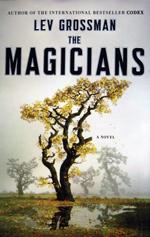
The Magicians
by Lev Grossman
★ Top 25 book of 2009 · #21 on Best Books of 2009
Quentin, a gifted but unhappy young man, is admitted to a secret college of magic. Real power brings him less joy than hoped, and the fantasy land he loved as a child proves darker than expected.
Best for: Adult fantasy readers who want a grounded, morally complex take on magic
The Magicians is #21 on BookWard's Best Books of 2009, out of 42 2009 books that cleared our data bar.
What The Magicians is about
Quentin Coldwater is a Brooklyn teenager who loves Fillory and Further, a series of children's books about five siblings who visit a magical land much like Narnia. Then he is whisked off to Brakebills, a college of magic, and finds that real spellwork means tedious study, old languages and precise hand positions rather than wonder. Alongside classmates such as Penny and Alice, and later the Physical magic group, he learns how much power a person can hold and how little it fixes. After graduation, he and his friends drift through Manhattan, still searching for a purpose. Then Fillory turns out to be real, and far darker than the books let on. Dark, wry and melancholic, this is a story about growing up, outgrowing escapism, and what happens when a childhood dream comes true.
The Magicians on the Best Books of 2009
The Magicians came out in 2009. Of the 42 books first published in 2009 that met BookWard's data bar, it ranks #21 on our Best Books of 2009 list.
Why it made the list: 342 readers have shelved it on Open Library; readers rate it 3.5 out of 5 (66 ratings). The list ranks each year’s books on how many readers have picked them up, how highly readers rate them, and how many are reading them right now.
Nearby on the 2009 list
- Where the Mountain Meets the Moon Grace Lin, #19
- 1Q84 村上春樹, #20
- The Gathering Storm Robert Jordan, #22
- Too Big to Fail Andrew Ross Sorkin, #23
See all Best Books of 2009 Best books by year
More years: Best Books of 2008 Best Books of 2010.
The numbers behind it
- Readers: 235 want to read it, 14 are reading it now and 93 have read it, according to Open Library.
- Ratings: 3.5 out of 5 from 66 Open Library ratings.
| Signal | This book (0 to 100) | Weight |
|---|---|---|
| Reach | 60 | 55% |
| Reader love | 5 | 25% |
| Being read right now | 62 | 20% |
Questions about The Magicians
When was The Magicians published?
The Magicians by Lev Grossman was first published in 2009.
Was The Magicians one of the best books of 2009?
The Magicians is #21 on BookWard's Best Books of 2009, out of 42 2009 books that cleared our data bar. 342 readers have shelved it on Open Library; readers rate it 3.5 out of 5 (66 ratings).
Why is The Magicians on the Best Books of 2009 list?
342 readers have shelved it on Open Library; readers rate it 3.5 out of 5 (66 ratings).
More of the best books of 2009
- The Last Olympian Rick Riordan, #1
- Catching Fire Suzanne Collins, #2
- The Maze Runner James Dashner, #3
- The Help Kathryn Stockett, #4
- Dork Diaries Rachel Renée Russell, #5
- I Will Teach You to Be Rich Ramit Sethi, #6
See the full Best Books of 2009, the Top 100, or new books on Rising.
How we know
This page uses public data: Open Library reader counts and ratings, and Wikipedia page views for recent years. The description is paraphrased from real source text. Rankings reflect reading interest, not quality or sales, and can be affected by data gaps. Lists update monthly.
Best suited to older teens and adults.
Depends on the edition you pick.
Narnia grown up, bruised, and a lot less comforting. 65% taste match
 BookWard’s take
Narnia grown up, bruised, and a lot less comforting
Quentin Coldwater is brilliant and miserable, a Brooklyn teenager still attached to a childhood fantasy series, until a secret college of magic in upstate New York admits him. What follows is an unusual premise handled with care: magic as tedious, rigorous study, practiced by people with real appetites and flaws. It is strikingly original, and its characters have genuine depth. The shocks it delivers are earned rather than leaned on for effect. The tone is demanding and often bleak, so it is less sunny than we tend to like, and the familiar fantasy tropes are knowingly turned over instead of repeated. The opening takes a little more time than we usually care for, but the internal logic of its magic holds up. A good fit if you want fantasy that argues with its own genre.
It is a full-sized novel that covers years of schooling and a later quest, longer than BookWard's taste for tight books.
The school years move briskly through compressed study but the book breathes in places, a little steadier than BookWard's fast preference.
Treating magic as grueling coursework for flawed adults is a fresh angle on a familiar setup, which BookWard values highly.
The writing is polished and literary without being showy, a shade more ornate than BookWard's plainer lean.
Events matter mostly for how they change Quentin and his friends, which suits BookWard's character-driven lean.
Quentin's search for fulfillment repeatedly turns sour, leaving a mood well below BookWard's hopeful leaning.
It follows a mostly chronological arc from school through a later quest, conventional in form, as BookWard likes.
Dry wit threads through a mostly serious story, a bit less comic than BookWard's lean.
The book grows steadily darker, with real cruelty and loss, a bit above BookWard's middle position.
Feelings run high but through a wry, self-aware filter, close to BookWard's balance.
See all 50 dialsEvery position, side by side with this book
Where it lines up
- Character depthBookWard 8 · book 8
- SentimentBookWard 8 · book 8
- Authorial voiceBookWard 9 · book 9
Where it pulls apart
- LengthBookWard 1 · book 6
- OpeningBookWard 10 · book 6
- Familiar tropesBookWard 10 · book 8
It is a full-sized novel that covers years of schooling and a later quest, longer than BookWard's taste for tight books.
The wait for Quentin to reach Brakebills is brief, though the book settles in rather than grabbing at once, a touch slower than BookWard likes.
It deliberately subverts the chosen-one and magical-land conventions it plays with, which BookWard rewards.
Magic here is rule-bound, learned through languages and hand positions, and consequences follow, in line with BookWard's love of airtight systems.
The school years move briskly through compressed study but the book breathes in places, a little steadier than BookWard's fast preference.
Treating magic as grueling coursework for flawed adults is a fresh angle on a familiar setup, which BookWard values highly.
Quentin and his classmates are drawn with real appetites, resentments and contradictions, close to what BookWard prizes.
The central storylines resolve, though the series continues beyond it, so closure is strong but not total.
It resists easy comfort and treats longing and disappointment without syrup, matching BookWard's restrained taste.
The darkness grows out of the premise and its themes, which is the kind BookWard says it wants.
This is a novel, so the dial does not apply.
Grossman's wry, knowing narration is unmistakable and sets the book apart, which BookWard loves.
It is firmly story-led, though it carries a strong argument about wonder and disillusionment, leaning a little more toward story than ideas.
The mechanics of magic are mostly taught through the school's lessons rather than lectured, slightly more explained than BookWard prefers.
The long stretch of school life is steady, but the middle runs more loosely than BookWard's taste for sustained tension.
The writing is polished and literary without being showy, a shade more ornate than BookWard's plainer lean.
Events matter mostly for how they change Quentin and his friends, which suits BookWard's character-driven lean.
Quentin's search for fulfillment repeatedly turns sour, leaving a mood well below BookWard's hopeful leaning.
It follows a mostly chronological arc from school through a later quest, conventional in form, as BookWard likes.
Dry wit threads through a mostly serious story, a bit less comic than BookWard's lean.
Accessible to read though thematically thorny, a little more demanding than BookWard's easier lean.
The story moves forward in order through Quentin's years, matching BookWard's linear lean.
A hidden magical college and a real Narnia-like land make this strongly fantastical, more than BookWard's middle position.
A handful of classmates and friends drive the story, fitting BookWard's modest cast preference.
It moves from a school to a larger quest, giving it more reach than a purely intimate story.
Quentin's dissatisfaction and longing drive much of the book, so it leans inward.
Conversation among friends carries much of the story, close to BookWard's dialogue-heavy side.
Quentin's relationships matter, but the book is not mainly a romance.
A secret magical college and an alternate land make for an unfamiliar setting, fitting BookWard's taste.
The story takes place in a recognizably contemporary world, close to BookWard's modern lean.
Its themes of longing and disillusionment should last, though the setting is rooted in its decade.
The narration is straightforward and trustworthy, less slippery than BookWard's lean toward unreliable.
People here are conflicted and power carries real costs, in line with BookWard's taste for ambiguity.
The magical settings are vividly rendered, a bit richer than BookWard's middle position.
This is a novel, so the dial does not apply.
This is a novel, so the dial does not apply.
It is the first of three novels, leaning well toward the series side of the dial.
There are real turns, notably in the Fillory section, though it is not built around constant reveals.
It deliberately unsettles comfortable fantasy expectations, matching BookWard's lean toward challenge.
The book grows steadily darker, with real cruelty and loss, a bit above BookWard's middle position.
Feelings run high but through a wry, self-aware filter, close to BookWard's balance.
The humor is deadpan and rueful rather than broad, close to BookWard's middle but drier.
Violence arrives in sudden, frightening episodes, more than a middle amount.
College life brings sexual relationships onto the page, at a moderate level.
The story is about personal longing and magic, with politics barely present.
The language is plain and accessible, with no dense dialect.
The narration carries a distinct wry attitude toward fantasy and its fans, a bit more opinionated than neutral.
It looks back at childhood fantasies and what they promised, leaning toward the past.
Its disenchanted view of magic and wonder leans cynical, below BookWard's mildly idealistic lean.
Review written by BookWard, dial version 1, November 2026.
Who is The Magicians right for?
Best suited to older teens and adults. It includes sexual content, drinking, and moments of frightening violence.
Accessible to read though thematically thorny, a little more demanding than BookWard's easier lean.
The book grows steadily darker, with real cruelty and loss, a bit above BookWard's middle position.
Feelings run high but through a wry, self-aware filter, close to BookWard's balance.
Violence arrives in sudden, frightening episodes, more than a middle amount.
Book CompanionThe Magicians: ideas, characters, themes
A gifted but unhappy young man finds that learning real magic and reaching the fantasy world of his childhood do not deliver the happiness he expected.
- A secret school. Quentin is taken from a Princeton interview to Brakebills College for Magical Pedagogy, the only school for magic in North America.
- Magic as hard work. Study requires old and lost languages and countless hand positions, making magic tedious and demanding rather than glamorous.
- A dangerous mistake. A bored Quentin tampers with a spell, and an otherworldly horror called the Beast enters Brakebills.
- Friends and a failed rival. Quentin's circle includes Alice, Penny, Eliot, Josh and Janet, while Julia, who failed the entrance exam, becomes obsessed with learning magic anyway.
- Childhood fantasy made real. After graduation Quentin and his friends discover Fillory exists, and it is darker and more dangerous than the books suggested.
Characters
Quentin Coldwater
Protagonist
A brilliant but miserable Brooklyn teenager who loves the Fillory books and is admitted to a college of magic.
Alice
Classmate and partner
A fellow Brakebills student who moves up a year with Quentin and begins a relationship with him.
Julia
Childhood friend and crush
She fails the entrance exam, retains an imperfect memory of magic, and becomes obsessed with learning it.
Penny
Classmate
A student who advances with Quentin and Alice at first but is held back after failing to pass.
Themes
The gap between a dream and what achieving it feels like.
Using fantasy to avoid dissatisfaction with real life.
Magic brings ability but also consequences.
Leaving behind childhood wonder for adult complexity.
Relationships that are messy, flawed and shaped by desire.
Discussion questions
- Why does magic fail to make Quentin happy, and is the problem magic or Quentin?
- How does the book reshape the Narnia-style stories it echoes?
- What does Julia's path suggest about who gets access to power?
- Is Quentin sympathetic, and does the book want him to be?
- How does the darker turn in Fillory change your view of the school years?
Personalize your Book Companion
This is the general edition. In BookWard, the Companion is written for you: your reading profile, your notes, and spoiler-safe to the page you are on.
Buy, listen or borrow The Magicians
Each link opens a search for this book on that store, in a new tab.
Read on a device
Borrow
Reviews and community
If you liked The Magicians
Occult Yale, a scarred heroine, and privilege with teeth
American GodsNeil GaimanOld gods, new gods, and one quiet man crossing America
The Atlas ComplexOlivie BlakeThe Atlas trilogy's finale: six gifted rivals, one deadly bargain
The HunterTana FrenchA slow-burning Irish thriller about a retired cop and a girl's revenge
Find your own best books
Add what you have read, rate it, and BookWard will recommend what to read next.
Free to start. No credit card needed.