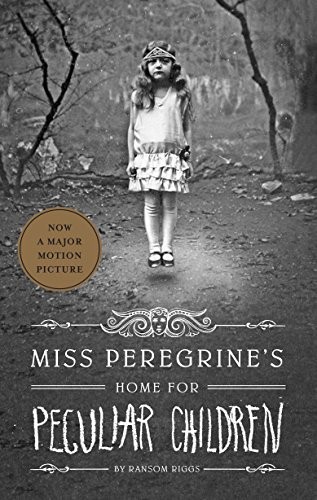
Miss Peregrine's Home for Peculiar Children
by Ransom Riggs
★ Top 10 book of 2011 · #10 on Best Books of 2011
After a family tragedy, sixteen-year-old Jacob travels to a remote island off Wales and explores the ruined orphanage there. Vintage-style photographs accompany the tale, which hints that its odd children may still be alive.
Best for: Teens and adults who enjoy eerie mysteries paired with unusual photographs
Miss Peregrine's Home for Peculiar Children is #10 on BookWard's Best Books of 2011, out of 53 2011 books that cleared our data bar.
What Miss Peregrine's Home for Peculiar Children is about
Jacob is sixteen when a terrible tragedy in his family sends him to a remote island off the coast of Wales. There he finds the broken remains of Miss Peregrine's Home for Peculiar Children, an abandoned orphanage where the bedrooms and hallways are slowly falling apart. As he explores, troubling possibilities take shape. The children who lived here may have been dangerous. They may have been shut away on a deserted island for a good reason. And impossibly, they may still be alive. The story is told partly through strange, old photographs woven into the text, which lend the mystery an eerie, collected-from-the-past feel. It suits readers who enjoy a spooky puzzle, a grieving young hero, and a setting that feels cut off from the world.
Miss Peregrine's Home for Peculiar Children on the Best Books of 2011
Miss Peregrine's Home for Peculiar Children came out in 2011. Of the 53 books first published in 2011 that met BookWard's data bar, it ranks #10 on our Best Books of 2011 list.
Why it made the list: 884 readers have shelved it on Open Library; readers rate it 4.4 out of 5 (49 ratings); 41 are reading it right now. The list ranks each year’s books on how many readers have picked them up, how highly readers rate them, and how many are reading them right now.
Nearby on the 2011 list
- Fifty Shades of Grey E. L. James, #8
- We'll Always Have Summer Jenny Han, #9
- Start with Why Simon Sinek, #11
- Outwitting the Devil Napoleon Hill, #12
See all Best Books of 2011 Best books by year
More years: Best Books of 2010 Best Books of 2012.
The numbers behind it
- Readers: 715 want to read it, 41 are reading it now and 128 have read it, according to Open Library.
- Ratings: 4.4 out of 5 from 49 Open Library ratings.
| Signal | This book (0 to 100) | Weight |
|---|---|---|
| Reach | 72 | 55% |
| Reader love | 87 | 25% |
| Being read right now | 66 | 20% |
Questions about Miss Peregrine's Home for Peculiar Children
When was Miss Peregrine's Home for Peculiar Children published?
Miss Peregrine's Home for Peculiar Children by Ransom Riggs was first published in 2011.
Was Miss Peregrine's Home for Peculiar Children one of the best books of 2011?
Miss Peregrine's Home for Peculiar Children is #10 on BookWard's Best Books of 2011, out of 53 2011 books that cleared our data bar. 884 readers have shelved it on Open Library; readers rate it 4.4 out of 5 (49 ratings); 41 are reading it right now.
Why is Miss Peregrine's Home for Peculiar Children on the Best Books of 2011 list?
884 readers have shelved it on Open Library; readers rate it 4.4 out of 5 (49 ratings); 41 are reading it right now.
More of the best books of 2011
- Sapiens Yuval Noah Harari, #1
- The Song of Achilles Madeline Miller, #2
- Thinking, Fast and Slow Daniel Kahneman, #3
- Steve Jobs Walter Isaacson, #4
- The Son of Neptune Rick Riordan, #5
- Shatter Me Tahereh Mafi, #6
See the full Best Books of 2011, the Top 100, or new books on Rising.
How we know
This page uses public data: Open Library reader counts and ratings, and Wikipedia page views for recent years. The description is paraphrased from real source text. Rankings reflect reading interest, not quality or sales, and can be affected by data gaps. Lists update monthly.
Best suited to teens and up, and to adult readers who enjoy YA fantasy.
Depends on the edition you pick.
Vintage photographs and a Welsh island make a vivid, odd debut. 47% taste match
 BookWard’s take
Vintage photographs and a Welsh island make a vivid, odd debut
Ransom Riggs builds a YA fantasy around found vintage photographs, and the gimmick earns its place. Jacob's journey to a remote island off Wales starts with a family tragedy, so the opening pulls hard, and the pull holds across a pace that stays brisk. The setting is unfamiliar and atmospheric, with a ruined orphanage doing real work, and the mix of image and text makes it more original than most teen fantasy manages. Where it loosens is internal logic, since the rules of peculiarity are vaguer than I'd like. Its tropes are a mixed bag: a chosen-teen frame in an unusual skin. It is also the first of a series, so the ending leaves doors open rather than closing them. Still, it moves fast and looks like nothing else on the shelf.
Short chapters and a steady forward push keep it moving, close to the quick tempo BookWard likes.
Building a novel around real vintage photographs is a distinctive device that BookWard values highly.
Plain, accessible YA prose that stays out of the way, near BookWard's slightly plain-leaning center.
Mystery and discovery drive events more than inner change, leaning plot-driven against BookWard's lean.
Dark history sits against wonder and friendship, ending on a modestly hopeful note.
Photographs woven into the text make the format unusual even though the narrative itself runs conventionally.
Mostly serious and eerie, with only light humor in Jacob's voice, less playful than BookWard enjoys.
Eerie and unsettling in places but pitched for teens, so moderately dark rather than harsh.
Grief and wonder register but the tone stays measured, a little below BookWard's intensity.
See all 50 dialsEvery position, side by side with this book
Where it lines up
- Story or ideasBookWard 3 · book 3
- PaceBookWard 8 · book 7
- OriginalityBookWard 9 · book 8
Where it pulls apart
- Familiar tropesBookWard 10 · book 5
- Internal logicBookWard 10 · book 5
- LengthBookWard 1 · book 4
A family tragedy sends sixteen-year-old Jacob toward a remote island, so the story grabs early, which BookWard rewards.
A teenager discovering a hidden world is well-worn ground, though the photographic frame freshens it only partly for BookWard.
The peculiar children's rules are revealed gradually and run looser than the airtight systems BookWard favors.
Short chapters and a steady forward push keep it moving, close to the quick tempo BookWard likes.
Building a novel around real vintage photographs is a distinctive device that BookWard values highly.
Jacob is clearly drawn but the peculiar children read closer to bright sketches than full portraits.
It resolves its main threat while clearly setting up more books, so closure is partial against BookWard's taste.
Grief and wonder sit side by side, with some sweetness, a little softer than BookWard's restraint.
The darker turns come from the premise and mostly feel earned rather than gratuitous.
This is a novel, so the nonfiction rigor dial does not apply.
Jacob's narration is clear and readable, with personality but not a strongly singular style.
Story leads here, with the photographs serving the plot rather than a set of ideas, as BookWard prefers.
Some of the peculiar world is explained outright by characters, a bit more than BookWard's show-don't-tell preference.
The island sequences hold interest, though the middle stretch leans on exploration and explanation.
Plain, accessible YA prose that stays out of the way, near BookWard's slightly plain-leaning center.
Mystery and discovery drive events more than inner change, leaning plot-driven against BookWard's lean.
Dark history sits against wonder and friendship, ending on a modestly hopeful note.
Photographs woven into the text make the format unusual even though the narrative itself runs conventionally.
Mostly serious and eerie, with only light humor in Jacob's voice, less playful than BookWard enjoys.
Easy, quick reading that asks little effort, lighter than BookWard's slightly demanding middle.
Told through Jacob alone, which is narrower than BookWard's taste for several viewpoints.
The present story is joined by glimpses of a past era, giving a moderate time shift.
Peculiar children with strange abilities and hidden time pockets make this firmly fantastical, beyond BookWard's middle.
A handful of peculiar children plus family, a moderate cast in line with BookWard's middle.
The story stays tied to one island and one boy, so it feels intimate rather than epic.
Exploration and mounting danger push events outward more than Jacob's inner thoughts do.
Conversation carries a fair share of the story but is balanced with exploration and description.
A light romantic thread exists but stays secondary to the mystery.
A remote Welsh island and a hidden peculiar world feel decidedly unfamiliar, right where BookWard likes to be.
Jacob is a modern teen, while the photographs pull in the past, a blend leaning slightly toward the past.
Its photograph-driven charm has aged well, though it remains a clear product of its YA moment.
Jacob narrates honestly and can be trusted, which is more reliable than BookWard's taste.
Heroes and threats are drawn fairly clearly, with less ambiguity than BookWard enjoys.
The decaying orphanage and island atmosphere are described vividly and lean toward rich.
This is fiction, so the nonfiction style dial does not apply.
This is fiction, so the nonfiction perspective dial does not apply.
It is the opening book of a series, well beyond BookWard's standalone-leaning middle.
The premise unfolds through a decent number of reveals, a little under BookWard's taste for surprise.
A fast, accessible adventure that entertains more than it challenges, below BookWard's appetite.
Eerie and unsettling in places but pitched for teens, so moderately dark rather than harsh.
Grief and wonder register but the tone stays measured, a little below BookWard's intensity.
Light humor leans dry rather than broad, in keeping with the book's eerie atmosphere.
Some frightening and dangerous scenes appear, kept at a YA level rather than graphic.
Essentially absent, in keeping with its young adult audience.
The story is not concerned with politics, so it sits well below BookWard's middle.
Plain contemporary language with little dialect, simpler than BookWard's middle.
Jacob's observations give some personality, but the narration stays fairly neutral overall.
Its eyes rest on the past and its secrets more than on what comes next.
Friendship and wonder are real, though the story keeps one foot in a darker world.
Review written by BookWard, dial version 1, November 2026.
Who is Miss Peregrine's Home for Peculiar Children right for?
Best suited to teens and up, and to adult readers who enjoy YA fantasy. It contains eerie, frightening moments and a family tragedy, but nothing explicit.
Easy, quick reading that asks little effort, lighter than BookWard's slightly demanding middle.
Eerie and unsettling in places but pitched for teens, so moderately dark rather than harsh.
Grief and wonder register but the tone stays measured, a little below BookWard's intensity.
Some frightening and dangerous scenes appear, kept at a YA level rather than graphic.
Book CompanionMiss Peregrine's Home for Peculiar Children: ideas, characters, themes
After a family tragedy, a teenager travels to a remote island and finds an abandoned orphanage whose peculiar children may still be alive.
- Photographs as storytelling. The book mixes fiction with vintage photographs, using the images as part of the reading experience.
- A grief-driven journey. Jacob's trip to Wales begins with a horrific family tragedy that sets the story in motion.
- The island setting. A remote island off the coast of Wales anchors the mystery and gives it atmosphere.
- The orphanage. Miss Peregrine's crumbling home is the central place Jacob explores, full of unanswered questions.
- Dangerous or quarantined?. The children may have been dangerous and isolated for good reason, which drives the central tension.
Characters
Jacob
Narrator and protagonist
A sixteen-year-old whose family tragedy sends him to a remote island in Wales.
Miss Peregrine
Title figure
Her home for peculiar children is the ruined orphanage at the center of the mystery.
Themes
How loss sends Jacob searching for answers far from home.
The pull of finding a place and people who accept being different.
How old photographs and abandoned places keep history alive.
What it costs and means to be set apart from ordinary people.
Discussion questions
- How do the photographs change the way you read the story?
- Why do you think grief sends Jacob so far from home?
- Were the children more dangerous or more endangered?
- What role does the island setting play in the mood?
- Does the story work as a first book, or does it need its sequels?
Personalize your Book Companion
This is the general edition. In BookWard, the Companion is written for you: your reading profile, your notes, and spoiler-safe to the page you are on.
Buy, listen or borrow Miss Peregrine's Home for Peculiar Children
Each link opens a search for this book on that store, in a new tab.
Read on a device
Borrow
Reviews and community
If you liked Miss Peregrine's Home for Peculiar Children
A numbered band of hunters, a missing Seven, and monsters everywhere
Rising StormErin HunterA Clan under strain, and a deputy trying to hold it together
Into the WildErin HunterA house cat joins the wild clans, and fun follows
Wild MagicTamora PierceA girl who talks to animals finds her place and her power
Find your own best books
Add what you have read, rate it, and BookWard will recommend what to read next.
Free to start. No credit card needed.