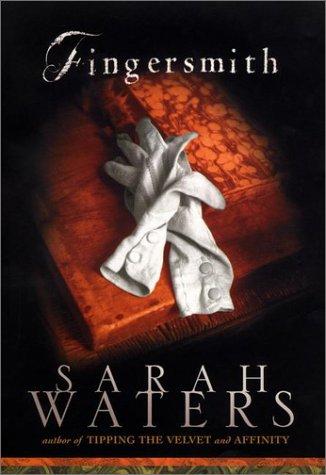
Fingersmith
by Sarah Waters
★ Top 10 book of 2002 · #8 on Best Books of 2002
Orphan Sue Trinder, raised among London thieves, agrees to help a con man deceive a gentlewoman out of her inheritance. But she grows protective of her target, and nothing proves to be what it seems in this Dickensian tale.
Best for: Readers who enjoy Dickensian settings full of cons, schemes and sudden twists
Fingersmith is #8 on BookWard's Best Books of 2002, out of 32 2002 books that cleared our data bar.
What Fingersmith is about
Sue Trinder grows up in a London den of thieves, raised by Mrs Sucksby, who takes in babies for money. When a charming con man known as Gentleman offers her a job, she agrees to become maid to Maud Lilly, a young woman living at a remote country house under her uncle's watch. But Sue and Maud grow close, and what begins as scheming turns into something Sue did not plan for.
Sarah Waters sets this Victorian crime novel in a world of class divides, secrets and hidden appetites, with a gothic, atmospheric feel. The publisher calls it Dickensian, full of thrills and reversals where no one is quite what they seem. It suits readers who enjoy a twisty historical tale with a love story at its centre.
Fingersmith on the Best Books of 2002
Fingersmith came out in 2002. Of the 32 books first published in 2002 that met BookWard's data bar, it ranks #8 on our Best Books of 2002 list.
Why it made the list: 304 readers have shelved it on Open Library; readers rate it 4.1 out of 5 (16 ratings). The list ranks each year’s books on how many readers have picked them up, how highly readers rate them, and how many are reading them right now.
Nearby on the 2002 list
- Everything's Eventual. 14 Dark Tales Stephen King, #6
- The Theory of Everything Stephen Hawking, #7
- 2Nd Chance James Patterson, #9
- Tithe Holly Black, #10
See all Best Books of 2002 Best books by year
More years: Best Books of 2001 Best Books of 2003.
The numbers behind it
- Readers: 264 want to read it, 10 are reading it now and 30 have read it, according to Open Library.
- Ratings: 4.1 out of 5 from 16 Open Library ratings.
| Signal | This book (0 to 100) | Weight |
|---|---|---|
| Reach | 78 | 55% |
| Reader love | 72 | 25% |
| Being read right now | 56 | 20% |
Questions about Fingersmith
When was Fingersmith published?
Fingersmith by Sarah Waters was first published in 2002.
Was Fingersmith one of the best books of 2002?
Fingersmith is #8 on BookWard's Best Books of 2002, out of 32 2002 books that cleared our data bar. 304 readers have shelved it on Open Library; readers rate it 4.1 out of 5 (16 ratings).
Why is Fingersmith on the Best Books of 2002 list?
304 readers have shelved it on Open Library; readers rate it 4.1 out of 5 (16 ratings).
More of the best books of 2002
- Romancing Mister Bridgerton Julia Quinn, #1
- Coraline Neil Gaiman, #2
- Why Does He Do That? Lundy Bancroft, #3
- Room on the Broom Julia Donaldson, #4
- Stories of Your Life and Others Ted Chiang, #5
- Everything's Eventual. 14 Dark Tales Stephen King, #6
See the full Best Books of 2002, the Top 100, or new books on Rising.
How we know
This page uses public data: Open Library reader counts and ratings, and Wikipedia page views for recent years. The description is paraphrased from real source text. Rankings reflect reading interest, not quality or sales, and can be affected by data gaps. Lists update monthly.
Best for adult readers and mature older teens.
Depends on the edition you pick.
A Victorian con that keeps turning itself inside out. 70% taste match
 BookWard’s take
A Victorian con that keeps turning itself inside out
Fingersmith opens in a London den of thieves and goes straight to work: an orphan, a con man, and a plan to defraud a sheltered heiress. The hook is immediate, and the setup is so tight that every move feels earned. The internal logic is among the book's real strengths, because the schemes hold together even as the ground shifts beneath them. The surprises are generous without cheating, and the novel sidesteps the usual conventions of its genre by turning them over. The character work is real: Sue and Maud are drawn with patience and specificity. Waters writes in an unmistakable voice, ornate enough that you can taste the period but never slow. It is a long book, so it isn't a quick read, but the middle stays taut. The darkness is earned rather than decorative, which is exactly how I like it.
A substantial Victorian novel that takes its time over a layered plot; longer than BookWard's taste, though it earns the room.
Brisk for a period novel, driven by scheme and consequence, a touch slower in places than BookWard's preference.
A genre-aware reworking of Victorian crime fiction that feels fresh, close to BookWard's appetite for the original.
Rich and period-textured without turning florid; a little more ornate than BookWard's middle ground.
Plot and character are tightly bound, with the twists pressing on who Sue and Maud turn out to be.
It balances grim circumstances against flickers of loyalty and love, tilting slightly toward bleak.
The book's design plays with perspective and revelation, more inventive than a conventional chronological telling.
A serious, tense novel with little room for comedy; BookWard likes a touch more levity.
Dark in its themes of confinement, betrayal and exploitation, though handled with purpose.
The attachments and betrayals hit with real force, more intense than BookWard's usual register.
See all 50 dialsEvery position, side by side with this book
Where it lines up
- EndingBookWard 8 · book 8
- Authorial voiceBookWard 9 · book 9
- Story or ideasBookWard 3 · book 3
Where it pulls apart
- LengthBookWard 1 · book 7
- Familiar tropesBookWard 10 · book 8
- EraBookWard 7 · book 1
A substantial Victorian novel that takes its time over a layered plot; longer than BookWard's taste, though it earns the room.
The thieves' household and the heiress scheme are in place almost immediately, which matches BookWard's love of an instant hook.
It borrows Dickensian trappings but keeps subverting them, so the familiar setting never settles into predictable beats.
The cons and counter-cons interlock tightly, and the story rewards close attention, which suits BookWard's demand for airtight plotting.
Brisk for a period novel, driven by scheme and consequence, a touch slower in places than BookWard's preference.
A genre-aware reworking of Victorian crime fiction that feels fresh, close to BookWard's appetite for the original.
Sue and Maud are drawn with real interiority, and their growing bond carries the book, as BookWard likes.
The plot resolves its threads decisively rather than leaving them hanging, in line with BookWard's taste for closure.
Feeling is present and sometimes tender, but the book keeps a cool, controlled hand over it.
Its reversals land hard yet grow out of the story, so the darkness feels earned rather than staged.
Waters has an unmistakable, richly period voice that gives the book its own texture, which BookWard prizes.
This is story first: a plot-driven con with ideas carried inside it, which fits BookWard's story-led leaning.
Information arrives through scenes and schemes rather than lectures, matching BookWard's preference for showing.
The middle stays tense and purposeful, with no real slackening, which BookWard values.
Rich and period-textured without turning florid; a little more ornate than BookWard's middle ground.
Plot and character are tightly bound, with the twists pressing on who Sue and Maud turn out to be.
It balances grim circumstances against flickers of loyalty and love, tilting slightly toward bleak.
The book's design plays with perspective and revelation, more inventive than a conventional chronological telling.
A serious, tense novel with little room for comedy; BookWard likes a touch more levity.
Dense period detail asks for attention but never becomes a chore, close to BookWard's middle ground.
The story is anchored in a small number of close perspectives rather than a sprawling chorus.
Events move forward in order, with the telling itself reshaping what the reader thinks they know.
Entirely grounded in Victorian England, with no supernatural element.
A compact, memorable set of players around the central trio, sized much like BookWard's usual reads.
Intimate in scope, concentrating on a few households and relationships rather than sweeping events.
Balances Sue's inner life with outward scheming, landing near BookWard's slightly inward lean.
Scenes are carried by conversation and deceit, so talk matters more than BookWard's usual middle.
The central relationship is a driving force of the book, more romance-forward than BookWard's usual.
Victorian slums, country houses and asylums feel distant and vivid, an unfamiliar world BookWard enjoys.
A historical novel set well in the past, away from BookWard's slight lean toward the present day.
Published in 2002, it already reads as a durable modern classic of its genre.
Narration shapes what the reader is allowed to believe, in line with BookWard's taste for unreliability.
Nobody here is purely good or bad, and the ethics blur, a fit with BookWard's ambiguity lean.
The settings, from slum to library to asylum, are rendered with generous, atmospheric detail.
A standalone novel with no sequel or series attached.
Reversals are the engine of the book and arrive in abundance, even more than BookWard expects.
It is gripping rather than cosy and asks the reader to sit with unsettling turns.
Dark in its themes of confinement, betrayal and exploitation, though handled with purpose.
The attachments and betrayals hit with real force, more intense than BookWard's usual register.
What humor exists is dry and wry, nowhere near broad.
There is cruelty and menace on the page, but it is not a gore-driven book.
The love story includes sensual and explicit passages, more present than BookWard's middle ground.
Class and gender shape the plot, but the book never turns into a polemic.
Period diction and some slum idiom add flavor without making the text hard going.
The narration stays close to its characters rather than editorializing from above.
Rooted firmly in the past, more backward-looking than BookWard's forward lean.
A balance of cynical dealings and stubborn loyalty keeps the outlook near the middle.
Review written by BookWard, dial version 1, November 2026.
Who is Fingersmith right for?
Best for adult readers and mature older teens. It contains cruelty, themes of confinement and committal to an asylum, and sexual content between women.
Dense period detail asks for attention but never becomes a chore, close to BookWard's middle ground.
Dark in its themes of confinement, betrayal and exploitation, though handled with purpose.
The attachments and betrayals hit with real force, more intense than BookWard's usual register.
There is cruelty and menace on the page, but it is not a gore-driven book.
Book CompanionFingersmith: ideas, characters, themes
A scheme to cheat an heiress out of her fortune puts two women in each other's lives and forces both to reckon with what loyalty and love cost.
- The setup. Sue Trinder, raised among thieves by Mrs Sucksby, is sent to Briar to pose as a maid and help Gentleman seduce Maud Lilly.
- The plan. Once Maud is married to Gentleman, the intention is to have her committed to a madhouse so her fortune can be claimed.
- The house at Briar. Maud lives a sheltered life with her uncle, Christopher Lilly, assisting with his supposed dictionary in the silence of his library.
- An unlikely bond. Sue and Maud form a friendship that develops into mutual attraction, which makes Sue regret her part in the plot.
- The Victorian frame. The novel is a historical crime story that borrows the manner of Dickens, with its slums, thieves, and asylums.
Characters
Sue Trinder
Protagonist
An orphan raised in a household of thieves, sent to Briar as a maid to carry out a deception.
Maud Lilly
The heiress
A sheltered young woman, orphaned at birth, who works as secretary to her uncle in a secluded country house.
Richard "Gentleman" Rivers
The con man
An elegant swindler who devises the plan to marry Maud and take her fortune.
Mrs Sucksby
Adoptive mother
The baby farmer who raised Sue and presides over the den of thieves.
Christopher Lilly
Maud's uncle
Keeps Maud close at Briar, using her to help with his supposed dictionary.
Themes
Almost every relationship rests on a lie or an angle, and the book keeps asking who is conning whom.
Thieves, servants and gentry occupy sharply different worlds, and money drives what people do to one another.
Houses, libraries and asylums trap characters in different ways, physically and socially.
Sue is torn between the family that raised her and the woman she comes to care for.
Orphaned characters grow up without knowing where they come from, and who they are shifts under pressure.
Discussion questions
- Which character did you trust most at the start, and did that change?
- How does the book use the Victorian underworld differently from the Dickens novels it recalls?
- What does Sue owe the people who raised her, and what does she owe Maud?
- Why might the author have chosen to tell the story the way she does?
- Did the book's turns feel fair, or did any of them feel like a cheat?
Personalize your Book Companion
This is the general edition. In BookWard, the Companion is written for you: your reading profile, your notes, and spoiler-safe to the page you are on.
Buy, listen or borrow Fingersmith
Each link opens a search for this book on that store, in a new tab.
Read on a device
Borrow
Reviews and community
If you liked Fingersmith
A cold, controlled summer that slowly turns on its reader
Memoirs of a GeishaArthur GoldenA geisha's life told in a rich, immersive, hard-won voice
RebeccaDaphne du MaurierA Gothic classic where a dead woman outshines the living
Presumed InnocentScott TurowA prosecutor investigates a murder, then stands accused of it
Find your own best books
Add what you have read, rate it, and BookWard will recommend what to read next.
Free to start. No credit card needed.