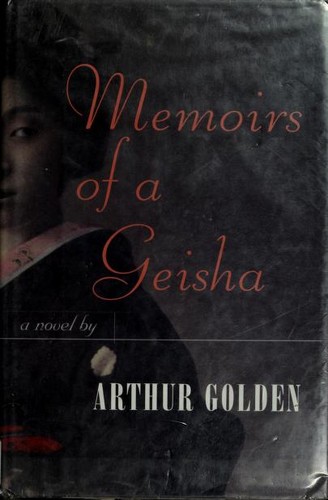
Memoirs of a Geisha
by Arthur Golden
★ Top 10 book of 1997 · #9 on Best Books of 1997
Nitta Sayuri recalls her life as a geisha, beginning in 1929 when she is sold from a poor fishing village into a renowned geisha house. Her training and rivalries unfold in a world where appearances rule.
Best for: Readers who enjoy lyrical, romantic historical fiction set in the hidden world of geisha
Memoirs of a Geisha is #9 on BookWard's Best Books of 1997, out of 28 1997 books that cleared our data bar.
What Memoirs of a Geisha is about
In 1929, nine-year-old Chiyo and her sister are sold by their father from the fishing village of Yoroido. Chiyo is taken to an okiya in Gion, a household of geisha, while her sister goes elsewhere. There she meets the cruelty of Hatsumomo, the house's leading geisha, and the guidance of Mameha, who becomes her mentor and gives her the name Sayuri. A moment of kindness from a stranger she calls the Chairman gives her something to hold on to through years of training. Told in the first person by an older Sayuri looking back, Arthur Golden's novel follows rivalry between women, the mix of love and money, and a way of life threatened by war. It is lyrical and wistful, and will appeal to readers who like historical fiction with a strong, intimate voice.
Memoirs of a Geisha on the Best Books of 1997
Memoirs of a Geisha came out in 1997. Of the 28 books first published in 1997 that met BookWard's data bar, it ranks #9 on our Best Books of 1997 list.
Why it made the list: 484 readers have shelved it on Open Library; readers rate it 4 out of 5 (95 ratings); 20 are reading it right now. The list ranks each year’s books on how many readers have picked them up, how highly readers rate them, and how many are reading them right now.
Nearby on the 1997 list
- The God of Small Things Arundhati Roy, #7
- Wizard and Glass Stephen King, #8
- The Subtle Knife Philip Pullman, #10
- Killing Floor Lee Child, #11
See all Best Books of 1997 Best books by year
More years: Best Books of 1996 Best Books of 1998.
The numbers behind it
- Readers: 336 want to read it, 20 are reading it now and 127 have read it, according to Open Library.
- Ratings: 4 out of 5 from 95 Open Library ratings.
| Signal | This book (0 to 100) | Weight |
|---|---|---|
| Reach | 68 | 55% |
| Reader love | 64 | 25% |
| Being read right now | 61 | 20% |
Questions about Memoirs of a Geisha
When was Memoirs of a Geisha published?
Memoirs of a Geisha by Arthur Golden was first published in 1997.
Was Memoirs of a Geisha one of the best books of 1997?
Memoirs of a Geisha is #9 on BookWard's Best Books of 1997, out of 28 1997 books that cleared our data bar. 484 readers have shelved it on Open Library; readers rate it 4 out of 5 (95 ratings); 20 are reading it right now.
Why is Memoirs of a Geisha on the Best Books of 1997 list?
484 readers have shelved it on Open Library; readers rate it 4 out of 5 (95 ratings); 20 are reading it right now.
More of the best books of 1997
- Harry Potter and the Philosopher's Stone J. K. Rowling, #1
- Rich Dad, Poor Dad Robert T. Kiyosaki, #2
- Guns, Germs, and Steel Jared Diamond, #3
- The Adventures of Captain Underpants Dav Pilkey, #4
- The Power of Now Eckhart Tolle, #5
- Into Thin Air Jon Krakauer, #6
See the full Best Books of 1997, the Top 100, or new books on Rising.
How we know
This page uses public data: Open Library reader counts and ratings, and Wikipedia page views for recent years. The description is paraphrased from real source text. Rankings reflect reading interest, not quality or sales, and can be affected by data gaps. Lists update monthly.
Best suited to adult and older teen readers who enjoy long, immersive historical fiction.
Depends on the edition you pick.
A geisha's life told in a rich, immersive, hard-won voice. 59% taste match
 BookWard’s take
A geisha's life told in a rich, immersive, hard-won voice
Arthur Golden's 1997 novel follows Chiyo, sold at nine from a fishing village and raised into the geisha Sayuri, and it holds you from the opening scenes. The hook is immediate: a child torn from home, a train to Kyoto, an okiya full of rivals. The ending is fully resolved, and the story runs on its own internal logic, with every favor and betrayal costing something. The characters have real depth, especially in the rivalry between Sayuri and Hatsumomo, though the cruel rival and the kind benefactor are shapes we have met before, and that familiarity takes a little off the freshness. The prose is lyrical and unhurried, richer than I usually go for, but the pace stays steady across a long book.
A full-sized, unhurried life story that takes its time, far from the tight and short end BookWard favors.
Steady rather than brisk, moving through years of training and maneuvering without much rush.
The geisha world gives it a distinctive setting, though the shape of the story is traditional.
Lyrical, image-rich sentences give it a more ornate texture than BookWard's usual taste.
Plot beats are real, but the pull comes mostly from Sayuri's inner life and relationships.
Hardship dominates but she keeps striving, and the book leans toward cautious hope.
A conventional memoir frame told in order, with little formal experiment.
Mostly serious, with only occasional dry moments in the okiya's sparring.
Being sold as a child and the mizuage auction give it real darkness, tempered by the glamour.
Loss, longing and jealousy run strong, giving the book real emotional weight.
See all 50 dialsEvery position, side by side with this book
Where it lines up
- Character depthBookWard 8 · book 8
- EndingBookWard 8 · book 8
- Story or ideasBookWard 3 · book 3
Where it pulls apart
- LengthBookWard 1 · book 6
- Familiar tropesBookWard 10 · book 5
- SentimentBookWard 8 · book 4
A full-sized, unhurried life story that takes its time, far from the tight and short end BookWard favors.
A nine-year-old sold from her village and put on a train to Kyoto grabs you at once, matching BookWard's taste.
The cruel rival, the kind benefactor and the long-awaited love are familiar shapes, so it falls short of BookWard's tropes-avoiding ideal.
Debts, rivalries and patrons follow consistent rules, so events feel earned and cohere, as BookWard likes.
Steady rather than brisk, moving through years of training and maneuvering without much rush.
The geisha world gives it a distinctive setting, though the shape of the story is traditional.
Sayuri, Mameha, Hatsumomo and Mother are each drawn with motives, matching BookWard's liking for depth.
The narrative closes its arcs and brings Sayuri's story to a settled conclusion, which suits BookWard.
Longing and gratitude color much of the telling, so it leans warmer than BookWard's restrained preference.
Hard moments such as the sale of the sisters and the mizuage auction serve the story rather than shock for effect.
This is a novel, so rigor does not apply.
Sayuri's reflective, confiding voice is distinctive and sustains the whole book, as BookWard values.
The book is story-led, driven by Sayuri's fortunes rather than by an argument.
Customs of the okiya and the geisha arts are often explained directly by an older Sayuri narrating.
Momentum holds through apprenticeship, rivalry and its aftermath, with only brief stretches of ceremony slowing it.
Lyrical, image-rich sentences give it a more ornate texture than BookWard's usual taste.
Plot beats are real, but the pull comes mostly from Sayuri's inner life and relationships.
Hardship dominates but she keeps striving, and the book leans toward cautious hope.
A conventional memoir frame told in order, with little formal experiment.
Mostly serious, with only occasional dry moments in the okiya's sparring.
Accessible and absorbing, with some unfamiliar Japanese terms to pick up along the way.
The entire novel is told in Sayuri's first-person voice.
It moves forward through her life as an older Sayuri recalls it, with little time-jumping.
A grounded historical novel with no fantastical elements.
Several key figures populate the okiya and Gion, a moderate cast that is easy to track.
Spans decades and a war, yet stays focused on one woman's world.
Told largely through Sayuri's reflections and feelings, more than through action.
Conversations between geisha, patrons and rivals carry much of the drama.
Sayuri's long attachment to the Chairman runs through the book and shapes her choices.
The geisha districts of Kyoto are likely unfamiliar to most readers, a strength BookWard enjoys.
Set from 1929 through and after World War II, so firmly in the past.
Its coming-of-age struggle and its portrait of a vanished world keep it lasting.
Sayuri narrates her own life and shades events in her favor, so trust is only moderate.
Characters act from survival and ambition, leaving few simple heroes or villains.
Kimono, rooms, rituals and the Kyoto setting are described in vivid, abundant detail.
This is fiction, so the nonfiction style dial does not apply.
Told intimately in the first person, with Sayuri's feelings in constant view.
A standalone novel that tells a complete story.
Rivalries and reversals of fortune keep surprises coming without relying on gimmicks.
Absorbing and approachable, though it does dwell on exploitation and loss.
Being sold as a child and the mizuage auction give it real darkness, tempered by the glamour.
Loss, longing and jealousy run strong, giving the book real emotional weight.
Humor is minor and tends toward the dry and cutting.
Cruelty is mostly emotional and social, with limited physical violence on the page.
Sexual themes sit at the heart of the geisha world but are handled with discretion.
War and social change shape events, but politics is not the main subject.
Plain English narration, with Japanese terms explained as they appear.
Sayuri's perspective is strongly felt, so the narration colors every event.
An older Sayuri looks back on her life, so the gaze is toward the past.
Survival and strategy dominate, though a thread of devotion keeps it from cynicism.
Review written by BookWard, dial version 1, November 2026.
Who is Memoirs of a Geisha right for?
Best suited to adult and older teen readers who enjoy long, immersive historical fiction. It includes the sale of children, an auction of a girl's virginity and themes of sexual exploitation.
Accessible and absorbing, with some unfamiliar Japanese terms to pick up along the way.
Being sold as a child and the mizuage auction give it real darkness, tempered by the glamour.
Loss, longing and jealousy run strong, giving the book real emotional weight.
Cruelty is mostly emotional and social, with limited physical violence on the page.
Book CompanionMemoirs of a Geisha: ideas, characters, themes
A poor fishing-village girl sold into a Kyoto okiya rises, through training, rivalry and patronage, to become the geisha Sayuri.
- Sold at nine. In 1929, Chiyo and her sister are taken from Yoroido, and Chiyo is placed in the Nitta okiya in Gion.
- The household. Auntie, Mother, Granny, Hatsumomo and Pumpkin shape Chiyo's early years in the okiya.
- A kind stranger. A man she calls the Chairman gives her money and a handkerchief, which becomes a reason to keep going.
- Mameha's mentorship. Mameha persuades Mother to reinvest in Chiyo and becomes her older sister and guide.
- The rise of Sayuri. As an apprentice, Sayuri gains popularity while Hatsumomo schemes to damage her reputation.
Characters
Sayuri (Chiyo)
Narrator and protagonist
A girl from a fishing village who becomes one of Gion's geisha.
Hatsumomo
Rival
The okiya's premier geisha, who torments Chiyo and works against her career.
Mameha
Mentor
A famous Gion geisha who becomes Sayuri's older sister and guide.
Mother
Okiya head
A businesslike figure driven by money who controls Chiyo's prospects.
The Chairman
Benefactor
The kind stranger whose gesture gives young Chiyo something to hold onto.
Themes
Making a life from limited choices in a world that treats women as assets.
How competition for status and money shapes relationships among women.
A world where performance and beauty are valued above feeling.
A persistent devotion that gives Sayuri a reason to keep striving.
How guidance from an older woman can open doors and change a life.
Discussion questions
- How does Sayuri's account of her own life shape what you trust in it?
- What does Mameha gain from helping Sayuri?
- Is Hatsumomo simply cruel, or is something else driving her?
- How does the book treat the cost of beauty and performance?
- What does the Chairman's kindness mean to Chiyo, and why does it matter so much?
Personalize your Book Companion
This is the general edition. In BookWard, the Companion is written for you: your reading profile, your notes, and spoiler-safe to the page you are on.
Buy, listen or borrow Memoirs of a Geisha
Each link opens a search for this book on that store, in a new tab.
Read on a device
Borrow
Reviews and community
If you liked Memoirs of a Geisha
A Gothic classic where a dead woman outshines the living
Water for ElephantsSara GruenA circus train, a ninety-year-old memory, and a love worth the risk
AtmosphereTaylor Jenkins ReidA shuttle disaster frames a long, tender story about love and ambition
Lust for LifeIrving StoneA long, devoted life of Van Gogh, told as fiction
Find your own best books
Add what you have read, rate it, and BookWard will recommend what to read next.
Free to start. No credit card needed.