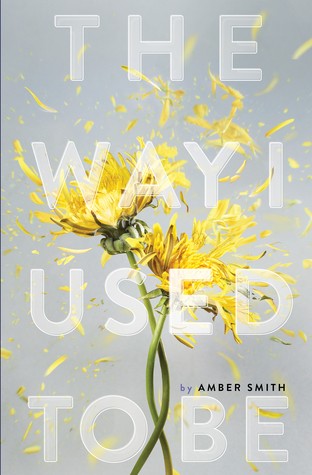
The Way I Used to Be
by Amber Smith
★ Top 25 book of 2016 · #12 on Best Books of 2016
After a brutal assault by her brother's best friend, Eden hides what happened and buries her former self. Across four high school years, the novel follows her trauma, relationships, and gradual discovery of her own resilience.
Best for: Readers of serious teen fiction about trauma, survival, and healing, in the vein of Speak
The Way I Used to Be is #12 on BookWard's Best Books of 2016, out of 70 2016 books that cleared our data bar.
What The Way I Used to Be is about
Eden has always been good at being good. Then, on the night her world tips over at the start of high school, her brother's best friend rapes her. She knows she is supposed to tell someone, but she can't, and so she buries it and tries to carry on.
The novel follows her through four years, one part each for freshman, sophomore, junior and senior year. Along the way come first love, first heartbreak, and friendships that break and are rebuilt, all shaped by what she cannot say aloud. Amber Smith's debut is raw and emotionally intense, in the tradition of Speak. The Boston Globe called it a heart-twisting but ultimately hopeful look at how pain can lead to strength. It suits older teens and adults ready for a painful but honest story.
The Way I Used to Be on the Best Books of 2016
The Way I Used to Be came out in 2016. Of the 70 books first published in 2016 that met BookWard's data bar, it ranks #12 on our Best Books of 2016 list.
Why it made the list: 1,489 readers have shelved it on Open Library; readers rate it 3.9 out of 5 (35 ratings); 68 are reading it right now. The list ranks each year’s books on how many readers have picked them up, how highly readers rate them, and how many are reading them right now.
Nearby on the 2016 list
- Deep Work Cal Newport, #10
- Crooked Kingdom Leigh Bardugo, #11
- Scythe Neal Shusterman, #13
- Ego Is the Enemy Ryan Holiday, #14
See all Best Books of 2016 Best books by year
More years: Best Books of 2015 Best Books of 2017.
The numbers behind it
- Readers: 1,376 want to read it, 68 are reading it now and 45 have read it, according to Open Library.
- Ratings: 3.9 out of 5 from 35 Open Library ratings.
| Signal | This book (0 to 100) | Weight |
|---|---|---|
| Reach | 89 | 55% |
| Reader love | 37 | 25% |
| Being read right now | 89 | 20% |
Questions about The Way I Used to Be
When was The Way I Used to Be published?
The Way I Used to Be by Amber Smith was first published in 2016.
Was The Way I Used to Be one of the best books of 2016?
The Way I Used to Be is #12 on BookWard's Best Books of 2016, out of 70 2016 books that cleared our data bar. 1,489 readers have shelved it on Open Library; readers rate it 3.9 out of 5 (35 ratings); 68 are reading it right now.
Why is The Way I Used to Be on the Best Books of 2016 list?
1,489 readers have shelved it on Open Library; readers rate it 3.9 out of 5 (35 ratings); 68 are reading it right now.
More of the best books of 2016
- It Ends with Us Colleen Hoover, #1
- Dog Man Dav Pilkey, #2
- The Subtle Art of Not Giving a F*ck Mark Manson, #3
- Never Split the Difference Chris Voss, #4
- The Hidden Oracle Rick Riordan, #5
- Born a Crime Trevor Noah, #6
See the full Best Books of 2016, the Top 100, or new books on Rising.
How we know
This page uses public data: Open Library reader counts and ratings, and Wikipedia page views for recent years. The description is paraphrased from real source text. Rankings reflect reading interest, not quality or sales, and can be affected by data gaps. Lists update monthly.
It suits older teens and adults ready for a serious, character-focused story.
Depends on the edition you pick.
A girl buries what happened and the cost keeps compounding. 54% taste match
 BookWard’s take
A girl buries what happened and the cost keeps compounding
Told across four school years, this is a character-driven young adult novel about Eden, who was always good at being good until a rape by her brother's best friend upends her. It is dark and emotionally intense, and it earns that darkness by staying with consequence rather than spectacle. Character depth is the draw: the four-part structure lets us watch one girl change in the open, over time. The structure is conventional and the premise sits in familiar territory for the genre, so it scores modestly on familiar tropes and originality. Outlook is the quiet surprise: it moves toward hope, framed around survival. For BookWard, the restraint matters more than the plot.
Jumping year by year keeps events moving, though the subject calls for weight, so the pace is steady rather than fast.
The subject has well-trodden company in YA, so the book's strength is execution over novelty.
Contemporary YA tends toward plain, direct language that carries emotion without ornament.
The book is about who Eden becomes after a single event, so character drives it more than plot.
It is described as ultimately hopeful, but the road there is hard, so it lands just above the middle.
Four parts keyed to school years is orderly and conventional.
The subject matter leaves little room for comedy.
Sexual assault and its long aftermath make this a dark book.
It is built to hit hard, tracing deep cuts of trauma across years.
See all 50 dialsEvery position, side by side with this book
Where it lines up
- Character depthBookWard 8 · book 8
- Story or ideasBookWard 3 · book 3
- PaceBookWard 8 · book 6
Where it pulls apart
- Familiar tropesBookWard 10 · book 4
- OriginalityBookWard 9 · book 4
- LengthBookWard 1 · book 4
The rape sits at the center of the setup and reshapes Eden at once, which suits BookWard's taste for immediate stakes.
Survivor stories in YA follow recognizable beats, so this leans somewhat on genre convention, a mild mark against it here.
Eden's choices to bury what happened follow from her situation, giving the story a coherent emotional cause and effect.
Jumping year by year keeps events moving, though the subject calls for weight, so the pace is steady rather than fast.
The subject has well-trodden company in YA, so the book's strength is execution over novelty.
The whole design follows one girl's change across four years, which is exactly the deep character work BookWard values.
The description frames the book as ultimately hopeful, pointing to a resolution that gives readers something to hold.
Pain is central, but the survival arc offers some uplift, so it is not purely restrained.
The central assault is the engine of the book, but it drives consequence rather than being used for effect.
This is a novel, so rigor does not apply.
First-person intensity in a YA debut tends to give a recognizable, personal voice, which BookWard rewards.
This is firmly story-led, built on Eden's lived experience rather than argument.
Feelings and aftermath are best conveyed through scene and behavior, which suits BookWard's preference for showing.
The year-by-year structure resets momentum at each part, which helps against a sagging middle.
Contemporary YA tends toward plain, direct language that carries emotion without ornament.
The book is about who Eden becomes after a single event, so character drives it more than plot.
It is described as ultimately hopeful, but the road there is hard, so it lands just above the middle.
Four parts keyed to school years is orderly and conventional.
The subject matter leaves little room for comedy.
The language is accessible; the difficulty is emotional rather than stylistic.
The story follows Eden alone, so a single viewpoint anchors it.
The four-year progression moves forward in sequence.
This is a realistic contemporary story with no fantasy elements.
A school-and-family setting gives a modest, manageable circle of characters.
The focus stays on one girl's inner and personal world, so it is deeply intimate.
The weight is on Eden's thoughts and her silence, not on external action.
Relationships and friendships get scene time, so conversation plays a solid role without dominating.
First love and first heartbreak are part of the story, but not the whole of it.
High school and family life are familiar settings for most readers.
A contemporary teenage setting places it close to the present day.
The subject stays relevant, though YA settings can date; it holds a moderate staying power.
Eden's silence is central, but a close narrator tends to be sincere rather than deceptive.
The wrong done to Eden is clear, though her responses to it are messy and human.
The story leans on feeling and event more than scenery.
This is fiction, so the nonfiction dial does not apply.
A close, personal lens fits the story's intimate approach.
It is presented as a standalone debut.
The story is built on aftermath and growth, not on plot reversals.
The subject asks readers to sit with something painful and hard.
Sexual assault and its long aftermath make this a dark book.
It is built to hit hard, tracing deep cuts of trauma across years.
Humor is largely absent, so the dial barely registers.
A rape is central, and the violence is a defining event in the book.
Sexual assault is the core event, and first romance adds more.
The book is personal rather than political, though it speaks to wider issues.
Plain, accessible language keeps the reading easy.
A close first-person view carries strong feeling and perspective.
The story is about moving on from the past toward survival, giving a slight forward lean.
It argues for resilience and strength, without turning cynical.
Review written by BookWard, dial version 1, November 2026.
Who is The Way I Used to Be right for?
It suits older teens and adults ready for a serious, character-focused story. It centers on sexual assault and its aftermath, so readers who find that difficult should approach with care.
The language is accessible; the difficulty is emotional rather than stylistic.
Sexual assault and its long aftermath make this a dark book.
It is built to hit hard, tracing deep cuts of trauma across years.
A rape is central, and the violence is a defining event in the book.
Book CompanionThe Way I Used to Be: ideas, characters, themes
After a rape she cannot tell anyone about, Eden buries both the event and her old self, and the book follows what that silence costs her and how she finds strength.
- Four-part structure. The story is organized by freshman, sophomore, junior and senior year, letting change build in stages.
- A turning point. One night divides Eden's life into before and after, and everything she once believed shifts.
- Silence and burial. Eden knows she should tell someone but cannot, so she buries the truth and her former self.
- Ordinary adolescence continues. First love, first heartbreak, and broken and rebuilt friendships carry on alongside the trauma.
- Survival as strength. The book frames survival as a power Eden did not know she had.
Characters
Eden
Protagonist
A girl who was always good at being good, changed by an assault in her freshman year.
Eden's brother's best friend
The one who assaults her
His act upends Eden's world and her sense of what she knew to be true.
Themes
How a single event can reshape a person's life over years.
The weight of not telling, and why Eden buries what happened.
The gap between who Eden was and who she becomes.
Strength found through enduring pain rather than escaping it.
How friendship, love and family are tested and rebuilt.
Discussion questions
- Why does Eden choose to bury what happened rather than tell someone?
- How does splitting the story into four school years shape the way you read her change?
- What does the title suggest about identity after trauma?
- How do friendships and first love help or complicate Eden's recovery?
- Is the hope in this book earned, and what makes it feel that way or not?
Personalize your Book Companion
This is the general edition. In BookWard, the Companion is written for you: your reading profile, your notes, and spoiler-safe to the page you are on.
Buy, listen or borrow The Way I Used to Be
Each link opens a search for this book on that store, in a new tab.
Read on a device
Borrow
Reviews and community
If you liked The Way I Used to Be
A former child star reclaims her story, on her terms
All the Bright PlacesJennifer NivenTwo teenagers meet on a ledge and change each other
TweakNic SheffA raw, first-person account of meth addiction and relapse
If I Was Your GirlMeredith RussoA tender, earnest first love story about a girl guarding her past
Find your own best books
Add what you have read, rate it, and BookWard will recommend what to read next.
Free to start. No credit card needed.