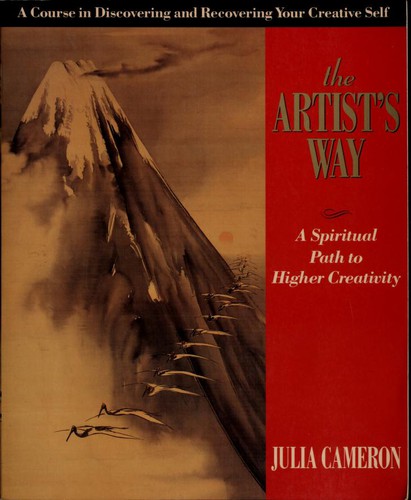
The Artist's Way
by Julia Cameron
★ Top 10 book of 1992 · #6 on Best Books of 1992
This widely read guide to creativity helps readers live more fully as artists. The anniversary edition adds a fresh introduction in which the author reflects on its impact and the insights she has gathered since.
Best for: Anyone seeking inspiration and guidance for a more creative, artistic life
The Artist's Way is #6 on BookWard's Best Books of 1992, out of 43 1992 books that cleared our data bar.
What The Artist's Way is about
Julia Cameron treats creativity as something that can be rebuilt by anyone who has lost touch with it. Her book lays out a twelve-week course for people who feel stuck, doubtful or out of practice with their own talents. Each week brings a reading, a set of creative exercises and daily tasks, including the habit of 'morning pages', a regular stretch of free writing. The weeks are designed to build on one another, so confidence grows through repetition rather than inspiration.
Cameron also ties creative work to faith, suggesting that making things is bound up with a person's spiritual life and sense of connection to God. She encouraged readers to work through the course together, and groups formed internationally. It suits writers, painters, musicians and anyone who has wanted to make something and kept talking themselves out of it. A later edition, updated with a fresh introduction, marked the book's first decade.
The Artist's Way on the Best Books of 1992
The Artist's Way came out in 1992. Of the 43 books first published in 1992 that met BookWard's data bar, it ranks #6 on our Best Books of 1992 list.
Why it made the list: 948 readers have shelved it on Open Library; readers rate it 3.6 out of 5 (25 ratings); 59 are reading it right now. The list ranks each year’s books on how many readers have picked them up, how highly readers rate them, and how many are reading them right now.
It earns Being read right now.
Nearby on the 1992 list
- The Indispensable Calvin and Hobbes Bill Watterson, #4
- The Shadow Rising Robert Jordan, #5
- Small Gods Terry Pratchett, #7
- Your Money or Your Life Vicki Robin, #8
See all Best Books of 1992 Best books by year
More years: Best Books of 1991 Best Books of 1993.
The numbers behind it
- Readers: 861 want to read it, 59 are reading it now and 28 have read it, according to Open Library.
- Ratings: 3.6 out of 5 from 25 Open Library ratings.
| Signal | This book (0 to 100) | Weight |
|---|---|---|
| Reach | 98 | 55% |
| Reader love | 19 | 25% |
| Being read right now | 98 | 20% |
Questions about The Artist's Way
When was The Artist's Way published?
The Artist's Way by Julia Cameron was first published in 1992.
Was The Artist's Way one of the best books of 1992?
The Artist's Way is #6 on BookWard's Best Books of 1992, out of 43 1992 books that cleared our data bar. 948 readers have shelved it on Open Library; readers rate it 3.6 out of 5 (25 ratings); 59 are reading it right now.
Why is The Artist's Way on the Best Books of 1992 list?
948 readers have shelved it on Open Library; readers rate it 3.6 out of 5 (25 ratings); 59 are reading it right now.
More of the best books of 1992
- Welcome to Dead House Robert Lawrence Stine, #1
- The Secret History Donna Tartt, #2
- Snow Crash Neal Stephenson, #3
- The Indispensable Calvin and Hobbes Bill Watterson, #4
- The Shadow Rising Robert Jordan, #5
- Small Gods Terry Pratchett, #7
See the full Best Books of 1992, the Top 100, or new books on Rising.
How we know
This page uses public data: Open Library reader counts and ratings, and Wikipedia page views for recent years. The description is paraphrased from real source text. Rankings reflect reading interest, not quality or sales, and can be affected by data gaps. Lists update monthly.
Suits adults and older teens who want to build creative habits.
Depends on the edition you pick.
A twelve-week creative recovery program built on daily writing. 33% taste match
 BookWard’s take
A twelve-week creative recovery program built on daily writing
The Artist's Way is a program more than a book to read straight through: twelve weeks of readings, exercises and daily assignments, with morning pages of free writing at its center. It is driven by ideas rather than story, and it is openly personal in tone, not detached. The outlook is hopeful, built around recovering confidence and a spiritual connection to creativity. It reads easily, but it asks for weeks of practice, not an afternoon. Rigor is where I push back hardest: this is a guide that argues by encouragement and exercise rather than evidence, and it is firmly faith-inflected. Readers who want a structured nudge to make things will find a clear, repeatable path.
A twelve-week program with weekly readings and assignments gives it a mid-sized, modular build; BookWard prefers tighter books.
Pace is set by the reader, since the program is meant to be worked through week by week rather than rushed.
Morning pages and the group course format made it distinctive, though the genre it launched has since become crowded.
Prose is plain and encouraging, built to be understood and acted on rather than admired.
Its whole purpose is recovery of confidence and creative faith, which fits BookWard's hopeful side.
A twelve-week course with readings, exercises and daily assignments is unconventional for a book, though tidily organised.
The tone is earnest and encouraging, with little aimed at humor.
The tone is supportive and encouraging, not dark.
It engages feelings around fear, doubt and creative longing, but in a measured, guiding way.
See all 50 dialsEvery position, side by side with this book
Where it lines up
- Authorial voiceBookWard 9 · book 8
- Sagging middleBookWard 8 · book 6
- OriginalityBookWard 9 · book 6
Where it pulls apart
- Familiar tropesBookWard 10 · book 4
- Rigor (nonfiction)BookWard 9 · book 2
- ExpositionBookWard 2 · book 9
A twelve-week program with weekly readings and assignments gives it a mid-sized, modular build; BookWard prefers tighter books.
It opens as a guide to creative recovery, not a gripping scene, so it invites rather than seizes the reader.
Self-help framing and spiritual encouragement are familiar ground, though the morning pages exercise is its own signature device.
Each week builds on the last, giving a clear progression, though its claims rest on belief and practice, not proof.
Pace is set by the reader, since the program is meant to be worked through week by week rather than rushed.
Morning pages and the group course format made it distinctive, though the genre it launched has since become crowded.
It teaches through exercises and encouragement, not evidence, which is the widest gap from BookWard's taste for rigor.
Cameron's personal, coaching voice and signature exercises are unmistakably hers, which BookWard values.
This is entirely idea and practice, with no story driving it, far from BookWard's story-led leaning.
It explains its ideas and instructions outright, the opposite of showing in scene, which sits badly with BookWard.
The weekly structure keeps momentum steady, though a program format asks for patience rather than propulsion.
Prose is plain and encouraging, built to be understood and acted on rather than admired.
Its whole purpose is recovery of confidence and creative faith, which fits BookWard's hopeful side.
A twelve-week course with readings, exercises and daily assignments is unconventional for a book, though tidily organised.
The tone is earnest and encouraging, with little aimed at humor.
The writing is easy; the effort lies in doing the daily work, not decoding the text.
One authorial voice guides the reader throughout.
The twelve weeks run in order, one building on the next.
It is entirely grounded in daily creative practice, though it brings in faith and spirituality.
There is essentially just the author and the reader doing the work.
It is intimate, concerned with one person's creative life and habits.
The work centers on inner blocks, confidence and spiritual connection, with exercises to bring them out.
As instruction and exercise, it has almost no dialogue.
Romance plays no role in a creative recovery program.
The setting is the reader's own everyday life, which is as familiar as it gets.
First published in 1992 and updated since, it speaks to a contemporary creative reader.
Its long life, anniversary edition and international reach suggest lasting appeal rather than a passing trend.
Cameron speaks plainly and directly as herself.
It offers firm guidance on what to do and believe, with little ambiguity.
It is instruction-led, so description is spare and functional.
It reads as a practical, instructional program with personal framing, more than analysis.
Cameron writes from personal experience and addresses the reader directly, close to BookWard's taste here.
It stands as one self-contained program.
A structured course has no surprises to speak of.
It asks readers to commit to daily practice and examine their creative blocks, which is gently challenging.
The tone is supportive and encouraging, not dark.
It engages feelings around fear, doubt and creative longing, but in a measured, guiding way.
Nothing violent is part of this book.
Sexual content is absent.
Politics is not a concern of this program.
Language is plain and direct.
It is openly opinionated, advising what readers should do and believe about creativity.
It is aimed at the reader's creative future, though it draws on past blocks.
It is built on belief in recovery and creative possibility, which is strongly idealistic.
Review written by BookWard, dial version 1, November 2026.
Who is The Artist's Way right for?
Suits adults and older teens who want to build creative habits. It contains religious and spiritual framing that some readers will welcome and others may not.
The writing is easy; the effort lies in doing the daily work, not decoding the text.
The tone is supportive and encouraging, not dark.
It engages feelings around fear, doubt and creative longing, but in a measured, guiding way.
Nothing violent is part of this book.
Book CompanionThe Artist's Way: ideas, characters, themes
Creativity can be recovered through a twelve-week program of readings, exercises and daily habits, in connection with faith and spirit.
- A twelve-week program. The book is organised as weekly readings, creative exercises and daily assignments, with each week building on the last.
- Morning pages. Daily free writing sits at the center of the program as a way to build creative habit.
- Creative recovery. The techniques aim to help people gain self-confidence in using their creative talents.
- Creativity and faith. Cameron links creativity with spirituality and a connection to God.
- Better in a group. The book encourages following the program with others, and many groups, seminars and workshops grew around it.
Themes
Regaining confidence and the ability to make things after doubt or neglect.
Daily practice as the route to creative growth.
Creativity understood as tied to faith and a connection to God.
Trusting one's own creative talents.
Working through the program in a group for support.
Discussion questions
- Which exercise in the program would be hardest for you to keep up, and why?
- Do you find the link between creativity and spirituality persuasive or limiting?
- How do morning pages compare with other ways you build a creative habit?
- What would you want evidence for in a book like this, and does its absence matter?
- Would you rather work through the program alone or in a group?
Personalize your Book Companion
This is the general edition. In BookWard, the Companion is written for you: your reading profile, your notes, and spoiler-safe to the page you are on.
Buy, listen or borrow The Artist's Way
Each link opens a search for this book on that store, in a new tab.
Read on a device
Borrow
Reviews and community
If you liked The Artist's Way
A calm, practical guide to living in the present moment
The 7 Habits of Highly Effective PeopleStephen R. CoveySeven habits, laid out plainly, with ideas ahead of story
Big MagicElizabeth GilbertGilbert's warm, anecdotal pep talk on living a creative life
101 Essays That Will Change The Way You ThinkBrianna WiestShort, quotable self-help essays you can read one idea at a time
Find your own best books
Add what you have read, rate it, and BookWard will recommend what to read next.
Free to start. No credit card needed.