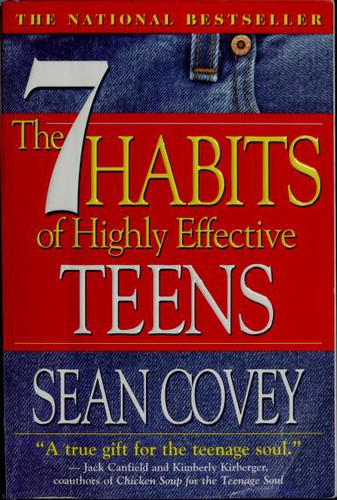
The 7 Habits of Highly Effective Teens
by Sean Covey
★ Top 10 book of 1998 · #7 on Best Books of 1998
Sean Covey's guide applies the 7 Habits principles to the big issues teens face, from self-image and friendships to peer pressure and goals. Updated for the digital age, it also tackles cyberbullying and social media, with cartoons, quotes, and real teen stories.
Best for: Teens wanting a practical roadmap for confidence, friendships, and reaching their goals
The 7 Habits of Highly Effective Teens is #7 on BookWard's Best Books of 1998, out of 36 1998 books that cleared our data bar.
What The 7 Habits of Highly Effective Teens is about
Sean Covey, the son of Stephen Covey, wrote a self-help book for teenagers that is largely based on The Seven Habits of Highly Effective People. The book argues that teens can become more independent and effective by building seven basic habits, starting with taking initiative in every part of life and extending to planning and prioritizing daily responsibilities. Along the way it offers a simple approach to improving self-image, making friends, resisting peer pressure, reaching goals and appreciating parents.
The tone is upbeat and practical, and the pages are lively, with cartoons, quotes and stories about real teens. An updated edition tackles newer challenges such as cyberbullying and social media. It will help teenagers who want a friendly push toward better habits, and parents or teachers looking for something to share with them.
The 7 Habits of Highly Effective Teens on the Best Books of 1998
The 7 Habits of Highly Effective Teens came out in 1998. Of the 36 books first published in 1998 that met BookWard's data bar, it ranks #7 on our Best Books of 1998 list.
Why it made the list: 470 readers have shelved it on Open Library; readers rate it 3.9 out of 5 (20 ratings); 55 are reading it right now. The list ranks each year’s books on how many readers have picked them up, how highly readers rate them, and how many are reading them right now.
It earns Being read right now.
Nearby on the 1998 list
- Who Moved My Cheese? Spencer Johnson, #5
- No, David! David Shannon, #6
- Bag of Bones Stephen King, #8
- A Bad Case of Stripes David Shannon, #9
See all Best Books of 1998 Best books by year
More years: Best Books of 1997 Best Books of 1999.
The numbers behind it
- Readers: 388 want to read it, 55 are reading it now and 25 have read it, according to Open Library.
- Ratings: 3.9 out of 5 from 20 Open Library ratings.
| Signal | This book (0 to 100) | Weight |
|---|---|---|
| Reach | 83 | 55% |
| Reader love | 50 | 25% |
| Being read right now | 92 | 20% |
Questions about The 7 Habits of Highly Effective Teens
When was The 7 Habits of Highly Effective Teens published?
The 7 Habits of Highly Effective Teens by Sean Covey was first published in 1998.
Was The 7 Habits of Highly Effective Teens one of the best books of 1998?
The 7 Habits of Highly Effective Teens is #7 on BookWard's Best Books of 1998, out of 36 1998 books that cleared our data bar. 470 readers have shelved it on Open Library; readers rate it 3.9 out of 5 (20 ratings); 55 are reading it right now.
Why is The 7 Habits of Highly Effective Teens on the Best Books of 1998 list?
470 readers have shelved it on Open Library; readers rate it 3.9 out of 5 (20 ratings); 55 are reading it right now.
More of the best books of 1998
- Harry Potter and the Chamber of Secrets J. K. Rowling, #1
- Holes Louis Sachar, #2
- A Clash of Kings George R. R. Martin, #3
- Among the Hidden Margaret Peterson Haddix, #4
- Who Moved My Cheese? Spencer Johnson, #5
- No, David! David Shannon, #6
See the full Best Books of 1998, the Top 100, or new books on Rising.
How we know
This page uses public data: Open Library reader counts and ratings, and Wikipedia page views for recent years. The description is paraphrased from real source text. Rankings reflect reading interest, not quality or sales, and can be affected by data gaps. Lists update monthly.
It suits teens and the adults who support them, with an approachable, encouraging style.
Depends on the edition you pick.
A teen-friendly roadmap built on seven clear, practical habits. 43% taste match
 BookWard’s take
A teen-friendly roadmap built on seven clear, practical habits
Sean Covey adapts his father's framework for teenagers, and the book is built to be used, not just read. It runs on cartoons, quotes and short stories about real teens, so the voice is friendly and direct rather than distinctive. The rigor is anecdotal: the habits are principles illustrated by examples, not conclusions drawn from evidence. The ideas are explained outright, which suits a handbook, though I'd rather see them play out in scene. Familiar advice turns up everywhere, as it does in most self-help of this kind. Where the book earns its place is in its pace and its opening pitch: short sections move fast, and the promise of a roadmap lands at once. Its staying power is real, too, with a 1998 original later updated for the digital age.
A handbook of short sections for teens, lighter than a full-length study, which fits BookWard's taste for the tight.
Cartoons, quotes and brief stories keep it moving, close to BookWard's preference for brisk reading.
It adapts an existing framework for a younger audience, so the ideas are familiar even if the packaging is new.
The writing is plain and conversational, built to be understood quickly, plainer than BookWard's middle ground.
There is no plot, though real teens' experiences carry some of the weight, so it sits near the middle.
It is built on the belief that teens can improve their lives, which is more hopeful than BookWard's lean.
A straightforward habit-by-habit layout, more conventional than BookWard's mild appetite for experiment.
Cartoons and clever ideas lighten the tone, though it remains an earnest guide.
Gentle overall, though it addresses tough teen issues like peer pressure and cyberbullying.
Encouraging and motivational, but kept at a measured level.
See all 50 dialsEvery position, side by side with this book
Where it lines up
- PaceBookWard 8 · book 8
- Shock for effectBookWard 9 · book 9
- EndingBookWard 8 · book 7
Where it pulls apart
- Familiar tropesBookWard 10 · book 3
- ExpositionBookWard 2 · book 9
- Internal logicBookWard 10 · book 6
A handbook of short sections for teens, lighter than a full-length study, which fits BookWard's taste for the tight.
It promises a roadmap to your goals right away, which is the kind of immediate pull BookWard rewards.
The advice on goals, friendships and peer pressure is familiar self-help ground, so it leans on convention where BookWard wants freshness.
The seven habits build on one another in a clear sequence, though the case rests on principle more than proof.
Cartoons, quotes and brief stories keep it moving, close to BookWard's preference for brisk reading.
It adapts an existing framework for a younger audience, so the ideas are familiar even if the packaging is new.
The real teens it features serve the lessons and are not developed as people, short of BookWard's taste for depth.
Encouragement and uplift are the point, so it runs warmer than BookWard's restrained taste.
There is no shock for effect; it stays constructive throughout, which BookWard approves.
It teaches through principles and anecdotes about real teens, not evidence, well below BookWard's high bar for rigor.
The tone is friendly and approachable, with a recognizable teen-handbook feel, but not strongly individual.
Ideas lead, with stories as illustration, so it sits well toward the idea end, further than BookWard usually goes.
The habits are explained outright, which suits a how-to but is the opposite of BookWard's preference for showing.
Short, self-contained chapters keep energy even, with little chance of a sagging middle.
The writing is plain and conversational, built to be understood quickly, plainer than BookWard's middle ground.
There is no plot, though real teens' experiences carry some of the weight, so it sits near the middle.
It is built on the belief that teens can improve their lives, which is more hopeful than BookWard's lean.
A straightforward habit-by-habit layout, more conventional than BookWard's mild appetite for experiment.
Cartoons and clever ideas lighten the tone, though it remains an earnest guide.
Easy to pick up and follow, less demanding than BookWard's usual reading.
Stories from teens around the world add varied voices, though one author guides throughout.
Habits are taught in order, with no jumping around in time.
Entirely grounded in everyday teenage life.
The many real teens that appear are brief cameos, which makes for a fairly wide but shallow cast.
It stays with personal, daily concerns like friends, parents and goals, so it feels intimate.
The focus is on mindset and personal choices, tilting toward inner change over external action.
Mostly explanation and anecdote, with little dialogue.
Relationships are touched on as part of teen life, but romance is not central.
It deals with the familiar world of school, family and friends.
Written in 1998 and updated for the digital age, so it speaks to present-day teens.
The habits are presented as timeless principles, and a long-running update backs that up.
The author speaks directly and plainly, with no unreliability.
Its guidance is clear and prescriptive, with little ambiguity.
Light on description, built for quick reading and practical use.
It mixes narrative anecdotes with step-by-step guidance, leaning a little toward narrative.
It addresses the reader directly, with a personal, mentoring tone.
Part of a family of 7 Habits titles, including a companion book of daily reflections.
A guide with no surprises by design.
It encourages growth but stays supportive, more comforting than provocative.
Gentle overall, though it addresses tough teen issues like peer pressure and cyberbullying.
Encouraging and motivational, but kept at a measured level.
Cartoons and playful asides lean toward a broad, approachable humor.
Violence has no real place in a self-help guide.
Little sexual content is signalled in a general teen guide.
It focuses on personal development, not politics.
Plain, accessible language aimed at teens.
The author offers strong, direct advice and a clear point of view.
It looks forward, helping teens plan toward future goals.
It believes firmly in teens' capacity to grow and succeed.
Review written by BookWard, dial version 1, November 2026.
Who is The 7 Habits of Highly Effective Teens right for?
It suits teens and the adults who support them, with an approachable, encouraging style. It touches on tough issues like peer pressure and cyberbullying, handled in a constructive way.
Easy to pick up and follow, less demanding than BookWard's usual reading.
Gentle overall, though it addresses tough teen issues like peer pressure and cyberbullying.
Encouraging and motivational, but kept at a measured level.
Violence has no real place in a self-help guide.
Book CompanionThe 7 Habits of Highly Effective Teens: ideas, characters, themes
Teens can take charge of their lives by building seven basic habits, from being proactive to planning and prioritizing their daily responsibilities.
- A roadmap to the future. The book offers a step-by-step guide from where you are now to where you want to be, covering goals, dreams and plans.
- Be proactive. The first habit is taking responsibility for your own life instead of waiting for things to happen to you.
- Plan and prioritize. Later habits focus on organizing daily life and responsibilities so important things come first.
- Real-life challenges. It covers improving self-image, building friendships, resisting peer pressure and appreciating parents.
- Updated for today. The updated edition adds modern issues like cyberbullying and social media.
Themes
Becoming more self-reliant and in charge of your own choices.
Using simple habits to get more of what matters done.
Building a healthier self-image through consistent action.
Learning to stay true to your own values among friends.
Turning dreams into concrete plans you can follow.
Discussion questions
- Which of the seven habits feels easiest for you, and which feels hardest?
- How does being proactive differ from simply reacting to what happens?
- What does peer pressure look like in your life, and how could these habits help?
- Do you think habits can really shape a future, or does luck matter more?
- How have social media and cyberbullying changed what it means to be a teen today?
Personalize your Book Companion
This is the general edition. In BookWard, the Companion is written for you: your reading profile, your notes, and spoiler-safe to the page you are on.
Buy, listen or borrow The 7 Habits of Highly Effective Teens
Each link opens a search for this book on that store, in a new tab.
Read on a device
Borrow
Reviews and community
If you liked The 7 Habits of Highly Effective Teens
Maxwell's leadership framework: low road, middle road, high road
Think Like a MonkJay ShettyA monk's habits, repackaged for a stressed, scrolling, overthinking world
Crucial ConversationsKerry PattersonA practical playbook for talking when stakes and emotions are high
Rich Dad, Poor Dad for TeensRobert T. KiyosakiKiyosaki's money lessons, trimmed and tuned for teenage readers
Find your own best books
Add what you have read, rate it, and BookWard will recommend what to read next.
Free to start. No credit card needed.