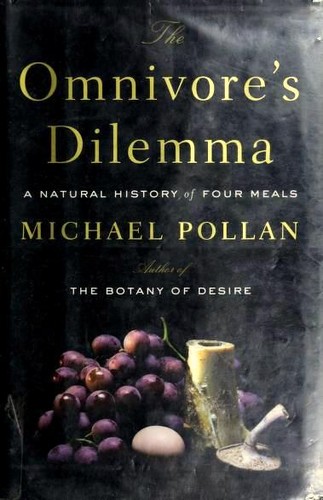
Omnivore's Dilemma. a Natural History of Four Meals
by Michael Pollan
★ Top 25 book of 2006 · #18 on Best Books of 2006
Michael Pollan asks what we should eat for dinner and argues that the answer matters for our health and the planet. He traces industrial, organic and foraged food chains from source to meal, building a portrait of how Americans eat.
Best for: Curious readers wanting to understand where their food comes from and its impact
Omnivore's Dilemma. a Natural History of Four Meals is #18 on BookWard's Best Books of 2006, out of 47 2006 books that cleared our data bar.
What Omnivore's Dilemma. a Natural History of Four Meals is about
Michael Pollan starts with a question that sounds simple: what should we have for dinner? He argues that the answer matters far more than it seems, touching our health, our children's health and the environment we all depend on. The modern supermarket and fast-food outlet, he says, form a confusing and risky landscape, and the old omnivore's dilemma has come back with force.
To make sense of it, he follows three food chains from their source to a finished meal: industrial food, organic or alternative food, and food he forages himself. The result is meant as a full account of how Americans eat. It will help anyone who shops, cooks or simply wonders where their dinner comes from, and who wants to choose with more understanding.
Omnivore's Dilemma. a Natural History of Four Meals on the Best Books of 2006
Omnivore's Dilemma. a Natural History of Four Meals came out in 2006. Of the 47 books first published in 2006 that met BookWard's data bar, it ranks #18 on our Best Books of 2006 list.
Why it made the list: 272 readers have shelved it on Open Library; readers rate it 4.1 out of 5 (46 ratings). The list ranks each year’s books on how many readers have picked them up, how highly readers rate them, and how many are reading them right now.
Nearby on the 2006 list
- Fablehaven Brandon Mull, #16
- Lisey's Story Stephen King, #17
- Aloha-Ha-Ha! Barbara Park, #19
- Don't Let the Pigeon Stay up Late! Mo Willems, #20
See all Best Books of 2006 Best books by year
More years: Best Books of 2005 Best Books of 2007.
The numbers behind it
- Readers: 203 want to read it, 9 are reading it now and 60 have read it, according to Open Library.
- Ratings: 4.1 out of 5 from 46 Open Library ratings.
| Signal | This book (0 to 100) | Weight |
|---|---|---|
| Reach | 62 | 55% |
| Reader love | 74 | 25% |
| Being read right now | 34 | 20% |
Questions about Omnivore's Dilemma. a Natural History of Four Meals
When was Omnivore's Dilemma. a Natural History of Four Meals published?
Omnivore's Dilemma. a Natural History of Four Meals by Michael Pollan was first published in 2006.
Was Omnivore's Dilemma. a Natural History of Four Meals one of the best books of 2006?
Omnivore's Dilemma. a Natural History of Four Meals is #18 on BookWard's Best Books of 2006, out of 47 2006 books that cleared our data bar. 272 readers have shelved it on Open Library; readers rate it 4.1 out of 5 (46 ratings).
Why is Omnivore's Dilemma. a Natural History of Four Meals on the Best Books of 2006 list?
272 readers have shelved it on Open Library; readers rate it 4.1 out of 5 (46 ratings).
More of the best books of 2006
- The Sea of Monsters Rick Riordan, #1
- The Book Thief Markus Zusak, #2
- Half of a Yellow Sun Chimamanda Ngozi Adichie, #3
- The Boy in the Striped Pyjamas John Boyne, #4
- The Secret Rhonda Byrne, #5
- Mindset Carol S. Dweck, #6
See the full Best Books of 2006, the Top 100, or new books on Rising.
How we know
This page uses public data: Open Library reader counts and ratings, and Wikipedia page views for recent years. The description is paraphrased from real source text. Rankings reflect reading interest, not quality or sales, and can be affected by data gaps. Lists update monthly.
Suits mature teens and adults interested in food, farming and the environment.
Depends on the edition you pick.
Four meals, three food chains, and a sharp reporter's appetite. 57% taste match
 BookWard’s take
Four meals, three food chains, and a sharp reporter's appetite
Pollan takes a plain question, what should we have for dinner, and answers it by following three food chains from source to plate: industrial, organic and alternative, and foraged. It is idea-driven nonfiction that reads like reportage, rigorous in its digging and unmistakable in its voice. The storytelling carries you through Iowa cornfields, feedlots and hunting grounds in scene after scene, so the explaining feels lighter than you would expect from a book this argumentative. It is more opinionated than neutral, and Pollan is candid about his own appetite and unease. The pace is steady rather than brisk, and a book this size can feel long in the stretches between meals. If you like your nonfiction built from firsthand travel, it earns its length.
A long, thorough survey across three food chains and four meals, well beyond tight; BookWard prefers shorter books, so it asks for patience.
Steady and curious rather than fast; it lingers on farms and kitchens, a bit slower than BookWard likes.
Tracing four meals back to their origins was a fresh way to frame the question, and it still feels distinctive.
Clear and elegant with some polish, but never ornate; BookWard finds it a touch richer than plain.
Driven by the question and the journey, with the author as guide rather than a character arc.
It starts from alarm but leans toward the hope that informed choices can change how we eat.
Organized by the three food chains and the meals that end each, which is tidy but a little more designed than standard.
Wry asides lighten the serious subject, but it stays mostly a serious inquiry.
Some industrial farming sections are unsettling, but it is not a dark book overall.
Thoughtful and engaged, with a few moments of unease, rather than emotionally intense.
See all 50 dialsEvery position, side by side with this book
Where it lines up
- Authorial voiceBookWard 9 · book 9
- OriginalityBookWard 9 · book 8
- EndingBookWard 8 · book 7
Where it pulls apart
- LengthBookWard 1 · book 7
- Story or ideasBookWard 3 · book 8
- OpeningBookWard 10 · book 7
A long, thorough survey across three food chains and four meals, well beyond tight; BookWard prefers shorter books, so it asks for patience.
It opens on a simple, pressing question about dinner, which draws you in quickly without needing a dramatic setup.
It avoids the standard diet-book formula by reporting each food chain firsthand, which suits BookWard's taste for the unfamiliar angle.
Each chain is followed from source to final meal, so the argument builds step by step and holds together well.
Steady and curious rather than fast; it lingers on farms and kitchens, a bit slower than BookWard likes.
Tracing four meals back to their origins was a fresh way to frame the question, and it still feels distinctive.
People appear as farmers and hunters met along the way, but they serve the argument more than they grow as characters.
It closes by pulling its threads together into a final meal and a clear sense of the answer to the opening question.
Warm toward good food, but the reporting stays practical and avoids heavy nostalgia.
The industrial chapters reveal unsettling facts, but they are drawn from reporting, not used just to jolt the reader.
Built on visits to farms, labs and feedlots and a clear food-chain method, it is closer to rigorous reportage than anecdote alone.
Pollan's curious, wry, first-person presence is unmistakable and carries the whole book.
The ideas about how we eat drive the book, though scenes carry them, so it sits well toward idea-led.
Much of the argument is shown through visits and scenes, with some direct explanation of how food systems work.
The three-part structure keeps momentum, though some stretches between the big set pieces run a little slower.
Clear and elegant with some polish, but never ornate; BookWard finds it a touch richer than plain.
Driven by the question and the journey, with the author as guide rather than a character arc.
It starts from alarm but leans toward the hope that informed choices can change how we eat.
Organized by the three food chains and the meals that end each, which is tidy but a little more designed than standard.
Wry asides lighten the serious subject, but it stays mostly a serious inquiry.
Accessible and well explained, though the subject and length ask for steady attention.
Pollan reports from many places, including farms, labs and hunting grounds, so the perspectives are varied.
Mostly moves forward along each food chain from source to meal.
Entirely grounded in real food and farms.
A good-sized cast of farmers, scientists and cooks passes through over the course of the reporting.
It ranges from a single dinner to the whole American food system and our shared evolutionary history with our crops.
Mostly outward reporting on places and processes, with reflective stretches.
Conversations with the people he meets appear, but narration and explanation dominate.
Not a topic here at all.
Cornfields, feedlots and food labs will be unfamiliar territory for many readers, and that is part of the appeal.
Rooted in the early twenty-first century American food scene, so it reads as fairly current.
The central question lasts, though some specifics are tied to when it was reported.
A candid, reliable guide who tells you where his own biases lie.
It raises hard ethical questions about eating and treats them as open and worth wrestling with.
Vivid, sensory writing about fields, kitchens and meals gives the places real texture.
Story-driven reportage that follows the journey from source to plate more than a dry analysis.
The author is present throughout, sharing his own experiences and reactions.
A standalone book.
Few plot twists, though some revelations about food production land as surprises.
It pushes readers to reconsider what they eat and why.
Some industrial farming sections are unsettling, but it is not a dark book overall.
Thoughtful and engaged, with a few moments of unease, rather than emotionally intense.
Dry and observational, not broad.
Includes animal slaughter and hunting described on the page, which is a moderate amount.
No sexual content.
Food policy and farm subsidies are discussed, though the focus stays on eating and farming.
Plain, readable language with some technical terms explained as they come up.
Pollan argues a clear point of view and lets it show.
Looks to the future of how we should eat while drawing on deep history.
Leans toward the belief that better choices are possible.
Review written by BookWard, dial version 1, November 2026.
Who is Omnivore's Dilemma. a Natural History of Four Meals right for?
Suits mature teens and adults interested in food, farming and the environment. It includes descriptions of animal slaughter and hunting that some readers may find upsetting.
Accessible and well explained, though the subject and length ask for steady attention.
Some industrial farming sections are unsettling, but it is not a dark book overall.
Thoughtful and engaged, with a few moments of unease, rather than emotionally intense.
Includes animal slaughter and hunting described on the page, which is a moderate amount.
Book CompanionOmnivore's Dilemma. a Natural History of Four Meals: ideas, characters, themes
How we answer the simple question of what to eat shapes our health, our environment and our relationship with the species we depend on.
- Three food chains. Pollan follows industrial, organic or alternative, and foraged food from source to final meal.
- Four meals. Each chain ends with a meal, giving the reporting a clear shape and a place to land.
- The omnivore's dilemma. Humans can eat almost anything, so choosing safely and wisely has always been a real problem.
- Coevolution. The book stresses our long, shared history with the handful of plants and animals we rely on.
- What is at stake. Eating choices affect personal and children's health as well as the environment that sustains life.
Themes
How what we eat is grown, processed and sold.
The burden and meaning of deciding what to eat.
How human appetite and farming have shaped each other.
Personal wellbeing tied to the planet's wellbeing.
Comparing large-scale and small-scale ways of producing food.
Discussion questions
- Which of the three food chains surprised you most, and why?
- What does the omnivore's dilemma mean in your own daily eating?
- How much responsibility should individual eaters bear compared with the food industry?
- Does following food from source to plate change how you see a meal?
- Which of Pollan's conclusions would you actually act on?
Personalize your Book Companion
This is the general edition. In BookWard, the Companion is written for you: your reading profile, your notes, and spoiler-safe to the page you are on.
Buy, listen or borrow Omnivore's Dilemma. a Natural History of Four Meals
Each link opens a search for this book on that store, in a new tab.
Read on a device
Borrow
Reviews and community
If you liked Omnivore's Dilemma. a Natural History of Four Meals
A lyrical argument that rivers deserve to be treated as living beings
The Code BookSimon SinghA history of secret writing that makes the mathematics approachable
I Contain MultitudesEd YongA joyful tour of the microbes that make animals possible
The botany of desireMichael PollanA plant's-eye view of us, one apple at a time
Find your own best books
Add what you have read, rate it, and BookWard will recommend what to read next.
Free to start. No credit card needed.