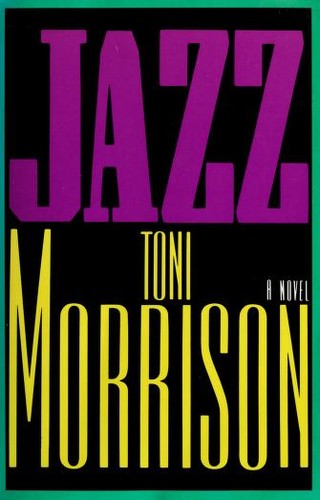
Jazz
by Toni Morrison
★ Top 25 book of 1992 · #22 on Best Books of 1992
In Harlem in early 1926, a salesman kills his teenage lover and his wife responds with a shocking act at the funeral. A shifting, improvisational narrator ties their blues to the legacy of slavery and the promise of city life.
Best for: Readers who enjoy inventive, musical prose and portraits of Black urban life
Jazz is #22 on BookWard's Best Books of 1992, out of 43 1992 books that cleared our data bar.
What Jazz is about
Winter, 1926, in Harlem. Joe Trace, a man in his fifties who sells Cleopatra beauty products door to door, has shot his eighteen-year-old lover, Dorcas, and his wife Violet, a hairdresser who mostly talks to birds, turns up at the funeral with a knife. Toni Morrison does not treat this as a whodunit. Instead she follows how these people, who came to the City from the South and West hoping for something better, arrived at such a moment, and the story reaches back to the mid-19th-century South as their pasts unfold. An unnamed narrator, whose identity is left for you to decide, drifts between past, present and future like a musician improvising. It is the middle volume of Morrison's trilogy on African-American history, between Beloved and Paradise.
Jazz on the Best Books of 1992
Jazz came out in 1992. Of the 43 books first published in 1992 that met BookWard's data bar, it ranks #22 on our Best Books of 1992 list.
Why it made the list: 231 readers have shelved it on Open Library. The list ranks each year’s books on how many readers have picked them up, how highly readers rate them, and how many are reading them right now.
Nearby on the 1992 list
- Dragonfly in Amber Diana Gabaldon, #20
- Dolores Claiborne Stephen King, #21
See all Best Books of 1992 Best books by year
More years: Best Books of 1991 Best Books of 1993.
The numbers behind it
- Readers: 198 want to read it, 14 are reading it now and 19 have read it, according to Open Library.
| Signal | This book (0 to 100) | Weight |
|---|---|---|
| Reach | 53 | 55% |
| Reader love | 7 | 25% |
| Being read right now | 70 | 20% |
Questions about Jazz
When was Jazz published?
Jazz by Toni Morrison was first published in 1992.
Was Jazz one of the best books of 1992?
Jazz is #22 on BookWard's Best Books of 1992, out of 43 1992 books that cleared our data bar. 231 readers have shelved it on Open Library.
Why is Jazz on the Best Books of 1992 list?
231 readers have shelved it on Open Library.
More of the best books of 1992
- Welcome to Dead House Robert Lawrence Stine, #1
- The Secret History Donna Tartt, #2
- Snow Crash Neal Stephenson, #3
- The Indispensable Calvin and Hobbes Bill Watterson, #4
- The Shadow Rising Robert Jordan, #5
- The Artist's Way Julia Cameron, #6
See the full Best Books of 1992, the Top 100, or new books on Rising.
How we know
This page uses public data: Open Library reader counts and ratings, and Wikipedia page views for recent years. The description is paraphrased from real source text. Rankings reflect reading interest, not quality or sales, and can be affected by data gaps. Lists update monthly.
Best suited to mature teens and adults comfortable with literary fiction and shifting timelines.
Depends on the edition you pick.
A murder told in the improvised rhythm of Harlem jazz. 69% taste match
 BookWard’s take
A murder told in the improvised rhythm of Harlem jazz
Jazz opens with its crime already committed: Joe Trace has shot Dorcas, and Violet has gone after the corpse with a knife. It is a hook that works at once, and Morrison then turns the story inside out, moving through Harlem in 1926 and back into the South that these people left. Her voice is the main event, wholly distinctive and carried by a mysterious narrator whose identity is yours to settle. The structure is experimental, and the timeline shifts constantly, which I find more exciting than disorienting. Character depth is the payoff, since Joe and Violet are drawn with patience and sympathy. Expect a book that rewards attention and rewards rereading, and one that steers well clear of familiar tropes.
A jazz-shaped novel narrated by an uncertain, self-doubting voice is rare, which is exactly what BookWard rewards.
The language is rich, rhythmic and heightened, closer to ornate than plain, a bit more than BookWard usually seeks.
The crime sets things off, but the book cares most about why these people act as they do.
The tone moves through loss, violence and regret toward tenderness, landing somewhere between bleak and hopeful.
Built to echo jazz improvisation, it loops, riffs and returns, with a narrator who changes course mid-telling.
There are wry flashes in the narrator's voice, but the book is serious about grief and violence.
See all 50 dialsEvery position, side by side with this book
Where it lines up
- OpeningBookWard 10 · book 10
- Familiar tropesBookWard 10 · book 10
- Shock for effectBookWard 9 · book 9
Where it pulls apart
- Internal logicBookWard 10 · book 7
- TimelineBookWard 4 · book 10
- StructureBookWard 4 · book 9
The shooting and the funeral attack are laid out almost immediately, so the book grips from the first page, just as BookWard likes.
Nothing here feels borrowed; the form, the narrator and the treatment of a love triangle all avoid the expected moves.
The voice and structure are deliberately loose and improvisational, yet the story's causes and consequences hold together once they land.
A jazz-shaped novel narrated by an uncertain, self-doubting voice is rare, which is exactly what BookWard rewards.
Joe, Violet and Dorcas are given histories and inner lives that complicate any easy judgment, matching BookWard's taste for deeply drawn people.
The story's central questions are answered, but the book closes on feeling and reconciliation more than on a tidy wrap-up.
Morrison writes grief and desire with feeling but without sugar; the tone is lyrical and restrained rather than sentimental.
The violence is part of the opening premise and is explored with purpose rather than used for cheap effect.
This is a novel, so the rigor dial does not apply.
Morrison's narrator is unmistakable, intimate and musical, and it is the book's greatest strength.
It pairs a concrete crime story with questions about memory, migration and the city, so ideas and story share the load.
The book trusts you to assemble history from scenes and fragments rather than explaining it outright, which BookWard prefers.
The book's circling structure stays charged throughout, with each backstory deepening the present rather than stalling it.
The language is rich, rhythmic and heightened, closer to ornate than plain, a bit more than BookWard usually seeks.
The crime sets things off, but the book cares most about why these people act as they do.
The tone moves through loss, violence and regret toward tenderness, landing somewhere between bleak and hopeful.
Built to echo jazz improvisation, it loops, riffs and returns, with a narrator who changes course mid-telling.
There are wry flashes in the narrator's voice, but the book is serious about grief and violence.
The shifting voice and time frames ask for focus, though the pages are short and the rewards are steady.
Joe, Violet, Dorcas and others take turns, with a roving narrator tying them together, which BookWard enjoys.
Harlem in 1926 gives way to the South decades earlier, and the book moves between them freely and often.
The world is grounded in real history and place, with only a stylized, imaginative narrating voice.
A handful of central figures and a manageable ring of secondary characters keep the cast modest.
The setting is one neighborhood, though the backstories reach across generations and regions.
Memory, desire and regret drive the story more than events, so it leans toward interior life.
Scenes rely more on narration and memory than on extended back-and-forth speech.
Love, infidelity and longing sit at the center of the plot, though not as a conventional romance.
Harlem in the 1920s and the post-slavery South will be unfamiliar to many readers, but Morrison makes them vivid.
The story belongs to the 1920s and the 19th century, a long way from today.
Its questions about love, memory and migration remain fresh, and the book has held its place.
The narrator is confident yet admits to misjudging the characters, which makes the telling quietly unreliable.
Joe and Violet are neither excused nor condemned, and the book resists easy verdicts.
The city and its sounds are drawn in lush detail, so description is generous.
Review written by BookWard, dial version 1, November 2026.
Who is Jazz right for?
Best suited to mature teens and adults comfortable with literary fiction and shifting timelines. It includes a killing, an attack on a corpse, infidelity and the legacy of slavery.
The shifting voice and time frames ask for focus, though the pages are short and the rewards are steady.
Book CompanionJazz: ideas, characters, themes
A shooting in 1926 Harlem becomes a way to explore love, memory and the long reach of the past, told in the improvised rhythm of jazz.
- The crime comes first. Joe Trace has shot his young lover Dorcas, and Violet attacks the body at the funeral, so the book begins after the worst has happened.
- A city in motion. Harlem in the 1920s is portrayed as a place of new hope, built by people who arrived from the South and West.
- The past keeps returning. The story moves back to the mid-19th-century South to show how earlier hardships shape the people of the present.
- A narrator with a mind of its own. The voice telling the story is mysterious and chooses its own route, leaving its identity for readers to decide.
- Part of a larger design. This is the second book in Morrison's trilogy on African-American history, after Beloved and before Paradise.
Characters
Joe Trace
Door-to-door salesman
A man in his fifties who sells Cleopatra beauty products and shoots his lover of three months.
Violet Trace
Joe's wife
A hardworking hairdresser given to dark spells of the mind, who talks mostly to birds.
Dorcas
Joe's young lover
An impetuous eighteen-year-old who sees life like a picture show.
Themes
How earlier lives and the history of slavery continue to shape the present.
The hope and cost of leaving the South for a new life in Harlem.
The pull of desire, the damage of infidelity and the possibility of forgiveness.
How a narrator shapes, and can misjudge, the story being told.
Jazz as a model for both the book's structure and its characters' survival.
Discussion questions
- Why does Morrison reveal the crime so early, and what does that change about how you read?
- How does the narrator's voice affect your trust in the story?
- What does the move between 1926 Harlem and the earlier South add to the characters' choices?
- How does the book treat Joe and Violet: with judgment, sympathy, or both?
- In what ways does the novel's structure behave like jazz?
Personalize your Book Companion
This is the general edition. In BookWard, the Companion is written for you: your reading profile, your notes, and spoiler-safe to the page you are on.
Buy, listen or borrow Jazz
Each link opens a search for this book on that store, in a new tab.
Read on a device
Borrow
Reviews and community
If you liked Jazz
A haunted house, a scarred past, and prose that refuses to look away
The Bluest EyeToni MorrisonA short, devastating debut about beauty, shame, and who gets seen
Wandering StarsTommy OrangeTwo centuries of one family, from Sand Creek to Oakland
Wuthering HeightsEmily BrontëA savage, original Gothic love story that still unsettles
Find your own best books
Add what you have read, rate it, and BookWard will recommend what to read next.
Free to start. No credit card needed.