Often shelved as young adult, it suits mature teens and adults ready for serious literary fiction.
181 pages, about 3 to 4 hours.
A short, devastating debut about beauty, shame, and who gets seen. 65% taste match
The story
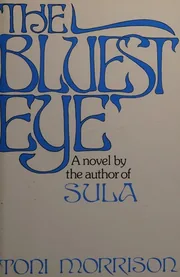
The Bluest Eye is the first novel by Toni Morrison, first published in 1970. It is a coming-of-age story set in Lorain, Ohio, in 1941, in the years following the Great Depression. The narrative moves between past and present through flashback and is told in the third person, with sections that draw on the world of Dick and Jane primers.
At its center is Pecola Breedlove, an eleven-year-old African American girl who is regarded as ugly because of her mannerisms and dark skin. She develops an inferiority complex and comes to wish for blue eyes, which she associates with whiteness. Around her are her parents, Cholly and Pauline Breedlove, and the sisters Claudia and Frieda MacTeer, whose household takes her in for a time. The book touches on foster care, family violence and incest, and on the pressure of white Anglo-Saxon Protestant standards of beauty on a young girl's sense of herself. It is shelved as African American fiction and as young adult reading, and it runs to roughly 181 pages in the median edition.
Nuns go by as quiet as lust, and drunken men and sober eyes sing in the lobby of the Greek hotel.
Characters
Pecola BreedloveClaudia MacTeerFrieda MacTeerCholly BreedlovePauline BreedloveDick
Setting
OhioLorain
Period
1941
Themes
foster careDick and JaneflashbackWhite Anglo-Saxon Protestantsinferiority complexwhitenessthird-person narrativeComing of age
- Want to read 783
- Reading now 22
- Read 72
Most people shelving it are saving it for later.
Of 877 readers who put it on a shelf, 89% want to read it, 3% are reading it now, 8% have finished it and 0% stopped before the end.
By the numbers
- The median edition runs 181 pages. Counting about 275 words a page and an adult reading pace of 250 words a minute, that is about 3.3 hours of reading.
- Open Library tracks 63 editions from 40 publishers, the earliest dated 1970 and the latest 2021, across 7 languages.
- On reader demand it ranks in the top 1% of the classic books in our catalog (8,749 of them).
- Libraries shelve it under Dewey 813.54 and Library of Congress class PS-3563.00000000.O8749 Bl.
 BookWard’s take
A short, devastating debut about beauty, shame, and who gets seen
Toni Morrison's first novel, set in Lorain, Ohio in 1941, follows eleven-year-old Pecola Breedlove, who prays each night for blue eyes. At 181 pages it is a comfortable, compact read, and the hook is immediate: that single wish frames everything that follows. The story moves through flashback and borrows from the Dick and Jane primers, a structure that is neither conventional nor showy, and the book feels genuinely original in how it uses those borrowed forms. Character depth is the real strength, with the Breedlove and MacTeer households drawn from the inside. Expect a very dark book and real emotional weight, but the darkness is tied to the book's argument about whiteness and worth rather than used for effect. It is a hard book that earns its weight.
At 181 pages it is compact and unpadded, which matches BookWard's preference for tight books.
It moves steadily rather than fast, with lingering passages that run slower than BookWard's usual preference.
A debut with a fresh form and a focused idea about beauty and whiteness, which BookWard values highly.
The language is lyrical and heightened, more ornate than BookWard's usual middle ground.
What happens grows from who these people are and what they have endured, favoring character over plot.
The outlook is bleak, more so than BookWard's mild lean toward hope.
Flashbacks and primer fragments make the form more experimental than a straight telling.
There is little levity; the book is serious from start to finish.
It deals with incest, violence and deep cruelty, placing it at the dark end.
The emotional pull is intense and sustained, more than BookWard's usual middle.
See all 50 dialsEvery position, side by side with this book
Where it lines up
- LengthBookWard 1 · book 1
- OriginalityBookWard 9 · book 9
- Shock for effectBookWard 9 · book 9
Where it pulls apart
- Internal logicBookWard 10 · book 8
- PaceBookWard 8 · book 5
- OutlookBookWard 7 · book 2
At 181 pages it is compact and unpadded, which matches BookWard's preference for tight books.
Pecola's nightly prayer for blue eyes grabs the reader early, in line with BookWard's taste for openings that pull at once.
It subverts the Dick and Jane primer and the standard coming-of-age shape, which BookWard rewards.
The shifting accounts and flashbacks cohere into a clear chain of cause and consequence around the Breedlove family.
It moves steadily rather than fast, with lingering passages that run slower than BookWard's usual preference.
A debut with a fresh form and a focused idea about beauty and whiteness, which BookWard values highly.
Pecola, Cholly, Pauline and the MacTeer sisters are drawn with interior depth that BookWard prizes.
The close resolves its central arc firmly while leaving the reader with lingering unease.
Morrison avoids easy consolation and refuses sentimentality, matching BookWard's taste for restraint.
Its harshest material serves the book's argument about shame and worth, so the darkness is earned.
This is a novel, so the rigor dial does not apply.
Morrison's voice is unmistakable from the first pages, a quality BookWard rates very highly.
Story and idea are fused here, with the narrative carrying a clear argument about beauty and race.
Meaning arrives through scene and juxtaposition rather than explanation, which suits BookWard well.
At this length there is no slack, and the tension holds across its sections.
The language is lyrical and heightened, more ornate than BookWard's usual middle ground.
What happens grows from who these people are and what they have endured, favoring character over plot.
The outlook is bleak, more so than BookWard's mild lean toward hope.
Flashbacks and primer fragments make the form more experimental than a straight telling.
There is little levity; the book is serious from start to finish.
The fragmenting and the subject matter ask more of the reader than a casual read.
The story is told through several perspectives, including the MacTeer sisters and the Breedloves.
It moves between past and present through flashback, leaning well toward shifting time.
It is firmly grounded in a recognizable small Ohio town.
The cast is modest and centered on two households, with a few others orbiting.
The focus stays close on a family and a girl, making this an intimate story.
Much of the force comes from what characters feel and believe about themselves.
Dialogue appears but does not dominate; narration and interior voice carry most of the weight.
Romance is a minor thread, with the central concerns being family, beauty and self-worth.
1941 Lorain is a particular place and moment, a little less familiar than the usual.
Set in the early 1940s, it sits in the past, though it speaks to the present.
Its concerns about beauty, race and worth have kept the book relevant for decades.
The narration is mostly trustworthy, filtered through a remembering voice.
The book's judgments are pointed, though it still asks readers to hold complicated people in view.
Morrison renders houses, streets and bodies in rich, sensory detail.
This is fiction, so the nonfiction style dial does not apply.
This is fiction, so the perspective dial does not apply.
It stands alone as Morrison's first novel.
The book is built on revelation through accumulation rather than plot twists.
Its subject matter is difficult and meant to unsettle, not soothe.
It deals with incest, violence and deep cruelty, placing it at the dark end.
The emotional pull is intense and sustained, more than BookWard's usual middle.
There is no comic register to speak of, so the humor style dial does not apply.
Violence, including sexual violence, is present and consequential though not gratuitous.
Sexual violence is central to a pivotal event, handled with weight rather than titillation.
Race, class and beauty standards are at the heart of the book without being a manifesto.
Some dialect and fragmented passages add texture but remain accessible.
The narration carries a strong point of view on how beauty and whiteness are weighed.
Rooted in the past, it examines how earlier damage shapes lives.
The worldview is unflinching and largely unconsoled, leaning cynical.
Review written by BookWard, dial version 1, November 2026.
Who is The Bluest Eye right for?
Often shelved as young adult, it suits mature teens and adults ready for serious literary fiction. It depicts incest and sexual violence, as well as racial cruelty, so it calls for readiness and, for younger readers, a conversation.
The fragmenting and the subject matter ask more of the reader than a casual read.
It deals with incest, violence and deep cruelty, placing it at the dark end.
The emotional pull is intense and sustained, more than BookWard's usual middle.
Violence, including sexual violence, is present and consequential though not gratuitous.
Book CompanionThe Bluest Eye: ideas, characters, themes
A girl's longing for blue eyes exposes how a culture's idea of beauty can wound those it excludes.
- The primer frame. Passages built from Dick and Jane readers set an idealized white family against the Breedloves' reality.
- A story told in pieces. Flashbacks fill in the pasts of Cholly and Pauline Breedlove, deepening how the family came to be as it is.
- Two households. The MacTeer sisters' home, which takes Pecola in for a time, contrasts with the Breedloves'.
- The wish for blue eyes. Pecola links being seen and loved to having eyes like those that society prizes.
- A place and a moment. The story is set in Lorain, Ohio in 1941, in the years after the Great Depression.
Characters
Pecola Breedlove
Protagonist
An eleven-year-old girl regarded as ugly, who comes to wish for blue eyes.
Claudia MacTeer
Neighbor and observer
One of the MacTeer sisters, whose household takes Pecola in for a time.
Frieda MacTeer
Claudia's sister
The other MacTeer sister, close to Pecola during her stay.
Cholly Breedlove
Pecola's father
A father whose history is explored through flashback and whose actions drive the story's tragedy.
Pauline Breedlove
Pecola's mother
Pecola's mother, whose own past and outlook shape the home Pecola grows up in.
Themes
How a dominant ideal of beauty shapes who is seen as worthy.
The way whiteness becomes a measure of value in a community.
How being repeatedly judged ugly becomes an inner belief.
How violence and neglect move through a household.
The longing to be noticed and loved by others.
Growing up under pressures that distort self-image.
Discussion questions
- Why does Pecola connect blue eyes with being loved?
- How do the Dick and Jane passages change what the Breedloves' story means?
- What does Claudia's perspective add to the way Pecola's story is told?
- How do the flashbacks reshape your view of Cholly and Pauline?
- What does the book suggest about who bears responsibility for Pecola's fate?
Personalize your Book Companion
This is the general edition. In BookWard, the Companion is written for you: your reading profile, your notes, and spoiler-safe to the page you are on.
Buy, listen or borrow The Bluest Eye
Each link opens a search for this book on that store, in a new tab.
Read on a device
Borrow
Reviews and community
If you liked The Bluest Eye
Vietnam as one reporter lived it, in prose that burns
The God of Small ThingsArundhati RoyA Booker-winning family tragedy told in fractured time
BelovedToni MorrisonA haunted house, a scarred past, and prose that refuses to look away
Another CountryJames BaldwinBaldwin's raw, unflinching novel of grief, race and desire in 1950s New York
Sources: Open Library.
Track The Bluest Eye and find your next favorite
Add it to your shelf, rate what you have read, and BookWard will recommend what fits you.
Free to start. No credit card needed.