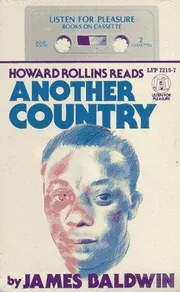
Another Country
by James Baldwin · 1962
It suits mature readers and older teens ready for serious literary fiction.
366 pages, about 6 to 8.5 hours.
Baldwin's raw, unflinching novel of grief, race and desire in 1950s New York. 55% taste match
The story
Another Country is a novel by James Baldwin, first published in 1962 and classed as literary fiction. It begins with the death of Rufus Scott, a jazz musician who takes his own life, and follows the circle of friends he leaves behind as they try to make sense of who he was and what became of him. The story moves between Greenwich Village, Harlem and France, with New York at its center, and is set in the late 1950s.
The book deals with race and racism in America, the relations between men and women, and relationships that cross racial lines. It also includes gay and bisexual characters and affairs outside marriage, subjects that were taboo when the novel first appeared. As the friends look back on Rufus, they come to face difficult truths about themselves and about the society around them. A work of classic American fiction, it has run to a large number of editions, with a typical printing of about 366 pages.
Setting
New York (N.Y.)
Themes
Classic LiteratureSuicide victimsAfrican AmericansRacismSocial conditionsSuicideRace relationsMan-woman relationships
- Want to read 190
- Reading now 9
- Read 22
Most people shelving it are saving it for later.
Of 221 readers who put it on a shelf, 86% want to read it, 4% are reading it now, 10% have finished it and 0% stopped before the end.
By the numbers
- The median edition runs 366 pages. Counting about 275 words a page and an adult reading pace of 250 words a minute, that is about 6.7 hours of reading.
- Open Library tracks 49 editions from 27 publishers, the earliest dated 1962 and the latest 2019, across 3 languages.
- On reader demand it ranks in the top 7% of the classic books in our catalog (8,749 of them).
- Libraries shelve it under Dewey 823.914 and Library of Congress class PS-3552.00000000.A45 A56 1962.
 BookWard’s take
Baldwin's raw, unflinching novel of grief, race and desire in 1950s New York
Another Country opens with Rufus Scott's suicide and then follows the friends who survive him, which gives it a pull from the first pages. Baldwin has no interest in comfort. Race, sex and love collide across Greenwich Village, Harlem and France, and the book treats its characters as people worth the full weight of attention, which is its great strength. The voice is unmistakable, and the book was strikingly original for its time, since it took on interracial relationships and gay and bisexual lives that were taboo in 1962. It is demanding and uneasy rather than tidy, and its moral picture is deliberately murky. Expect intensity over breeziness, and a book that earns its darkness.
At 366 pages it runs long for a character study, though BookWard prefers tighter books.
It tackled interracial love and gay and bisexual lives when they were taboo, which BookWard values highly.
Baldwin's sentences are rich and rhythmic, more lyrical than plain.
The book is driven by who these people are and how they hurt each other, matching BookWard's lean.
The mood is largely heavy, though not without moments of tenderness.
This is an intense, serious novel with little room for comedy.
Suicide, racism and betrayal make this a dark book, a little darker than BookWard's midpoint.
The feeling is intense and exposed from start to finish, beyond BookWard's usual level.
See all 50 dialsEvery position, side by side with this book
Where it lines up
- OriginalityBookWard 9 · book 8
- SentimentBookWard 8 · book 7
- Shock for effectBookWard 9 · book 8
Where it pulls apart
- LengthBookWard 1 · book 6
- Internal logicBookWard 10 · book 7
- EndingBookWard 8 · book 4
At 366 pages it runs long for a character study, though BookWard prefers tighter books.
Rufus's suicide opens the story, so it grips immediately, which BookWard rewards.
It avoids the usual tropes of race and romance fiction by treating these subjects as lived, uncomfortable experience.
Its emotional logic holds together, with each character's choices tracing back to who they are.
It tackled interracial love and gay and bisexual lives when they were taboo, which BookWard values highly.
Its friends are drawn with real contradiction and interior life, exactly what BookWard prizes.
Feeling runs high and raw, but Baldwin generally avoids easy sweetness, so it sits mid-range.
The darkness is earned by the story's concerns rather than used for effect, which BookWard respects.
This is fiction, so rigor does not apply.
Baldwin's voice is unmistakable and charged, which BookWard loves.
Ideas about race and desire drive the book, but they arrive through people and events.
Baldwin shows these themes in scene and relationship rather than explaining them outright, which BookWard likes.
Its intensity is largely sustained, though a long character study can dip in places.
Baldwin's sentences are rich and rhythmic, more lyrical than plain.
The book is driven by who these people are and how they hurt each other, matching BookWard's lean.
The mood is largely heavy, though not without moments of tenderness.
This is an intense, serious novel with little room for comedy.
Emotionally heavy and dense, it asks more of the reader than BookWard's usual middle ground.
It moves between several friends, giving a broad, shifting view that BookWard enjoys.
It is entirely grounded in the real New York of the 1950s.
A close circle of friends keeps the cast moderate rather than sprawling.
Though it covers a city and a society, the book stays close to a small group of friends.
Most of the drama happens inside the characters' feelings and relationships.
Love and desire are central, across several intertwined relationships.
Greenwich Village, Harlem and France are vividly specific, though New York is familiar territory to many readers.
It is set in the late 1950s, firmly in the past.
Its themes of race, love and belonging still feel urgent, matching BookWard's taste for lasting books.
The narration is a trustworthy guide to its characters' inner lives.
Baldwin refuses easy verdicts, leaving blame and sympathy intertwined, which BookWard appreciates.
Places and moods are conjured richly, making the settings feel lived in.
It is a standalone novel.
Revelations about the characters matter more than plot twists, so surprises are modest.
It confronts uncomfortable truths about race and desire rather than soothing the reader, which BookWard values.
Suicide, racism and betrayal make this a dark book, a little darker than BookWard's midpoint.
The feeling is intense and exposed from start to finish, beyond BookWard's usual level.
Humor is scarce, and what exists is dry.
Sex and desire are openly part of the story, more than BookWard's midpoint.
Race and social conditions run through nearly every relationship, putting politics near the front.
The language is fluent but dense, with a demanding emotional register.
Baldwin's moral intelligence shapes the telling, so the narration is far from neutral.
It looks back at its era and its wounds rather than forward.
It leans skeptical about whether love can bridge society's divides, while still holding out for it.
Review written by BookWard, dial version 1, November 2026.
Who is Another Country right for?
It suits mature readers and older teens ready for serious literary fiction. It deals with suicide, racism, and frank sexual content.
Emotionally heavy and dense, it asks more of the reader than BookWard's usual middle ground.
Suicide, racism and betrayal make this a dark book, a little darker than BookWard's midpoint.
The feeling is intense and exposed from start to finish, beyond BookWard's usual level.
Book CompanionAnother Country: ideas, characters, themes
After a gifted friend's suicide, a circle of friends confronts the truths about race, desire and themselves that his death exposes.
- A death at the start. Rufus Scott's suicide opens the story and sets the survivors searching for who he was.
- Three settings. The story moves between Greenwich Village, Harlem and France, with New York at its center.
- Taboo themes. Homosexuality, bisexuality, interracial couples and affairs were all taboo when the book appeared in 1962.
- Friends as mirrors. Looking back at Rufus forces his friends to see their own lives more honestly.
- Jazz and the city. Rufus is a jazz musician, tying the book to the music and mood of 1950s New York.
Characters
Rufus Scott
Jazz musician
His suicide opens the novel, and his life and death shape everything that follows.
Themes
How American racism shapes love, friendship and self-worth.
The friends' search to make sense of Rufus's death.
Relationships that cross lines of race, gender and sexuality.
Facing uncomfortable truths about oneself.
The gap between a tolerant self-image and actual behavior.
Discussion questions
- Why does Baldwin begin with Rufus's death rather than build toward it?
- How do the different settings of New York and France change what the characters can say or be?
- Which relationships in the book feel honest, and which feel like performances?
- What does the novel suggest about the limits of liberal goodwill?
- Why might this book have been so controversial in 1962, and does it still unsettle today?
Personalize your Book Companion
This is the general edition. In BookWard, the Companion is written for you: your reading profile, your notes, and spoiler-safe to the page you are on.
Buy, listen or borrow Another Country
Each link opens a search for this book on that store, in a new tab.
Read on a device
Borrow
Reviews and community
If you liked Another Country
A butch life told from inside, written as a call to action
The Bluest EyeToni MorrisonA short, devastating debut about beauty, shame, and who gets seen
If Beale Street Could TalkJames BaldwinA tender, furious love story told by a pregnant Harlem teenager
Alias GraceMargaret AtwoodA murder case retold through a woman who may not remember
Sources: Open Library.
Track Another Country and find your next favorite
Add it to your shelf, rate what you have read, and BookWard will recommend what fits you.
Free to start. No credit card needed.