Best suited to mature readers who can handle sustained scenes of combat and its toll.
260 pages, about 4 to 6 hours.
Vietnam as one reporter lived it, in prose that burns. 58% taste match
What it covers
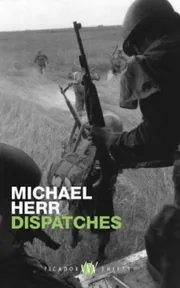
Dispatches is a work of war reporting by Michael Herr, first published in 1977. It is a first-person account of the Vietnam War, drawn from the author's time in the country as a correspondent. The narration opens in Saigon, where Herr lived during the war, and moves between the city and the combat zones he visited.
The book is nonfiction in the form of personal narrative, built from the day-to-day events of the conflict between 1961 and 1975 rather than from a conventional chronological history. Its focus is the experience of being in Vietnam during the war, as seen by a journalist who worked among American troops and lived in a country shaped by the fighting. Readers interested in war correspondence, American memoirs of the Vietnam era, or the history and politics of that conflict will find it fits all three. It runs to roughly 260 pages and has appeared in 23 editions, including translations and editions for readers in other languages.
There was a map of Vietnam on the wall of my apartment in Saigon and some nights, coming back late to the city, I'd lie out on my bed and look at it, too tired to do anything more than just get my boots off.
Characters
Michael Herr
Setting
Vietnam
Period
1961-1975
Themes
American Personal narrativesVietnam WarVietnamese ConflictVietnam War, 1961-1975Vietnam-oorlogCorresponsales de guerraNarración cuentosGuerra del Vietnam, 1961-1975
- Want to read 124
- Reading now 9
- Read 21
Most people shelving it are saving it for later.
Of 154 readers who put it on a shelf, 81% want to read it, 6% are reading it now, 14% have finished it and 0% stopped before the end.
By the numbers
- The median edition runs 260 pages. Counting about 275 words a page and an adult reading pace of 250 words a minute, that is about 4.8 hours of reading.
- Open Library tracks 23 editions from 19 publishers, the earliest dated 1977 and the latest 2016, across 4 languages.
- On reader demand it ranks in the top 8% of the modern books in our catalog (15,152 of them).
- Libraries shelve it under Dewey 959.70438 and Library of Congress class DS-0559.50000000.H47 2009.
 BookWard’s take
Vietnam as one reporter lived it, in prose that burns
Dispatches is Michael Herr's first-person account of the Vietnam War, drawn from his time as a correspondent and first published in 1977. It opens in Saigon and moves out to the combat zones, and it is built from days and encounters rather than a tidy history. Its great strength is the voice: Herr's narration is unmistakably his own, and anyone who loves distinctive writing will find plenty to admire. The prose runs richer and more ornate than I usually like, and the structure is looser than a conventional history, so it asks more of you than a straight account would. The book is dark and violent, but it earns its bleakness rather than reaching for shock. If you want the war felt from inside, this is the one.
At roughly 260 pages it is compact for its subject, close to BookWard's preference for tight books.
It moves between city and combat zone in bursts, brisk without racing, close to BookWard's quicker pace.
Its unorthodox, poetic way of retelling the war set it apart from conventional reportage, which BookWard values highly.
The writing is rich and charged, closer to poetry than plain reporting, so more ornate than BookWard's middle ground.
It follows people and impressions more than a plot, leaning character-driven like BookWard.
The account is bleak and unsparing, with little consolation, darker than BookWard's mild hopefulness.
It is assembled from episodes and impressions instead of straight chronology, more experimental than BookWard's norm.
The tone is grave throughout, with only the grim absurdity of war for relief.
The war's horror is unflinching and constant, so the content is very dark.
Fear, fervor and compassion run intensely through it, even when the telling is controlled.
See all 50 dialsEvery position, side by side with this book
Where it lines up
- OriginalityBookWard 9 · book 9
- Shock for effectBookWard 9 · book 9
- OpeningBookWard 10 · book 9
Where it pulls apart
- Internal logicBookWard 10 · book 6
- EndingBookWard 8 · book 4
- LengthBookWard 1 · book 3
At roughly 260 pages it is compact for its subject, close to BookWard's preference for tight books.
It opens in Saigon with the war already in the air, pulling you in at once, as BookWard likes.
Herr avoids the stock war-story beats, giving the conflict its own strange texture, which BookWard rewards.
Built from episodes rather than argument, it holds together by experience more than strict logic, a little looser than BookWard prefers.
It moves between city and combat zone in bursts, brisk without racing, close to BookWard's quicker pace.
Its unorthodox, poetic way of retelling the war set it apart from conventional reportage, which BookWard values highly.
Soldiers and fellow reporters are drawn through brief, vivid encounters, giving real depth in a short space.
It closes on a final eloquent note rather than a neat conclusion, more open than BookWard usually likes.
Herr refuses easy pathos and lets the events carry the weight, which suits BookWard's restraint.
The horror is the subject itself and is never staged for effect, so its darkness is earned.
It is first-hand reporting rather than a documented history, strong on witness but lighter on rigor than BookWard's ideal.
Herr's voice is the book's signature, instantly his own and exactly what BookWard prizes.
It is led by experience and scene, though it carries real reflection on what the war was.
Herr shows the war through scenes and encounters instead of explaining it, in line with BookWard.
Built from vivid episodes, it keeps its intensity from start to finish.
The writing is rich and charged, closer to poetry than plain reporting, so more ornate than BookWard's middle ground.
It follows people and impressions more than a plot, leaning character-driven like BookWard.
The account is bleak and unsparing, with little consolation, darker than BookWard's mild hopefulness.
It is assembled from episodes and impressions instead of straight chronology, more experimental than BookWard's norm.
The tone is grave throughout, with only the grim absurdity of war for relief.
The dense, poetic style and harrowing material make it a demanding read, above BookWard's comfort.
It stays within Herr's own eyes while meeting many people, a mostly single viewpoint.
It moves through the war by episode rather than strict date order, somewhat shifting.
It is firmly grounded in real events, though the war reads as surreal.
Many soldiers and journalists pass through, making a fairly large if shifting cast.
It stays at ground level with individuals, though the war behind them is vast.
Herr balances what he sees with what the war does to him, an even mix.
Soldiers' talk is a steady presence, though the narration dominates.
Romance has no real place in this account of war.
A war zone in Vietnam is unfamiliar ground for most readers, which BookWard enjoys.
It looks back to a war fought between 1961 and 1975, well in the past.
Its status as an immediate classic points to lasting power far beyond its moment.
Herr reports as himself and can be trusted as witness, with only the haze of memory.
It declines to hand down neat verdicts on the war, leaving the moral picture ambiguous.
Scenes are described with dense, vivid detail, much richer than BookWard's usual taste.
It is told as lived narrative, not analysis, so very narrative.
It is told in the first person from inside the experience, about as personal as nonfiction gets.
It stands entirely on its own as a single book.
It offers few plot surprises, though events can startle.
It is an unsettling book that confronts you with the war's chaos, strongly challenging.
The war's horror is unflinching and constant, so the content is very dark.
Fear, fervor and compassion run intensely through it, even when the telling is controlled.
Any humor is dry and gallows-edged rather than broad.
Combat and its aftermath are rendered plainly, with a lot of violence on the page.
Sexual content is minimal in this account.
The war is inherently political and the book engages it, though through experience more than argument.
Soldiers' slang and Herr's dense, allusive style raise the difficulty above plain English.
Herr's perspective colors every page, so the narration is far from neutral.
It looks back at a war already fought, with little interest in the future.
It is disillusioned about the war, leaning cynical though compassion remains.
Review written by BookWard, dial version 1, November 2026.
Who is Dispatches right for?
Best suited to mature readers who can handle sustained scenes of combat and its toll. It contains intense violence, grim subject matter and soldiers' rough language.
The dense, poetic style and harrowing material make it a demanding read, above BookWard's comfort.
The war's horror is unflinching and constant, so the content is very dark.
Fear, fervor and compassion run intensely through it, even when the telling is controlled.
Combat and its aftermath are rendered plainly, with a lot of violence on the page.
Book CompanionDispatches: ideas, characters, themes
Dispatches renders the Vietnam War as lived experience, showing the chaos and surreal insanity of a combat zone through one correspondent's unsparing eyes.
- A correspondent's vantage. Herr writes as a journalist who lived in Saigon and traveled to the combat zones, so the war comes through personal witness.
- Experience over chronology. The book draws on the day-to-day events of the conflict rather than telling a conventional history from start to finish.
- The opening in Saigon. The narration begins in the city where Herr lived during the war, then moves between it and the fighting.
- Poetry in reportage. Herr's unorthodox retellings take on the force of poetry, finding clarity in events that resist easy understanding.
- Blistering yet compassionate. The account is unflinching about the war's horror while remaining humane toward those caught in it.
Characters
Michael Herr
Narrator and correspondent
The author tells the story as himself, a journalist living in Saigon and reporting among American troops.
Themes
The war's disorder and surreal insanity as lived on the ground.
What it means to see and report a war firsthand.
How poetic, unorthodox writing can capture what plain reporting cannot.
Humane attention to people caught inside the fighting.
How a conflict is recorded and carried afterward.
Discussion questions
- How does Herr's decision to write from inside the experience change what you understand about the war?
- Why might the book avoid a conventional chronological history, and what does that gain or lose?
- Where does the poetic style clarify the war, and where does it make things harder?
- How does the book balance unflinching horror with compassion?
- What does it mean that Dispatches became an immediate classic of war reportage?
Personalize your Book Companion
This is the general edition. In BookWard, the Companion is written for you: your reading profile, your notes, and spoiler-safe to the page you are on.
Buy, listen or borrow Dispatches
Each link opens a search for this book on that store, in a new tab.
Read on a device
Borrow
Reviews and community
If you liked Dispatches
A short, devastating debut about beauty, shame, and who gets seen
V for VendettaAlan MooreA masked saboteur takes on a fascist Britain, with eyes open
Hell's AngelsHunter S. ThompsonThompson rides with the Angels and files a gonzo classic
The Spirit Catches You and You Fall DownAnne FadimanA child's illness becomes a study of two worlds colliding
Sources: Open Library.
Track Dispatches and find your next favorite
Add it to your shelf, rate what you have read, and BookWard will recommend what fits you.
Free to start. No credit card needed.