This is a book for adult readers.
Depends on the edition you pick.
Two centuries of one family, from Sand Creek to Oakland. 58% taste match
The story
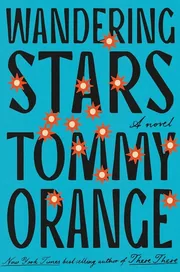
Wandering Stars is a novel by Tommy Orange, first published in 2024. It belongs to American literary fiction and follows a Native American family across several generations, starting with the Sand Creek Massacre of 1864 and continuing into the twenty-first century.
The story moves through roughly two centuries of American history, with Oakland as its present-day setting. It centers on the descendants of those who lived through the massacre and on the ways a family carries displacement and pain forward through time while looking for a place to call home. The book is part of a wider account of the nation's long conflict with its Native peoples, seen through the lives of one family rather than through a single moment.
Orange is the author of the book, which draws on poetry and music alongside its family drama. Readers interested in multigenerational fiction, Native American stories, and novels that connect nineteenth-century violence to contemporary urban life will find a clear fit here. Four editions of the book have been issued.
By the numbers
- Open Library tracks 4 editions from 3 publishers.
- On reader demand it ranks in the top 30% of the recent releases books in our catalog (1,627 of them).
- Libraries shelve it under Library of Congress class PS-3615.00000000.R32W36 2024.
 BookWard’s take
Two centuries of one family, from Sand Creek to Oakland
Wandering Stars follows a Native American family from the Sand Creek Massacre of 1864 into present-day Oakland, and it works as a sequel of sorts to Orange's debut. The story passes through many generations and many voices, and the book is dense and demanding, asking real patience of the reader. The authorial voice is distinctive, with poetry and music woven into the family drama. Character depth is the draw: the book cares about how pain and displacement get carried forward. The timeline shifts across two hundred years, and the subject matter is dark, as you'd expect given where the story begins. Readers who like their history felt through people rather than explained will find the approach rewarding.
A multigenerational saga covering two centuries and a large family has room to sprawl, well past the tight reading BookWard prefers.
A story crossing two hundred years moves in leaps and settles in places, so it is steadier than BookWard's faster preference.
Tying Sand Creek to modern Oakland through poetry and music is a fresh approach to a familiar historical subject.
The language leans toward the poetic, with musical rhythm and image, richer than plain prose.
The book follows how people carry history inside them, so character leads over plot mechanics.
It looks for ways through displacement and pain toward home and hope, so it is not purely bleak, but it does not promise comfort.
Moving across two centuries and generations gives it a looser, more layered shape than a straight-line novel.
The subject is grave, and humor is secondary to rage, grief and love.
The Sand Creek Massacre and its aftermath make for heavy material throughout.
Rage, grief, love and tenderness run high, so the feeling is intense.
See all 50 dialsEvery position, side by side with this book
Where it lines up
- Character depthBookWard 8 · book 8
- Authorial voiceBookWard 9 · book 9
- Familiar tropesBookWard 10 · book 9
Where it pulls apart
- LengthBookWard 1 · book 6
- OpeningBookWard 10 · book 7
- Internal logicBookWard 10 · book 7
A multigenerational saga covering two centuries and a large family has room to sprawl, well past the tight reading BookWard prefers.
A story that starts from a historical atrocity has weight from the outset, though it grabs less sharply than BookWard's taste for an instant hook.
Telling American history through one Native family in a contemporary city avoids the worn paths, which BookWard values highly.
The generational chain holds together clearly, with each era connected to the next, though it reads more by feeling than by tight mechanics.
A story crossing two hundred years moves in leaps and settles in places, so it is steadier than BookWard's faster preference.
Tying Sand Creek to modern Oakland through poetry and music is a fresh approach to a familiar historical subject.
The family is the center, and the book is built around how its members carry displacement and pain.
The family story is tender and heartfelt, so it leans warmer than the restraint BookWard prefers.
The violence at its root is historical fact, and the book treats it as weight rather than spectacle.
Grounded in the real Sand Creek Massacre, the history is anchored firmly even as the family is fiction.
Orange's voice is distinctive, mixing poetry, music and rage in a way that is hard to confuse with anyone else's.
It carries ideas about America's war on its people, but they arrive through family story rather than argument.
The history is delivered mostly through lives and scenes, though a book spanning centuries must explain some context outright.
A long multigenerational sweep can lose tension in places, though the changing eras keep it moving.
The language leans toward the poetic, with musical rhythm and image, richer than plain prose.
The book follows how people carry history inside them, so character leads over plot mechanics.
It looks for ways through displacement and pain toward home and hope, so it is not purely bleak, but it does not promise comfort.
Moving across two centuries and generations gives it a looser, more layered shape than a straight-line novel.
The subject is grave, and humor is secondary to rage, grief and love.
Many eras, voices and relatives ask for steady attention, more than BookWard's middle position.
The story is told through several generations of one family, so many perspectives carry it.
It spans from 1864 to the early twenty-first century, moving across eras rather than running in a straight line.
It is rooted in real history and real places, so it stays grounded.
Several generations of a family make for a wide cast.
Two hundred years of national history gives it an epic span even as it stays with one family.
Love appears in the family story, but romance is not the engine.
Sand Creek and Native Oakland may be unfamiliar ground to many readers, though both are real and recognizable places.
It runs from the nineteenth century to the present, ending near our own time.
A story about inherited pain and the search for home has staying power well beyond its year of publication.
The history carries clear moral weight, though individual lives stay complicated.
Place and period matter here, and the poetic prose gives its settings real texture.
This follows Orange's earlier novel, so it fits a larger body of work rather than standing alone.
It asks readers to face America's war on its own people, which is challenging rather than comforting.
The Sand Creek Massacre and its aftermath make for heavy material throughout.
Rage, grief, love and tenderness run high, so the feeling is intense.
The massacre is historical violence the book must show, though it is not the whole of the story.
Its subject is the nation's treatment of Native peoples, so politics are central to what it is about.
The book carries a clear moral stance on its history, so narration is not neutral.
It looks back to the massacre while following its effects toward the present and what comes next.
It holds out hope and home as things worth seeking, but its view of America is far from rosy.
Review written by BookWard, dial version 1, November 2026.
Who is Wandering Stars right for?
This is a book for adult readers. It deals with massacre and its long aftermath, so expect heavy themes of violence and grief.
Many eras, voices and relatives ask for steady attention, more than BookWard's middle position.
The Sand Creek Massacre and its aftermath make for heavy material throughout.
Rage, grief, love and tenderness run high, so the feeling is intense.
The massacre is historical violence the book must show, though it is not the whole of the story.
Book CompanionWandering Stars: ideas, characters, themes
A Native American family carries displacement and pain across two centuries, from Sand Creek to Oakland, searching for home and hope.
- Sand Creek as a starting point. The family's history is anchored in the 1864 massacre, a real act of violence.
- Generations as structure. The book moves through several generations, showing how what happened to one carries into the next.
- Oakland as present. The contemporary setting links the nineteenth-century past to urban life today.
- Poetry and music. The novel draws on poetry and music alongside the family drama, shaping its voice.
- War on a people. The book frames its subject as America's war on its own people, seen through one family's lives.
Themes
How suffering from one generation passes into the lives of those who follow.
The loss of home and the long effort to find a place to belong.
The search for somewhere safe and a reason to keep going.
National violence told through the intimate lives of one family.
Poetry and music as ways of carrying and answering what happened.
Discussion questions
- How does starting with the Sand Creek Massacre shape the way you read the later generations?
- What does Oakland add as a present-day setting for this family's story?
- How do poetry and music change the way the history is told?
- Where do you see hope in the family's search for home, and where does it fall short?
- How does telling a national story through one family differ from a straight history?
Personalize your Book Companion
This is the general edition. In BookWard, the Companion is written for you: your reading profile, your notes, and spoiler-safe to the page you are on.
Buy, listen or borrow Wandering Stars
Each link opens a search for this book on that store, in a new tab.
Read on a device
Borrow
Reviews and community
If you liked Wandering Stars
A party, a vanished host, and an America that has come apart
WickedGregory MaguireOz retold as a political biography of its witch
JazzToni MorrisonA murder told in the improvised rhythm of Harlem jazz
Ninth HouseLeigh BardugoOccult Yale, a scarred heroine, and privilege with teeth
Sources: Open Library.
Track Wandering Stars and find your next favorite
Add it to your shelf, rate what you have read, and BookWard will recommend what fits you.
Free to start. No credit card needed.