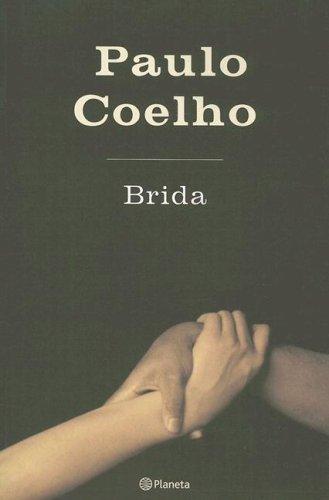
Brida
by Paulo Coelho
★ Top 25 book of 1990 · #22 on Best Books of 1990
A young Irish woman named Brida searches for deeper knowledge and finds teachers who show her how to face her fears and honor the world. As she pursues her destiny, she must weigh her relationships against her wish to become a witch.
Best for: Readers who enjoy Paulo Coelho's spiritual tales of love, mystery, and self-discovery
Brida is #22 on BookWard's Best Books of 1990, out of 39 1990 books that cleared our data bar.
What Brida is about
Brida is a young Irish woman who has always been curious about magic but feels it is only the start of what she wants to find. Her search brings her to teachers who open the spiritual world to her. A wise man living in a forest helps her face her fears and rely on the goodness around her, while a woman shows her how to move to the music of the world and pray to the moon.
All the while Brida is pulled between the people she loves and her wish to become a witch. Coelho's novel is a quiet, reflective tale of love, mystery and self-discovery, written in a mystical and philosophical tone. It will appeal to readers who enjoy spiritual fables and questions about destiny and choosing one's own path.
Brida on the Best Books of 1990
Brida came out in 1990. Of the 39 books first published in 1990 that met BookWard's data bar, it ranks #22 on our Best Books of 1990 list.
Why it made the list: 236 readers have shelved it on Open Library. The list ranks each year’s books on how many readers have picked them up, how highly readers rate them, and how many are reading them right now.
Nearby on the 1990 list
- Almost Heaven Judith McNaught, #20
- The Fall of Hyperion Dan Simmons, #21
See all Best Books of 1990 Best books by year
More years: Best Books of 1991.
The numbers behind it
- Readers: 208 want to read it, 14 are reading it now and 14 have read it, according to Open Library.
| Signal | This book (0 to 100) | Weight |
|---|---|---|
| Reach | 49 | 55% |
| Reader love | 3 | 25% |
| Being read right now | 59 | 20% |
Questions about Brida
When was Brida published?
Brida by Paulo Coelho was first published in 1990.
Was Brida one of the best books of 1990?
Brida is #22 on BookWard's Best Books of 1990, out of 39 1990 books that cleared our data bar. 236 readers have shelved it on Open Library.
Why is Brida on the Best Books of 1990 list?
236 readers have shelved it on Open Library.
More of the best books of 1990
- Good Omens Terry Pratchett, #1
- Jurassic Park Michael Crichton, #2
- The Eye of the World Robert Jordan, #3
- The Witching Hour Anne Rice, #4
- Flow Mihaly Csikszentmihalyi, #5
- The Things They Carried Tim O'Brien, #6
See the full Best Books of 1990, the Top 100, or new books on Rising.
How we know
This page uses public data: Open Library reader counts and ratings, and Wikipedia page views for recent years. The description is paraphrased from real source text. Rankings reflect reading interest, not quality or sales, and can be affected by data gaps. Lists update monthly.
Suits adult and older teen readers curious about spiritual searching and personal growth.
Depends on the edition you pick.
A short spiritual quest where ideas outweigh the story. 39% taste match
 BookWard’s take
A short spiritual quest where ideas outweigh the story
Brida follows a young Irish woman who wants more from life than ordinary knowledge and goes looking for teachers in the spiritual world. Coelho keeps the telling brief and plainspoken, which is a point in its favor, but the book strains under its familiar shapes: the wise mentor in the forest and the seeker finding her destiny are both well-worn. It also explains rather than shows. Lessons are handed to Brida by her teachers instead of being discovered in scene, and that leaves the story feeling more like instruction than experience. The outlook is hopeful and the prose is plain, with a gentle tone throughout. Brida's struggle to balance love against her calling gives the romance and the central character something to work with, though the book cares more about ideas than about drawing its people in any depth.
A compact novel that moves briskly through its lessons, which matches BookWard's liking for tight books.
Short scenes with teachers keep it moving at a steady, moderate speed.
The questing-apprentice setup is well established, so the book offers comfort more than surprise.
The language is simple and direct rather than ornate, close to BookWard's plainer end.
Brida's inner quest and the external lessons share the load fairly evenly.
Faith in the goodness of the world is central, so the outlook is clearly hopeful.
A straightforward progression from one teacher to the next, with no formal experiments.
The tone is earnest and spiritual, with little room for humor.
The tone is gentle and affirming throughout.
Longing and wonder are present but kept at a moderate pitch.
See all 50 dialsEvery position, side by side with this book
Where it lines up
- LengthBookWard 1 · book 2
- PaceBookWard 8 · book 6
- EndingBookWard 8 · book 6
Where it pulls apart
- Familiar tropesBookWard 10 · book 3
- Rigor (nonfiction)BookWard 9 · book 1
- Internal logicBookWard 10 · book 5
A compact novel that moves briskly through its lessons, which matches BookWard's liking for tight books.
It opens on a young woman already searching, which gives it a clear purpose but not an urgent pull.
Wise mentors, a forest sage and a seeker finding her path are familiar spiritual-fiction moves that BookWard tends to resist.
The magical and spiritual system works on its own terms but is not rigorously built or tested.
Short scenes with teachers keep it moving at a steady, moderate speed.
The questing-apprentice setup is well established, so the book offers comfort more than surprise.
Brida is defined mainly by her longing and her choices, while the teachers serve their lessons.
The tone is earnest and warm, leaning toward sincere feeling over restraint.
Nothing here relies on shock, so the darkness question barely arises.
This is fiction, so rigor does not apply.
Coelho's plain, parable-like manner is recognizable, though it is more a house style than a sharp personal voice.
The spiritual lessons drive the book more than plot events do, the opposite of BookWard's story-led lean.
Teachers explain how the spiritual world works outright, which cuts against BookWard's preference for showing in scene.
A series of mentor encounters can feel episodic, though the book is short enough to avoid a real sag.
The language is simple and direct rather than ornate, close to BookWard's plainer end.
Brida's inner quest and the external lessons share the load fairly evenly.
Faith in the goodness of the world is central, so the outlook is clearly hopeful.
A straightforward progression from one teacher to the next, with no formal experiments.
The tone is earnest and spiritual, with little room for humor.
Simple sentences and clear ideas make it an easy read.
The story stays centered on Brida's search.
The story moves forward in a linear way.
Magic, witchcraft and moon-prayer sit inside an otherwise ordinary world.
A handful of characters, mostly Brida and her teachers.
This is a personal journey of one young woman, not a sweeping saga.
Spiritual awakening and doubt matter more than events on the page.
Much of the teaching happens through conversation between Brida and her mentors.
Brida's love life competes with her calling, making romance a real thread without being the whole story.
An Irish setting with a spiritual overlay, neither deeply foreign nor fully everyday.
Published in 1990 with a contemporary-feeling frame rather than a clear historical one.
Its questions about love, fear and purpose travel well across time.
A straightforward third-person narration that can be trusted.
The book offers fairly clear answers about trust, fear and following your destiny.
Description serves the spiritual lessons and stays in the background.
This is a novel, so the nonfiction dial does not apply.
The close focus on Brida's feelings makes it feel personal rather than detached.
A standalone novel.
It reassures and encourages more than it unsettles.
The tone is gentle and affirming throughout.
Longing and wonder are present but kept at a moderate pitch.
Humor is minimal and mild.
There is no notable violence in its spiritual quest.
Politics is absent from this spiritual story.
The language is plain and easy.
The book steers the reader toward its spiritual worldview.
It looks toward Brida's future and what she will become.
A firmly idealistic book that trusts in the goodness of the world.
Review written by BookWard, dial version 1, November 2026.
Who is Brida right for?
Suits adult and older teen readers curious about spiritual searching and personal growth. It touches on love and passion and on witchcraft themes, which some readers may want to consider.
Simple sentences and clear ideas make it an easy read.
The tone is gentle and affirming throughout.
Longing and wonder are present but kept at a moderate pitch.
There is no notable violence in its spiritual quest.
Book CompanionBrida: ideas, characters, themes
A young woman seeking deeper knowledge learns from spiritual teachers while weighing her desire to become a witch against her need for love.
- A restless seeker. Brida is drawn to magic but wants something beyond what she already knows.
- The wise man in the forest. He teaches her to face her fears and trust the goodness of the world.
- The woman of the moon. A second teacher shows her how to dance to the music of the world and pray to the moon.
- Calling versus relationships. Brida must find a balance between the people she loves and her wish to become a witch.
- Destiny as a search. Her path unfolds through encounters, each one moving her closer to understanding her place.
Characters
Brida
Protagonist
A young Irish girl with a long interest in magic who is searching for something more.
The wise man
Mentor
A sage living in a forest who teaches her to overcome fear and trust the world.
The woman teacher
Mentor
She shows Brida how to dance to the music of the world and pray to the moon.
Themes
The idea that a person has a path to find and follow.
Learning to face fear and believe in the goodness of the world.
The tension between personal relationships and a vocation.
Seeking meaning through ritual, nature and wisdom beyond the ordinary.
Discussion questions
- Why does Brida feel that ordinary knowledge is not enough for her?
- How do the two teachers differ in what they offer her?
- Can love and a spiritual calling coexist, or must one give way?
- Does the book show its ideas in scenes, or mostly explain them?
- What does trusting the goodness of the world ask of Brida?
Personalize your Book Companion
This is the general edition. In BookWard, the Companion is written for you: your reading profile, your notes, and spoiler-safe to the page you are on.
Buy, listen or borrow Brida
Each link opens a search for this book on that store, in a new tab.
Read on a device
Borrow
Reviews and community
If you liked Brida
A prostitute's search for love, told in plain, earnest prose
The Power of NowEckhart TolleA calm, practical guide to living in the present moment
The Four AgreementsDon Miguel RuizFour short rules for living, delivered plainly and without padding
Who Moved My Cheese?Spencer JohnsonA cheese-in-a-maze parable that makes its point and gets out
Find your own best books
Add what you have read, rate it, and BookWard will recommend what to read next.
Free to start. No credit card needed.