This is an adult novel, but its everyday setting and short length make it approachable for most mature teens and up.
176 pages, about 3 to 4 hours.
A short, wry family novel packed into one wedding weekend. 68% taste match
The story
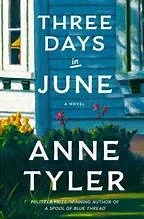
Three Days in June is a contemporary literary novel by Anne Tyler, first published in 2025. It belongs to the tradition of American family fiction and carries a romance label, centering on love, marriage and the ties between relatives. At around 176 pages, it is a short book that moves through a compact stretch of time, the days leading up to and following a wedding.
The story follows Gail Baines in Baltimore, Maryland. She is the mother of the bride, and her daughter Debbie is about to be married. Gail's own week goes badly from the start: she leaves her job, either by quitting or by being let go, and finds she has been left out of a spa day arranged by the groom's mother. Her ex-husband, Max, then turns up at her door with a cat, with nowhere to stay and without a suit for the ceremony. When Debbie tells her parents something she has just discovered about the man she is marrying, the wedding is thrown into doubt, and the shared history of Gail and Max comes back to the surface. The novel is written for an adult readership and has appeared in five editions.
People don't tap their watches anymore, have you noticed?
Characters
Gail BainesMax Baines
Setting
Baltimore (Maryland - United States)
Themes
American literatureContemporaryRomanceFamilyAdultChick Lit
By the numbers
- The median edition runs 176 pages. Counting about 275 words a page and an adult reading pace of 250 words a minute, that is about 3.2 hours of reading.
- Open Library tracks 5 editions from 4 publishers.
- On reader demand it ranks in the top 28% of the recent releases books in our catalog (1,627 of them).
- Libraries shelve it under Dewey 813.6 and Library of Congress class PS-3570.00000000.Y45T497 2025.
 BookWard’s take
A short, wry family novel packed into one wedding weekend
Three Days in June is a compact Anne Tyler novel at 176 pages, built around Gail Baines, a mother of the bride whose week is going badly before the wedding even starts. It is short and tight, which suits a reader who likes economy. The hook is immediate: a lost job, an ex-husband on the doorstep with a cat, and a secret that shakes the wedding. Character and internal logic are where a Tyler novel earns its keep, with ordinary people and ordinary quarrels drawn closely. The tone is wry, and the humor runs a little above what you'd expect from a family drama. Whether it lingers after the last page and how it handles sentiment are the open questions, but the setup promises restraint rather than syrup.
At 176 pages, it is a short book that covers a compact stretch of days, which matches BookWard's love of tight storytelling.
Three days and a wedding keep events moving briskly, with no stretches of drift in a book this size.
The wedding-weekend premise is well worn, so the freshness comes from character and tone rather than the idea itself.
Tyler is known for clear, unshowy sentences, so the prose runs plain rather than ornate.
The crisis is a plot jolt, but what carries the book is how Gail, Max and Debbie respond to it.
The tone is tart rather than grim, with room for warmth around the family tensions.
A linear run of days around a wedding is a conventional frame, used economically.
The book is told with a tart sense of humor, so it leans funnier than most family dramas.
Despite upheaval, the material is domestic and wry rather than grim.
Family strain and a threatened wedding bring real feeling, tempered by humor.
See all 50 dialsEvery position, side by side with this book
Where it lines up
- LengthBookWard 1 · book 1
- Shock for effectBookWard 9 · book 9
- Authorial voiceBookWard 9 · book 9
Where it pulls apart
- Familiar tropesBookWard 10 · book 6
- OriginalityBookWard 9 · book 5
- Internal logicBookWard 10 · book 8
At 176 pages, it is a short book that covers a compact stretch of days, which matches BookWard's love of tight storytelling.
Gail's bad day, the unannounced ex-husband and the wedding secret give it an opening with immediate pressure, well suited to BookWard.
A mother-of-the-bride wedding setup is familiar ground, so it leans on some recognizable family-fiction shapes, though the details feel specific.
A contained timeframe and a few people reacting to one disruption make for a story that holds together on its own terms.
Three days and a wedding keep events moving briskly, with no stretches of drift in a book this size.
The wedding-weekend premise is well worn, so the freshness comes from character and tone rather than the idea itself.
Tyler's family fiction centers on closely observed ordinary people, and Gail, Max and Debbie carry the whole book.
A short novel built around one decisive weekend points toward settling its central questions rather than leaving them hanging.
Wedding and family material invites sentiment, but a tart sense of humor suggests it stays clear-eyed instead of syrupy.
Its drama comes from a family secret and old history, not from darkness used for effect.
Tyler is a long-established stylist, and the wry, observant tone is the main draw of the book.
This is a story-led novel about people and a specific weekend, not an argument or a thesis.
Family fiction of this kind works through scene and conversation, letting history surface through the characters themselves.
With so little room and so much happening in a few days, the middle has no space to go slack.
Tyler is known for clear, unshowy sentences, so the prose runs plain rather than ornate.
The crisis is a plot jolt, but what carries the book is how Gail, Max and Debbie respond to it.
The tone is tart rather than grim, with room for warmth around the family tensions.
A linear run of days around a wedding is a conventional frame, used economically.
The book is told with a tart sense of humor, so it leans funnier than most family dramas.
It is short, direct and built on everyday situations, so it reads easily.
The story follows Gail, so the lens is mostly one person's experience of the week.
The days leading up to and following a wedding give it a straightforward forward line.
This is a grounded domestic story set in Baltimore with no fantastical element.
A mother, a daughter, an ex-husband and a groom's family make for a small, tight circle.
The stakes are a wedding and a family's past, which keeps everything intimate.
Gail's reactions and relationships drive the book more than outward action does.
A family collision around a wedding naturally runs on conversation and confrontation.
It carries a romance label, but the focus is on marriage, family and shared history more than courtship.
A contemporary Baltimore household is familiar territory for most readers.
First published in 2025 and set in the present day, it is about as current as fiction gets.
Family friction and a wedding weekend are lasting subjects, though a 2025 release has yet to prove itself.
Nothing in the setup points to a distorted or deceptive narrator; the story reads as straightforward.
Quitting or being let go, and a groom's secret, point to murky human situations rather than clean heroes and villains.
A short domestic novel spends its words on people and talk, with setting kept to the essentials.
It is a standalone novel with no sign of being part of a series.
A secret about the groom is the one big revelation, with the rest driven by character rather than reversals.
It is a gentle, humane read that leans toward comfort over provocation.
Despite upheaval, the material is domestic and wry rather than grim.
Family strain and a threatened wedding bring real feeling, tempered by humor.
The humor is described as tart, which points toward dry wit rather than broad comedy.
A domestic family story offers essentially no violence.
The premise centers on family and marriage, not on sexual content.
Nothing in the setup suggests political themes; the focus is household and family.
Plain contemporary American language keeps the reading straightforward.
A tart tone suggests a narration with some personality, without turning into commentary.
It looks at the present moment while the past of Gail and Max resurfaces, so it sits near the middle.
Love and marriage are examined with affection and some skepticism, landing between idealism and cynicism.
Review written by BookWard, dial version 1, November 2026.
Who is Three Days in June right for?
This is an adult novel, but its everyday setting and short length make it approachable for most mature teens and up. The main sensitivities are family conflict and a secret that threatens a wedding.
It is short, direct and built on everyday situations, so it reads easily.
Despite upheaval, the material is domestic and wry rather than grim.
Family strain and a threatened wedding bring real feeling, tempered by humor.
A domestic family story offers essentially no violence.
Book CompanionThree Days in June: ideas, characters, themes
A mother of the bride, her ex-husband and a daughter's wedding collide over a secret that reopens an old marriage.
- A bad day, fast. Gail loses her job, either by quitting or being let go, before the wedding weekend has even properly begun.
- An unexpected houseguest. Her ex-husband Max arrives with a cat, no place to stay and no suit for the ceremony.
- A snub. Gail is left out of a spa day organized by the groom's mother, which sets the tone for her place in the wedding.
- A secret about the groom. Debbie tells her parents something she has just learned about her husband-to-be, which puts the wedding in doubt.
- The past returns. The crisis stirs up the shared history of Gail and Max.
Characters
Gail Baines
Mother of the bride
Socially awkward and having a terrible few days, she is the book's central point of view.
Max Baines
Gail's ex-husband
He turns up unannounced with a cat and nowhere to stay.
Debbie
The bride
Gail and Max's daughter, whose discovery about her fiance unsettles the wedding.
Themes
What a long-ago marriage leaves behind, and how it shapes a new one.
The pull and friction among parents, children and in-laws.
How one piece of withheld information can unsettle a whole event.
Gail's place, or lack of one, in the wedding and in her own family.
Humor drawn from ordinary awkwardness rather than farce.
Discussion questions
- Why might a wedding make old family wounds easier to reopen?
- How does Max's arrival change what Gail has to face?
- What does it say about Gail that she is left out of the spa day?
- Should a person tell a partner everything before a marriage?
- How does humor change the way family conflict reads?
Personalize your Book Companion
This is the general edition. In BookWard, the Companion is written for you: your reading profile, your notes, and spoiler-safe to the page you are on.
Buy, listen or borrow Three Days in June
Each link opens a search for this book on that store, in a new tab.
Read on a device
Borrow
Reviews and community
If you liked Three Days in June
A sharp, unsentimental school story that still bites
Paper TownsJohn GreenA midnight caper that turns into a search for a person
CrashJerry SpinelliA bully's own story, told with humor and real heart
Double ActJacqueline WilsonTwo ten-year-old twins, one accounts book, and a family coming apart
Sources: Open Library.
Track Three Days in June and find your next favorite
Add it to your shelf, rate what you have read, and BookWard will recommend what fits you.
Free to start. No credit card needed.