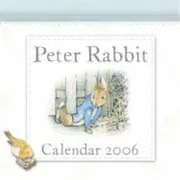
The Tale of Peter Rabbit
by Beatrix Potter · 1902
It suits young children, being written for a five-year-old, and works well as a read-aloud or first picture book.
32 pages, about 0.5 to 0.5 hours.
A tiny garden chase that still moves faster than most thrillers. 57% taste match
About the book
The Tale of Peter Rabbit is a children's picture book written and illustrated by Beatrix Potter. It follows Peter, a young rabbit who lives with his mother and his sisters Flopsy, Mopsy and Cotton-tail beneath the root of a big fir-tree. Peter is mischievous and disobedient, and his wanderings take him into the garden of Mr. McGregor, where he ends up being chased from one spot to the next. He gets away and makes it back home, where his mother puts him to bed with a cup of chamomile tea.
Potter first wrote the story in 1893 for Noel Moore, the five-year-old son of her former governess, Annie Carter Moore. After several publishers turned it down, she revised it and had it privately printed in 1901. Frederick Warne & Co. brought out a trade edition in 1902. The book runs to about 32 pages in most editions, and it has since appeared in over one hundred editions, including miniature and movable formats and versions in other languages. It has been translated into 36 languages.
Flopsy, Mopsy, Cotton-tail and Peter lived underneath the root of a very big fir-tree.
Characters
Peter Rabbit
Themes
Pictorial worksRabbitsChildren's stories, EnglishToy and movable booksSpecimensMiniature booksItalian language materialsPeter Rabbit (Fictitious character)
- Want to read 646
- Reading now 37
- Read 96
Most people shelving it are saving it for later.
Of 779 readers who put it on a shelf, 83% want to read it, 5% are reading it now, 12% have finished it and 0% stopped before the end.
By the numbers
- The median edition runs 32 pages. Counting about 275 words a page and an adult reading pace of 250 words a minute, that is about 35 minutes of reading.
- Open Library tracks 102 editions from 52 publishers, the earliest dated 1920 and the latest 2022, across 4 languages.
- On reader demand it ranks in the top 1% of the classic books in our catalog (8,749 of them).
- Libraries shelve it under Dewey [E] and Library of Congress class PZ-0007.00000000.P85 Tap 1986.
Read it
A digital copy can be borrowed for free.
1 ebook provider carry it and a scanned copy is on the Internet Archive.
 BookWard’s take
A tiny garden chase that still moves faster than most thrillers
At 32 pages, The Tale of Peter Rabbit is about as tight as a book gets, and that is the whole point of it. BookWard rates short, quick openings highly, and this one earns both: Peter is disobedient and in trouble almost at once, and the chase through Mr. McGregor's garden never stops to catch its breath. The pace is brisk and the ending is fully resolved, with Peter home and put to bed with chamomile tea. The prose is plain, the world is small and intimate, and the logic holds together without effort. It leans more on story than ideas, and shows rather than explains. For a book written in 1893 for a five-year-old, it has remarkable staying power.
At 32 pages it is as short as a book can be, which is exactly where BookWard sits.
The chase from one spot to the next keeps moving, in step with BookWard's taste for speed.
The structure is familiar, but Potter's own text and illustrations give it a character few imitators match.
The language is plain and simple, pitched at a young child, and BookWard leans a little more ornate.
What happens to Peter drives the book more than any inner change in him.
Peter escapes and ends up safe and cared for at home, so the outlook is warm.
A straightforward beginning, chase and return, with no formal experiment.
Peter's misadventures carry a light comic touch, though the book is not played for laughs.
Peter is chased and in danger, but the tone stays gentle.
The feelings are real, from fright to relief, but kept small and gentle.
See all 50 dialsEvery position, side by side with this book
Where it lines up
- LengthBookWard 1 · book 1
- PaceBookWard 8 · book 8
- Shock for effectBookWard 9 · book 9
Where it pulls apart
- Familiar tropesBookWard 10 · book 6
- Character depthBookWard 8 · book 4
- SentimentBookWard 8 · book 4
At 32 pages it is as short as a book can be, which is exactly where BookWard sits.
Peter's disobedience and the garden trouble start almost immediately, matching BookWard's love of a fast opening.
The naughty-child-learns-a-lesson shape is a familiar one, though the telling is fresh enough to carry it.
Cause follows effect cleanly: Peter wanders into the garden, gets chased, escapes, and goes home.
The chase from one spot to the next keeps moving, in step with BookWard's taste for speed.
The structure is familiar, but Potter's own text and illustrations give it a character few imitators match.
Peter is a sharply drawn mischievous type rather than a deep psychological portrait, as befits a picture book.
Peter gets home and is put to bed with chamomile tea, a clean resolution BookWard appreciates.
The warmth of the mother and the tea is gentle, but the tale never turns syrupy.
Any peril comes from the story itself and is never added for effect, which suits BookWard.
Potter's narration and her own illustrations give the book an unmistakable, distinctive personality.
This is pure story: a rabbit, a garden, a chase, and a bedtime.
Events are shown in the telling and the pictures, with almost nothing explained outright.
At this length there is no middle to sag, and the chase carries straight through.
The language is plain and simple, pitched at a young child, and BookWard leans a little more ornate.
What happens to Peter drives the book more than any inner change in him.
Peter escapes and ends up safe and cared for at home, so the outlook is warm.
A straightforward beginning, chase and return, with no formal experiment.
Peter's misadventures carry a light comic touch, though the book is not played for laughs.
It is as easy to read as a book gets, and written for a five-year-old.
The story stays with Peter alone.
It moves forward in a single line from home to garden and back.
Talking, clothed rabbits give it a gentle fantasy, set against an ordinary garden.
A small circle: Peter, his mother and sisters, and Mr. McGregor.
The whole drama plays out in a single garden and a rabbit burrow.
The book is made of action, chasing and hiding, rather than reflection.
The story is carried by narration and image rather than talk.
There is no romance, only a family and a garden.
A garden and a burrow are about as familiar as settings come.
Written in 1893 and first published in 1902, it belongs to the past, though the setting is timeless.
Over a century in print, translated into 36 languages and one of the best-selling books ever.
The narrator tells the story straight and can be trusted throughout.
Peter is plainly naughty and the lesson is plain, so the moral reading is clear.
Description is economical in the text, with the illustrations doing much of the work.
The chase has turns, but little that a child would call a twist.
It is a comforting bedtime read, not a challenging one.
Peter is chased and in danger, but the tone stays gentle.
The feelings are real, from fright to relief, but kept small and gentle.
The humor is mild and dry, rather than slapstick or broad.
There is chasing and peril, but nothing graphic on the page.
None at all.
Politics are absent.
The wording is simple and clear for a young reader.
Potter's narrator comments on Peter's behavior and has a view of it.
It is a domestic tale about home and a day's adventure, not about the future.
It trusts in the safety of home and a mother's care, a gently hopeful worldview.
Review written by BookWard, dial version 1, November 2026.
Who is The Tale of Peter Rabbit right for?
It suits young children, being written for a five-year-old, and works well as a read-aloud or first picture book. There is a chase and some peril, but the tone stays gentle.
It is as easy to read as a book gets, and written for a five-year-old.
Peter is chased and in danger, but the tone stays gentle.
The feelings are real, from fright to relief, but kept small and gentle.
There is chasing and peril, but nothing graphic on the page.
Book CompanionThe Tale of Peter Rabbit: ideas, characters, themes
A mischievous young rabbit ignores his mother, gets into trouble in a garden, and finds his way safely home.
- Peter's disobedience. Peter is described as mischievous and disobedient, and that is what sets the whole chase in motion.
- The garden of Mr. McGregor. Peter's wanderings take him into the garden, where he is chased from one spot to the next.
- The escape. Peter gets away and makes it back home, bringing the chase to a close.
- The chamomile tea. His mother puts him to bed with a cup of chamomile tea, a quiet and caring end to the day.
- How it began. Potter wrote it in 1893 for the five-year-old Noel Moore, then had it privately printed in 1901 after several publishers turned it down.
Characters
Peter Rabbit
The mischievous young hero
A disobedient young rabbit whose wandering lands him in trouble.
Mr. McGregor
The gardener
The owner of the garden Peter wanders into and is chased around.
Peter's mother
Parent
She puts Peter to bed with chamomile tea once he is home.
Flopsy, Mopsy and Cotton-tail
Peter's sisters
They live with Peter and their mother beneath the root of a big fir-tree.
Themes
Peter's choice to wander leads directly to danger.
The book ends with Peter back in his mother's care.
Peter's wandering is what drives the whole story.
The mother's tea at the end shows love even after trouble.
Discussion questions
- Why do you think Peter goes into the garden even though he has been told not to?
- How does the pace of the chase make the story exciting despite its short length?
- What does the ending, with the chamomile tea, tell us about Peter's mother?
- How do the illustrations add to what the words tell us?
- Why might this book have stayed popular for so long?
Personalize your Book Companion
This is the general edition. In BookWard, the Companion is written for you: your reading profile, your notes, and spoiler-safe to the page you are on.
Buy, listen or borrow The Tale of Peter Rabbit
Each link opens a search for this book on that store, in a new tab.
Read on a device
Borrow
Reviews and community
If you liked The Tale of Peter Rabbit
A tiny vocabulary, one naughty boy, and a hug at the end
The GruffaloJulia DonaldsonA tiny mouse outwits the whole forest in rhyme
The Ugly DucklingHans Christian AndersenA short fairy tale about an unloved duckling who becomes a swan
Room on the BroomJulia DonaldsonA rhyming broomstick tale where kindness gets crowded and then pays off
Sources: Open Library.
Track The Tale of Peter Rabbit and find your next favorite
Add it to your shelf, rate what you have read, and BookWard will recommend what fits you.
Free to start. No credit card needed.