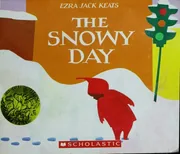
The Snowy Day
by Ezra Jack Keats, Marilyn Sanabria · 1962
It suits young children, roughly toddlers through early primary age, and works well read aloud.
32 pages, about 0.5 to 0.5 hours.
A quiet, perfect snow day in 32 pages and collage. 54% taste match
About the book
The Snowy Day is a children's picture book by Ezra Jack Keats, first published in 1962 and running about 32 pages. It follows Peter, a young African American boy living in a city neighborhood, on a winter day when snow has covered everything outside. Dressed in a red snowsuit, he heads out to walk through the drifts, leaving tracks behind him, and spends the day on his own small adventures in the cold.
Keats made the pictures as collage, and the book won the Caldecott Medal in 1963. It is among the first picture books to place an African American child at its center. Themes of play, winter weather, and friendship run through the story, which is aimed at young readers and listeners. The book has been issued in many editions, including Spanish-language ones, with the Spanish text opening on a winter morning as Peter wakes and looks out his window.
Una manana de invierno Peter se desperto y miro por la ventana.
Themes
SnowAfrican AmericansChildren's storiesSpanish language materialsAfro-AmericansWinterPlayAdventure and adventurers
- Want to read 255
- Reading now 12
- Read 50
Most people shelving it are saving it for later.
Of 317 readers who put it on a shelf, 80% want to read it, 4% are reading it now, 16% have finished it and 0% stopped before the end.
By the numbers
- The median edition runs 32 pages. Counting about 275 words a page and an adult reading pace of 250 words a minute, that is about 35 minutes of reading.
- Open Library tracks 66 editions from 32 publishers, the earliest dated 1962 and the latest 2021, across 6 languages.
- On reader demand it ranks in the top 4% of the classic books in our catalog (8,749 of them).
- Libraries shelve it under Dewey 813.54 and Library of Congress class PZ-0007.00000000.K2253 Sn3.
 BookWard’s take
A quiet, perfect snow day in 32 pages and collage
The Snowy Day does a great deal with very little. At 32 pages it is short, and it opens on Peter and the snow with no wind-up at all. The story is small: a boy walks through the drifts, makes tracks, and brings a snowball home. The pace is gentle rather than quick, slower than I usually like, but nothing in it sags. Keats works through collage and plain, direct text, and the result is an unmistakable voice and a visual originality that still feels fresh. Peter's wonder and his small disappointment are drawn with restraint, not syrup. It ends settled and whole. Best read aloud, slowly, with the pictures in view.
At 32 pages it is as tight as a book gets, which fits BookWard's love of brevity.
It moves at a child's unhurried walking pace, slower than BookWard prefers, though never dull for its length.
Its collage artwork and an African American child at the center were fresh for 1962 and still stand out.
The text is plain and simple, leaving the richness to the pictures.
The events are modest, so Peter's wonder and feelings carry the book more than the plot does.
It is warm and cheerful throughout, with only a brief and gentle sadness.
It runs in a simple, conventional line from morning to bedtime and on to the next day.
The tone is sweet and observant more than funny, with only light playfulness.
It is gentle throughout, with nothing frightening in it.
Feeling runs soft and quiet, from delight to a small pang of loss.
See all 50 dialsEvery position, side by side with this book
Where it lines up
- LengthBookWard 1 · book 1
- Authorial voiceBookWard 9 · book 9
- OriginalityBookWard 9 · book 8
Where it pulls apart
- PaceBookWard 8 · book 3
- OpeningBookWard 10 · book 8
- Familiar tropesBookWard 10 · book 8
At 32 pages it is as tight as a book gets, which fits BookWard's love of brevity.
It opens straight onto the snow and Peter, so there is no slow build before the day begins.
A child's day in the snow is simple, but Keats avoids the stock moral beats picture books often lean on.
Each moment follows plainly from the last, from tracks to snowball to the melted surprise at bedtime.
It moves at a child's unhurried walking pace, slower than BookWard prefers, though never dull for its length.
Its collage artwork and an African American child at the center were fresh for 1962 and still stand out.
Peter is drawn lightly through his small actions and moods, which is deep enough for this form.
The day closes on a clear, satisfying note, with the next morning's snow bringing it full circle.
It is tender without being syrupy, letting the melted snowball sting a little before moving on.
Nothing here is for effect; the only sadness is a snowball melting, and it is earned.
This is a story, so the rigor dial does not apply.
Keats's collage style and spare text are instantly recognizable and unlike most picture books.
It is entirely story-led, following one boy's day with no argument or lesson to carry.
Everything is shown in scene and picture, with almost nothing explained outright.
At 32 pages there is no room to sag, and every spread earns its place.
The text is plain and simple, leaving the richness to the pictures.
The events are modest, so Peter's wonder and feelings carry the book more than the plot does.
It is warm and cheerful throughout, with only a brief and gentle sadness.
It runs in a simple, conventional line from morning to bedtime and on to the next day.
The tone is sweet and observant more than funny, with only light playfulness.
Young listeners can take it in at once, which makes it about as easy as reading gets.
The story stays close to Peter alone throughout.
It follows one day in order, then the next morning, with no jumps.
Everything in it is grounded in a real city winter.
Peter is nearly the whole cast, with a mother and a friend at the edges.
It is as intimate as it gets: one boy, one neighborhood, one snowfall.
Peter's wonder shows through what he does, so it leans a little toward outer action.
It carries almost no dialogue, since the pictures and narration do the work.
There is no romance at all.
A city neighborhood in winter is familiar ground to most readers.
It dates from 1962, though the setting never feels tied to a precise year.
It has stayed in print and in readers' hands for generations, and the snow still delights.
The narration is straightforward and trustworthy, with nothing hidden.
There is no moral puzzle here, just a child at play.
The words are sparse, while the collage supplies rich visual detail.
This is fiction, so the nonfiction style dial does not apply.
The story is close and warm, told from alongside Peter.
The only surprise is the snowball melting, which is small and gentle.
It is a comforting read from start to finish.
It is gentle throughout, with nothing frightening in it.
Feeling runs soft and quiet, from delight to a small pang of loss.
Any humor is light and affectionate rather than broad.
There is no violence, only a snowball fight Peter is too young to join.
There is no sexual content.
It is not political in text, though its place in children's publishing carries quiet significance.
The language is plain and simple enough for the youngest listeners.
The narration observes quietly and does not editorialize.
It lives in the present moment of the day, looking neither far back nor ahead.
It sees the world with warmth and wonder, with no cynicism in sight.
Review written by BookWard, dial version 1, November 2026.
Who is The Snowy Day right for?
It suits young children, roughly toddlers through early primary age, and works well read aloud. Nothing in it is frightening, and it handles the small sadness of the melted snowball gently.
Young listeners can take it in at once, which makes it about as easy as reading gets.
It is gentle throughout, with nothing frightening in it.
Feeling runs soft and quiet, from delight to a small pang of loss.
There is no violence, only a snowball fight Peter is too young to join.
Book CompanionThe Snowy Day: ideas, characters, themes
A young boy spends a day exploring the first snowfall of the year, finding joy and a small disappointment in it.
- Peter wakes to snow. Peter wakes up to the season's first snowfall and heads outside in his bright red snowsuit.
- Tracks and trails. He makes footprints and trails through the snow, exploring his neighborhood on his own.
- Too young for the big kids. Peter is too young to join the older kids' snowball fight, so he makes a snowman and snow angels and slides down a hill.
- The pocket snowball. He brings a snowball home in his pocket, only to find before bed that it has melted.
- More snow, a friend. The next day brings tons more falling snow, and Peter goes out again with a friend.
Characters
Peter
Protagonist
A young African American boy in a red snowsuit who explores the snowy neighborhood.
Peter's mother
Supporting figure
The caring presence at home who is part of Peter's day.
Peter's friend
Companion
The friend who joins Peter outdoors the next morning.
Themes
Simple, imaginative fun is enough to fill a whole day.
Ordinary weather can feel magical to a child.
Even a tiny disappointment, like a melted snowball, is felt deeply.
Joy is sweeter when shared, as the next day's outing suggests.
Seeing a Black child as the hero of a picture book mattered to many readers.
Discussion questions
- Why do you think Peter wants to keep the snowball?
- What do the tracks Peter leaves tell us about his day?
- How do the collage pictures make you feel the cold and the quiet?
- Why might it have mattered that Peter was the main character in 1962?
- What would you do on your own first snow day?
Personalize your Book Companion
This is the general edition. In BookWard, the Companion is written for you: your reading profile, your notes, and spoiler-safe to the page you are on.
Buy, listen or borrow The Snowy Day
Each link opens a search for this book on that store, in a new tab.
Read on a device
Borrow
Reviews and community
If you liked The Snowy Day
A quiet room, a rhyme, and one long goodnight
ChrysanthemumKevin HenkesA gentle, funny picture book about a name worth keeping
My side of the mountainJean Craighead GeorgeA boy, a hollow tree, and a falcon: survival done simply
The Tale of Peter RabbitBeatrix PotterA tiny garden chase that still moves faster than most thrillers
Sources: Open Library.
Track The Snowy Day and find your next favorite
Add it to your shelf, rate what you have read, and BookWard will recommend what fits you.
Free to start. No credit card needed.