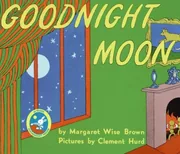
Goodnight Moon
by Margaret Wise Brown · 1947
It suits babies, toddlers and preschoolers, and is available in board book editions for small hands.
32 pages, about 0.5 to 0.5 hours.
A quiet room, a rhyme, and one long goodnight. 50% taste match
The story
Goodnight Moon is a children's picture book by Margaret Wise Brown, with illustrations by Clement Hurd. It first appeared on September 3, 1947, and has since been issued in 143 editions, including board book versions. The text runs about 32 pages and is told in rhyme, making it a story meant for reading aloud at the end of the day.
The book takes place in a single bedroom with green walls, where a young rabbit prepares for sleep. Bedtime is the whole occasion: the rabbit says goodnight to the things in the room, among them a telephone, a red balloon, a picture on the wall, chairs and a comb. The moon is part of the scene as well. Spanish-language editions of the book are also in circulation, opening with a description of that same green room and the objects in it.
The book belongs to the tradition of American picture books for very young listeners, and it sits alongside other rhyming bedtime stories and animal tales for the nursery.
En la gran habitacion verde, hay un telefono, un globo rojo y un cuadro...
Setting
Moon
Themes
Picture booksRabbitsStories in rhymeBoard booksHora de acostarseFicción juvenilSleepBedtime
- Want to read 679
- Reading now 46
- Read 164
- Stopped 1
Most people shelving it are saving it for later.
Of 890 readers who put it on a shelf, 76% want to read it, 5% are reading it now, 18% have finished it and 0% stopped before the end.
By the numbers
- The median edition runs 32 pages. Counting about 275 words a page and an adult reading pace of 250 words a minute, that is about 35 minutes of reading.
- Open Library tracks 143 editions from 77 publishers, the earliest dated 1947 and the latest 2023, across 10 languages.
- On reader demand it ranks in the top 1% of the classic books in our catalog (8,749 of them).
- Libraries shelve it under Dewey 513 and Library of Congress class PZ-0008.30000000.B815 Go 1991.
 BookWard’s take
A quiet room, a rhyme, and one long goodnight
Goodnight Moon is 32 pages of rhyme set in a single green bedroom, where a young rabbit says goodnight to the room's contents one by one. It is as tight as a book gets, and it hooks you at once: the first lines hand you a telephone, a red balloon and a picture. Nothing in it strains for effect. There is no shock here, and the sentiment stays restrained because the book simply names things and lets the hush do the work. What feels original about it is how little it asks of the reader. I tend to prize tension and surprise, so this is not a natural fit on pace. But as a read-aloud ritual built from pure repetition and calm, it earns its place.
At 32 pages it is about as short as a book can be, which BookWard's taste for tight books welcomes.
It moves slowly and deliberately by design, a hush rather than a rush, which sits well below BookWard's fast-pace taste.
Its stripped-down method of saying goodnight to ordinary objects stood apart from other picture books of its time.
The language is deliberately simple and spare, with rhyme carrying the music rather than ornament.
There is almost no plot, and the rabbit is barely a character, so it sits near the middle of the drive scale.
It closes in warmth and safety, a calm, reassuring outlook.
It follows a conventional bedtime-rhyme shape, with its pattern doing the organizing.
It is gentle and soothing instead of humorous.
Nothing here is dark; it is entirely gentle.
The feeling is mild and calm, a soft drowsiness rather than intensity.
See all 50 dialsEvery position, side by side with this book
Where it lines up
- LengthBookWard 1 · book 1
- Authorial voiceBookWard 9 · book 9
- EndingBookWard 8 · book 9
Where it pulls apart
- Familiar tropesBookWard 10 · book 6
- PaceBookWard 8 · book 2
- Character depthBookWard 8 · book 2
At 32 pages it is about as short as a book can be, which BookWard's taste for tight books welcomes.
The very first line drops you into the green room and its objects, so it grabs a small listener at once.
Bedtime and goodnights are familiar ground, yet the single-room, name-everything approach feels distinct from the usual nursery tale.
The rhyme and the room's contents follow a steady, predictable pattern that never contradicts itself.
It moves slowly and deliberately by design, a hush rather than a rush, which sits well below BookWard's fast-pace taste.
Its stripped-down method of saying goodnight to ordinary objects stood apart from other picture books of its time.
The young rabbit is a gentle presence rather than a drawn personality, so depth is intentionally minimal.
The book ends where bedtime ends, completely settled, with nothing left hanging.
It is tender in subject but plain in manner, naming things instead of pouring on feeling.
There is no darkness or jolt anywhere, and nothing is used for effect, which BookWard respects.
This is a rhyming picture book, so rigor does not apply.
The rhythmic, repetitive, lulling voice is instantly recognizable and unlike generic nursery verse.
It is a small situation more than an argument, leaning toward story and mood over ideas.
Nothing is explained; the room is simply shown and named line by line.
With so few pages and one steady pattern, there is no middle to slump.
The language is deliberately simple and spare, with rhyme carrying the music rather than ornament.
There is almost no plot, and the rabbit is barely a character, so it sits near the middle of the drive scale.
It closes in warmth and safety, a calm, reassuring outlook.
It follows a conventional bedtime-rhyme shape, with its pattern doing the organizing.
It is gentle and soothing instead of humorous.
Nothing here asks effort of a young listener; it is built to be absorbed effortlessly.
The story stays with one rabbit in one room.
The action unfolds in one continuous evening settling toward sleep.
Mostly a grounded bedroom, with only the gentle storybook rabbit as a touch of fancy.
The rabbit and the room's objects make for a very small cast.
Everything happens inside one bedroom, about as intimate as stories get.
It is mostly quiet observation of the room, leaning slightly inward rather than toward action.
The text is rhyming goodnights, with essentially no back-and-forth conversation.
There is no romance in it.
A bedroom is the most familiar setting there is.
First published in 1947, it carries a mid-century feel, though the bedtime setting reads as always-now.
Decades of editions and its place as a bedtime staple show how well it holds up.
The narrator is a plain, trustworthy voice simply naming what is there.
There is no moral dilemma at all; it is clear and uncomplicated.
It lists objects briefly, leaving the illustrations to carry most of the visual detail.
This is a picture book of rhyme, so nonfiction style does not apply.
It is a story, not a nonfiction viewpoint, so this does not apply.
It reads as a self-contained standalone.
There are no surprises; its comfort is that nothing unexpected happens.
It is pure comfort, made to soothe rather than test anyone.
Nothing here is dark; it is entirely gentle.
The feeling is mild and calm, a soft drowsiness rather than intensity.
It is not a comic book, so humor style does not apply.
There is no violence.
There is no sexual content.
Politics never enters the room.
The words are plain and simple for the youngest listeners.
The narration is neutral, simply saying goodnight to each thing.
It looks to the night ahead and sleep, with a slight backward glance at a day winding down.
It presents a safe, loving world where everything is in its place.
Review written by BookWard, dial version 1, November 2026.
Who is Goodnight Moon right for?
It suits babies, toddlers and preschoolers, and is available in board book editions for small hands. Nothing in it is frightening or sensitive.
Nothing here asks effort of a young listener; it is built to be absorbed effortlessly.
Nothing here is dark; it is entirely gentle.
The feeling is mild and calm, a soft drowsiness rather than intensity.
There is no violence.
Book CompanionGoodnight Moon: ideas, characters, themes
A young rabbit settles for the night by saying goodnight to everything in a single green room.
- One room, one evening. The whole book takes place in a green bedroom at bedtime, giving it a tight, focused feel.
- Rhyme as lullaby. The text is told in rhyme, which makes it ideal for reading aloud at the end of the day.
- Naming the familiar. Goodnights go to ordinary things such as a telephone, a red balloon, a picture, chairs and a comb.
- The moon in the scene. The moon is part of the setting, adding to the sense of night settling in.
- Words and pictures together. It was written by Margaret Wise Brown and illustrated by Clement Hurd, and the two work as one.
Characters
The young rabbit
Protagonist
A small rabbit preparing for sleep who says goodnight to the room.
Themes
The ritual of winding down and getting ready for sleep.
Safety and calm found in a familiar space.
The reassurance of repeating the same things in the same order.
The gentle act of saying goodnight to what is around you.
Discussion questions
- Which object in the room would you say goodnight to first, and why?
- How does the rhyme help the story feel sleepy?
- What do the pictures add that the words leave out?
- Why might a child enjoy hearing the same bedtime book again and again?
- What is your own favorite part of getting ready for bed?
Personalize your Book Companion
This is the general edition. In BookWard, the Companion is written for you: your reading profile, your notes, and spoiler-safe to the page you are on.
Buy, listen or borrow Goodnight Moon
Each link opens a search for this book on that store, in a new tab.
Read on a device
Borrow
Reviews and community
If you liked Goodnight Moon
A quiet, perfect snow day in 32 pages and collage
ChrysanthemumKevin HenkesA gentle, funny picture book about a name worth keeping
The Foot BookDr. SeussA rhyming parade of feet that teaches opposites
The Ugly DucklingHans Christian AndersenA short fairy tale about an unloved duckling who becomes a swan
Sources: Open Library.
Track Goodnight Moon and find your next favorite
Add it to your shelf, rate what you have read, and BookWard will recommend what fits you.
Free to start. No credit card needed.