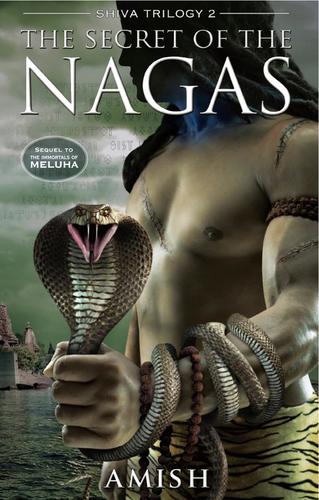
The Secret of the Nagas
by Amish Tripathi
★ Top 25 book of 2011 · #24 on Best Books of 2011
Shiva hunts the Naga warrior who killed his friend and now stalks his wife. His quest across ancient India uncovers hidden truths, shaky alliances and a puppeteer behind the scenes, in this Shiva Trilogy sequel.
Best for: Readers of Indian mythological fantasy who loved The Immortals of Meluha
The Secret of the Nagas is #24 on BookWard's Best Books of 2011, out of 53 2011 books that cleared our data bar.
What The Secret of the Nagas is about
Second in the Shiva Trilogy, this follows The Immortals of Meluha, a number one national bestseller. Shiva is a God today but was only a man 4000 years ago, a Tibetan immigrant and the prophesied destroyer of evil.
When a sinister Naga warrior kills his friend Brahaspati and begins to stalk his wife Sati, Shiva sets out for vengeance. The hunt leads him to the Nagas, the serpent people, and across the length and breadth of ancient India. Along the way a kingdom is held to ransom for a miracle drug and a crown prince is murdered.
The Vasudevs, the philosophers who guide him, betray his unquestioning faith by taking the aid of the dark side. Meluha, the perfect empire, hides a terrible secret in Maika, the city of births, and a master puppeteer is playing a grand game Shiva knows nothing about. Mythic and fast-moving, it is best read after the first book.
The Secret of the Nagas on the Best Books of 2011
The Secret of the Nagas came out in 2011. Of the 53 books first published in 2011 that met BookWard's data bar, it ranks #24 on our Best Books of 2011 list.
Why it made the list: 449 readers have shelved it on Open Library; readers rate it 4.3 out of 5 (18 ratings); 55 are reading it right now. The list ranks each year’s books on how many readers have picked them up, how highly readers rate them, and how many are reading them right now.
Nearby on the 2011 list
- The Night Circus Erin Morgenstern, #22
- Wool Hugh Howey, #23
- Debt David Graeber, #25
See all Best Books of 2011 Best books by year
More years: Best Books of 2010 Best Books of 2012.
The numbers behind it
- Readers: 365 want to read it, 55 are reading it now and 29 have read it, according to Open Library.
- Ratings: 4.3 out of 5 from 18 Open Library ratings.
| Signal | This book (0 to 100) | Weight |
|---|---|---|
| Reach | 49 | 55% |
| Reader love | 60 | 25% |
| Being read right now | 79 | 20% |
Questions about The Secret of the Nagas
When was The Secret of the Nagas published?
The Secret of the Nagas by Amish Tripathi was first published in 2011.
Was The Secret of the Nagas one of the best books of 2011?
The Secret of the Nagas is #24 on BookWard's Best Books of 2011, out of 53 2011 books that cleared our data bar. 449 readers have shelved it on Open Library; readers rate it 4.3 out of 5 (18 ratings); 55 are reading it right now.
Why is The Secret of the Nagas on the Best Books of 2011 list?
449 readers have shelved it on Open Library; readers rate it 4.3 out of 5 (18 ratings); 55 are reading it right now.
More of the best books of 2011
- Sapiens Yuval Noah Harari, #1
- The Song of Achilles Madeline Miller, #2
- Thinking, Fast and Slow Daniel Kahneman, #3
- Steve Jobs Walter Isaacson, #4
- The Son of Neptune Rick Riordan, #5
- Shatter Me Tahereh Mafi, #6
See the full Best Books of 2011, the Top 100, or new books on Rising.
How we know
This page uses public data: Open Library reader counts and ratings, and Wikipedia page views for recent years. The description is paraphrased from real source text. Rankings reflect reading interest, not quality or sales, and can be affected by data gaps. Lists update monthly.
Suits older teens and adults who enjoy mythological adventure.
Depends on the edition you pick.
Shiva's quest for a Naga warrior, wrapped in epic mythological adventure. 45% taste match
 BookWard’s take
Shiva's quest for a Naga warrior, wrapped in epic mythological adventure
The Secret of the Nagas is the second book in the Shiva Trilogy, and it sends Shiva across ancient India in search of the Naga warrior who killed his friend Brahaspati. The opening grabs you right away: the vengeance is already underway, so the book rarely idles. The pace stays brisk and the twists keep coming, with secrets and surprising alliances promised at every turn. This is a story-driven book more than an idea-driven one, and it tends to explain things outright, which keeps the mythology easy to follow. The prose is plain and clear rather than ornate. It does lean on familiar quest and prophecy shapes, which is the weaker side of the book for me. As a sequel, it is best read after The Immortals of Meluha.
Battles, pursuit and reveals keep it moving fast, close to where BookWard likes to sit.
Recasting Shiva as a mortal immigrant is a fresh angle, but the quest framework is familiar.
Clean, direct and unadorned, in line with BookWard's lean toward plain over ornate.
Events and revelations steer the book more than inner change, so it sits plot-side of BookWard.
Shiva's mission to destroy evil carries a heroic, forward-looking charge despite the grim stakes.
A straightforward quest told in sequence with little formal play, close to BookWard's conventional middle.
The tone is earnest and epic, with little room for comedy.
Murder, vengeance and a kingdom held to ransom add real shadow without turning bleak.
Grief, loyalty and betrayal give the story a strong emotional pulse.
See all 50 dialsEvery position, side by side with this book
Where it lines up
- PaceBookWard 8 · book 8
- Story or ideasBookWard 3 · book 4
- OpeningBookWard 10 · book 8
Where it pulls apart
- LengthBookWard 1 · book 7
- Familiar tropesBookWard 10 · book 4
- Internal logicBookWard 10 · book 6
The hunt for the Naga warrior is already in motion, so the story grips early, which BookWard rewards.
Prophesied destroyer, serpent people and a hidden puppeteer are well-worn mythic moves, short of BookWard's appetite for freshness.
The intrigue holds together well enough to follow, though it does not reach the airtight standard BookWard favors.
Battles, pursuit and reveals keep it moving fast, close to where BookWard likes to sit.
Recasting Shiva as a mortal immigrant is a fresh angle, but the quest framework is familiar.
Shiva carries real motivation through grief and vengeance, though the wider cast leans toward archetype.
As a middle volume it resolves its hunt only partly and is built to hand off to the next book.
Loss and loyalty are played openly and warmly rather than with restraint, softer than BookWard prefers.
A murdered prince and killed friend raise the stakes, though some darkness serves momentum over meaning.
A confident, accessible storytelling voice with a recognizable mythological-adventure flavor.
Plot and quest come first; the philosophy is carried by events, which suits BookWard's story-led preference.
Backstory and myth are often explained directly, a clear contrast to BookWard's preference for showing in scene.
Momentum holds for most of the journey, though a quest this wide can drift between set pieces.
Clean, direct and unadorned, in line with BookWard's lean toward plain over ornate.
Events and revelations steer the book more than inner change, so it sits plot-side of BookWard.
Shiva's mission to destroy evil carries a heroic, forward-looking charge despite the grim stakes.
A straightforward quest told in sequence with little formal play, close to BookWard's conventional middle.
The tone is earnest and epic, with little room for comedy.
Easy to follow and propulsive, with a gentle learning curve for the mythology.
Serpent people, miracle drugs and demonic adversaries lean the world well into the fantastical.
Allies, guides, rulers and adversaries across several kingdoms make for a large cast.
A journey across ancient India with kingdoms and empires at stake gives it a broad, epic canvas.
The pursuit and battles keep attention on action over introspection.
Shiva's bond with his wife Sati is a meaningful thread alongside the quest.
Ancient India reimagined through myth is an unfamiliar setting that BookWard enjoys.
Set roughly four thousand years in the past, far from the present day.
Rooted in enduring myth, though its adventure style reads as a product of its era.
A straightforward third-person telling with no sign of deceptive narration.
A destroyer of evil against demonic foes makes the moral lines relatively clear.
Cities, landscapes and battles are drawn with moderate detail in service of the plot.
The second book of the Shiva Trilogy, best read after The Immortals of Meluha.
Hidden puppeteers, betrayals and buried secrets promise reveals throughout.
A comfortable adventure that rarely asks the reader to wrestle with hard ideas.
Murder, vengeance and a kingdom held to ransom add real shadow without turning bleak.
Grief, loyalty and betrayal give the story a strong emotional pulse.
What humor exists is light and incidental.
Fierce battles and killings are central to the story, so violence is frequent.
Romantic and marital bonds feature, but sexual content stays minor.
Kingdoms, rulers and power struggles drive much of the plot.
The language is plain and accessible throughout.
The telling carries some worldview but mostly stays with the story.
Rooted in a mythic past, it looks back more than forward.
Faith, duty and a quest to defeat evil give it an idealistic bent.
Review written by BookWard, dial version 1, November 2026.
Who is The Secret of the Nagas right for?
Suits older teens and adults who enjoy mythological adventure. It includes murder, battles and war violence, along with themes of betrayal and vengeance.
Easy to follow and propulsive, with a gentle learning curve for the mythology.
Murder, vengeance and a kingdom held to ransom add real shadow without turning bleak.
Grief, loyalty and betrayal give the story a strong emotional pulse.
Fierce battles and killings are central to the story, so violence is frequent.
Book CompanionThe Secret of the Nagas: ideas, characters, themes
A mortal Shiva hunts the Naga warrior who killed his friend, and the trail leads through secrets and betrayals across ancient India.
- A personal hunt. Shiva's search begins with the killing of his friend Brahaspati and a threat to his wife Sati.
- The Naga trail. His pursuit leads toward the Nagas, the serpent people.
- A dying kingdom. A kingdom is held to ransom for a miracle drug, showing how widely evil has spread.
- Trust tested. The Vasudevs, Shiva's guides, take help from the dark side, shaking his unquestioning faith.
- A hidden hand. Behind the events a master puppeteer is playing a grand game unknown to Shiva.
Characters
Shiva
Protagonist
A Tibetan immigrant, prophesied destroyer of evil, driven by vengeance and the search for truth.
Sati
Shiva's wife
Stalked by the Naga warrior, which raises the personal stakes.
Brahaspati
Shiva's friend
His killing sets Shiva's hunt in motion.
The Naga warrior
Adversary
A sinister fighter whom Shiva is determined to find.
Themes
How grief drives Shiva's pursuit and tests his judgment.
What happens when trusted guides take questionable paths.
The prophesied struggle at the heart of Shiva's mission.
Nothing is what it seems, and secrets reshape what Shiva believes.
The weight of being cast as a destroyer of evil.
Discussion questions
- Is Shiva's vengeance a strength or a weakness in his quest?
- How does the book use mythology to talk about good and evil?
- What does it mean when Shiva's guides turn to the dark side for help?
- Does reading this as a middle volume change how its ending lands?
- Which alliance surprised you most, and why?
Personalize your Book Companion
This is the general edition. In BookWard, the Companion is written for you: your reading profile, your notes, and spoiler-safe to the page you are on.
Buy, listen or borrow The Secret of the Nagas
Each link opens a search for this book on that store, in a new tab.
Read on a device
Borrow
Reviews and community
If you liked The Secret of the Nagas
Shiva as a Tibetan chief, reimagined as myth rooted in history
Throne of GlassSarah J. MaasA prison-to-palace assassin contest that moves fast and trades on familiar bones
DragonquestAnne McCaffreyPern's second Threadfall: dragons, politics, and a planet to save
A Drop of VenomSajni PatelA Naga Priestess and a Monster Slayer, Bound for Collision
Find your own best books
Add what you have read, rate it, and BookWard will recommend what to read next.
Free to start. No credit card needed.