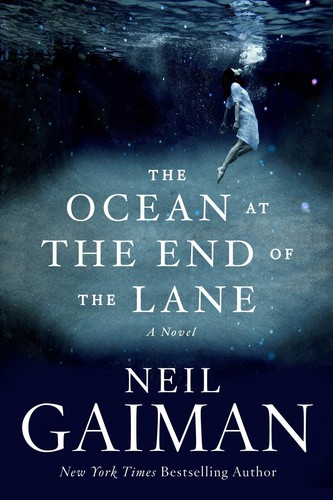
The Ocean at the End of the Lane
by Neil Gaiman
★ Top 25 book of 2013 · #13 on Best Books of 2013
A man returning for a funeral recalls his seventh year, when a girl named Lettie Hempstock promised to protect him from a frightening darkness. It is a haunting fable about memory, stories and the dangers hiding nearby.
Best for: Adults who enjoy dark, dreamlike fables about childhood and memory
The Ocean at the End of the Lane is #13 on BookWard's Best Books of 2013, out of 46 2013 books that cleared our data bar.
What The Ocean at the End of the Lane is about
A man goes back to his hometown for a funeral and finds himself drawn to the lane near his childhood home. There he remembers Lettie Hempstock, a girl who lived with her mother and grandmother on a farm at the end of the road, and who insisted that the pond behind her house was an ocean.
The memories take him back forty years, to when he was seven and something from outside the ordinary world slipped into his life. A woman named Ursula Monkton arrives to look after him and his sister, and he dislikes her at once. Lettie promises to protect him, whatever happens.
Neil Gaiman writes a dreamlike, haunting story about childhood, memory and the gap between how children and adults see the world. It suits readers who like their fantasy quiet, strange and lyrical.
The Ocean at the End of the Lane on the Best Books of 2013
The Ocean at the End of the Lane came out in 2013. Of the 46 books first published in 2013 that met BookWard's data bar, it ranks #13 on our Best Books of 2013 list.
Why it made the list: 634 readers have shelved it on Open Library; readers rate it 4 out of 5 (122 ratings). The list ranks each year’s books on how many readers have picked them up, how highly readers rate them, and how many are reading them right now.
Nearby on the 2013 list
- Doctor Sleep Stephen King, #11
- Crazy Rich Asians Kevin Kwan, #12
- Bully Penelope Douglas, #14
- Inferno Dan Brown, #15
See all Best Books of 2013 Best books by year
More years: Best Books of 2012 Best Books of 2014.
The numbers behind it
- Readers: 437 want to read it, 16 are reading it now and 180 have read it, according to Open Library.
- Ratings: 4 out of 5 from 122 Open Library ratings.
| Signal | This book (0 to 100) | Weight |
|---|---|---|
| Reach | 83 | 55% |
| Reader love | 54 | 25% |
| Being read right now | 57 | 20% |
Questions about The Ocean at the End of the Lane
When was The Ocean at the End of the Lane published?
The Ocean at the End of the Lane by Neil Gaiman was first published in 2013.
Was The Ocean at the End of the Lane one of the best books of 2013?
The Ocean at the End of the Lane is #13 on BookWard's Best Books of 2013, out of 46 2013 books that cleared our data bar. 634 readers have shelved it on Open Library; readers rate it 4 out of 5 (122 ratings).
Why is The Ocean at the End of the Lane on the Best Books of 2013 list?
634 readers have shelved it on Open Library; readers rate it 4 out of 5 (122 ratings).
More of the best books of 2013
- House of Hades Rick Riordan, #1
- Hard Luck Jeff Kinney, #2
- Crown of Midnight Sarah J. Maas, #3
- The Screaming Staircase Jonathan Stroud, #4
- Unravel Me Tahereh Mafi, #5
- The Goldfinch Donna Tartt, #6
See the full Best Books of 2013, the Top 100, or new books on Rising.
How we know
This page uses public data: Open Library reader counts and ratings, and Wikipedia page views for recent years. The description is paraphrased from real source text. Rankings reflect reading interest, not quality or sales, and can be affected by data gaps. Lists update monthly.
Suited to older teens and adults, and often enjoyed by younger readers who like dark fantasy.
Depends on the edition you pick.
A short, strange fable of childhood, memory and quiet menace. 59% taste match
 BookWard’s take
A short, strange fable of childhood, memory and quiet menace
Gaiman's 2013 novel follows a man who returns to his hometown for a funeral and finds the childhood events that began forty years earlier coming back to him. It stays small and focused throughout, a quick, compact read that never overstays its welcome. The opening grabs early: a death, a coin, a girl who calls a pond an ocean. The mood is mixed, tender about friendship yet shadowed by loss. The fantasy is real and strange, but it plays by rules of its own rather than winking at the reader. Not everything lands comfortably. Lettie's world is deliberately left half-explained, which some readers will find frustrating, and the frame story, looking back across four decades, adds a layer of distance I didn't always need. What carries the book is the voice, which is unmistakably Gaiman's: plain-spoken, quietly lyrical, and doing a great deal of the work.
A compact novel that never sprawls, which fits BookWard's love of tight, short books.
Events move briskly once the supernatural intrusion begins, close to BookWard's preferred speed.
The pond-as-ocean idea and the childhood-memory framing feel distinctive, if drawn from older fable traditions.
The language is clean and simple with lyrical touches, a little more poetic than BookWard's middle ground.
Events drive the boy's ordeal, but his inner experience of childhood fear is the real heart, leaving it balanced.
Friendship and protection offer warmth against real loss, giving it a gentle lean toward hope, close to BookWard.
A simple frame story around one long flashback is mildly unconventional, close to BookWard's comfort zone.
The tone is serious and eerie, with only light touches of wry humor.
Suicide, a predatory presence and a child in danger make it darker than gentle, near BookWard's midpoint.
Fear, loss and tenderness are felt strongly, giving it more intensity than BookWard's slightly restrained middle.
See all 50 dialsEvery position, side by side with this book
Where it lines up
- Authorial voiceBookWard 9 · book 9
- Sagging middleBookWard 8 · book 8
- LengthBookWard 1 · book 2
Where it pulls apart
- Familiar tropesBookWard 10 · book 6
- Internal logicBookWard 10 · book 6
- OpeningBookWard 10 · book 8
A compact novel that never sprawls, which fits BookWard's love of tight, short books.
A funeral, a stolen car and a coin in the throat pull you in quickly, though the opening is quieter than BookWard demands.
Magical neighbours and ancient forces are familiar fairy-tale ground, though Gaiman gives them a fresh domestic setting.
The otherworld follows its own rules, but many are left unexplained, so it is looser than BookWard prefers.
Events move briskly once the supernatural intrusion begins, close to BookWard's preferred speed.
The pond-as-ocean idea and the childhood-memory framing feel distinctive, if drawn from older fable traditions.
The boy and Lettie are vivid, but the adults and the antagonist work more as archetypes than rounded people.
It closes the main threat while leaving some mysteries and emotions unresolved, slightly looser than BookWard likes.
Warm feeling runs through the book, yet it mostly avoids easy sweetness, landing a little softer than BookWard's restraint.
The darkness serves the fable's themes of fear and powerlessness rather than existing for effect, matching BookWard.
This is a novel, so the nonfiction rigor dial does not apply.
Gaiman's calm, confiding narration is instantly recognisable, a strong match for BookWard's taste.
It is story-led, with its themes of memory and childhood carried by events rather than argument, as BookWard prefers.
Much is shown in scene, but Lettie's family hints at deeper explanations, so it sits a bit above BookWard.
The compact length keeps tension steady from the opening death to the closing return.
The language is clean and simple with lyrical touches, a little more poetic than BookWard's middle ground.
Events drive the boy's ordeal, but his inner experience of childhood fear is the real heart, leaving it balanced.
Friendship and protection offer warmth against real loss, giving it a gentle lean toward hope, close to BookWard.
A simple frame story around one long flashback is mildly unconventional, close to BookWard's comfort zone.
The tone is serious and eerie, with only light touches of wry humor.
The prose is accessible and quick, making it easier going than BookWard's slightly demanding middle.
Everything is filtered through a single narrator, well below BookWard's taste for several viewpoints.
A present-day frame wraps a childhood memory from forty years earlier, so time shifts but only once.
Supernatural beings and a pond that is an ocean make this strongly fantastical, beyond BookWard's middle.
A handful of characters carry the story, keeping the cast small, as BookWard likes.
The stakes are huge in cosmic terms but experienced within one boy's home and a nearby farm, so it feels intimate.
The story weighs a child's feelings as heavily as the events happening around him, matching BookWard.
Conversation matters but narration carries most of the story, so it is lighter than BookWard's taste.
Romance plays almost no role, which is a bit below BookWard's middle.
A countryside farm with an otherworldly pond is partly familiar, partly strange, a bit under BookWard's taste.
The childhood scenes look back four decades, so the book feels more past than BookWard's present-day lean.
Fable-like themes of childhood and memory give it staying power, in line with BookWard.
The narrator is an honest adult recalling things imperfectly, more reliable than BookWard's taste for the unreliable.
Good and threatening forces are fairly clear, so it is less ambiguous than BookWard prefers.
The farm, the pond and the creeping menace are drawn in evocative detail, slightly richer than BookWard's middle.
This is fiction, so the nonfiction style dial does not apply.
The story is told from a deeply personal first-person view, far from detached.
It is a standalone novel, a little below BookWard's middle.
Reveals about Ursula and the creatures land well, though the shape of the fable is easy to follow.
It unsettles without being punishing, sitting below BookWard's taste for challenge.
Suicide, a predatory presence and a child in danger make it darker than gentle, near BookWard's midpoint.
Fear, loss and tenderness are felt strongly, giving it more intensity than BookWard's slightly restrained middle.
Humor is sparse and dry when it appears, leaning lighter than BookWard's middle.
Threat and one death matter more than graphic harm, so violence stays below BookWard's middle.
A seduction subplot is handled briefly and without detail, keeping it low.
There is almost no political content.
The language is plain and easy throughout.
The narration reports events more than it argues, so it is more neutral than BookWard's lean.
The book is a looking-back story, so it leans firmly toward the past, unlike BookWard's forward lean.
Faith in friendship and protection runs through a dangerous world, a little less idealistic than BookWard.
Review written by BookWard, dial version 1, November 2026.
Who is The Ocean at the End of the Lane right for?
Suited to older teens and adults, and often enjoyed by younger readers who like dark fantasy. It includes a suicide, a menacing figure threatening a child and a brief seduction subplot.
The prose is accessible and quick, making it easier going than BookWard's slightly demanding middle.
Suicide, a predatory presence and a child in danger make it darker than gentle, near BookWard's midpoint.
Fear, loss and tenderness are felt strongly, giving it more intensity than BookWard's slightly restrained middle.
Threat and one death matter more than graphic harm, so violence stays below BookWard's middle.
Book CompanionThe Ocean at the End of the Lane: ideas, characters, themes
A grown man remembers a childhood encounter with a magical neighbour and the dark presence that followed him home.
- A funeral opens the door. A man returns to his hometown for a funeral and finds old memories surfacing at the Hempstock farm.
- The pond that is an ocean. Lettie Hempstock insists the pond behind her house is an ocean, setting up the book's blend of the ordinary and the cosmic.
- A death lets something in. An opal miner's suicide in a stolen car lets a supernatural being enter the boy's world.
- The coin and the journey. After a coin lodges in his throat, the boy turns to Lettie, who takes him on a journey to bind the spirit.
- Ursula Monkton arrives. A new carer settles into the family and wins over the household while the boy grows isolated.
Characters
The narrator
Unnamed protagonist
A man recalling events from when he was seven, living with his family near a farm at the end of a lane.
Lettie Hempstock
Neighbour and protector
A young girl who claims the pond behind her house is an ocean and promises to help the boy.
Ursula Monkton
Antagonist
A woman who comes to look after the narrator and his sister and quickly charms the family.
The narrator's family
Parents and sister
His mother, father and sister live in the family home and are drawn into the unfolding events.
Themes
How half-forgotten childhood events return and reshape an adult's sense of self.
The gap between how children and adults understand the world.
The search for who one is, set against the events that formed us.
The way friendship and care can shelter a person from fear.
How a child experiences threats adults cannot or will not see.
Discussion questions
- Why might Gaiman leave the narrator unnamed?
- How does the adult frame change the way you read the childhood events?
- What does the pond that is an ocean suggest about perception?
- Why do the adults in the story fail to notice the danger?
- How does the book balance comfort and fear?
Personalize your Book Companion
This is the general edition. In BookWard, the Companion is written for you: your reading profile, your notes, and spoiler-safe to the page you are on.
Buy, listen or borrow The Ocean at the End of the Lane
Each link opens a search for this book on that store, in a new tab.
Read on a device
Borrow
Reviews and community
If you liked The Ocean at the End of the Lane
A gothic Barcelona mystery that blends ghosts, memory and first love
The Thief of AlwaysClive BarkerA short, sharp fable about boredom, bargains and stolen youth
Works (Buried Talents / Dance of the Dead / Dress of White Silk / From Shadowed Places / I Am Legend / Mad House / Person to Person / Prey / The Funeral / The Near Departed / Witch War)Richard MathesonA lean, lonely vampire plague story that still bites
The Graveyard BookNeil GaimanA boy raised by ghosts, with a murderer still looking
Find your own best books
Add what you have read, rate it, and BookWard will recommend what to read next.
Free to start. No credit card needed.