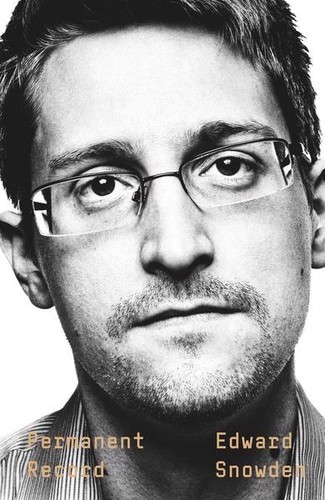
Permanent Record
by Edward Snowden
★ Top 25 book of 2019 · #24 on Best Books of 2019
Edward Snowden tells his own story, from a childhood spent growing up online to his work in intelligence agencies. He explains how he helped build a government mass surveillance system and what drove him to expose it in 2013.
Best for: Readers interested in privacy, surveillance and a whistleblower's personal account of the digital age
Permanent Record is #24 on BookWard's Best Books of 2019, out of 83 2019 books that cleared our data bar.
What Permanent Record is about
In 2013, at twenty-nine, Edward Snowden broke with the American intelligence world and exposed a secret effort by the US government to gather every phone call, text message and email. The result, he explained, would be mass surveillance able to look into the private lives of everyone on earth. Six years later, he tells for the first time how he helped build that system and why he chose to reveal it.
The memoir begins with his childhood in the suburbs around Washington, where he grew up online, and follows him through his postings with the CIA and NSA. It becomes the account of a young man who turned from spy to whistleblower, and then, in exile, to something like the conscience of the Internet. Readers who want to understand how digital privacy is shaped, who holds power over it, and what one person gave up to speak out will find an earnest, urgent and personal answer here.
Permanent Record on the Best Books of 2019
Permanent Record came out in 2019. Of the 83 books first published in 2019 that met BookWard's data bar, it ranks #24 on our Best Books of 2019 list.
Why it made the list: 307 readers have shelved it on Open Library; readers rate it 4.5 out of 5 (56 ratings). The list ranks each year’s books on how many readers have picked them up, how highly readers rate them, and how many are reading them right now.
It earns Reader favorite.
Nearby on the 2019 list
- Anxious People Fredrik Backman, #22
- The House in the Cerulean Sea T. J. Klune, #23
See all Best Books of 2019 Best books by year
More years: Best Books of 2018 Best Books of 2020.
The numbers behind it
- Readers: 214 want to read it, 11 are reading it now and 82 have read it, according to Open Library.
- Ratings: 4.5 out of 5 from 56 Open Library ratings.
| Signal | This book (0 to 100) | Weight |
|---|---|---|
| Reach | 53 | 55% |
| Reader love | 100 | 25% |
| Being read right now | 58 | 20% |
Questions about Permanent Record
When was Permanent Record published?
Permanent Record by Edward Snowden was first published in 2019.
Was Permanent Record one of the best books of 2019?
Permanent Record is #24 on BookWard's Best Books of 2019, out of 83 2019 books that cleared our data bar. 307 readers have shelved it on Open Library; readers rate it 4.5 out of 5 (56 ratings).
Why is Permanent Record on the Best Books of 2019 list?
307 readers have shelved it on Open Library; readers rate it 4.5 out of 5 (56 ratings).
More of the best books of 2019
- Red, White & Royal Blue Casey McQuiston, #1
- A Good Girl's Guide to Murder Holly Jackson, #2
- Heartstopper, Volume 2 Alice Oseman, #3
- Guts Raina Telgemeier, #4
- The Silent Patient Alex Michaelides, #5
- Into the Pit (Five Nights at Freddy’s Scott Cawthon, #6
See the full Best Books of 2019, the Top 100, or new books on Rising.
How we know
This page uses public data: Open Library reader counts and ratings, and Wikipedia page views for recent years. The description is paraphrased from real source text. Rankings reflect reading interest, not quality or sales, and can be affected by data gaps. Lists update monthly.
Suits mature teens and adults interested in technology, politics, and civil liberties.
Depends on the edition you pick.
A whistleblower's memoir that explains the machine he helped build. 51% taste match
 BookWard’s take
A whistleblower's memoir that explains the machine he helped build
Permanent Record is Edward Snowden's account of growing up online, working inside the intelligence world, and deciding to expose mass surveillance. It leans toward the personal rather than the detached: this is one man's story, told in his own voice, and that voice is distinctive. The life and the argument about privacy are braided together, so neither the story nor the ideas take over. It asks a moderate amount of the reader, though the technical ideas are explained outright rather than shown through scene, which is not the way I tend to like to be taught. The rigor is respectable but not academic, because a memoir asks you to trust its narrator. A strong pick for anyone curious how the surveillance system worked from the inside.
A full-length memoir that covers a childhood and a career, longer than BookWard likes to commit to.
It moves steadily through childhood and career, slowing where technical explanation takes over.
Few memoirs come from someone who helped build the thing they later exposed.
The writing is clear and conversational rather than ornate.
The events matter mainly through what they reveal about his choices and conscience.
It balances alarm at what was built with faith that people can still push back.
A broadly chronological life story with a conventional memoir shape.
The tone is serious, with only occasional lightness.
The subject is grim but handled without graphic or gratuitous detail.
Feeling is present in his account but kept under measured control.
See all 50 dialsEvery position, side by side with this book
Where it lines up
- Authorial voiceBookWard 9 · book 8
- PaceBookWard 8 · book 6
- OriginalityBookWard 9 · book 7
Where it pulls apart
- LengthBookWard 1 · book 6
- OpeningBookWard 10 · book 6
- Familiar tropesBookWard 10 · book 6
A full-length memoir that covers a childhood and a career, longer than BookWard likes to commit to.
It opens on a life and a decision that invite curiosity, though not with a single jolt.
Whistleblower stories are well known, but the insider detail about how surveillance was built keeps it from feeling stock.
The account of how the system worked and why he acted is laid out in a clear, followable sequence.
It moves steadily through childhood and career, slowing where technical explanation takes over.
Few memoirs come from someone who helped build the thing they later exposed.
It is built around one person's motives and growth, drawn from the inside rather than as a type.
The story arrives at his exile and a settled account of why he acted, rather than leaving it hanging.
Personal and earnest in places, but grounded in events and reasoning more than feeling.
The revelations carry weight because they are real, not because the book reaches for effect.
It rests on firsthand experience and clear explanation, though a memoir cannot match a documented study.
Written in a first-person voice that is unmistakably his own.
The life story and the argument about privacy are woven together almost evenly.
Technical and political concepts are often explained directly, which cuts against BookWard's taste for showing.
Momentum mostly holds, though the technical stretches can slow the middle.
The writing is clear and conversational rather than ornate.
The events matter mainly through what they reveal about his choices and conscience.
It balances alarm at what was built with faith that people can still push back.
A broadly chronological life story with a conventional memoir shape.
The tone is serious, with only occasional lightness.
Accessible overall, but the technical and policy material asks for some attention.
Everything is seen through the author's single perspective.
The narrative follows his life in order, from childhood to exile.
Entirely grounded in real events and real institutions.
The focus stays on the author, with a modest supporting cast around him.
A personal story with global stakes, since the subject touches everyone's communications.
It balances his reasoning and conscience with the events and workplaces he moved through.
Personal relationships appear in the background but are not the point.
The intelligence world is unfamiliar territory to most readers.
It covers the digital age and events from the 2010s, close to the present.
Tied to specific events, but the privacy questions it raises will outlast them.
He tells his own story as he understands it, a plain first-person account.
The book argues a clear position, though the ethics of leaking are left for the reader to weigh.
Settings and workplaces are described enough to place you without lingering.
It reads as a life story, not a detached analysis.
A first-person memoir from start to finish.
A standalone book.
The reveals are about how the system worked, not plot turns.
It pushes readers to question assumptions about privacy and government power.
The subject is grim but handled without graphic or gratuitous detail.
Feeling is present in his account but kept under measured control.
Any humor is understated and dry.
Violence is not a feature of the book.
Sexual content is not a feature of the book.
Government power, privacy and dissent are the subject itself.
The language is plain, with some technical vocabulary.
He argues for his position and makes no pretense of neutrality.
It reckons with the past but is concerned with where surveillance and freedom are heading.
Rooted in a belief that principle and public knowledge matter.
Review written by BookWard, dial version 1, November 2026.
Who is Permanent Record right for?
Suits mature teens and adults interested in technology, politics, and civil liberties. It deals with government secrecy and national security but is free of graphic content.
Accessible overall, but the technical and policy material asks for some attention.
The subject is grim but handled without graphic or gratuitous detail.
Feeling is present in his account but kept under measured control.
Violence is not a feature of the book.
Book CompanionPermanent Record: ideas, characters, themes
A man who helped build a system of mass surveillance explains why he turned against it and what it cost him.
- A childhood online. The book traces how growing up connected to the internet shaped his view of technology and privacy.
- Working inside intelligence. It describes his postings within US intelligence agencies and his role in building the systems he later exposed.
- The decision to speak. The memoir explains his motives for breaking with the establishment in 2013.
- What mass surveillance means. It lays out the ability to collect phone calls, texts and emails on a sweeping scale.
- Life after exile. The story follows him as he becomes a public figure living outside his country.
Characters
Edward Snowden
Author and narrator
A bright young man who grew up online and became a spy, a whistleblower, and an exile.
Themes
The idea that people's private lives deserve protection from state intrusion.
The pull between loyalty to an institution and obligation to the public.
How digital tools can extend the reach of governments.
The personal cost of breaking with one's country.
The case for the public knowing what is done in its name.
Discussion questions
- Do you think the author was right to expose the surveillance system, and why?
- How did growing up online shape his outlook?
- Where does privacy end and security begin?
- Does knowing he helped build the system change how you weigh his motives?
- What should ordinary people do about surveillance they cannot see?
Personalize your Book Companion
This is the general edition. In BookWard, the Companion is written for you: your reading profile, your notes, and spoiler-safe to the page you are on.
Buy, listen or borrow Permanent Record
Each link opens a search for this book on that store, in a new tab.
Read on a device
Borrow
Reviews and community
If you liked Permanent Record
A girl's memoir of Swat, the Taliban, and a school bus
How to Win an Information WarPeter PomerantsevA wartime propagandist's story, read against Ukraine's information war
Omnivore's Dilemma. a Natural History of Four MealsMichael PollanFour meals, three food chains, and a sharp reporter's appetite
Invisible WomenCaroline Criado PerezGender data gaps, argued with evidence and some real heat
Find your own best books
Add what you have read, rate it, and BookWard will recommend what to read next.
Free to start. No credit card needed.