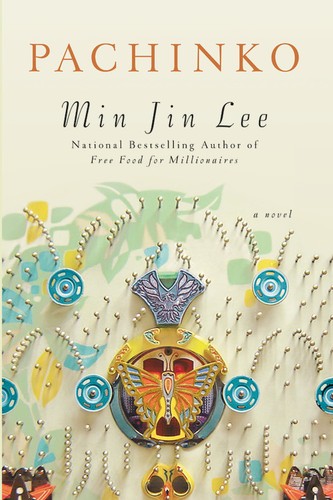
Pachinko
by Min Jin Lee
★ Top 25 book of 2017 · #17 on Best Books of 2017
Beginning in early 1900s Korea, Sunja rejects a wealthy married lover and accepts a minister's proposal, moving to Japan. Her choice launches a generational saga of love, sacrifice, ambition and loyalty.
Best for: Readers who enjoy sweeping multigenerational family sagas with strong, complex characters
Pachinko is #17 on BookWard's Best Books of 2017, out of 73 2017 books that cleared our data bar.
What Pachinko is about
Pachinko follows one Korean family across much of the twentieth century, beginning in 1883 in the fishing village of Yeongdo. Hoonie, born with a cleft lip and a club foot, marries Yangjin, and in the mid-1910s they have a daughter, Sunja. At sixteen, Sunja becomes pregnant by a wealthy fishbroker, only to learn he is already married. She refuses to become his mistress and instead marries a sickly Christian minister, who takes her to Osaka to live with his brother and sister-in-law.
There she discovers how Koreans are treated in Japan: crowded into a small ghetto and offered only the lowest jobs. From that point the novel traces what racism and discrimination ask of a family, and what each generation gives up to keep it together. The tone is sweeping but sober, and always empathetic. It will appeal to readers who enjoy long family sagas, historical fiction, and stories about immigration and belonging.
Pachinko on the Best Books of 2017
Pachinko came out in 2017. Of the 73 books first published in 2017 that met BookWard's data bar, it ranks #17 on our Best Books of 2017 list.
Why it made the list: 486 readers have shelved it on Open Library; readers rate it 4 out of 5 (25 ratings); 29 are reading it right now. The list ranks each year’s books on how many readers have picked them up, how highly readers rate them, and how many are reading them right now.
Nearby on the 2017 list
- Dream Psychology Sigmund Freud, #15
- If We Were Villains M. L. Rio, #16
- Origin Dan Brown, #18
- Make Your Bed William H. McRaven, #19
See all Best Books of 2017 Best books by year
More years: Best Books of 2016 Best Books of 2018.
The numbers behind it
- Readers: 409 want to read it, 29 are reading it now and 48 have read it, according to Open Library.
- Ratings: 4 out of 5 from 25 Open Library ratings.
| Signal | This book (0 to 100) | Weight |
|---|---|---|
| Reach | 75 | 55% |
| Reader love | 48 | 25% |
| Being read right now | 85 | 20% |
Questions about Pachinko
When was Pachinko published?
Pachinko by Min Jin Lee was first published in 2017.
Was Pachinko one of the best books of 2017?
Pachinko is #17 on BookWard's Best Books of 2017, out of 73 2017 books that cleared our data bar. 486 readers have shelved it on Open Library; readers rate it 4 out of 5 (25 ratings); 29 are reading it right now.
Why is Pachinko on the Best Books of 2017 list?
486 readers have shelved it on Open Library; readers rate it 4 out of 5 (25 ratings); 29 are reading it right now.
More of the best books of 2017
- The Hate U Give Angie Thomas, #1
- The Seven Husbands of Evelyn Hugo Taylor Jenkins Reid, #2
- A Court of Wings and Ruin Sarah J. Maas, #3
- One of Us Is Lying Karen M. McManus, #4
- Why We Sleep Matthew P. Walker, #5
- The Dark Prophecy Rick Riordan, #6
See the full Best Books of 2017, the Top 100, or new books on Rising.
How we know
This page uses public data: Open Library reader counts and ratings, and Wikipedia page views for recent years. The description is paraphrased from real source text. Rankings reflect reading interest, not quality or sales, and can be affected by data gaps. Lists update monthly.
Best suited to mature teens and adults comfortable with a long, serious novel.
Depends on the edition you pick.
Four generations of a Korean family in Japan, told with patience. 59% taste match
 BookWard’s take
Four generations of a Korean family in Japan, told with patience
Pachinko opens in a Korean fishing village in 1883 and follows one family across the century that follows, into Japan and through its discrimination. It is a long, sustained saga on an epic scale, and the length is the main thing to weigh before starting. The payoff is the depth of its characters: Sunja and her descendants are drawn in full, with real stakes in every generation. The sentiment is restrained, and the darkness is earned rather than staged for shock. The viewpoints widen as the family grows, and the ending resolves the arcs the book opens. The prose is plain and clear, and the history arrives through scenes rather than lectures. This is a big, serious novel that mostly justifies its size, and a rewarding one if you have the time.
A multigenerational epic over a century; it is long and wide, well past the tight end BookWard prefers.
The story moves across decades at a measured, deliberate speed rather than racing, slower than BookWard likes.
The subject, Koreans in Japan across generations, is distinctive even though the saga form is traditional.
Plain, clear sentences that favor clarity over ornament, a little plainer than BookWard's middle position.
Events matter, but what holds the book together is the family and how each person is shaped.
Hardship and prejudice weigh heavily, though endurance and loyalty give it a measure of light.
Three sequential books move forward through the family; it is a conventional saga form.
A serious, weighty novel with very little comic relief.
Discrimination, poverty and loss run through it, but it never revels in cruelty.
Sacrifice and endurance carry real feeling, expressed with restraint rather than melodrama.
See all 50 dialsEvery position, side by side with this book
Where it lines up
- Story or ideasBookWard 3 · book 3
- Character depthBookWard 8 · book 9
- EndingBookWard 8 · book 7
Where it pulls apart
- LengthBookWard 1 · book 9
- OpeningBookWard 10 · book 6
- Familiar tropesBookWard 10 · book 6
A multigenerational epic over a century; it is long and wide, well past the tight end BookWard prefers.
It opens with a fisherman's family history rather than a jolt, building interest steadily instead of grabbing at once.
Immigrant sagas have familiar shapes, but this one follows a specific, less-told Korean experience in Japan.
Characters' choices follow from their circumstances and the historical pressures on them, which keeps events believable.
The story moves across decades at a measured, deliberate speed rather than racing, slower than BookWard likes.
The subject, Koreans in Japan across generations, is distinctive even though the saga form is traditional.
Sunja and her descendants are drawn with real interior life, which is the book's strongest suit for BookWard.
The three-book structure closes with Sunja's reflection on her life, giving the family story a sense of completion.
The emotion comes through hardship and sacrifice rather than sweetness, which fits BookWard's restrained taste.
The hardships come from history and circumstance, so the darkness feels earned rather than used for effect.
This is a novel, so the nonfiction rigor dial does not apply.
A calm, even narration with a clear authorial presence, though it is more steady than flashy.
Story leads here; the themes of belonging and discrimination come through events and people.
History arrives mostly through what the characters live through, not through explanation, which suits BookWard.
A long book with some stretches that run quieter, though the family's stakes keep it moving.
Plain, clear sentences that favor clarity over ornament, a little plainer than BookWard's middle position.
Events matter, but what holds the book together is the family and how each person is shaped.
Hardship and prejudice weigh heavily, though endurance and loyalty give it a measure of light.
Three sequential books move forward through the family; it is a conventional saga form.
A serious, weighty novel with very little comic relief.
Long and wide in scope, but the language is accessible and the story easy to follow.
The narrative moves among many family members across generations, widening as the family grows.
It moves mostly forward through the decades, from 1883 onward, with a clear chronological spine.
A grounded historical novel with no fantasy elements.
A sprawling family across four generations, plus lodgers, rivals and acquaintances, makes a large cast.
A century of family history set against annexation, migration and war gives it an epic reach.
It balances characters' inner lives with the outward events of history that shape them.
Conversation carries a fair share of the scenes without dominating the narration.
Love and marriage drive key choices, but the book is about family and survival more than romance.
Korean villages and Japanese cities of the last century will be unfamiliar territory for many readers.
Set from the 1880s through the twentieth century, so firmly in the past.
Questions of belonging, prejudice and family endure well beyond its setting.
A steady, trustworthy narrator who tells events straight, with no unreliability.
Characters make hard, compromised choices, and the book resists neat verdicts.
Places and daily life are rendered with enough detail to feel real, without lavish excess.
This is fiction, so the nonfiction style dial does not apply.
This is a novel, so the personal versus detached perspective dial does not apply.
A self-contained novel that tells its full story in one volume.
Family secrets and reversals arise along the way, though the book is not built around surprises.
It asks readers to sit with prejudice and loss, so it leans challenging over comforting.
Discrimination, poverty and loss run through it, but it never revels in cruelty.
Sacrifice and endurance carry real feeling, expressed with restraint rather than melodrama.
There is little humor in the book, so this dial does not apply.
Some violence occurs, but it is not dwelled on.
Sex is touched on lightly and is not a feature of the book.
Colonization and discrimination shape the story, but it works through lives rather than argument.
The language is direct and readable throughout, with little dense or dialect-heavy writing.
The narration tends to stay neutral, letting events and characters speak for themselves.
It looks back across a century to understand how a family came to be where it is.
It sits in the middle, honest about harshness while granting the worth of loyalty and endurance.
Review written by BookWard, dial version 1, November 2026.
Who is Pachinko right for?
Best suited to mature teens and adults comfortable with a long, serious novel. It deals with discrimination, poverty, an attempted sexual assault and loss, so sensitive readers may want to be prepared.
Long and wide in scope, but the language is accessible and the story easy to follow.
Discrimination, poverty and loss run through it, but it never revels in cruelty.
Sacrifice and endurance carry real feeling, expressed with restraint rather than melodrama.
Some violence occurs, but it is not dwelled on.
Book CompanionPachinko: ideas, characters, themes
Across four generations, a Korean family in Japan struggles to find belonging and dignity against discrimination.
- A family saga across a century. The story begins in a Korean fishing village in 1883 and follows one family forward through the decades that follow.
- Sunja's choice. Teenaged Sunja, pregnant by a married man, refuses to be bought and accepts a minister's offer of marriage.
- Migration to Japan. Her marriage takes her to Japan, where the family faces racism and stereotyping as outsiders.
- Three books, three phases. The novel divides into Hometown, Motherland and Pachinko, each opening with a quotation from a different writer.
- Ensemble over single hero. Though Sunja anchors the story, the book follows an ensemble of family members and their separate struggles.
Characters
Sunja
The central daughter
Raised in the Yeongdo lodging house, she makes the choice that sets the family saga in motion.
Hoonie
Sunja's father
Born with a cleft lip and club foot and deemed unmarriageable, he marries Yangjin and takes over the lodging house.
Yangjin
Sunja's mother
A farmer's daughter who lost everything in the colonial conquest, she raises Sunja after Hoonie dies.
Koh Hansu
The wealthy fishbroker
He pursues sixteen-year-old Sunja and earns her trust by rescuing her from an assault.
Noa
Sunja's son
His birth ends the first book, and his new beginnings in Nagano open the third.
Themes
What it takes to feel at home in a country that treats you as an outsider.
The daily and lasting cost of racism and stereotyping on a family over generations.
How people give up their own wants to protect and sustain those they love.
How annexation and occupation reshape ordinary lives long after the events.
How a person defines themselves between inherited roots and an adopted home.
Discussion questions
- Why does Sunja refuse to be bought, and what does that choice cost her?
- How does the family's treatment in Japan change from one generation to the next?
- What does the book gain by following an ensemble rather than one protagonist?
- Why might the author open each of the three books with a quotation from a different writer?
- Which character's choices did you find hardest to judge, and why?
Personalize your Book Companion
This is the general edition. In BookWard, the Companion is written for you: your reading profile, your notes, and spoiler-safe to the page you are on.
Buy, listen or borrow Pachinko
Each link opens a search for this book on that store, in a new tab.
Read on a device
Borrow
Reviews and community
If you liked Pachinko
A mathematician's genius and illness, told with a reporter's patience
A Fine BalanceRohinton MistryFour lives, one flat, and the Emergency pressing in
BuckeyePatrick RyanA small Ohio town, two families, and one buried secret
FlashlightSusan ChoiA family wrecked by one night on a breakwater
Find your own best books
Add what you have read, rate it, and BookWard will recommend what to read next.
Free to start. No credit card needed.