Suits adult readers who enjoy literary historical fiction.
464 pages, about 7.5 to 11 hours.
A small Ohio town, two families, and one buried secret. 57% taste match
The story
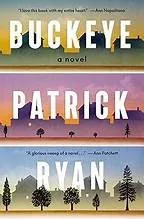
Buckeye is a work of historical fiction by Patrick Ryan, first published in 2025. It is set in Bonhomie, Ohio, and follows two local families, the Jenkinses and the Salts, across several decades of the twentieth century. Cal Jenkins was born in 1920 with one leg shorter than the other, a condition that kept him out of military service. His wife, Becky, is a seer who contacts the dead on behalf of grieving families. Margaret Salt is married to Felix, who serves aboard a Navy cargo ship during the war.
The story begins around the end of the fighting in Europe, when Cal and Margaret share a brief encounter that links the two households. From there the narrative moves into the years of postwar growth in America, tracing how that event reaches the next generation, including Skip Jenkins and Tom Salt. Family, war, and the long reach of the past run through this literary novel of about 464 pages, which is aimed at adult readers.
Cal Jenkins was born in the spring of 1920 with one leg shorter than the other.
Characters
Cal JenkinsBecky JenkinsFelix SaltMargaret SaltSkip JenkinsTom Salt
Themes
HistoricalWarFamilyAdult
By the numbers
- The median edition runs 464 pages. Counting about 275 words a page and an adult reading pace of 250 words a minute, that is about 8.5 hours of reading.
- On reader demand it ranks in the top 46% of the recent releases books in our catalog (1,627 of them).
- Libraries shelve it under Library of Congress class PS-3618.00000000.Y336 B83.
 BookWard’s take
A small Ohio town, two families, and one buried secret
Buckeye is a multigenerational historical novel set in Bonhomie, Ohio, beginning around the end of the war in Europe and running through the postwar decades. At 464 pages it is a long book, and I tend to favor shorter, tighter ones. The premise rests on a single encounter between Cal Jenkins and Margaret Salt, which suggests the opening should have a clear point of attack, and the story seems to turn toward character as the consequences reach the next generation. Becky Jenkins, a seer who contacts the dead, brings a touch of the fantastical to an otherwise grounded setting, which makes the novel's relationship to familiar family-saga conventions more interesting. The big question is whether a long family saga can keep its momentum across several decades without sagging in the middle.
At 464 pages it is a long book, well past BookWard's love of the short and tight.
A multigenerational span suggests a measured pace, a little slower than BookWard's brisk preference.
The seer detail sets it apart, but the postwar family saga frame is well-worn territory.
Literary historical fiction tends to polished, mid-ornate prose rather than plain or showy.
The secret drives events, but its effect on the next generation makes this character-led.
Postwar rebuilding and the repair of family ties lean modestly hopeful against the grief.
The jump from the war years to the next generation gives it a more shifting shape than a straight line.
The subject of war, loss and secrets keeps the tone serious.
War, death and a hidden secret bring weight without making the book bleak.
Grief, longing and family consequence should land with real feeling.
See all 50 dialsEvery position, side by side with this book
Where it lines up
- Character depthBookWard 8 · book 8
- Story or ideasBookWard 3 · book 3
- EndingBookWard 8 · book 7
Where it pulls apart
- LengthBookWard 1 · book 7
- Familiar tropesBookWard 10 · book 6
- OpeningBookWard 10 · book 7
At 464 pages it is a long book, well past BookWard's love of the short and tight.
A single wartime encounter sets the story moving early, which suits BookWard's taste for an immediate pull.
A small-town family saga with a secret is familiar ground, though the seer adds an unusual touch.
A secret rippling through two families across decades invites cause and effect that should hold together.
A multigenerational span suggests a measured pace, a little slower than BookWard's brisk preference.
The seer detail sets it apart, but the postwar family saga frame is well-worn territory.
Following two families across generations gives room for deeply drawn people, which BookWard values.
Grief, family and the dead invite emotion, so the restraint BookWard likes is not guaranteed.
The darkness here comes from consequences of a choice, not from shock for its own sake.
This is fiction, so rigor does not apply.
A literary novel with a distinctive premise suggests a recognizable authorial hand.
It is firmly story-led, built on a plot of secrets and relationships rather than an argument.
Family history across decades leans on scene and event rather than outright explanation.
Spanning several decades over 464 pages, the middle is the risk, though the secret gives it a thread.
Literary historical fiction tends to polished, mid-ornate prose rather than plain or showy.
The secret drives events, but its effect on the next generation makes this character-led.
Postwar rebuilding and the repair of family ties lean modestly hopeful against the grief.
The jump from the war years to the next generation gives it a more shifting shape than a straight line.
The subject of war, loss and secrets keeps the tone serious.
Readable literary fiction with a clear premise, though the time span asks some attention.
Two families across generations means several perspectives carry the story.
It begins at the end of the war and moves into later decades, so time shifts.
Becky's gift for conjuring the dead adds one fantastical element to a grounded world.
Two families across generations give a mid-sized cast of linked characters.
The setting is a single town, but it is tied to several decades of national change.
A family drama of secrets and relationships keeps the focus on inner life.
Domestic and community scenes between family members suggest a healthy share of dialogue.
A single encounter between Cal and Margaret is the hinge of the story, but not its whole subject.
Small-town Ohio in the mid-twentieth century is a recognizable setting.
Set from 1945 onward, it sits firmly in the past rather than the present.
Themes of family, secrets and grief last, though the period setting is specific.
A family saga of this kind suggests a straightforward, trustworthy narration.
A secret affair and its fallout carry moral weight without a simple verdict.
Period and place in a literary historical novel get fairly full description.
This is fiction, so the nonfiction style dial does not apply.
This is fiction, so the nonfiction perspective dial does not apply.
It is presented as a standalone novel.
The secret and its later reverberations promise revelations along the way.
Grief and betrayal ask something of the reader, but it is not a punishing read.
War, death and a hidden secret bring weight without making the book bleak.
Grief, longing and family consequence should land with real feeling.
Humor is not a focus here, and what appears is dry rather than broad.
The central encounter is part of the plot, but the book is not centered on sexual content.
Postwar America forms the backdrop rather than a political argument.
A multigenerational story tends toward neutral narration rather than opinionated commentary.
The story looks back on the past and its long reach into later lives.
Rebuilding after war and repairing family ties sit between cynicism and idealism.
Review written by BookWard, dial version 1, November 2026.
Who is Buckeye right for?
Suits adult readers who enjoy literary historical fiction. It deals with war, grief, and an affair and its fallout.
Readable literary fiction with a clear premise, though the time span asks some attention.
War, death and a hidden secret bring weight without making the book bleak.
Grief, longing and family consequence should land with real feeling.
Book CompanionBuckeye: ideas, characters, themes
A single wartime encounter between Cal Jenkins and Margaret Salt binds two Ohio families and echoes through the next generation.
- A town and its families. The story is rooted in Bonhomie, Ohio, and the lives of the Jenkins and Salt households.
- The encounter. A brief moment near the end of the fighting in Europe links Cal and Margaret.
- Cal's wound. Cal was born with one leg shorter than the other, which kept him out of military service.
- Becky's gift. Cal's wife is a seer who contacts the dead on behalf of grieving families.
- The next generation. The secret reaches Skip Jenkins and Tom Salt in the postwar years.
Characters
Cal Jenkins
Husband of Becky
Born in 1920 with one leg shorter than the other, he was kept out of military service.
Becky Jenkins
Cal's wife
A seer who contacts the dead for grieving families.
Margaret Salt
Wife of Felix
One half of the encounter that links the two families.
Felix Salt
Margaret's husband
Serves aboard a Navy cargo ship during the war.
Skip Jenkins
Next generation
A member of the younger Jenkins generation touched by the old secret.
Themes
What is hidden does not stay buried in a small town.
The effects of the fighting extend beyond the battlefield and into later lives.
Bonds and obligations shape two households across decades.
Becky's gift ties the living to those they have lost.
The next generation carries the consequences of choices it did not make.
Discussion questions
- How does Cal's inability to serve shape the way he sees himself?
- What does Becky's gift add to a story about secrets and loss?
- How does the war's end set the stage for the central encounter?
- How do the consequences change as they pass to the next generation?
- Is a small town a good place to keep a secret, or the worst?
Personalize your Book Companion
This is the general edition. In BookWard, the Companion is written for you: your reading profile, your notes, and spoiler-safe to the page you are on.
Buy, listen or borrow Buckeye
Each link opens a search for this book on that store, in a new tab.
Read on a device
Borrow
Reviews and community
If you liked Buckeye
Stephen King's elegy for the sixties and the generation that blew it
Tomorrow, and Tomorrow, and TomorrowGabrielle ZevinA thirty-year friendship told through the games two people build
The Briar ClubKate QuinnFive women, one boardinghouse, and Washington's Red Scare closing in
The Joy Luck ClubAmy TanFour mothers, four daughters, and the stories between them
Sources: Open Library.
Track Buckeye and find your next favorite
Add it to your shelf, rate what you have read, and BookWard will recommend what fits you.
Free to start. No credit card needed.