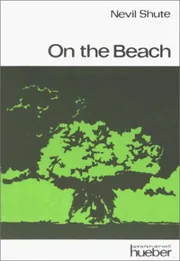
Suited to mature teens and adults, as it is a thoughtful, steady read rather than a graphic one.
292 pages, about 4.5 to 7 hours.
A quiet, devastating wait for the end in Melbourne. 53% taste match
The story
On the Beach is a science fiction novel by Nevil Shute, first published in 1957. Shute was a British author who had moved to Australia, and the book is set there in 1963, some years after a nuclear war in the Northern Hemisphere. It belongs to the apocalyptic strand of the genre and sits alongside other fiction concerned with atomic warfare.
The story centers on a varied group of people living in Melbourne as deadly radiation drifts steadily south toward them. Among them is Lieutenant Commander Peter Holmes of the Royal Australian Navy, whose morning opens the book. With the end of life in the region approaching, each character responds to the prospect of death in a different way, and the narrative follows those individual choices rather than a single shared reaction. The United States Navy also figures in the background of the novel. The edition runs to a median of about 292 pages, and the book has appeared in around 120 editions.
Lieutenant commander peter holmes of the royal australian navy woke soon after dawn.
Setting
Australia
Period
1963
Themes
Atomic BombLiteratureNuclear warfareRomanUnited StatesUnited States. NavyRock music, discography
- Want to read 176
- Reading now 10
- Read 20
Most people shelving it are saving it for later.
Of 206 readers who put it on a shelf, 85% want to read it, 5% are reading it now, 10% have finished it and 0% stopped before the end.
By the numbers
- The median edition runs 292 pages. Counting about 275 words a page and an adult reading pace of 250 words a minute, that is about 5.4 hours of reading.
- Open Library tracks 120 editions from 58 publishers, the earliest dated 1957 and the latest 2022, across 5 languages.
- On reader demand it ranks in the top 8% of the classic books in our catalog (8,749 of them).
- Libraries shelve it under Dewey 823.912 and Library of Congress class PR-6027.00000000 O54 O6.
 BookWard’s take
A quiet, devastating wait for the end in Melbourne
Shute does something bold with a nuclear apocalypse: nothing explodes. The war is over before page one, and the book watches ordinary Melburnians decide how to spend their remaining time. That restraint is the point. The sentiment is held in check, with plain scenes left to carry the grief. The cast is varied, led by naval officer Peter Holmes, and the book follows each person's different response to death. The premise is built carefully, and the radiation's slow southward drift gives the story its clock. The prose is deliberately plain, and the ending is fully resolved, which is exactly why it lands so hard. It cares more about ideas than plot, and it asks you to sit with dread rather than chase thrills.
At 292 pages it is compact and holds its theme without padding, which suits BookWard's taste for the short and tight.
The tempo is measured and deliberate, matching a slow wait for the end, which runs slower than BookWard likes.
Setting the end of the world in Melbourne among everyday routines is a distinctive angle, even if the nuclear theme is familiar.
The writing is plain and clear, free of ornament, which sits below BookWard's slightly richer preference.
Events follow from how each person chooses to spend their remaining time, so character steers the book more than plot.
The outlook is bleak by design, with only small human warmth set against an unavoidable end.
The telling is conventional and linear, with no formal experiments getting in the way.
The book is serious throughout, with only faint, dry flashes of lightness.
The subject is the death of everyone, though the tone stays calm rather than graphic.
The feeling builds quietly but powerfully, so the impact is strong even when the surface is calm.
See all 50 dialsEvery position, side by side with this book
Where it lines up
- SentimentBookWard 8 · book 8
- Shock for effectBookWard 9 · book 9
- Character depthBookWard 8 · book 7
Where it pulls apart
- Familiar tropesBookWard 10 · book 4
- OpeningBookWard 10 · book 6
- Rigor (nonfiction)BookWard 9 · book 3
At 292 pages it is compact and holds its theme without padding, which suits BookWard's taste for the short and tight.
It opens on an ordinary dawn rather than a jolt, so the grip builds gradually instead of arriving at once.
Apocalypse stories lean on set pieces, but this one drops the spectacle for domestic calm, though some genre conventions remain.
The premise is laid out carefully, with a clear mechanism for the approaching radiation and consistent consequences for every choice.
The tempo is measured and deliberate, matching a slow wait for the end, which runs slower than BookWard likes.
Setting the end of the world in Melbourne among everyday routines is a distinctive angle, even if the nuclear theme is familiar.
Each person in the cast reacts to death differently, and the book follows those separate choices with care.
The story drives toward a firm, unavoidable conclusion and does not hedge, which fits BookWard's taste for resolution.
Grief is handled through understatement and routine, never melodrama, so it stays restrained and BookWard approves.
The darkness is the premise itself, earned by the story's logic rather than added for effect.
This is fiction, so rigor as nonfiction measures it does not weigh much here.
Shute's tone is steady and unshowy, with a recognizable calm, though it is less flamboyant than the most distinctive stylists.
It is built around a question of how people face certain death, with the story serving that idea fairly evenly.
The situation is mostly conveyed through conversation and routine, with a modest amount of explaining along the way.
The slow tempo is constant and purposeful, so the middle keeps its tension as the radiation draws nearer.
The writing is plain and clear, free of ornament, which sits below BookWard's slightly richer preference.
Events follow from how each person chooses to spend their remaining time, so character steers the book more than plot.
The outlook is bleak by design, with only small human warmth set against an unavoidable end.
The telling is conventional and linear, with no formal experiments getting in the way.
The book is serious throughout, with only faint, dry flashes of lightness.
The language is easy and direct, so it reads smoothly even as the subject weighs on you.
The story moves among a mixed group in Melbourne, giving it several perspectives without sprawling.
Events unfold in order as the deadline closes in, with no shifting between times.
It is firmly grounded, extrapolating from real nuclear fears rather than inventing the impossible.
A handful of central figures carry the story, with a modest supporting circle around them.
Though the stakes are global, the telling stays close to individuals and their daily lives.
Most of the weight sits in conversation, feeling and decision rather than action, so it leans inward.
Characters talk through their situation constantly, so conversation carries a large share of the book.
Relationships matter and shape some choices, but love is one thread among several rather than the center.
A 1963 Melbourne would feel somewhat unfamiliar, though its ordinary routines are easy to recognize.
It is set in the early 1960s and was written in 1957, so it reads as a period piece.
The central question of how to face the end still resonates, which gives it lasting power.
The narration is straightforward and trustworthy, simply reporting what these people do.
It raises hard questions about how to meet death but does not hand down tidy verdicts on its characters.
Setting is sketched economically, enough to place you without lingering on detail.
It stands alone as a complete novel.
The outcome is understood from the start, so there are few plot surprises, and the weight comes from how it plays out.
It offers no comfort and asks the reader to look directly at mortality and the cost of war.
The subject is the death of everyone, though the tone stays calm rather than graphic.
The feeling builds quietly but powerfully, so the impact is strong even when the surface is calm.
What humor exists is dry and understated, nothing broad.
The destruction happens offstage, so there is very little violence on the page.
Sexual content is minimal and discreet.
The war's origins and its human cost sit in the background, giving it a political edge without sermonizing.
The language is plain and accessible throughout.
The narration lets events speak for themselves, with only a faint moral undercurrent.
It looks back at what was lost and at the mistakes that brought the world here, more than it looks ahead.
The mood is sober and tinged with sadness, though acts of decency keep it from pure cynicism.
Review written by BookWard, dial version 1, November 2026.
Who is On the Beach right for?
Suited to mature teens and adults, as it is a thoughtful, steady read rather than a graphic one. It deals with death, despair and the end of humanity throughout, which can be heavy.
The language is easy and direct, so it reads smoothly even as the subject weighs on you.
The subject is the death of everyone, though the tone stays calm rather than graphic.
The feeling builds quietly but powerfully, so the impact is strong even when the surface is calm.
The destruction happens offstage, so there is very little violence on the page.
Book CompanionOn the Beach: ideas, characters, themes
When the end is certain and near, the book asks how a varied group of ordinary people choose to live out what remains.
- The setup. A nuclear war in the Northern Hemisphere has already happened, and deadly radiation is drifting south toward Australia.
- Melbourne as stage. The story is set in Melbourne in 1963, among people trying to keep life looking normal.
- Many reactions. Each character meets the prospect of death differently, and the narrative follows those separate choices.
- Quiet over spectacle. The war is in the past, so the drama comes from waiting rather than from explosions.
- Naval thread. Lieutenant Commander Peter Holmes of the Royal Australian Navy opens the book, and naval life, including the United States Navy, runs through the background.
Characters
Peter Holmes
Lieutenant Commander, Royal Australian Navy
The book opens with his morning, and he anchors the story's view of a society counting down its remaining time.
Themes
How people choose to meet a death they cannot avoid.
The cost of atomic weapons, shown through consequence rather than combat.
The different ways people cope, from carrying on as usual to confronting the end.
The dignity and poignancy of everyday routine when the future is gone.
Discussion questions
- Why might the author set the story after the war rather than during it?
- Which character's way of facing death feels most convincing to you, and why?
- How does the calm, plain tone change the weight of the subject?
- What does the Australian setting add to the feeling of waiting?
- Does the book argue against nuclear war, or simply show its result?
Personalize your Book Companion
This is the general edition. In BookWard, the Companion is written for you: your reading profile, your notes, and spoiler-safe to the page you are on.
Buy, listen or borrow On the Beach
Each link opens a search for this book on that store, in a new tab.
Read on a device
Borrow
Reviews and community
If you liked On the Beach
Two ridges, two faiths, and one young man holding the line
Burmese DaysGeorge OrwellOrwell's first novel: empire, rot, and one man's small cowardice
The Killer AngelsMichael ShaaraGettysburg through the eyes of the men who fought it
The Power and the GloryGraham GreeneA hunted, drinking priest and the faith he cannot shed
Sources: Open Library.
Track On the Beach and find your next favorite
Add it to your shelf, rate what you have read, and BookWard will recommend what fits you.
Free to start. No credit card needed.