It suits teens and adult fans of the Twilight series, and its tone is aimed at a young adult audience.
675 pages, about 10.5 to 15.5 hours.
Twilight again, told from inside Edward Cullen's head. 39% taste match
The story
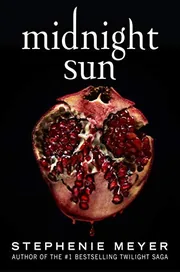
Midnight Sun is a young adult paranormal romance by Stephenie Meyer, first published in 2020. It is a companion novel to Twilight, which appeared in 2005, and it retells the events of that book from the point of view of Edward Cullen rather than Bella Swan, the narrator readers know from the series. Meyer had said Twilight was the only book in the series she planned to rewrite from Edward's perspective.
The story is set in Forks, Washington, with Phoenix, Arizona also part of its world. Edward's family, the Cullens, are vampires, and the cast includes Esme, Alice, Carlisle, Emmett, Rosalie and Jasper Hale, along with Bella's father Charlie Swan and schoolmates such as Mike Newton, Jessica Stanley and Tyler Crowley. The book runs to roughly 675 pages in its median edition and was released on August 4, 2020. Readers who want the vampire romance of Twilight told from the other side will find it here.
This was the time of day when I most wished I were able to sleep.
Characters
Edward CullenBella SwanEsme CullenAlice CullenJasper HaleCarlisle Cullen
Setting
ForksWashington (United States)PhoenixArizona (United States)
Themes
New York Times reviewedFantasyRomanceYoung AdultVampiresParanormalParanormal RomanceSupernatural
- Want to read 744
- Reading now 30
- Read 45
- Stopped 1
Most people shelving it are saving it for later.
Of 820 readers who put it on a shelf, 91% want to read it, 4% are reading it now, 5% have finished it and 0% stopped before the end.
By the numbers
- The median edition runs 675 pages. Counting about 275 words a page and an adult reading pace of 250 words a minute, that is about 12 hours of reading.
- Open Library tracks 11 editions from 7 publishers, the earliest dated 2020 and the latest 2022.
- On reader demand it ranks in the top 1% of the recent books in our catalog (6,647 of them).
- Libraries shelve it under Dewey 813.087381 and Library of Congress class PZ-0007.00000000.M5717515 M.
 BookWard’s take
Twilight again, told from inside Edward Cullen's head
Midnight Sun retells Twilight through Edward, and the choice of narrator is the whole proposition. At 675 pages it is long for a story readers already know, which is a real cost for anyone who prefers tight books. The familiar tropes are the point rather than a flaw: this is paranormal romance with a brooding vampire at its center, and both the tropes and the overall approach stay squarely traditional. What it does offer is depth of character, since Edward's inner life is now on the page, along with an intense emotional pitch. The ending is fixed by the original, so it resolves cleanly. Pacing is the open question for a retelling so full of inner monologue. If you loved Forks and the Cullens, this is a second visit with new access. If you want surprises, look elsewhere.
At 675 pages it is a long retelling of a story readers already know, well away from BookWard's preference for tight books.
Long stretches of internal reaction to events already known slow the momentum compared with BookWard's faster taste.
The new angle is the narrator; the events themselves are a retelling, so originality is modest.
The prose is clear and emotive without being ornate, aimed at easy reading.
The drive comes from Edward's feelings and conflicts about Bella rather than from external plotting.
Love and loyalty give the book warmth, though Edward's self-loathing and danger keep it from simply sunny.
It follows Twilight's straightforward sequence, with the twist being the narrator rather than the form.
The tone is earnest and intense, with only occasional lightness.
Vampire danger and bloodlust give it some edge, but the tone stays within young adult limits.
Longing, guilt and obsession drive an intense emotional register throughout.
See all 50 dialsEvery position, side by side with this book
Where it lines up
- EndingBookWard 8 · book 8
- Character depthBookWard 8 · book 7
- Story or ideasBookWard 3 · book 2
Where it pulls apart
- LengthBookWard 1 · book 9
- Familiar tropesBookWard 10 · book 2
- Internal logicBookWard 10 · book 5
At 675 pages it is a long retelling of a story readers already know, well away from BookWard's preference for tight books.
The premise of hearing Edward's thoughts gives an immediate pull, though the opening pace follows the original's quieter setup.
A brooding vampire and a human girl in a small town is the paranormal romance template, which BookWard tends to find too familiar.
The vampire rules carry over from Twilight, but a retelling built on mind-reading and desire leaves room for some looseness.
Long stretches of internal reaction to events already known slow the momentum compared with BookWard's faster taste.
The new angle is the narrator; the events themselves are a retelling, so originality is modest.
Moving inside Edward gives the book its main strength, a fuller picture of a character previously seen from outside.
The story follows Twilight's events, so its resolution is fixed and satisfyingly closed, which suits BookWard.
Yearning and devotion are written openly and intensely, the opposite of the restraint BookWard prefers.
Danger and menace appear as part of the vampire premise, mostly driven by the plot rather than darkness for its own sake.
This is fiction, so the rigor dial does not apply.
Edward's self-critical, intense narration has a recognizable character, even if the prose is not unusually distinctive.
This is a story-led romance built on relationships and events rather than an argument or idea.
Edward's inner commentary explains motives and reactions directly, more than BookWard's show-it-in-scene preference.
A retelling with a known path and heavy interior reflection can drift in the middle of its long run.
The prose is clear and emotive without being ornate, aimed at easy reading.
The drive comes from Edward's feelings and conflicts about Bella rather than from external plotting.
Love and loyalty give the book warmth, though Edward's self-loathing and danger keep it from simply sunny.
It follows Twilight's straightforward sequence, with the twist being the narrator rather than the form.
The tone is earnest and intense, with only occasional lightness.
Accessible young adult prose makes this an easy read, even at its length.
The whole novel stays inside Edward's head, a single viewpoint.
Events unfold in order, following the original's timeline.
Vampires, mind-reading and supernatural abilities are central to the world.
The Cullens, Charlie and the Forks schoolmates make a moderate cast, though Edward and Bella dominate.
The stakes are personal and family-sized, set in a small town.
Edward's thoughts, desires and self-argument are the main substance of the book.
Conversations with Bella and the Cullens carry much of the story and are reinforced by Edward's commentary.
The Edward and Bella relationship is the book's center and reason for being.
Forks and the vampire family are a recognizable, established setting rather than a new world.
It is set in a contemporary world and was published in 2020.
It depends heavily on readers' attachment to Twilight, tying its appeal to a particular fan moment.
Edward is sincere but filters Bella and events through his own obsession and self-judgment.
Edward wrestles with right and wrong, but the book's moral frame is fairly clear.
Edward's heightened senses give the settings and people vivid, sensory attention.
It is a companion to Twilight and belongs to a larger saga.
Readers of Twilight know the events, so the surprises are limited to Edward's perspective.
It is a comfort read for fans, with little to unsettle them.
Vampire danger and bloodlust give it some edge, but the tone stays within young adult limits.
Longing, guilt and obsession drive an intense emotional register throughout.
Light humor is mostly gentle and character-based rather than broad.
Peril and predatory instinct appear, though the book is not graphically violent.
Desire is present but handled within young adult conventions.
The story concerns relationships and family, with no political agenda.
The language is plain and conversational.
Edward's strong feelings and judgments color everything the narration reports.
The story revisits a past book rather than looking ahead.
Devotion and self-sacrifice give it an idealistic romantic streak.
Review written by BookWard, dial version 1, November 2026.
Who is Midnight Sun right for?
It suits teens and adult fans of the Twilight series, and its tone is aimed at a young adult audience. Themes include intense romantic obsession, predatory danger and mild sexual tension.
Accessible young adult prose makes this an easy read, even at its length.
Vampire danger and bloodlust give it some edge, but the tone stays within young adult limits.
Longing, guilt and obsession drive an intense emotional register throughout.
Peril and predatory instinct appear, though the book is not graphically violent.
Book CompanionMidnight Sun: ideas, characters, themes
Midnight Sun retells Twilight from Edward Cullen's point of view, revealing how he experiences meeting and wanting Bella Swan.
- A retelling, not a sequel. The events of Twilight are replayed, with the difference lying in whose mind we are inside.
- Edward as narrator. His thoughts, self-doubt and attention to Bella become the book's core.
- Setting in Forks. The small Washington town and its school remain the backdrop, with Phoenix in the wider world.
- The Cullen family. Esme, Carlisle, Alice, Jasper, Emmett and Rosalie appear more fully through Edward's perspective.
- Length and context. At about 675 pages and published in 2020, it arrives long after the 2005 original.
Characters
Edward Cullen
Narrator and vampire
The book's point-of-view character, drawn to Bella and wary of what he is.
Bella Swan
Edward's love interest
The human newcomer to Forks, seen here through Edward's eyes.
Alice Cullen
Edward's sister
A member of the Cullen family who is part of Edward's circle.
Carlisle Cullen
Edward's adoptive father
The head of the vampire family.
Charlie Swan
Bella's father
The Forks resident whose daughter has come to live with him.
Themes
Edward's intense, consuming attachment and how it shapes his choices.
His struggle to control his nature around the person he cares about.
How Edward sees himself as a vampire and whether he deserves happiness.
The bonds and rules that hold the Cullens together.
How the same events feel different from another person's mind.
Discussion questions
- Does hearing Edward's thoughts change how you see events you already knew?
- Is a retelling of this length justified, or does it stretch the story?
- How does Edward's self-criticism affect your view of him?
- What does the book gain or lose by staying in one viewpoint?
- How does the family around Edward shape his choices?
Personalize your Book Companion
This is the general edition. In BookWard, the Companion is written for you: your reading profile, your notes, and spoiler-safe to the page you are on.
Buy, listen or borrow Midnight Sun
Each link opens a search for this book on that store, in a new tab.
Read on a device
Borrow
Reviews and community
If you liked Midnight Sun
Third Twilight book: love triangle meets a vampire army
New MoonStephenie MeyerA heartbreak-heavy sequel that trades vampire romance for grief and wolves
TearsmithErin DoomA dark orphanage romance built on shared trauma and a made-up monster
Fallen (Fallen #1)Lauren KateA brooding boarding-school romance that leans hard on familiar YA tropes
Sources: Open Library.
Track Midnight Sun and find your next favorite
Add it to your shelf, rate what you have read, and BookWard will recommend what fits you.
Free to start. No credit card needed.