It suits toddlers and early preschoolers, who can follow the pattern and move along with an adult reading aloud.
32 pages, about 0.5 to 0.5 hours.
A tiny exercise class where every animal asks you to join in. 50% taste match
About the book
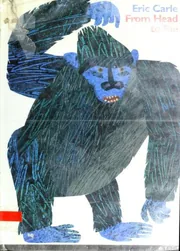
From Head to Toe is a children's picture book by Eric Carle, first published in 1977. It is built around movement and exercise, with a series of animals each showing a different action that a child can try. The book opens with a penguin who says it can turn its head, and the pages that follow carry on in the same pattern, so that every animal's motion becomes something for the reader to copy.
The text is arranged as questions and answers. Each animal is asked whether it can do a given movement, and the reply comes back in the same short, direct form, inviting a response from whoever is reading along. This makes it a natural fit for reading aloud with young children, who can answer and move at the same time. The book runs about 32 pages, and it has appeared in 39 editions, including Spanish language versions and formats made for blind readers. It sits alongside other juvenile titles on physical fitness and exercise, introducing basic body movements through simple, repeated phrasing.
I am a penguin and I can turn my head.
Themes
ExercisePhysical fitnessQuestions and answersSpanish language materialsEjercicioLiteratura juvenilAptitud físicaPreguntas y respuestas
- Want to read 146
- Reading now 9
- Read 20
Most people shelving it are saving it for later.
Of 175 readers who put it on a shelf, 83% want to read it, 5% are reading it now, 11% have finished it and 0% stopped before the end.
By the numbers
- The median edition runs 32 pages. Counting about 275 words a page and an adult reading pace of 250 words a minute, that is about 35 minutes of reading.
- Open Library tracks 39 editions from 28 publishers, the earliest dated 1977 and the latest 2020, across 7 languages.
- On reader demand it ranks in the top 9% of the modern books in our catalog (15,152 of them).
- Libraries shelve it under Dewey 613.71 and Library of Congress class GV-0481.00000000.C38 1997.
 BookWard’s take
A tiny exercise class where every animal asks you to join in
From Head to Toe is Eric Carle's 1977 picture book, 32 pages built on one repeating move: an animal asks a question, and the child answers with their whole body. It opens with a penguin turning its head, and the pattern carries on from there. It is about as short as a book can be, and it grabs a child at once, since the first question needs no setup. There is almost no explaining, because the movement is shown and then copied rather than described. The pace is brisk and even, so there is no sagging middle to speak of. The structure is familiar by design, and that repetition is the point, since young listeners can predict the answer and shout it back.
At 32 pages it is as short as a book gets, which suits BookWard's love of the tight.
Each page moves on quickly to the next animal, keeping the rhythm brisk and playful.
Turning a read-aloud into a participation game is a clever idea, even if the pattern is familiar.
The text is plain, short and direct, which is exactly what a read-aloud for little ones needs.
There is no plot to speak of; the engine is the animals and their movements.
It is cheerful and encouraging throughout, built around what a child can do.
It follows a simple, conventional repeating pattern, with no formal experiments.
It is playful and light, with a gentle humor in the animals' moves.
Gentle from start to finish, with nothing to worry a young child.
The feeling is mild and sunny, closer to delight than intensity.
See all 50 dialsEvery position, side by side with this book
Where it lines up
- LengthBookWard 1 · book 1
- PaceBookWard 8 · book 8
- EndingBookWard 8 · book 8
Where it pulls apart
- Familiar tropesBookWard 10 · book 4
- Shock for effectBookWard 9 · book 1
- Character depthBookWard 8 · book 2
At 32 pages it is as short as a book gets, which suits BookWard's love of the tight.
The first page asks a question and invites an answer, so it pulls the reader in immediately, as BookWard likes.
The call-and-response format is a well-worn picture book device, though it is used with confidence here.
Every page follows the same question and answer rule, so the book's internal logic never wobbles.
Each page moves on quickly to the next animal, keeping the rhythm brisk and playful.
Turning a read-aloud into a participation game is a clever idea, even if the pattern is familiar.
The animals are there to demonstrate movements, so they are types rather than people with inner lives.
The pattern closes cleanly, with no loose ends for a young reader to worry about.
It is warm and encouraging but not syrupy, and it never sinks into sweetness.
Nothing here is dark, so there is no shock to earn or abuse.
Carle's bold, simple presentation and direct phrasing give the book a recognizable personality.
It leans toward an idea, that reading can be physical, but the animal sequence still gives it a gentle shape.
Nothing is explained; the movements are demonstrated and the child simply copies them.
Short, repetitive and evenly paced, it holds its energy from first page to last.
The text is plain, short and direct, which is exactly what a read-aloud for little ones needs.
There is no plot to speak of; the engine is the animals and their movements.
It is cheerful and encouraging throughout, built around what a child can do.
It follows a simple, conventional repeating pattern, with no formal experiments.
It is playful and light, with a gentle humor in the animals' moves.
It asks nothing of readers beyond listening, answering and moving along.
The book speaks in one steady voice, putting questions to each animal and to the reader.
The animals follow one another in a straight sequence with no jumps in time.
Animals that talk and answer questions give a light touch of fantasy, but the world stays simple.
A handful of animals each get a page, so the cast is small and easy to hold in mind.
Everything is about physical action, with almost no inner thought.
The whole book is question and answer, so spoken exchange is nearly all there is.
There is no romance anywhere in these pages.
The setting is a bare, familiar space of colorful animals and a child's own body.
First published in 1977, it reads as a classic and carries no dated markers that matter.
The idea of copying animals' movements is as fresh for a toddler today as it was in 1977.
The voice is straightforward and trustworthy, simply asking and answering.
There is no moral dilemma; the book simply encourages kids to move.
Words are kept spare, leaving the pictures to carry the animals.
It stands on its own and needs nothing before or after it.
The pattern is the point, so nothing is meant to catch the reader off guard.
It is a comfortable, reassuring read that invites rather than tests.
Gentle from start to finish, with nothing to worry a young child.
The feeling is mild and sunny, closer to delight than intensity.
The humor is light and silly, the kind that makes small children giggle along.
There is no violence on the page.
There is no sexual content of any kind.
Politics never comes into it.
The words are short and plain, easy for any early listener.
The narration just poses questions and lets the animals answer, with no editorializing.
It is about the present moment of moving your body right now, with a slight lean toward doing.
It assumes children can do the things asked of them, which is a quietly optimistic stance.
Review written by BookWard, dial version 1, November 2026.
Who is From head to toe right for?
It suits toddlers and early preschoolers, who can follow the pattern and move along with an adult reading aloud. There is nothing sensitive in it.
It asks nothing of readers beyond listening, answering and moving along.
Gentle from start to finish, with nothing to worry a young child.
The feeling is mild and sunny, closer to delight than intensity.
There is no violence on the page.
Book CompanionFrom head to toe: ideas, characters, themes
A series of animals each ask whether you can do their movement, turning reading into a game that children answer with their bodies.
- A penguin begins. The book opens with a penguin who says it can turn its head, and the pattern is set from there.
- Question and answer. Each animal is asked about a movement, and the reply comes back in the same short, direct form.
- Reader as participant. The child is invited to answer and copy the move, so they are doing the book as well as hearing it.
- Repetition as design. The same phrasing recurs on every page, which makes the book easy to predict and join in with.
- Wide availability. It has appeared in many editions, including Spanish language versions and formats made for blind readers.
Characters
The penguin
Opening animal
The first animal to show a movement, turning its head to start the pattern that follows.
Themes
Exercise and physical play are the whole subject, presented as something fun a child can do.
The book is built so the reader answers back and acts out each page.
Children learn and play by copying animals, and the book turns that instinct into a game.
Each question invites a yes, which gives a young reader a small win on every page.
Discussion questions
- Which animal's movement was your favorite to copy, and why?
- Can you think of another animal and a movement it might do?
- Why do you think the book asks questions instead of just telling us what to do?
- How did it feel to answer along with the book?
- What other things can your body do that the animals did not mention?
Personalize your Book Companion
This is the general edition. In BookWard, the Companion is written for you: your reading profile, your notes, and spoiler-safe to the page you are on.
Buy, listen or borrow From head to toe
Each link opens a search for this book on that store, in a new tab.
Read on a device
Borrow
Reviews and community
If you liked From head to toe
A tiny mouse outwits the whole forest in rhyme
FrindleAndrew ClementsA small word rebellion that grows into a big idea
ChrysanthemumKevin HenkesA gentle, funny picture book about a name worth keeping
Room on the BroomJulia DonaldsonA rhyming broomstick tale where kindness gets crowded and then pays off
Sources: Open Library.
Track From head to toe and find your next favorite
Add it to your shelf, rate what you have read, and BookWard will recommend what fits you.
Free to start. No credit card needed.