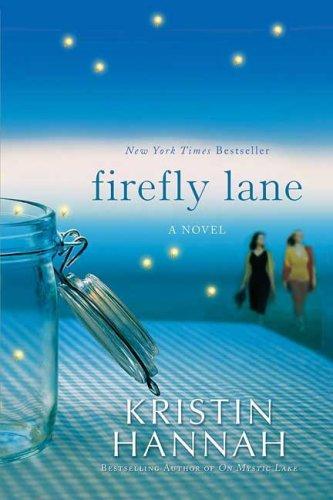
Firefly Lane
by Kristin Hannah
★ Top 25 book of 2008 · #22 on Best Books of 2008
Two girls become inseparable friends in the summer of 1974, one awkward and one glamorous with a painful secret. The story follows their bond across three decades and changing careers in the Pacific Northwest.
Best for: Fans of emotional, decades-spanning stories about female friendship, love and loss
Firefly Lane is #22 on BookWard's Best Books of 2008, out of 46 2008 books that cleared our data bar.
What Firefly Lane is about
Two girls meet as teenagers on a quiet street in Snohomish, Washington, in the summer of 1974. Kate is unpopular and a little mortified by her loving, ordinary family. Tully is glamorous and driven, and she hides a secret that does her no good. Her mother, who calls herself Cloud, is addicted to drugs and neglects her, so Tully finds the closeness she lacks in Kate's company.
From there the story follows their friendship across more than thirty years in the Pacific Northwest. Kate builds a family of her own, with a husband and three children, while Tully chases a career in journalism. Warm and nostalgic, it looks at what female friends give each other, how ambition and motherhood can pull people apart, and what it takes to forgive. Readers who love a big-hearted story about lifelong loyalty will feel at home here.
Firefly Lane on the Best Books of 2008
Firefly Lane came out in 2008. Of the 46 books first published in 2008 that met BookWard's data bar, it ranks #22 on our Best Books of 2008 list.
Why it made the list: 247 readers have shelved it on Open Library. The list ranks each year’s books on how many readers have picked them up, how highly readers rate them, and how many are reading them right now.
Nearby on the 2008 list
- Fast Food Nation Eric Schlosser, #20
- The Last Lecture Randy Pausch, #21
- The Art of Racing in the Rain Garth Stein, #23
See all Best Books of 2008 Best books by year
More years: Best Books of 2007 Best Books of 2009.
The numbers behind it
- Readers: 207 want to read it, 10 are reading it now and 30 have read it, according to Open Library.
| Signal | This book (0 to 100) | Weight |
|---|---|---|
| Reach | 52 | 55% |
| Reader love | 59 | 25% |
| Being read right now | 37 | 20% |
Questions about Firefly Lane
When was Firefly Lane published?
Firefly Lane by Kristin Hannah was first published in 2008.
Was Firefly Lane one of the best books of 2008?
Firefly Lane is #22 on BookWard's Best Books of 2008, out of 46 2008 books that cleared our data bar. 247 readers have shelved it on Open Library.
Why is Firefly Lane on the Best Books of 2008 list?
247 readers have shelved it on Open Library.
More of the best books of 2008
- The Hunger Games Suzanne Collins, #1
- End of Days Sylvia Browne, #2
- The Last Straw Jeff Kinney, #3
- Amulet Kazu Kibuishi, #4
- Outliers Malcolm Gladwell, #5
- Michelle Obama in Her Own Words Michelle Obama, #6
See the full Best Books of 2008, the Top 100, or new books on Rising.
How we know
This page uses public data: Open Library reader counts and ratings, and Wikipedia page views for recent years. The description is paraphrased from real source text. Rankings reflect reading interest, not quality or sales, and can be affected by data gaps. Lists update monthly.
It suits adult and older teen readers who enjoy emotional, character-focused stories.
Depends on the edition you pick.
A three-decade friendship, told with warmth and a firm grip on your heart. 49% taste match
 BookWard’s take
A three-decade friendship, told with warmth and a firm grip on your heart
Firefly Lane follows Kate Mularkey and Tully Hart from the summer of 1974, when they meet as girls on a Washington street, through more than thirty years of love, ambition and loss. It is a character-driven story, and the characters are where it earns its place: Tully's abandonment and Kate's quieter life are drawn with real care. The familiar tropes are where it may frustrate some readers, since the friendship-saga template is well worn and the book leans right into it. It is openly sentimental, and the ending is built to land emotionally rather than stay ambiguous. The pace is steady, and the shifting timeline keeps things moving. If you want an emotional, well-built friendship novel, it delivers. If you want originality or restraint, it will feel familiar.
A saga covering more than three decades, so it runs longer than BookWard's tight preference.
It moves steadily across the decades, a touch slower than BookWard likes.
The premise is a familiar one in women's fiction, and BookWard wants something fresher.
The prose is plain and readable, in service of emotion rather than ornament.
Character and relationship drive everything, which fits BookWard well.
Even through loss, the book keeps faith in friendship, leaning toward hope.
The structure is conventional, moving through the years of the friendship.
There is warmth and the occasional light moment, but the tone is mostly serious.
It deals with abandonment, addiction and loss, but stays emotional rather than grim.
It is built for strong feeling and aims straight for the heart.
See all 50 dialsEvery position, side by side with this book
Where it lines up
- Character depthBookWard 8 · book 8
- EndingBookWard 8 · book 8
- Story or ideasBookWard 3 · book 2
Where it pulls apart
- Familiar tropesBookWard 10 · book 3
- LengthBookWard 1 · book 6
- OriginalityBookWard 9 · book 3
A saga covering more than three decades, so it runs longer than BookWard's tight preference.
Two girls meeting on a street in 1974 is a gentle, inviting start rather than an instant grab.
The lifelong-friendship saga with its glamour, ambition and heartbreak leans on well-known beats, which cuts against BookWard's taste.
The friendship and its turns follow clear emotional cause and effect, though not airtight.
It moves steadily across the decades, a touch slower than BookWard likes.
The premise is a familiar one in women's fiction, and BookWard wants something fresher.
Tully and Kate are drawn with real history and wounds, which BookWard values.
The story drives toward an emotionally resolved close, matching BookWard's liking for resolution.
This is openly sentimental, built to move you, where BookWard prefers restraint.
The darker turns serve the friendship story, though some are aimed squarely at tears.
The voice is warm and accessible, clear but not strikingly distinctive.
This is entirely story-led, following two lives rather than arguing an idea.
Backstory and feeling are often laid out directly, more than BookWard's show-it-in-scene taste.
Covering this much time, the middle stretches can drift, though the friendship holds interest.
The prose is plain and readable, in service of emotion rather than ornament.
Character and relationship drive everything, which fits BookWard well.
Even through loss, the book keeps faith in friendship, leaning toward hope.
The structure is conventional, moving through the years of the friendship.
There is warmth and the occasional light moment, but the tone is mostly serious.
It reads easily and asks little of you, more comfortable than BookWard's middle ground.
The story moves between the two women, giving it more than one angle.
It spans decades and moves across the years, with some shifting rather than strictly linear.
This is grounded, realistic fiction with no fantastical element.
The focus stays on the two friends and their circle, keeping the cast modest.
Though it covers decades, the heart is a deeply personal friendship.
Feelings, relationships and private struggles dominate over outward action.
Scenes between the friends carry much of the story through conversation.
Romance and marriage are part of the lives shown, but the friendship is the center.
The Pacific Northwest and ordinary American lives are familiar territory.
It begins in 1974 and moves forward through the decades, so it sits in the past.
The theme of lifelong friendship lasts, though the saga style is tied to its genre.
The narration is straightforward and trustworthy rather than unreliable.
Right and wrong are mostly clear, with human flaws that are easy to read.
Setting and period details are present and warm without being lavish.
It stands alone as one complete story.
There are emotional turns along the way, though the broad shape is predictable.
This is a comforting, emotionally satisfying read more than a challenging one.
It deals with abandonment, addiction and loss, but stays emotional rather than grim.
It is built for strong feeling and aims straight for the heart.
Light, warm humor sits in the friends' banter rather than broad comedy.
Politics stays in the background of the characters' lives.
The language is plain and easy to follow.
The narration is mostly even, with warm leanings toward its characters.
The story looks back across the years of a shared life.
It believes in the lasting power of friendship, leaning idealistic.
Review written by BookWard, dial version 1, November 2026.
Who is Firefly Lane right for?
It suits adult and older teen readers who enjoy emotional, character-focused stories. It touches on parental neglect, addiction and loss, which some readers may find heavy.
It reads easily and asks little of you, more comfortable than BookWard's middle ground.
It deals with abandonment, addiction and loss, but stays emotional rather than grim.
It is built for strong feeling and aims straight for the heart.
Book CompanionFirefly Lane: ideas, characters, themes
Two girls who meet on Firefly Lane in 1974 build a friendship that shapes their lives across more than thirty years.
- A friendship begins. Kate and Tully meet as girls in Snohomish, Washington, and quickly become inseparable.
- Opposites attract. Kate feels uncool beside Tully, who seems to have everything but carries a painful secret.
- Different paths. Kate builds a family while Tully chases a career in journalism and television news.
- Decades and settings. The story moves through the eras and changing face of the Pacific Northwest and beyond.
- What friendship holds up. The bond becomes the structure of both women's lives through ups and downs.
Characters
Kate Mularkey
One half of the central friendship
She starts out feeling at the bottom of the social order and later builds a family.
Tully Hart
The other half of the friendship
Ambitious and glamorous, she is shaped by being abandoned by her mother.
Cloud
Tully's mother
Drug-addicted and negligent, she leaves Tully longing for unconditional love.
Themes
A bond that lasts and shapes a whole life.
The lasting mark of a parent who is not there.
The drive for success and what it costs.
The wish to be accepted and loved as you are.
Grief that comes with a long attachment.
Discussion questions
- Why do Kate and Tully fit together despite being so different?
- How does Tully's childhood shape her choices as an adult?
- What does each woman want that the other seems to have?
- How does the book use the passing decades to deepen the friendship?
- Does the story's emotional pull feel earned, or does it lean on familiar beats?
Personalize your Book Companion
This is the general edition. In BookWard, the Companion is written for you: your reading profile, your notes, and spoiler-safe to the page you are on.
Buy, listen or borrow Firefly Lane
Each link opens a search for this book on that store, in a new tab.
Read on a device
Borrow
Reviews and community
If you liked Firefly Lane
A cozy 1895 book club with a murder rumor attached
If He Had Been With MeLaura NowlinA YA romance that opens on a promise of regret
Stolen Life of Colette MarceauKristin HarmelA jewel thief's old crime and a bracelet that resurfaces
One True LovesTaylor Jenkins ReidA love triangle that turns on a husband returning from the dead
Find your own best books
Add what you have read, rate it, and BookWard will recommend what to read next.
Free to start. No credit card needed.