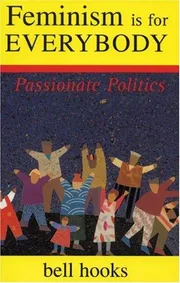
Feminism Is for Everybody
by bell hooks, Amaia Apalauza Ollo · 2000
Suited to teens and adults new to feminist ideas, and to students entering women's studies.
138 pages, about 2 to 3 hours.
A short, plain-spoken primer on feminism meant for everyone. 50% taste match
What it covers
Feminism Is for Everybody is a work of feminist theory by bell hooks, first published in 2000. Written by a self-described writer, feminist theorist and cultural critic, it is a short book of about 138 pages that has appeared in 22 editions and in several languages.
The book is an introduction to feminism as a political movement, and it takes up sex discrimination against women and the wider social questions that follow from it. It looks at how feminist ideas bear on work and home life, on relationships and sexuality, and on masculinity, family and raising children. It also considers how class, race and sexuality intersect with feminist politics, and it makes the case that feminism concerns men as well as women. Its subjects place it within feminist theory, women's studies and African American studies, and it is written for general readers as well as students coming to these fields for the first time.
Em todos os lugares aonde vou, com orgulho digo ao pessoal interessado em saber quem sou e o que faço: sou escritora, teórica feminista, crítica cultural.
Themes
Feminist theoryFeminismeSex discrimination against womenPolitical aspectsFeminismFrauenforschungPolitikSOCIAL SCIENCE / Women's Studies
- Want to read 205
- Reading now 7
- Read 17
Most people shelving it are saving it for later.
Of 229 readers who put it on a shelf, 90% want to read it, 3% are reading it now, 7% have finished it and 0% stopped before the end.
By the numbers
- The median edition runs 138 pages. Counting about 275 words a page and an adult reading pace of 250 words a minute, that is about 2.5 hours of reading.
- Open Library tracks 22 editions from 12 publishers, the earliest dated 2000 and the latest 2023, across 6 languages.
- On reader demand it ranks in the top 10% of the modern books in our catalog (15,152 of them).
- Libraries shelve it under Dewey 305.4201 and Library of Congress class HQ-1190.00000000.H67 2014.
 BookWard’s take
A short, plain-spoken primer on feminism meant for everyone
bell hooks wrote this as an introduction, and at 138 pages it sticks to that job. It is driven by ideas rather than story, which runs against my own preference for narrative, but the explanations are given outright, in the plain language the book promises. The voice is distinctive and opinionated, and that is where it earns its place: hooks argues a position instead of surveying one. The rigor is mixed, since this is a movement primer built on argument and observation, closer to a manifesto than a research text. Politics sit front and center, and the book takes in work, family, sexuality, race and class without sprawling. It asks little of the reader, and it holds up from start to finish because it stays short and focused.
At 138 pages it is short and compact, which suits BookWard's taste for tight books.
Short chapters keep it moving briskly, which matches BookWard's preference for pace.
As an accessible primer it reframes feminism for a general audience instead of breaking new theoretical ground.
The prose is deliberately plain and accessible, a little plainer than BookWard's middle-leaning taste.
There is no plot or cast, so neither plot-driven nor character-driven applies.
Its central claim is that feminism can make life better for everyone, which gives it a hopeful outlook.
A conventional run of short thematic chapters keeps the structure straightforward.
The tone is earnest and serious throughout, with little room for jokes.
It names sexism and violence plainly but stays more constructive than grim.
The conviction is felt, but the tone stays measured rather than overwhelming.
See all 50 dialsEvery position, side by side with this book
Where it lines up
- LengthBookWard 1 · book 1
- Shock for effectBookWard 9 · book 9
- Authorial voiceBookWard 9 · book 9
Where it pulls apart
- ExpositionBookWard 2 · book 10
- Story or ideasBookWard 3 · book 10
- Familiar tropesBookWard 10 · book 6
At 138 pages it is short and compact, which suits BookWard's taste for tight books.
It opens by confronting stereotypes about feminists directly, which draws a reader in without needing a slow build.
It argues against stock caricatures of feminism, though the primer format means some familiar talking points recur.
Each chapter makes a clear case and builds on the last, so the argument holds together well.
Short chapters keep it moving briskly, which matches BookWard's preference for pace.
As an accessible primer it reframes feminism for a general audience instead of breaking new theoretical ground.
This is an argument-driven work with no characters to draw, so the dial does not apply.
hooks writes with warmth and conviction but anchors it in argument, so it never turns syrupy.
It earns its seriousness by naming real harms plainly, not by reaching for provocation.
The case rests on argument and lived observation more than data, so it sits in the middle as a manifesto-style primer.
hooks writes in a direct, unmistakable voice that is hers alone, which BookWard values highly.
This is an idea-led book from start to finish, well away from BookWard's story-led leaning.
hooks explains her points outright in plain words, the opposite of BookWard's show-in-scene preference.
The book is brief and focused, so the argument stays sustained from page to page.
The prose is deliberately plain and accessible, a little plainer than BookWard's middle-leaning taste.
There is no plot or cast, so neither plot-driven nor character-driven applies.
Its central claim is that feminism can make life better for everyone, which gives it a hopeful outlook.
A conventional run of short thematic chapters keeps the structure straightforward.
The tone is earnest and serious throughout, with little room for jokes.
It is written in simple language for newcomers, so it asks little effort of the reader.
The book speaks largely through one authorial perspective, though it discusses many groups.
The argument moves forward in a linear way from chapter to chapter.
It is grounded entirely in real social life, work, family and relationships.
As an essay-style work without characters, cast size does not apply.
It moves from personal relationships to society-wide change, giving it broad reach in a short space.
The focus is on social action and political change more than inner reflection.
It is argued in essay form, with essentially no dialogue on the page.
Romance is not a theme beyond brief discussion of relationships and sexuality.
The setting is everyday contemporary life, which is familiar territory.
Written in 2000 about ongoing social questions, it sits closer to the present than the past.
Its core questions about equality and solidarity have kept it in circulation for years.
hooks speaks as herself and plainly argues her view, so there is nothing unreliable about the voice.
The book takes clear moral positions rather than leaving questions open.
It is argument rather than scene-setting, so physical description is sparse.
It reads as analysis and argument more than storytelling, though it stays accessible.
hooks writes with a personal stake and shares perspective, so it is far from detached.
It stands alone as a self-contained introduction.
An argument-driven primer holds few surprises of plot, as it should.
It asks readers to rethink assumptions about gender, race and class, which is a real challenge.
It names sexism and violence plainly but stays more constructive than grim.
The conviction is felt, but the tone stays measured rather than overwhelming.
Humor is not a feature of the book, so this dial does not apply.
Domestic violence is mentioned as a social issue but not depicted.
Sexuality is discussed as a political topic, not shown on the page.
Politics is the whole point, with feminist theory and movement strategy front and center.
The language is plain and written for general readers.
hooks argues a position openly and makes no pretense of neutrality.
It looks toward a renewed feminism and the changes still to come.
It holds firmly to the belief that a more equal, supportive world is achievable.
Review written by BookWard, dial version 1, November 2026.
Who is Feminism Is for Everybody right for?
Suited to teens and adults new to feminist ideas, and to students entering women's studies. It discusses sexism, sexuality and domestic violence in general terms rather than graphically.
It is written in simple language for newcomers, so it asks little effort of the reader.
It names sexism and violence plainly but stays more constructive than grim.
The conviction is felt, but the tone stays measured rather than overwhelming.
Domestic violence is mentioned as a social issue but not depicted.
Book CompanionFeminism Is for Everybody: ideas, characters, themes
Feminism is a movement to end sexism and domination that benefits women and men alike, and it needs to be explained in simple words to everyone.
- Feminism is not anti-male. hooks argues the stereotype of the angry man-hating feminist is a media creation that misrepresents the movement's aims.
- Solidarity across class and race. The book holds that feminism has to take in class, race and sexuality or it fails its own purpose.
- Men belong in the movement. It makes the case that men can be feminist allies and that sexism harms them too.
- New models for daily life. hooks calls for feminist approaches to family, parenting, beauty and sexuality.
- Plain language as a tool. The book is written in accessible terms so feminist ideas reach beyond academic circles.
Themes
The goal of ending sexism and sharing power fairly in work, home and relationships.
How race, class and sexuality shape and complicate feminist politics.
Mutual support among women, and between women and men, as the movement's center.
Rethinking what it means to be a man in a feminist world.
Discussion questions
- Why does hooks insist feminism is for everybody, and does the argument persuade you?
- How does the book treat the stereotype of the angry feminist?
- What role does hooks give men in the movement?
- How do class and race change what feminism should aim for?
- Which of the book's calls for change in family or relationships feels most relevant today?
Personalize your Book Companion
This is the general edition. In BookWard, the Companion is written for you: your reading profile, your notes, and spoiler-safe to the page you are on.
Buy, listen or borrow Feminism Is for Everybody
Each link opens a search for this book on that store, in a new tab.
Read on a device
Borrow
Reviews and community
If you liked Feminism Is for Everybody
A short, plain-spoken case for love as practice
In Defense of FoodMichael PollanMichael Pollan's short, argued case for eating real food again
Moral AmbitionRutger BregmanA call to aim your career at the world's biggest problems
La conquête du painPeter KropotkinKropotkin's case for feeding everyone through voluntary cooperation, argued without apology
Sources: Open Library.
Track Feminism Is for Everybody and find your next favorite
Add it to your shelf, rate what you have read, and BookWard will recommend what fits you.
Free to start. No credit card needed.