It suits adult readers and mature teens interested in relationships, ethics and culture.
239 pages, about 4 to 5.5 hours.
A short, plain-spoken case for love as practice. 50% taste match
What it covers
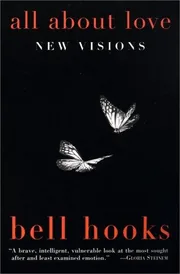
All About Love is a nonfiction work by bell hooks that looks at love as it is understood and practiced in contemporary life. First published in 2000, the book draws on feminist ethics, cultural criticism, and the study of interpersonal relations, with attention to how popular culture shapes ideas about affection and partnership. It sits within social science and psychology as much as within writing on culture and African American studies.
The book is arranged in thirteen chapters, and each one takes up a separate aspect of love. Among the subjects it works through are honesty and forgiveness. Alongside her analysis of what society teaches people about love, hooks draws on reflections from her own experience of it. The book opens with the line "As a society we are embarrassed by love." At roughly 239 pages in its median edition, it has appeared in eleven editions. It suits readers interested in relationships, ethics, and the cultural forces that inform how people think about love.
As a society we are embarrassed by love.
Themes
Feminist ethicsLoveSOCIAL SCIENCEPopular CultureAfrican American StudiesInterpersonal RelationsEthnic StudiesPSYCHOLOGY
- Want to read 787
- Reading now 47
- Read 72
Most people shelving it are saving it for later.
Of 906 readers who put it on a shelf, 87% want to read it, 5% are reading it now, 8% have finished it and 0% stopped before the end.
By the numbers
- The median edition runs 239 pages. Counting about 275 words a page and an adult reading pace of 250 words a minute, that is about 4.4 hours of reading.
- Open Library tracks 11 editions from 8 publishers, the earliest dated 2000 and the latest 2025, across 4 languages.
- On reader demand it ranks in the top 1% of the modern books in our catalog (15,152 of them).
- Libraries shelve it under Dewey 306.7 and Library of Congress class BF-0575.00000000 L8 H655 2000.
 BookWard’s take
A short, plain-spoken case for love as practice
bell hooks opens with a flat claim, "As a society we are embarrassed by love," and the first page hooks at once. At 239 pages in thirteen chapters, the book stays tight, each chapter taking one aspect of love, honesty and forgiveness among them. It is idea-led rather than story-led, and its authorial voice is distinctive: direct, opinionated, and personal, with reflections from hooks's own life set against her analysis of what culture teaches about love. On rigor it leans toward argument and cultural criticism rather than data. It is hopeful in outlook, though it asks something of the reader. That challenge, delivered in plain prose, is what BookWard rewards most.
At 239 pages in thirteen chapters, it stays compact, which suits BookWard's preference for tight books.
Short chapters keep it moving at a steady clip, a little more reflective than BookWard's quick preference.
Treating love as an ethic and a practice rather than a feeling was a fresh angle, sitting close to BookWard's taste.
The prose is plain and accessible, a touch plainer than BookWard's middling taste.
The book argues that love can be learned and practiced, which gives it a hopeful outlook in line with BookWard.
Thirteen chapters, each on one aspect of love, make for a conventional, clear organization.
It is earnest and serious throughout, with little comedy, which is well below BookWard's lighter side.
The subject is tender, though it discusses harms that come from poor models of love.
The topic carries feeling, but the tone is measured and reflective rather than intense.
See all 50 dialsEvery position, side by side with this book
Where it lines up
- Authorial voiceBookWard 9 · book 9
- LengthBookWard 1 · book 2
- Sagging middleBookWard 8 · book 7
Where it pulls apart
- ExpositionBookWard 2 · book 9
- Familiar tropesBookWard 10 · book 6
- Story or ideasBookWard 3 · book 9
At 239 pages in thirteen chapters, it stays compact, which suits BookWard's preference for tight books.
The opening line, "As a society we are embarrassed by love," makes a claim immediately, matching BookWard's taste for openings that grab.
Self-help-adjacent love talk is a crowded field, but hooks pushes against the usual romantic scripts rather than repeating them.
Each chapter builds on a clear definition of love, so the argument holds together, though it rests on assertion more than proof.
Short chapters keep it moving at a steady clip, a little more reflective than BookWard's quick preference.
Treating love as an ethic and a practice rather than a feeling was a fresh angle, sitting close to BookWard's taste.
It closes by gathering its argument rather than tying off a plot, resolved enough to satisfy BookWard.
The subject invites softness, but hooks writes with conviction and discipline rather than sweetness.
It argues from feminist ethics, cultural criticism and personal reflection rather than systematic evidence, so it is less rigorous than BookWard prefers.
hooks's voice is unmistakable: direct, opinionated and personal, which BookWard values highly.
Ideas carry the whole book, each chapter built around one aspect of love, so it sits far from BookWard's story-led lean.
hooks explains her arguments outright rather than dramatizing them, well past BookWard's preference for showing in scene.
Thirteen focused chapters each have a clear job, so the book holds its energy throughout.
The prose is plain and accessible, a touch plainer than BookWard's middling taste.
The book argues that love can be learned and practiced, which gives it a hopeful outlook in line with BookWard.
Thirteen chapters, each on one aspect of love, make for a conventional, clear organization.
It is earnest and serious throughout, with little comedy, which is well below BookWard's lighter side.
The writing is accessible and short, asking for reflection more than stamina, close to BookWard's comfort zone.
hooks speaks in one authorial voice throughout, so the book is firmly single-perspective.
It moves chapter by chapter through topics, with no timeline games.
This is a grounded look at real relationships and culture, with nothing fantastical.
The book centers on hooks and the reader rather than a cast of characters.
It stays with the intimate scale of personal relationships, though it ties them to wider cultural forces.
It dwells on thought, feeling and ethics rather than external action.
It is argument and reflection, with almost no dialogue on the page.
Romantic love is one subject among several, alongside friendship, community and self-love.
It deals with everyday relationships in modern society, familiar territory for most readers.
Written around 2000 about contemporary life, it still reads close to the present day.
Its questions about honesty, forgiveness and embarrassment around love have kept it widely read, including a 2021 paperback bestseller listing.
hooks speaks plainly in her own voice, so the narration is reliable.
hooks takes firm, clear positions on how love should be practiced, rather than leaving questions open.
This is argument rather than scene-setting, so physical description is thin.
It blends analysis with personal reflection, leaning analytical in its chapter-by-chapter treatment of love.
hooks brings in reflections from her own experience of love, so it is far from detached.
It stands alone as a single work.
As an argument-driven book, it has no plot twists, only shifts in perspective.
It asks readers to question what they have been taught about love, which can be uncomfortable.
The subject is tender, though it discusses harms that come from poor models of love.
The topic carries feeling, but the tone is measured and reflective rather than intense.
There is no violence on the page.
Love is discussed as an ethic, not through sexual content.
Feminist ethics and cultural criticism run through it, though it centers on love rather than policy.
The language is plain and accessible.
hooks argues from conviction and does not pretend to neutrality.
It looks forward, proposing a different way to practice love, while diagnosing the present.
It argues that a love ethic can change lives, which is a clearly idealistic stance.
Review written by BookWard, dial version 1, November 2026.
Who is All About Love right for?
It suits adult readers and mature teens interested in relationships, ethics and culture. It discusses harm and failed relationships in general terms but has no graphic content.
The writing is accessible and short, asking for reflection more than stamina, close to BookWard's comfort zone.
The subject is tender, though it discusses harms that come from poor models of love.
The topic carries feeling, but the tone is measured and reflective rather than intense.
There is no violence on the page.
Book CompanionAll About Love: ideas, characters, themes
bell hooks argues that love is best understood as an ethic and a practice, and that a society embarrassed by love fails to teach it.
- Society is embarrassed by love. The book opens by claiming that cultural discomfort with love keeps people from understanding and practicing it.
- Thirteen chapters, thirteen aspects. Each chapter takes up a separate aspect of love, including honesty and forgiveness.
- Culture teaches ideas about love. hooks analyzes how popular culture and social teaching shape what people expect from affection and partnership.
- Personal reflection alongside analysis. She draws on her own journey of love to ground the cultural argument.
- Love as ethics. Drawing on feminist ethics, she treats love as something practiced and chosen rather than only felt.
Themes
Love treated as something done and learned, not just felt.
Truthfulness as a foundation for caring relationships.
Letting go of harm as part of loving well.
How popular culture shapes expectations of love.
An ethical framework for relationships grounded in equality.
Discussion questions
- Why might a society be embarrassed by love, as the opening line suggests?
- How does hooks's use of personal reflection change the way you read her arguments?
- Which of the thirteen aspects of love feels most neglected in popular culture?
- Is love better understood as a feeling or as a practice, and why?
- How do honesty and forgiveness work together in the relationships you know?
Personalize your Book Companion
This is the general edition. In BookWard, the Companion is written for you: your reading profile, your notes, and spoiler-safe to the page you are on.
Buy, listen or borrow All About Love
Each link opens a search for this book on that store, in a new tab.
Read on a device
Borrow
Reviews and community
If you liked All About Love
A blunt, opinionated manual on masculinity, love, and sexual polarity
Feminism Is for Everybodybell hooksA short, plain-spoken primer on feminism meant for everyone
ScatteredGabor MatéA physician's personal, environment-first case about attention deficit disorder
DriveDaniel H. PinkA lively case that autonomy, mastery and purpose beat carrots and sticks
Sources: Open Library.
Track All About Love and find your next favorite
Add it to your shelf, rate what you have read, and BookWard will recommend what fits you.
Free to start. No credit card needed.