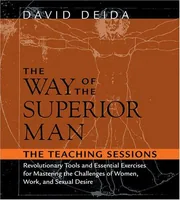
The way of the superior man
by David Deida · 1997
It suits readers interested in self-development, masculinity, and relationships.
221 pages, about 3.5 to 5 hours.
A blunt, opinionated manual on masculinity, love, and sexual polarity. 43% taste match
What it covers
David Deida's The Way of the Superior Man, first published in 1997, is a work of nonfiction about masculinity and the conduct of a man's life. It sits within men's studies and the study of relationships between men and women, and it also takes up sexuality as part of that picture. The book runs to about 221 pages and has appeared in 15 editions.
Its subject is how a man can grow spiritually while dealing with women, work, and sexual desire. Deida sets out to move past two familiar ideals of manhood, one that is all spine and no heart, and another that is all heart and no spine. In their place he describes a way of living that joins consciousness and love in the openness of the present moment. The book is arranged around practical lessons for men of any age, aimed at helping each reader offer the gifts he was born to give. A later edition adds a new introduction from the author, written for a new generation of readers.
It's never going to be over, so stop waiting for the good stuff.
Themes
Man-woman relationshipsConduct of lifeMenMasculinitySOCIAL SCIENCEMen's StudiesMen, conduct of lifesexuality
- Want to read 1,786
- Reading now 135
- Read 46
Most people shelving it are saving it for later.
Of 1967 readers who put it on a shelf, 91% want to read it, 7% are reading it now, 2% have finished it and 0% stopped before the end.
By the numbers
- The median edition runs 221 pages. Counting about 275 words a page and an adult reading pace of 250 words a minute, that is about 4.1 hours of reading.
- Open Library tracks 15 editions from 10 publishers, the earliest dated 1997 and the latest 2020, across 3 languages.
- On reader demand it ranks in the top 1% of the modern books in our catalog (15,152 of them).
- Libraries shelve it under Library of Congress class BJ-1601.00000000.D45 2017.
 BookWard’s take
A blunt, opinionated manual on masculinity, love, and sexual polarity
Deida opens with a command, "It's never going to be over, so stop waiting for the good stuff," and the book holds that direct tone across 221 pages. The voice is distinctive, and the opinions are firmly his own. It is driven by ideas rather than story, built from short lessons for men on women, work, and desire. It is anecdotal rather than rigorous: this is spiritual instruction, not evidence-based argument, which is a drawback for readers who prefer their nonfiction well supported. It is also demanding in a different way, since the claims about masculine and feminine energy invite pushback. Its aim to move past both the macho jerk and the sensitive wimp is a fresh framing. Read it as one man's philosophy, not settled science.
At 221 pages of short, separable lessons it stays compact, which suits BookWard's taste for tight books.
Short, punchy lessons move quickly and rarely linger on one point.
The two-ideals framing is distinctive, though it draws on well-worn spiritual and self-help traditions.
The language is plain and conversational, with occasional spiritual flourish.
With no plot or characters, it is neither plot-led nor truly character-driven.
It insists a man can grow and offer his gifts, a hopeful stance BookWard shares.
A string of brief, themed lessons is a little looser than a standard argued book.
The subject matter is frank but the tone is not grim.
It appeals to love and presence with moderate intensity.
See all 50 dialsEvery position, side by side with this book
Where it lines up
- Authorial voiceBookWard 9 · book 9
- PaceBookWard 8 · book 7
- LengthBookWard 1 · book 3
Where it pulls apart
- Familiar tropesBookWard 10 · book 4
- Internal logicBookWard 10 · book 4
- Rigor (nonfiction)BookWard 9 · book 2
At 221 pages of short, separable lessons it stays compact, which suits BookWard's taste for tight books.
It opens on a direct command to stop waiting for the good stuff, a hook BookWard rewards.
It rejects the macho and the wimp ideals but leans on familiar self-help and gender-polarity ideas.
Its claims about masculine and feminine energy are asserted more than argued, so the reasoning feels loose against BookWard's airtight standard.
Short, punchy lessons move quickly and rarely linger on one point.
The two-ideals framing is distinctive, though it draws on well-worn spiritual and self-help traditions.
There are no characters to draw; the book addresses the reader as a type of man.
As a set of lessons it closes without a narrative payoff, so resolution is loose.
Warm in its call to love and presence, yet it avoids heavy sentimentality.
Its frankness about sex and relationships is deliberate and tied to its argument, not shock for effect.
It rests on the author's convictions rather than evidence, well below the rigor BookWard prizes in nonfiction.
Deida's blunt, commanding address is unmistakable and carries the whole book.
Ideas and instruction drive every page; there is no story to speak of.
The book states its claims outright instead of dramatizing them, far from BookWard's show-in-scene preference.
Self-contained lessons keep the energy fairly even from one chapter to the next.
The language is plain and conversational, with occasional spiritual flourish.
With no plot or characters, it is neither plot-led nor truly character-driven.
It insists a man can grow and offer his gifts, a hopeful stance BookWard shares.
A string of brief, themed lessons is a little looser than a standard argued book.
The prose is easy, but the ideas require some effort to weigh and test.
Everything comes from a single authorial perspective.
It moves in order through lessons with no time shifts.
It deals with ordinary life, though it uses spiritual language.
No cast; it speaks to the reader directly.
Its focus is the personal life of an individual man.
It centers on inner stance and consciousness more than outward action.
It is direct address with essentially no dialogue.
Relationships between men and women are a central concern throughout.
It speaks to everyday, familiar life.
Written in 1997 and reissued with a new introduction, it speaks to the present.
Its enduring edition history suggests lasting appeal, though its gender framing dates in places.
The author speaks plainly in his own voice with no unreliable narration.
It lays out a clear view of how a man should live, with little ambiguity.
It is spare on scene and imagery, focused on instruction.
It leans toward direct instruction more than storytelling.
Written in the first-person voice of a teacher addressing the reader intimately.
A standalone book.
There is nothing to surprise; each lesson is direct.
It deliberately confronts men's habits and the reader's assumptions.
The subject matter is frank but the tone is not grim.
It appeals to love and presence with moderate intensity.
No violence appears on the page.
Sexuality is discussed openly as part of relationships, though not graphically.
Its views on gender roles carry political weight even without partisan argument.
The language is plain and accessible.
It is heavily opinionated, pressing the author's view on every page.
It urges growth from here forward more than looking back.
It holds an idealistic picture of what a man can become.
Review written by BookWard, dial version 1, November 2026.
Who is The way of the superior man right for?
It suits readers interested in self-development, masculinity, and relationships. It discusses sexuality and gender roles frankly.
The prose is easy, but the ideas require some effort to weigh and test.
The subject matter is frank but the tone is not grim.
It appeals to love and presence with moderate intensity.
No violence appears on the page.
Book CompanionThe way of the superior man: ideas, characters, themes
A man grows by living with presence, purpose, and love, avoiding both the hard, heartless ideal and the soft, spineless one.
- Beyond two ideals. Deida rejects the macho jerk, all spine and no heart, and the sensitive wimp, all heart and no spine.
- Stop waiting. Life will not reach a finished state, so a man should live fully now rather than wait for the good stuff.
- Women, work, desire. These are treated as the central arenas where a man's growth is tested.
- Offer your gifts. The aim is to give the gifts a man was born to give.
- Present-moment openness. Consciousness and love are joined in the openness of the present moment.
Themes
What it takes for a man to be strong and loving at once.
Personal development framed as a path rather than a goal.
How men and women meet and challenge each other.
One of the arenas where a man's growth is tested.
Living in service of one's deeper gifts.
Discussion questions
- Do the two ideals Deida rejects match men you know, or are they caricatures?
- What does it mean to stop waiting for the good stuff in your own life?
- How do you weigh claims that rest on conviction rather than evidence?
- Which lessons feel timeless, and which feel tied to 1997?
- How might a reader of any gender respond to the book's picture of relationships?
Personalize your Book Companion
This is the general edition. In BookWard, the Companion is written for you: your reading profile, your notes, and spoiler-safe to the page you are on.
Buy, listen or borrow The way of the superior man
Each link opens a search for this book on that store, in a new tab.
Read on a device
Borrow
Reviews and community
If you liked The way of the superior man
A short, plain-spoken case for love as practice
Ageless Body, Timeless MindDeepak ChopraChopra's case that aging bends to belief, argued with conviction
The Power of NowEckhart TolleA calm, practical guide to living in the present moment
The Artist's WayJulia CameronA twelve-week creative recovery program built on daily writing
Sources: Open Library.
Track The way of the superior man and find your next favorite
Add it to your shelf, rate what you have read, and BookWard will recommend what fits you.
Free to start. No credit card needed.