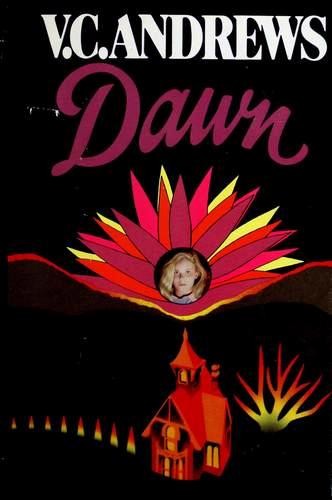
Dawn
by V.C. Andrews
★ Top 25 book of 1990 · #17 on Best Books of 1990
Dawn Longchamp thinks she has finally found stability, until police accuse her father of kidnapping her as a baby and her brother Jimmy is taken away. Placed with the wealthy Cutler family, she faces cruelty and must uncover generations of lies.
Best for: Readers who like emotional family dramas full of dark secrets and hidden lies.
Dawn is #17 on BookWard's Best Books of 1990, out of 39 1990 books that cleared our data bar.
What Dawn is about
Fourteen-year-old Dawn Longchamp has grown up on the move with her parents, Ormond and Sally Jean, and her older brother Jimmy. When her father takes a janitor's job at an exclusive Virginia school, Dawn and Jimmy enroll there. Dawn's singing talent is noticed, and she draws a kind admirer in Philip Cutler and the cruel attention of his sister Clara Sue, who calls her white trash. Jimmy watches Philip warily. Then the family's fragile footing begins to give way, and secrets about where Dawn truly belongs come to light.
Begun by V. C. Andrews and completed by Andrew Neiderman after her death, this 1990 novel opens the five-book Cutler series. It explores class divides, grief, and the search for a real home. Readers who like emotional family sagas with a touch of gothic drama will feel at ease here.
Dawn on the Best Books of 1990
Dawn came out in 1990. Of the 39 books first published in 1990 that met BookWard's data bar, it ranks #17 on our Best Books of 1990 list.
Why it made the list: 272 readers have shelved it on Open Library. The list ranks each year’s books on how many readers have picked them up, how highly readers rate them, and how many are reading them right now.
Nearby on the 1990 list
- The Face on the Milk Carton Caroline B. Cooney, #15
- The Sleepwalker Robert Lawrence Stine, #16
- Postmortem Patricia Cornwell, #18
- Stormy Surrender Patricia Wilson, #19
See all Best Books of 1990 Best books by year
More years: Best Books of 1991.
The numbers behind it
- Readers: 242 want to read it, 13 are reading it now and 17 have read it, according to Open Library.
| Signal | This book (0 to 100) | Weight |
|---|---|---|
| Reach | 62 | 55% |
| Reader love | 36 | 25% |
| Being read right now | 49 | 20% |
Questions about Dawn
When was Dawn published?
Dawn by V.C. Andrews was first published in 1990.
Was Dawn one of the best books of 1990?
Dawn is #17 on BookWard's Best Books of 1990, out of 39 1990 books that cleared our data bar. 272 readers have shelved it on Open Library.
Why is Dawn on the Best Books of 1990 list?
272 readers have shelved it on Open Library.
More of the best books of 1990
- Good Omens Terry Pratchett, #1
- Jurassic Park Michael Crichton, #2
- The Eye of the World Robert Jordan, #3
- The Witching Hour Anne Rice, #4
- Flow Mihaly Csikszentmihalyi, #5
- The Things They Carried Tim O'Brien, #6
See the full Best Books of 1990, the Top 100, or new books on Rising.
How we know
This page uses public data: Open Library reader counts and ratings, and Wikipedia page views for recent years. The description is paraphrased from real source text. Rankings reflect reading interest, not quality or sales, and can be affected by data gaps. Lists update monthly.
Best suited to older teens and adults who enjoy melodramatic family sagas.
Depends on the edition you pick.
A gothic family melodrama that trades restraint for hooks and secrets. 37% taste match
 BookWard’s take
A gothic family melodrama that trades restraint for hooks and secrets
Dawn is the first of five Cutler books, started by V. C. Andrews and finished by Andrew Neiderman after her death. It follows fourteen-year-old Dawn Longchamp, whose rootless but loving family lands a place at an exclusive Virginia school, and whose world then starts to come apart. It hooks at once: class divides, a cruel rival and a handsome boy arrive within the first chapters. Familiar tropes are the engine here, and restraint is not on offer. The sentiment runs high, and the shocks lean lurid rather than earned. Character depth is limited, with Dawn defined mostly by her goodness. The pace is brisk, and the middle holds up because secrets keep surfacing. It will frustrate readers who want originality and quiet, but it knows exactly what it is.
Events keep arriving and secrets keep surfacing, close to the fast pace BookWard likes.
It follows a well-worn gothic template, so it feels familiar rather than fresh.
Plain, emotional sentences with little ornament.
Plot twists drive things, though Dawn's inner longing gives it a character-led pull.
Dawn's optimism is repeatedly crushed, leaving a mostly bleak outlook.
A straightforward first-person coming-of-age line with no formal experiment.
Almost no humor; the tone stays earnest and anguished.
It deals in family secrets, loss of innocence and cruelty, with heavy emotional shadows.
Intense, high-pitch feeling runs through most scenes.
See all 50 dialsEvery position, side by side with this book
Where it lines up
- OpeningBookWard 10 · book 9
- PaceBookWard 8 · book 7
- Story or ideasBookWard 3 · book 2
Where it pulls apart
- Familiar tropesBookWard 10 · book 2
- Internal logicBookWard 10 · book 4
- LengthBookWard 1 · book 6
Class conflict, a rival and a charming boy all land in the opening chapters, which suits BookWard well.
Orphaned-style heroine, cruel rich girl, sinister matriarch: stock gothic figures, far from BookWard's tropes-averse taste.
The plot runs on convenient reveals and coincidence, which strains the airtight logic BookWard wants.
Events keep arriving and secrets keep surfacing, close to the fast pace BookWard likes.
It follows a well-worn gothic template, so it feels familiar rather than fresh.
Dawn is sympathetic but mostly defined by her innocence, with the wider cast drawn as villains or allies.
As series opener it leaves threads hanging toward the next book, short of BookWard's resolved endings.
Tender yearning, suffering and longing for home are laid on openly, the opposite of restrained.
Dark turns are central to the appeal and play more as melodrama than hard-won darkness.
Fiction, so this dial does not apply.
Andrews's heated, melodramatic style is recognizable, though much of it reads as genre formula.
This is entirely story-led, driven by secrets and family drama rather than ideas.
Backstory and feelings are often stated outright rather than slipped into scenes.
Fresh blows and reveals keep the middle moving, which BookWard appreciates.
Plain, emotional sentences with little ornament.
Plot twists drive things, though Dawn's inner longing gives it a character-led pull.
Dawn's optimism is repeatedly crushed, leaving a mostly bleak outlook.
A straightforward first-person coming-of-age line with no formal experiment.
Almost no humor; the tone stays earnest and anguished.
Easy, fast reading that asks little of the reader.
Told through Dawn's eyes alone.
Events unfold in a plain forward line.
Entirely realistic, though the gothic mood heightens everything.
A handful of family members and school figures keep the cast compact.
A single girl and two families, all domestic and personal.
Dawn's feelings and the events around her get roughly equal weight.
Confrontations and emotional exchanges carry a fair share of the story.
Dawn's attraction to Philip Cutler is a major thread, though family secrets share the stage.
A Virginia private school and a wealthy household are fairly familiar settings.
The gothic template endures, but the style is tied to its era and genre.
Dawn tells her own story sincerely, with no sign of unreliability.
Victims and villains are clearly sorted, leaving little moral gray.
Rooms, clothes and manners get moderate attention without heavy scene painting.
Fiction, so this dial does not apply.
Fiction, so this dial does not apply.
The first of five Cutler books, built to continue.
Hidden family secrets and sudden reversals are the book's main engine.
A familiar, compulsive read, more indulgence than challenge.
It deals in family secrets, loss of innocence and cruelty, with heavy emotional shadows.
Intense, high-pitch feeling runs through most scenes.
Humor is largely absent, so this dial does not apply.
Cruelty is mostly emotional and social, with some darker incidents in the story.
Romance and a loss of innocence are central, handled with melodramatic intensity.
Class is a theme but not a political argument.
Plain, accessible language throughout.
Dawn's feelings color everything, though the book argues no larger view.
The story is anchored in family history and buried pasts.
Dawn holds on to hope even as the world turns harsh around her.
Review written by BookWard, dial version 1, November 2026.
Who is Dawn right for?
Best suited to older teens and adults who enjoy melodramatic family sagas. It deals with loss of innocence, cruelty and emotional distress, so it may not suit younger or more sensitive readers.
Easy, fast reading that asks little of the reader.
It deals in family secrets, loss of innocence and cruelty, with heavy emotional shadows.
Intense, high-pitch feeling runs through most scenes.
Cruelty is mostly emotional and social, with some darker incidents in the story.
Book CompanionDawn: ideas, characters, themes
A girl who longs for a stable home finds that the family she is thrust into hides cruel secrets.
- A rootless childhood. Dawn's family moves often, but her home life is loving.
- The private school. A job for her father gets Dawn and her brother Jimmy into an exclusive school.
- Class divides. Dawn is warned to behave because she is of lower status than her classmates.
- Rivalry and attention. Clara Sue Cutler targets her while Clara Sue's brother Philip shows interest.
- A world unravels. The comfort Dawn finds does not last, and the first act sets up the secrets that drive the series.
Characters
Dawn Longchamp
Narrator and heroine
A fourteen-year-old with a talent for singing and an optimistic nature.
Jimmy
Dawn's older brother
Moody and protective, he feels the weight of class differences.
Philip Cutler
Love interest
The charming brother of Clara Sue, who pursues Dawn.
Clara Sue Cutler
Rival
The affluent, popular girl who torments Dawn at school.
Themes
How wealth and status shape who is welcomed and who is scorned.
Dawn's search for a true home and a stable family.
Hidden pasts that shape the present.
What happens to a hopeful girl in a hostile world.
Discussion questions
- Why does Dawn's optimism matter so much to the story?
- How does the book use class to create conflict at the school?
- What makes Philip's attention both flattering and unsettling?
- How does the gothic family drama formula work, and where does it feel predictable?
- How does the book set up a series and make you want the next one?
Personalize your Book Companion
This is the general edition. In BookWard, the Companion is written for you: your reading profile, your notes, and spoiler-safe to the page you are on.
Buy, listen or borrow Dawn
Each link opens a search for this book on that store, in a new tab.
Read on a device
Borrow
Reviews and community
If you liked Dawn
The Foxworth prequel: how Olivia became the Hall's cold mistress
The StruggleLisa Jane SmithTeen vampire romance where two brothers circle Elena in Mistic Falls
After (After Series, Book 1)Anna ToddA binge-ready campus romance built on the bad-boy, good-girl formula
Naked in DeathNora RobertsA near-future murder case where a cop and her suspect collide
Find your own best books
Add what you have read, rate it, and BookWard will recommend what to read next.
Free to start. No credit card needed.