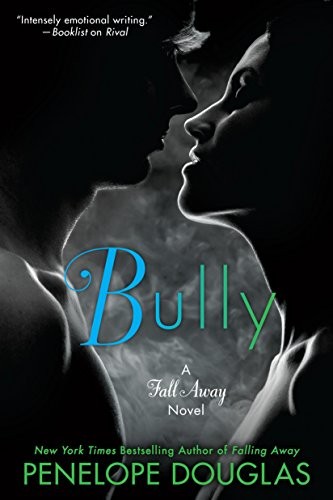
Bully
by Penelope Douglas
★ Top 25 book of 2013 · #14 on Best Books of 2013
Tate was once best friends with the boy who now torments her with pranks and rumors. Back from a year away, she is done hiding and determined to fight back during her senior year.
Best for: Readers who like high school enemies-to-more stories with a fierce heroine
Bully is #14 on BookWard's Best Books of 2013, out of 46 2013 books that cleared our data bar.
What Bully is about
Tate and the boy who torments her used to be best friends. Then he turned on her and made it his mission to ruin her life. Through high school she has been humiliated, shut out, and talked about behind her back, and his pranks and rumors have only grown crueler with time. She even spent a year in France to get away from him.
Now Tate is starting her senior year, and she has decided she is done running. Told in her own voice, the novel looks at what it feels like to be targeted by someone who once knew you best, and at the nerve it takes to finally fight back.
Bully on the Best Books of 2013
Bully came out in 2013. Of the 46 books first published in 2013 that met BookWard's data bar, it ranks #14 on our Best Books of 2013 list.
Why it made the list: 352 readers have shelved it on Open Library; readers rate it 4.6 out of 5 (11 ratings); 22 are reading it right now. The list ranks each year’s books on how many readers have picked them up, how highly readers rate them, and how many are reading them right now.
Nearby on the 2013 list
- Crazy Rich Asians Kevin Kwan, #12
- The Ocean at the End of the Lane Neil Gaiman, #13
- Inferno Dan Brown, #15
- And the Mountains Echoed Khaled Hosseini, #16
See all Best Books of 2013 Best books by year
More years: Best Books of 2012 Best Books of 2014.
The numbers behind it
- Readers: 313 want to read it, 22 are reading it now and 17 have read it, according to Open Library.
- Ratings: 4.6 out of 5 from 11 Open Library ratings.
| Signal | This book (0 to 100) | Weight |
|---|---|---|
| Reach | 63 | 55% |
| Reader love | 83 | 25% |
| Being read right now | 70 | 20% |
Questions about Bully
When was Bully published?
Bully by Penelope Douglas was first published in 2013.
Was Bully one of the best books of 2013?
Bully is #14 on BookWard's Best Books of 2013, out of 46 2013 books that cleared our data bar. 352 readers have shelved it on Open Library; readers rate it 4.6 out of 5 (11 ratings); 22 are reading it right now.
Why is Bully on the Best Books of 2013 list?
352 readers have shelved it on Open Library; readers rate it 4.6 out of 5 (11 ratings); 22 are reading it right now.
More of the best books of 2013
- House of Hades Rick Riordan, #1
- Hard Luck Jeff Kinney, #2
- Crown of Midnight Sarah J. Maas, #3
- The Screaming Staircase Jonathan Stroud, #4
- Unravel Me Tahereh Mafi, #5
- The Goldfinch Donna Tartt, #6
See the full Best Books of 2013, the Top 100, or new books on Rising.
How we know
This page uses public data: Open Library reader counts and ratings, and Wikipedia page views for recent years. The description is paraphrased from real source text. Rankings reflect reading interest, not quality or sales, and can be affected by data gaps. Lists update monthly.
Best suited to older teens and adults who enjoy New Adult romance.
Depends on the edition you pick.
A high school enemies-to-lovers story that runs on tension and trope. 48% taste match
 BookWard’s take
A high school enemies-to-lovers story that runs on tension and trope
Bully is a New Adult romance built on a single hostile pairing: Tate and the former best friend who turned on her. It hooks at once, because the premise is the conflict, and the pace stays brisk. But it leans hard on familiar tropes, since enemies-to-lovers is a well-worn route, and its originality is modest. The rivalry itself has real depth, with Tate's narration giving a close, one-sided view. Romance is central, the sentiment runs high, and the emotion is intense. The outlook is hopeful at its core. It is a book to read for heat and momentum, not for surprise, and it will suit readers who like the genre's rules played confidently.
The conflict between the two leads keeps scenes moving and rarely lets up, close to BookWard's preference.
The central dynamic is familiar to genre readers, so freshness comes from execution rather than concept.
Plain and accessible, written to keep the reader moving rather than to show off style.
The emotional push and pull between the two leads drives the story more than events do.
A story of fighting back and reconciling points toward hope despite the bruising start.
A conventional single-narrator romance arc told in a straightforward way.
The tone is mostly charged and serious, with banter doing the lighter work.
The torment at the heart of the story gives it a darker edge than a typical romance.
Feelings run intense, with longing, anger and hurt on the surface throughout.
See all 50 dialsEvery position, side by side with this book
Where it lines up
- EndingBookWard 8 · book 8
- OpeningBookWard 10 · book 9
- PaceBookWard 8 · book 7
Where it pulls apart
- Familiar tropesBookWard 10 · book 2
- Internal logicBookWard 10 · book 5
- LengthBookWard 1 · book 5
The premise of a former friend turned tormentor is the opening, so the tension starts immediately.
Enemies-to-lovers and high school rivalry are among romance's best-worn tropes, well away from BookWard's taste for the fresh.
The setup holds together on its own terms, though romance conventions bend plausibility for the sake of heat.
The conflict between the two leads keeps scenes moving and rarely lets up, close to BookWard's preference.
The central dynamic is familiar to genre readers, so freshness comes from execution rather than concept.
Tate's first-person view gives her real interiority, though the genre's types are never far away.
The romance arc drives toward a satisfying resolution, which suits BookWard's liking for closure.
Feelings run high and are played openly rather than held back, a gap from BookWard's restraint.
The cruelty is central to the setup and used to fuel tension more than to make a point.
This is a novel, so rigor does not apply.
Tate's confident, direct narration has a recognizable personality within the genre.
Story comes first; the book is about the relationship, not an argument.
Backstory about the rift is revealed through Tate's narration, with some plain telling.
The central tension gives the middle a steady push, though romance beats can repeat.
Plain and accessible, written to keep the reader moving rather than to show off style.
The emotional push and pull between the two leads drives the story more than events do.
A story of fighting back and reconciling points toward hope despite the bruising start.
A conventional single-narrator romance arc told in a straightforward way.
The tone is mostly charged and serious, with banter doing the lighter work.
Easy to read and quick to settle into, with no effort needed to follow it.
Fully grounded in a realistic high school and family world.
A small circle of friends, family and classmates surrounds the two leads.
An intimate story about one relationship and one school year.
Tate's thoughts and feelings carry much of the book, balanced by confrontations.
Sparring and confrontation scenes give conversation a large share of the book.
The central romance is the point of the whole book.
A recognizable American high school and suburban setting, comfortable for most readers.
Set in a contemporary world of teens and school life, close to the present day.
Rooted in genre trends of its moment, though the core rivalry has lasting appeal.
Tate narrates plainly, with the usual slant of one person's view of events.
Settings and bodies get moderate detail, with emotion given the larger share.
This is fiction, so nonfiction style does not apply.
This is fiction, so perspective as a nonfiction measure does not apply.
Part of a series, with later books continuing the world and its characters.
Some reveals about the past land, but the main arc is easy to see coming.
A comfort read for those who like the genre, though the cruelty gives it an edge.
The torment at the heart of the story gives it a darker edge than a typical romance.
Feelings run intense, with longing, anger and hurt on the surface throughout.
Humor is occasional and sharp, rarely broad or slapstick.
The conflict is mostly emotional and social, with some physical moments.
Sexual tension and on-page intimacy are a significant part of the genre promise.
The book stays with personal relationships and has no political focus.
Plain contemporary language with nothing difficult to parse.
Tate's voice is strongly felt and clearly takes sides in her own story.
Review written by BookWard, dial version 1, November 2026.
Who is Bully right for?
Best suited to older teens and adults who enjoy New Adult romance. It deals with sustained bullying and humiliation and includes mature romantic content, so sensitive readers should be aware.
Easy to read and quick to settle into, with no effort needed to follow it.
The torment at the heart of the story gives it a darker edge than a typical romance.
Feelings run intense, with longing, anger and hurt on the surface throughout.
The conflict is mostly emotional and social, with some physical moments.
Book CompanionBully: ideas, characters, themes
A girl who has spent years dodging her former best friend's cruelty decides to stop hiding and face him.
- A friendship turned hostile. Tate and the boy who torments her were once close, and the book treats the rupture as the engine of the story.
- Years of humiliation. The pranks and rumors grew more sadistic over time, and Tate describes the toll they took on her.
- Running away. She went to France for a year to avoid him, which shows how far she was willing to go to escape.
- A senior year reset. Tate refuses to let him ruin her final year, and the story sets her determination against his cruelty.
- Fighting back. Her turning point is deciding she has changed, which sets up the clash between the two leads.
Characters
Tate
Narrator and lead
The girl at the center, shaped by years of being targeted and now determined to stand her ground.
The bully
Tate's former best friend
The boy who turned on her and made it his mission to ruin her life, and who will not speak to her yet will not leave her alone.
Themes
How sustained cruelty shapes a person and what it costs them.
Tate's decision to stop hiding and fight back.
What it means when someone close turns into an enemy.
Whether people can become different from who they were.
How anger and attraction can sit side by side.
Discussion questions
- Why does Tate decide to stop running now, and does her reason feel earned?
- How does the book handle the line between rivalry and cruelty?
- What do you make of the way the story treats the bully's behavior?
- Does a shared past change how we judge someone's harm?
- Did the story's central pairing work for you, or did the trope feel too familiar?
Personalize your Book Companion
This is the general edition. In BookWard, the Companion is written for you: your reading profile, your notes, and spoiler-safe to the page you are on.
Buy, listen or borrow Bully
Each link opens a search for this book on that store, in a new tab.
Read on a device
Borrow
Reviews and community
If you liked Bully
Hopeless retold from Holder's side, with the guilt turned up
CorruptPenelope DouglasA dark college romance built on revenge and obsession
Twisted LoveAna HuangA trope-forward, steamy romance that rarely surprises but delivers what it promises
Bared to YouSylvia DayA trauma-informed erotic romance that became a publishing phenomenon
Find your own best books
Add what you have read, rate it, and BookWard will recommend what to read next.
Free to start. No credit card needed.