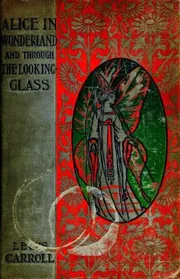
Alice's Adventures in Wonderland / Through the Looking Glass
by Lewis Carroll, Lucy Etheldred Broadwood · 1881
It suits readers from about seven and up, and reads well aloud, though adults will catch more of the wordplay.
271 pages, about 4.5 to 6.5 hours.
Two dream-logic classics where nonsense follows its own rules. 55% taste match
About the book
This volume brings together two children's classics by Lewis Carroll, Alice's Adventures in Wonderland and Through the Looking Glass, and What Alice Found There. Both are works of children's fiction in the English tradition, written in the nineteenth century and aimed at young readers, and both follow a girl named Alice into strange and fantastical settings.
The stories belong to the adventure genre and make heavy use of anthropomorphism, with talking animals and other odd creatures throughout. Alice meets figures such as the Caterpillar, the Dodo, the Dormouse, the Gryphon, the Hatter, the Duchess, the Fish-Footman and the Frog-Footman, as well as the King of Hearts and the Knave of Hearts. Wonderland is the main setting, and the second story carries Alice through a looking-glass. The opening scene finds her sitting beside her sister on a riverbank, thinking about a book that has no pictures or conversations in it, and the tale takes off from there. The first edition of the combined work dates to 1881. Many illustrated editions exist, and a typical copy runs to about 271 pages.
Characters
AliceCaterpillarDodoDormouseDuchessFish-Footman
Setting
WonderlandYing guo
Themes
adventure and adventurersadventure storiesadventure travelanimalsanthropomorphismartists' illustrated booksbooks and readingchildren
- Want to read 777
- Reading now 42
- Read 190
Most people shelving it are saving it for later.
Of 1009 readers who put it on a shelf, 77% want to read it, 4% are reading it now, 19% have finished it and 0% stopped before the end.
By the numbers
- The median edition runs 271 pages. Counting about 275 words a page and an adult reading pace of 250 words a minute, that is about 5.0 hours of reading.
- Open Library tracks 649 editions from 375 publishers, the earliest dated 1881 and the latest 2026, across 11 languages.
- On reader demand it ranks in the top 1% of the classic books in our catalog (8,749 of them).
- Libraries shelve it under Dewey 821.8 and Library of Congress class PR-4611.00000000.A7 1993.
Read it
The text of this edition is free to read online.
1 ebook provider carry it and a scanned copy is on the Internet Archive.
 BookWard’s take
Two dream-logic classics where nonsense follows its own rules
These two Victorian fantasies drop a girl into worlds that break every ordinary expectation, and the fun is in how thoroughly they commit. The hook is immediate: a riverbank, a book with no pictures or conversations, and the story is off. Carroll still feels unlike almost anything that followed, and his voice is unmistakable, a dry, playful narrator who relishes wordplay and argument. The internal logic is the clever part: the nonsense runs on strict, comic rules, closer to a puzzle than a muddle. Character depth is thinner, since the creatures are vivid types built for a single joke or quarrel. Alice's adventures are episodic, so the pace stays brisk and the middle never sags, though neither tale leans on a tight plot. Short chapters make it easy to dip into.
Two short novels in one volume of about 271 pages, built from brief chapters; it reads lean for a pair of classics.
Short episodes keep it moving at a lively clip, though it wanders rather than races.
Few books are as singular; the wordplay, the talking creatures and the looking-glass world remain distinctive.
Clear and light on the surface, with Victorian phrasing and verse parodies adding some ornament.
Events are driven by Alice's tumbling from one encounter to the next rather than by inner change.
Cheerful and curious overall, with dread kept at the level of comic menace.
A chain of loosely linked episodes in dream form, plus a second tale built like a chess game.
Humor is everywhere, from absurd arguments to puns and parody verse.
See all 50 dialsEvery position, side by side with this book
Where it lines up
- PaceBookWard 8 · book 7
- OriginalityBookWard 9 · book 10
- Shock for effectBookWard 9 · book 8
Where it pulls apart
- Internal logicBookWard 10 · book 7
- Character depthBookWard 8 · book 4
- LengthBookWard 1 · book 3
Two short novels in one volume of about 271 pages, built from brief chapters; it reads lean for a pair of classics.
Alice is drawn into the story within the first pages, with little warm-up before the strangeness begins.
It created many of the fantasy conventions others later copied, so on its own terms it avoids the familiar.
The nonsense follows its own strict, argumentative rules, though dream logic means events do not always connect cleanly.
Short episodes keep it moving at a lively clip, though it wanders rather than races.
Few books are as singular; the wordplay, the talking creatures and the looking-glass world remain distinctive.
The Hatter, the Duchess and the rest are sharp comic types rather than deeply drawn people, which suits the form.
Each story closes cleanly on a return to the ordinary world, though with a dreamlike shrug.
Warm toward childhood but not syrupy; the tone is more wry and teasing than tender.
The strangeness and the Queen's threats are there for surprise and comic effect, not for genuine darkness.
Carroll's playful, dry narration is unmistakable and carries the whole book.
Story comes first as a string of adventures, but the games with logic and language are central.
Almost everything is shown through encounters and conversation rather than explained.
The episodic chapters each bring a new oddity, so energy holds across both tales.
Clear and light on the surface, with Victorian phrasing and verse parodies adding some ornament.
Events are driven by Alice's tumbling from one encounter to the next rather than by inner change.
Cheerful and curious overall, with dread kept at the level of comic menace.
A chain of loosely linked episodes in dream form, plus a second tale built like a chess game.
Humor is everywhere, from absurd arguments to puns and parody verse.
Easy to follow line by line, though the wordplay and period references reward a slower read.
Everything is seen through Alice's eyes alone.
Events move forward in order, though dream time wobbles within scenes.
Talking animals, living playing cards and a looking-glass world make this fully fantastical.
A large parade of memorable creatures appears, though most are in and out quickly.
The stakes stay personal and small, centered on one girl in a dream.
Alice mostly responds to what happens around her, with action and encounter ahead of introspection.
Conversation drives nearly every scene, often as sparring over meaning.
There is no romance to speak of.
Wonderland and the looking-glass lands are about as unfamiliar as settings get.
Written in the nineteenth century, with Victorian manners and references throughout.
Its appeal has lasted well beyond its era and still reads fresh.
The narrator is straightforward and trustworthy, even when the world is not.
Right and wrong are mostly clear, with a few playful muddles over rules and authority.
The settings and creatures are drawn with vivid, inventive detail without long stretches of scene painting.
Review written by BookWard, dial version 1, November 2026.
Who is Alice's Adventures in Wonderland / Through the Looking Glass right for?
It suits readers from about seven and up, and reads well aloud, though adults will catch more of the wordplay. A few moments of comic menace, such as the Queen's threats, are mild but may unsettle very young listeners.
Easy to follow line by line, though the wordplay and period references reward a slower read.
Book CompanionAlice's Adventures in Wonderland / Through the Looking Glass: ideas, characters, themes
A girl meets absurd worlds where adult rules, language and logic are turned inside out, and she keeps trying to make sense of them.
- Falling into the story. Alice follows a rabbit down a hole and the book leaves ordinary life behind almost at once.
- A parade of odd characters. The Caterpillar, Hatter, Duchess and others each offer a new puzzle in manners or meaning.
- Two linked journeys. The second story carries Alice through a looking-glass into a reversed world, echoing the first.
- Language as play. Puns, riddles and arguments over what words mean fuel much of the humor.
- Illustrated tradition. Many editions exist with artwork, and the pictures have become part of how readers imagine Wonderland.
Characters
Alice
Protagonist
A curious, self-possessed girl who tries to reason with a world that has no use for reason.
The Hatter
Wonderland host
A tea-party figure whose conversation twists logic and time into riddles.
The Duchess
Wonderland resident
A crusty, bossy figure who lectures in confident non sequiturs.
The Caterpillar
Questioner
A calm creature who presses Alice on who she is.
The Gryphon
Companion
A fabulous creature who guides Alice and shows how tall tales are told.
Themes
Alice's changes in size and her questioning of her own identity stand in for the confusions of childhood.
Absurd events are argued with strict reasoning, showing how fragile sense can be.
Rulers and elders are often silly or domineering, and Alice questions them.
Words slip and change meaning, and conversations turn on literal readings.
Alice's wish to know and explore drives her through each strange scene.
Discussion questions
- Why does Carroll make the nonsense follow strict rules instead of being random?
- How does Alice's behavior change when she meets figures of authority?
- Which creature's conversation do you find most revealing, and why?
- How do the looking-glass world and Wonderland mirror or differ from each other?
- Does the dream frame make the story less or more serious?
Personalize your Book Companion
This is the general edition. In BookWard, the Companion is written for you: your reading profile, your notes, and spoiler-safe to the page you are on.
Buy, listen or borrow Alice's Adventures in Wonderland / Through the Looking Glass
Each link opens a search for this book on that store, in a new tab.
Read on a device
Borrow
Reviews and community
If you liked Alice's Adventures in Wonderland / Through the Looking Glass
Carroll's nonsense expedition: eight fits, one elusive creature, wild invention
The Jungle BookRudyard KiplingKipling's jungle tales: short, vivid, and nothing like the cartoon
Witches AbroadTerry PratchettThree witches, one wand, and a fairy tale with teeth
The Amulet of SamarkandJonathan StroudA sarcastic djinni steals the show in magical London
Sources: Open Library.
Track Alice's Adventures in Wonderland / Through the Looking Glass and find your next favorite
Add it to your shelf, rate what you have read, and BookWard will recommend what fits you.
Free to start. No credit card needed.