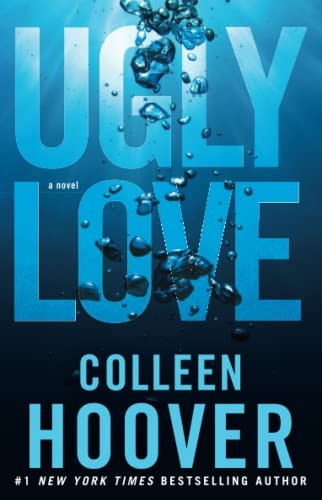
Ugly Love
by Colleen Hoover
★ Top 10 book of 2014 · #6 on Best Books of 2014
Tate finds pilot Miles passed out at her door, and a strong attraction develops despite no spark of love. They agree to simple rules about the past and future, but Tate may not be able to keep to them.
Best for: Readers who like romances about casual arrangements that turn complicated and emotional
Ugly Love is #6 on BookWard's Best Books of 2014, out of 66 2014 books that cleared our data bar.
What Ugly Love is about
Tate Collins finds Miles Archer, an airline pilot, passed out outside her apartment door. He turns out to live right next door. They are not friends, yet the pull between them is obvious. Miles wants no part of love, and Tate has no room in her life for a relationship, so they settle on an arrangement with two rules: never ask about the past, and never expect a future.
The question driving Colleen Hoover's 2014 novel is whether Tate can stick to those terms once she realizes they are more than she can handle. It is a raw, emotional romance about attraction, emotional wounds and the distance people keep to protect themselves. Readers who like intense, steamy contemporary love stories will want to pick it up.
Ugly Love on the Best Books of 2014
Ugly Love came out in 2014. Of the 66 books first published in 2014 that met BookWard's data bar, it ranks #6 on our Best Books of 2014 list.
Why it made the list: 7,071 readers have shelved it on Open Library; readers rate it 4 out of 5 (186 ratings); 509 are reading it right now. The list ranks each year’s books on how many readers have picked them up, how highly readers rate them, and how many are reading them right now.
It earns Being read right now.
Nearby on the 2014 list
- Surrounded by Idiots Thomas Erikson, #4
- After (After Series, Book 1) Anna Todd, #5
- All the Light We Cannot See Anthony Doerr, #7
- Milk and Honey Rupi Kaur, #8
See all Best Books of 2014 Best books by year
More years: Best Books of 2013 Best Books of 2015.
The numbers behind it
- Readers: 6,211 want to read it, 509 are reading it now and 351 have read it, according to Open Library.
- Ratings: 4 out of 5 from 186 Open Library ratings.
| Signal | This book (0 to 100) | Weight |
|---|---|---|
| Reach | 100 | 55% |
| Reader love | 44 | 25% |
| Being read right now | 100 | 20% |
Questions about Ugly Love
When was Ugly Love published?
Ugly Love by Colleen Hoover was first published in 2014.
Was Ugly Love one of the best books of 2014?
Ugly Love is #6 on BookWard's Best Books of 2014, out of 66 2014 books that cleared our data bar. 7,071 readers have shelved it on Open Library; readers rate it 4 out of 5 (186 ratings); 509 are reading it right now.
Why is Ugly Love on the Best Books of 2014 list?
7,071 readers have shelved it on Open Library; readers rate it 4 out of 5 (186 ratings); 509 are reading it right now.
More of the best books of 2014
- To All the Boys I've Loved Before Jenny Han, #1
- The Long Haul Jeff Kinney, #2
- Zero to One Peter A. Thiel, #3
- Surrounded by Idiots Thomas Erikson, #4
- After (After Series, Book 1) Anna Todd, #5
- All the Light We Cannot See Anthony Doerr, #7
See the full Best Books of 2014, the Top 100, or new books on Rising.
How we know
This page uses public data: Open Library reader counts and ratings, and Wikipedia page views for recent years. The description is paraphrased from real source text. Rankings reflect reading interest, not quality or sales, and can be affected by data gaps. Lists update monthly.
Best suited to adult readers, as it includes frank sexual content and heavy emotional themes.
Depends on the edition you pick.
A hot, heartbreaking romance built on two rules and a locked past. 50% taste match
 BookWard’s take
A hot, heartbreaking romance built on two rules and a locked past
Ugly Love hooks fast: Tate finds the pilot Miles passed out at her door, and the no-strings arrangement they strike gets the story moving almost at once. This is a romance first and foremost, and the dual timeline gives it a shifting structure that's easy to appreciate. Where it lost me a little is in its reliance on familiar tropes. The friends-with-benefits setup and the guarded hero are well-worn ground, so it leans on convention more than I'd like. The pace stays brisk, the dialogue is plentiful, and the sentiment runs high rather than restrained. The emotion is intense and the sex is frank. Readers who want a fast, feelings-forward love story will be well served; those chasing originality may not.
The premise of two neighbors with a rule-bound arrangement is well worn, so originality sits below BookWard's high bar.
Plain, conversational sentences that stay out of the way, a bit simpler than BookWard's middle-leaning taste.
The story runs on what Tate and Miles feel and withhold, closely matching BookWard's character-driven lean.
Pain runs through it, but it is aimed at healing and the possibility of love, landing near BookWard's hopeful side.
Present-day chapters alternate with the past, a mild structural twist that sits slightly above BookWard's conventional middle.
Banter and playful flirting lighten the heavier material, though the book stays mostly earnest.
Grief and emotional damage sit under the romance, giving it more weight than a typical light love story.
The book is built to produce intense feeling, pushing well beyond BookWard's more measured emotional register.
See all 50 dialsEvery position, side by side with this book
Where it lines up
- PaceBookWard 8 · book 8
- EndingBookWard 8 · book 8
- Story or ideasBookWard 3 · book 2
Where it pulls apart
- Familiar tropesBookWard 10 · book 3
- LengthBookWard 1 · book 5
- Internal logicBookWard 10 · book 6
Tate finding Miles passed out at her door starts the story at once, which matches BookWard's love of immediate openings.
The no-strings arrangement and guarded, wounded hero are familiar romance moves, a gap from BookWard's taste for avoiding tropes.
The rules and the past that drives Miles hold together well enough, though the emotional logic matters more than strict plausibility.
The premise of two neighbors with a rule-bound arrangement is well worn, so originality sits below BookWard's high bar.
Tate and Miles are given real emotional history, though the supporting cast stays thin next to what BookWard prizes.
The central relationship resolves with clear emotional closure, in step with BookWard's preference for resolved endings.
It leans into big feelings and heart-on-sleeve moments, a long way from the restraint BookWard favors.
The darker backstory is tied to the characters' pain rather than added for jolts, though some beats lean on drama.
A romance novel, so this dial does not apply.
Hoover's chatty, intimate style is recognizable and easy to spot, matching BookWard's liking for distinctive voices.
This is entirely story-led, driven by the relationship rather than any argument, well away from BookWard's idea-leaning lean.
Backstory is revealed in its own timeline scenes, but feelings are often stated directly rather than left to implication.
The push and pull between the leads sustains momentum, with the interleaved past keeping the middle from drifting.
Plain, conversational sentences that stay out of the way, a bit simpler than BookWard's middle-leaning taste.
The story runs on what Tate and Miles feel and withhold, closely matching BookWard's character-driven lean.
Pain runs through it, but it is aimed at healing and the possibility of love, landing near BookWard's hopeful side.
Present-day chapters alternate with the past, a mild structural twist that sits slightly above BookWard's conventional middle.
Banter and playful flirting lighten the heavier material, though the book stays mostly earnest.
An easy, quick read that asks little effort, lighter than BookWard's comfortable middle.
The story moves between Tate's present and Miles's past perspective, giving two angles on the same relationship.
Present-day chapters are interleaved with the past, so the timeline shifts often, above BookWard's moderate tolerance.
Entirely grounded in everyday contemporary life, with no fantastical elements.
Focused tightly on two leads with a small circle around them, matching BookWard's modest cast preference.
A deeply intimate story centered on two people and one apartment building, more contained than BookWard's middle.
The drama is almost entirely emotional and interior, tilting well toward inner thoughts.
Banter and heated exchanges carry much of the story, in line with BookWard's fondness for dialogue.
The relationship is the whole point of the book, which puts it at the very top of this dial.
A familiar contemporary setting of apartments, work and neighbors that requires no adjustment.
Set in the present day, a bit more contemporary than BookWard's middle.
Its appeal is tied to a particular wave of popular contemporary romance, so it may date more than classics do.
The narration is a straightforward first-person account, so reliability is not a concern, below BookWard's unreliable lean.
Right and wrong are fairly legible, with empathy for flawed choices, less ambiguous than BookWard's leaning.
Settings are sketched lightly so the focus stays on the characters, a little sparser than BookWard's taste.
A novel, so this nonfiction dial does not apply.
A novel, so this nonfiction dial does not apply.
Stands alone as a complete story, though it shares the author's wider romance output.
A hidden past and withheld information create reveals, with enough surprises to hold interest.
Emotionally heavy in places but ultimately a satisfying, genre-comfortable read rather than a challenging one.
Grief and emotional damage sit under the romance, giving it more weight than a typical light love story.
The book is built to produce intense feeling, pushing well beyond BookWard's more measured emotional register.
Humor is mostly gentle teasing and flirtation rather than broad comedy.
Little physical violence appears on the page; the pain is emotional.
Frank, on-page intimacy is central to the arrangement, placing it high on this dial.
Politics are essentially absent, with the focus entirely on personal relationships.
Plain, accessible language with no dialect or dense passages.
The narration shares inner feelings freely but does not push views on the reader.
Rooted in the characters' past and present feelings rather than looking toward the future.
It believes love can heal damage, giving it a lean toward idealism despite its hurt.
Review written by BookWard, dial version 1, November 2026.
Who is Ugly Love right for?
Best suited to adult readers, as it includes frank sexual content and heavy emotional themes. Readers sensitive to grief and trauma should be aware that the backstory is painful.
An easy, quick read that asks little effort, lighter than BookWard's comfortable middle.
Grief and emotional damage sit under the romance, giving it more weight than a typical light love story.
The book is built to produce intense feeling, pushing well beyond BookWard's more measured emotional register.
Little physical violence appears on the page; the pain is emotional.
Book CompanionUgly Love: ideas, characters, themes
Two guarded neighbors try to keep desire separate from love, and the cost of that rule slowly comes due.
- The two rules. Tate and Miles agree never to ask about the past and not to expect a future, which frames the whole arrangement.
- A chance meeting. The story begins when Tate finds Miles passed out outside her apartment door, an unromantic first impression.
- Attraction versus intention. Both say they do not want a relationship, yet their chemistry keeps pulling against those stated limits.
- The past as pressure. Miles's unspoken history sits behind the arrangement, and the book alternates between present and past to reveal it.
- Staying power of feeling. Tate tries to hold to the rules, but the story asks whether she can keep her emotions out of it.
Characters
Tate Collins
Protagonist
A neighbor with little time for a relationship who agrees to Miles's terms and then struggles to keep to them.
Miles Archer
Love interest
An airline pilot who lives next door, wants no love, and keeps his past closed off.
Themes
Whether emotional boundaries can really hold once attachment forms.
How unresolved history shapes present choices and limits intimacy.
Physical connection as both shield and risk for guarded people.
Whether love can reach someone who has decided not to need it.
Discussion questions
- Were the two rules ever realistic, or were they doomed from the start?
- How does alternating between past and present change how you judge Miles?
- Is the arrangement fair to both characters, or does it favor one?
- Which tropes did you enjoy, and which felt too familiar?
- Does the ending feel earned given how the relationship begins?
Personalize your Book Companion
This is the general edition. In BookWard, the Companion is written for you: your reading profile, your notes, and spoiler-safe to the page you are on.
Buy, listen or borrow Ugly Love
Each link opens a search for this book on that store, in a new tab.
Read on a device
Borrow
Reviews and community
If you liked Ugly Love
A marriage in trouble, held together by one old promise
Game OnNavessa AllenA steamy fake-dating revenge romance with banter and a morally gray hero
Punk 57Penelope DouglasPen pals turn enemies in a heated, hooky enemies-to-lovers romance
November 9Colleen HooverA yearly-meeting romance that builds toward one big twist
Find your own best books
Add what you have read, rate it, and BookWard will recommend what to read next.
Free to start. No credit card needed.