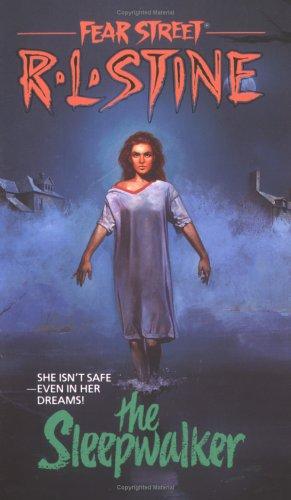
The Sleepwalker
by Robert Lawrence Stine
★ Top 25 book of 1990 · #16 on Best Books of 1990
Mayra Barnes takes a summer job with Mrs. Cottler on Fear Street, then starts sleepwalking and waking up outdoors at night. With a possible witch nearby and a strange man following her, she must uncover the truth.
Best for: Fans of spooky tales with a suspected witch, a menacing stranger and rising peril.
The Sleepwalker is #16 on BookWard's Best Books of 1990, out of 39 1990 books that cleared our data bar.
What The Sleepwalker is about
Mayra Barnes takes a summer job on Fear Street, working for old Mrs. Cottler. A week in, she starts sleepwalking, and each time she wakes outdoors in the middle of the night with no idea where she is. Mayra begins to suspect that Mrs. Cottler may be a witch, and she wonders whether a spell is behind her nightly wanderings. Meanwhile a menacing stranger follows her and seems to recognize her, though she has never seen him before. Mayra comes to understand that she must find out what is going on, or she may never leave Fear Street alive. R. L. Stine's 1990 tale of witchcraft and creeping dread suits young readers who like their suspense with a shiver.
The Sleepwalker on the Best Books of 1990
The Sleepwalker came out in 1990. Of the 39 books first published in 1990 that met BookWard's data bar, it ranks #16 on our Best Books of 1990 list.
Why it made the list: 324 readers have shelved it on Open Library. The list ranks each year’s books on how many readers have picked them up, how highly readers rate them, and how many are reading them right now.
Nearby on the 1990 list
- The Stepsister Robert Lawrence Stine, #14
- The Face on the Milk Carton Caroline B. Cooney, #15
- Dawn V.C. Andrews, #17
- Postmortem Patricia Cornwell, #18
See all Best Books of 1990 Best books by year
More years: Best Books of 1991.
The numbers behind it
- Readers: 257 want to read it, 13 are reading it now and 54 have read it, according to Open Library.
| Signal | This book (0 to 100) | Weight |
|---|---|---|
| Reach | 69 | 55% |
| Reader love | 26 | 25% |
| Being read right now | 49 | 20% |
Questions about The Sleepwalker
When was The Sleepwalker published?
The Sleepwalker by Robert Lawrence Stine was first published in 1990.
Was The Sleepwalker one of the best books of 1990?
The Sleepwalker is #16 on BookWard's Best Books of 1990, out of 39 1990 books that cleared our data bar. 324 readers have shelved it on Open Library.
Why is The Sleepwalker on the Best Books of 1990 list?
324 readers have shelved it on Open Library.
More of the best books of 1990
- Good Omens Terry Pratchett, #1
- Jurassic Park Michael Crichton, #2
- The Eye of the World Robert Jordan, #3
- The Witching Hour Anne Rice, #4
- Flow Mihaly Csikszentmihalyi, #5
- The Things They Carried Tim O'Brien, #6
See the full Best Books of 1990, the Top 100, or new books on Rising.
How we know
This page uses public data: Open Library reader counts and ratings, and Wikipedia page views for recent years. The description is paraphrased from real source text. Rankings reflect reading interest, not quality or sales, and can be affected by data gaps. Lists update monthly.
Written for young readers, it suits teens and confident younger readers who enjoy scary stories.
Depends on the edition you pick.
A quick Fear Street chiller about sleepwalking and a suspicious old woman. 43% taste match
 BookWard’s take
A quick Fear Street chiller about sleepwalking and a suspicious old woman
The Sleepwalker is a 1990 Fear Street novel from R. L. Stine, built on a clean, grabby setup: a summer job, a strange old employer, and a girl who keeps waking up outdoors at night with no idea where she is. The hook lands almost immediately, since the trouble starts within the first week. It also leans heavily on familiar tropes, with a possible witch and a menacing stranger on offer. The pace is brisk, which is a real pleasure here. Don't come looking for deep characters or fresh ideas; this is a plot-first thrill ride meant to be gulped in an evening, and it works best taken on those terms.
Teen horror of this kind is typically lean and quick, which matches BookWard's love of tight books.
Constant menace keeps it moving, close to the quick pace BookWard enjoys.
The sleepwalking-and-witch premise is a familiar horror pairing, so it is less original than BookWard usually wants.
Plain, quick sentences built for speed, plainer than BookWard's middle-of-the-road taste.
Driven by what happens to Mayra next, so it is far more plot-led than BookWard's lean toward character.
A frightened girl in peril gives it a darker outlook than BookWard's mildly hopeful lean.
A straightforward forward-moving thriller, more conventional than BookWard's slight lean toward experiment.
The mood is suspense and dread with almost no comedy, serious where BookWard likes a bit of levity.
Scary but pitched at a young audience, so it sits on the lighter side of BookWard's middle.
Fear and urgency carry it, though without deep emotional weight, slightly under BookWard's mark.
See all 50 dialsEvery position, side by side with this book
Where it lines up
- LengthBookWard 1 · book 2
- OpeningBookWard 10 · book 9
- PaceBookWard 8 · book 9
Where it pulls apart
- Familiar tropesBookWard 10 · book 3
- Internal logicBookWard 10 · book 5
- OriginalityBookWard 9 · book 3
Teen horror of this kind is typically lean and quick, which matches BookWard's love of tight books.
The sleepwalking begins within a week of the job starting, so the mystery is live almost at once, just as BookWard likes.
A possible witch and a mysterious stalker are stock horror furniture, which sits well away from BookWard's taste for fresh ideas.
Teen horror of this kind runs on spooky momentum more than airtight rules, so it is looser than BookWard prefers.
Constant menace keeps it moving, close to the quick pace BookWard enjoys.
The sleepwalking-and-witch premise is a familiar horror pairing, so it is less original than BookWard usually wants.
Mayra is a heroine defined by the danger around her rather than by deep inner life, thinner than BookWard likes.
Light on tenderness and focused on fright, so it is fairly restrained, though not as much as BookWard prefers.
The scares are there to thrill, so they lean more on effect than earned darkness.
This is fiction, so rigor does not apply.
Stine's snappy, cliffhanger-driven style is recognisable but not as distinctive as BookWard's favorites.
Story-led all the way: it is a chase through a mystery, while BookWard also prefers story over ideas.
Plot-driven horror like this mostly dramatizes events and keeps explanation light, close to BookWard's preference.
A thriller of this kind has little room to drag, though BookWard likes middles that stay fully tense.
Plain, quick sentences built for speed, plainer than BookWard's middle-of-the-road taste.
Driven by what happens to Mayra next, so it is far more plot-led than BookWard's lean toward character.
A frightened girl in peril gives it a darker outlook than BookWard's mildly hopeful lean.
A straightforward forward-moving thriller, more conventional than BookWard's slight lean toward experiment.
The mood is suspense and dread with almost no comedy, serious where BookWard likes a bit of levity.
Easy, quick reading from the first page, even lighter than BookWard's comfortable middle.
The witch question pushes it into the supernatural, a little more fantastical than BookWard's middle position.
One girl, one street, one threat keeps it intimate, close to BookWard's slightly intimate lean.
Mostly external danger and pursuit, tilting more toward outer action than BookWard's inward lean.
Conversation and confrontation carry much of the suspense, near the heavier dialogue BookWard likes.
The setup centers on mystery and menace, so romance stays in the background.
Written in 1990, so its feel is dated rather than present-day, short of BookWard's modern lean.
A product of its era's teen-horror boom, so it carries less staying power than BookWard prizes.
Good and threat are plainly separated in a chase story, clearer than BookWard's ambiguity.
Atmosphere is sketched rather than lingered over, sparser than BookWard's middle ground.
Part of the Fear Street line, so more series-bound than BookWard's standalone-leaning middle.
Cliffhangers and reveals are the engine of this kind of book, matching BookWard's taste for surprises.
A comfortable, familiar thrill rather than a book that pushes the reader, gentler than BookWard's lean.
Scary but pitched at a young audience, so it sits on the lighter side of BookWard's middle.
Fear and urgency carry it, though without deep emotional weight, slightly under BookWard's mark.
Menace is constant but this is teen horror, so on-page violence stays modest.
Aimed at young readers, so sexual content is essentially absent.
A personal fright story with no political concerns on the page.
Plain, accessible language throughout, easier than BookWard's middle.
Narration stays neutral and tells the story without editorializing, a bit below BookWard's lean.
Concerned with what the stranger recognizes in Mayra, so it looks back more than ahead.
Survival is the goal rather than any larger worldview, so it sits near the middle.
Review written by BookWard, dial version 1, November 2026.
Who is The Sleepwalker right for?
Written for young readers, it suits teens and confident younger readers who enjoy scary stories. It features suspense, a stalker, and supernatural menace, which may unsettle sensitive readers.
Easy, quick reading from the first page, even lighter than BookWard's comfortable middle.
Scary but pitched at a young audience, so it sits on the lighter side of BookWard's middle.
Fear and urgency carry it, though without deep emotional weight, slightly under BookWard's mark.
Menace is constant but this is teen horror, so on-page violence stays modest.
Book CompanionThe Sleepwalker: ideas, characters, themes
A girl's new summer job on Fear Street coincides with nightly sleepwalking, and she must learn what is behind it before it costs her everything.
- The job. Mayra takes a summer position working for an old woman named Mrs. Cottler.
- The sleepwalking. A week in, Mayra begins waking up outdoors in the middle of the night with no memory of getting there.
- The suspicion. Mayra comes to wonder whether Mrs. Cottler might be a witch casting a spell on her.
- The stranger. A menacing man follows Mayra and seems to recognize her, though she has never seen him.
- The stakes. Mayra realizes she must act and uncover the truth, or she may never leave Fear Street alive.
Characters
Mayra Barnes
Protagonist
A young woman on a summer job who starts sleepwalking and is drawn into danger.
Mrs. Cottler
Employer
The old woman Mayra works for, whom Mayra begins to suspect is a witch.
The stranger
Pursuer
A menacing man who follows Mayra and seems to know her.
Themes
Not knowing what is happening to you can be as frightening as the threat itself.
Sleepwalking puts Mayra's own body beyond her command.
Mayra must decide whom to doubt and whom to trust.
Being recognized by a stranger raises the question of who Mayra is to others.
Discussion questions
- Why does sleepwalking make for such an effective horror device?
- How does the story use Mayra's suspicion of Mrs. Cottler to build tension?
- What does it mean to be recognized by someone you have never met?
- Which elements of this setup are classic horror conventions, and which feel fresh?
- How does a thriller keep its suspense going from start to finish?
Personalize your Book Companion
This is the general edition. In BookWard, the Companion is written for you: your reading profile, your notes, and spoiler-safe to the page you are on.
Buy, listen or borrow The Sleepwalker
Each link opens a search for this book on that store, in a new tab.
Read on a device
Borrow
Reviews and community
If you liked The Sleepwalker
A fast, cursed-camera Goosebumps tale built for young readers
Death RowFreida McFaddenA condemned woman, a dead husband who may not be dead
The Silver Eyes (Five Nights At Freddy's #1)Scott CawthonA game-born horror novel about friends, a pizzeria, and machines
The Spook's ApprenticeJoseph DelaneyA brisk, chilling Lancashire monster hunt with a young apprentice
Find your own best books
Add what you have read, rate it, and BookWard will recommend what to read next.
Free to start. No credit card needed.