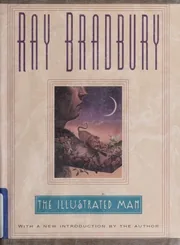
The Illustrated Man
by Ray Bradbury · 1946
Suits teens and adults who enjoy classic speculative fiction, and its short stories make it approachable.
251 pages, about 4 to 6 hours.
Eighteen strange, brief tales framed by a tattooed man. 56% taste match
The story
The Illustrated Man is a short story collection by the American writer Ray Bradbury, first published in 1946 and often listed with the 1951 edition of the book. It brings together eighteen tales that move between science fiction, fantasy and horror, and it runs to about 251 pages in its typical edition. More than eighty editions of the book exist.
The stories range across space flight, space colonies and invasion, and they also turn to children, prejudice, magic and storytelling. Tattooing gives the collection its frame, and one story opens with a line addressed to a man named George about the nursery. Across the eighteen pieces, a recurring concern is how machines and technology collide with the inner lives of the people who depend on them. The book was nominated for the International Fantasy Award in 1952. It suits readers who enjoy classic American speculative fiction in short form, where each story can be read on its own.
"GEORGE, I wish you'd look at the nursery."
Themes
English Short storiesTattooingMagicStorytellingAmerican Horror storiesPrejudiceInvasionSpace colonies
- Want to read 288
- Reading now 6
- Read 61
Most people shelving it are saving it for later.
Of 355 readers who put it on a shelf, 81% want to read it, 2% are reading it now, 17% have finished it and 0% stopped before the end.
By the numbers
- The median edition runs 251 pages. Counting about 275 words a page and an adult reading pace of 250 words a minute, that is about 4.6 hours of reading.
- Open Library tracks 82 editions from 56 publishers, the earliest dated 1951 and the latest 2020, across 5 languages.
- On reader demand it ranks in the top 3% of the classic books in our catalog (8,749 of them).
- Libraries shelve it under Dewey 813.54 and Library of Congress class PS-3503.00000000.R167 Il.
 BookWard’s take
Eighteen strange, brief tales framed by a tattooed man
Bradbury's collection suits BookWard where it counts. Because it is a set of short stories, it keeps things tight, and each tale has to earn its place, so a sagging middle is rarely a worry. The openings are strong too, since every story must hook quickly. Where it parts company is in what drives the stories: Bradbury leans on ideas, using space flight, invasion and prejudice to ask what machines do to the people who rely on them. That clash between cold technology and human psychology is the engine. The voice is unmistakable, and the prose runs lyrical and a touch ornate. It's a classic of American speculative fiction, with horror and fantasy mixed in, readable one story at a time.
At about 251 pages of eighteen separate stories, each piece stays short, which matches BookWard's love of tight reading.
Short forms move briskly, and most stories reach their point without lingering, close to BookWard's preference.
The tattoo frame and the stories' odd angles on space and machines feel distinctive, which BookWard rewards.
Lush, figurative and often lyrical, the prose runs more ornate than BookWard's middling taste.
The stories turn on situations and ideas more than on individual characters' inner change.
The tone tilts wary about machines and human failings, with flashes of wonder rather than steady optimism.
A framing device of the tattooed man gathers separate stories, a modest departure from a conventional novel.
Humor is occasional and wry, while the dominant tone is serious, eerie or wistful.
See all 50 dialsEvery position, side by side with this book
Where it lines up
- Sagging middleBookWard 8 · book 8
- LengthBookWard 1 · book 2
- OpeningBookWard 10 · book 9
Where it pulls apart
- Familiar tropesBookWard 10 · book 6
- Internal logicBookWard 10 · book 6
- Story or ideasBookWard 3 · book 8
At about 251 pages of eighteen separate stories, each piece stays short, which matches BookWard's love of tight reading.
A short story has little room to warm up, so each tale tends to pull the reader in fast, as BookWard likes.
Rockets, invasions and colonies were well-worn pulp ground, though Bradbury's treatment is fresher than the settings suggest.
These are fables about technology and people, so the internal rules matter less than the idea each tale carries.
Short forms move briskly, and most stories reach their point without lingering, close to BookWard's preference.
The tattoo frame and the stories' odd angles on space and machines feel distinctive, which BookWard rewards.
Short pieces built around an idea leave characters sketched rather than deeply drawn, a step below BookWard's taste.
Many stories close on a sharp turn or a quiet sting, resolving the idea more than every loose thread.
Warmth and nostalgia sit alongside cold endings, so the book is neither syrupy nor strictly restrained.
The horror stories land their darkness for a reason tied to the theme, which fits BookWard.
Bradbury's poetic, immediately recognizable voice is the collection's signature and fully meets BookWard's taste for distinctiveness.
Each story is built to examine a notion about technology and human nature, so ideas lead more than plot.
Bradbury mostly lets situations play out in scene, though some stories state their ideas directly, close to BookWard's preference.
With eighteen self-contained stories there is no single middle to sag, and the collection stays lively throughout.
Lush, figurative and often lyrical, the prose runs more ornate than BookWard's middling taste.
The stories turn on situations and ideas more than on individual characters' inner change.
The tone tilts wary about machines and human failings, with flashes of wonder rather than steady optimism.
A framing device of the tattooed man gathers separate stories, a modest departure from a conventional novel.
Humor is occasional and wry, while the dominant tone is serious, eerie or wistful.
The language is accessible and stories are brief, though the ideas reward some thought.
Each story brings new people and angles, so the collection spreads across many viewpoints.
Within each story events generally run in order, even as the frame holds the tales together.
Space travel, magic and living machines place the book well into speculative, imaginative territory.
Each story introduces fresh characters, so the overall cast is wide, though none is large.
Some tales reach across planets and invasions, while others stay in a single room or family.
Stories mix external events with the psychology of people facing them, landing in the middle.
Conversation carries a fair share of many stories without dominating them.
Romance is a minor thread at most, since the focus is on technology, fear and wonder.
Mars, rockets and futuristic rooms make the settings often unfamiliar, with ordinary homes mixed in.
First published decades ago, it belongs to a mid-century past rather than the present day.
Concerns about technology versus human feeling have kept the stories current well beyond their era.
The narration is generally straightforward, with little reason to doubt what the storyteller reports.
The tales raise questions about prejudice and machines without always handing down a neat verdict.
Bradbury paints vivid, colorful scenes, from alien landscapes to imagined rooms, with rich imagery.
Review written by BookWard, dial version 1, November 2026.
Who is The Illustrated Man right for?
Suits teens and adults who enjoy classic speculative fiction, and its short stories make it approachable. Some tales carry horror and dark themes, including prejudice and threat, so a younger reader may want a quick look first.
The language is accessible and stories are brief, though the ideas reward some thought.
Book CompanionThe Illustrated Man: ideas, characters, themes
A collection of eighteen stories, held together by tattooing, explores how cold technology collides with the inner lives of the people who depend on it.
- A frame holds the tales. Tattooing provides the connecting thread that gathers the separate stories into one book.
- Technology versus people. A recurring concern across the collection is how machines clash with human psychology.
- Genres blend. The stories move between science fiction, fantasy and horror within one volume.
- Wide range of subjects. Space flight, space colonies, invasion, children, prejudice, magic and storytelling all appear.
- Stories stand alone. Each of the eighteen pieces can be read on its own, so the book rewards dipping in.
Themes
The tension between machines and the people who rely on them.
How fear and bias shape the way people treat others.
The power of tales, here carried by a tattooed man's images.
What happens when people spread into space or are threatened from it.
How children see and are shaped by the worlds adults build.
Discussion questions
- Which story best shows technology clashing with human feeling, and why?
- How does the tattoo frame change the way you read the separate tales?
- Where does the collection feel hopeful, and where wary?
- How do the science fiction, fantasy and horror elements work together?
- Which story would you recommend first to a new reader, and what makes it stand alone?
Personalize your Book Companion
This is the general edition. In BookWard, the Companion is written for you: your reading profile, your notes, and spoiler-safe to the page you are on.
Buy, listen or borrow The Illustrated Man
Each link opens a search for this book on that store, in a new tab.
Read on a device
Borrow
Reviews and community
If you liked The Illustrated Man
Linked stories that read as one novel about settling Mars
The October CountryRay BradburyNineteen macabre tales from the long twilight of Bradbury's imagination
Count ZeroWilliam GibsonGibson's braided cyberspace sequel, fast, strange and rarely familiar
Sublimia SyndromeExurb1aA million-year-old mystery, chased by five seekers across the stars
Sources: Open Library.
Track The Illustrated Man and find your next favorite
Add it to your shelf, rate what you have read, and BookWard will recommend what fits you.
Free to start. No credit card needed.