Suited to adult readers and mature older teens.
450 pages, about 7 to 10.5 hours.
A Mafia family saga that earns its reputation. 63% taste match
The story
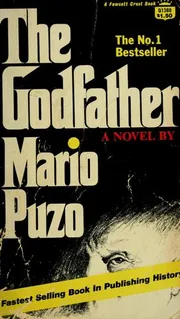
Mario Puzo's The Godfather, first published in 1969, is a crime novel centered on a fictional Mafia family in New York. The Corleone family is headed by Vito Corleone, known as the Godfather, and the story follows its members and associates, among them Santino, Michael, Frederico, and Constanzia Corleone, along with Thomas Hagen, Peter Clemenza, Johnny Fontane, and Kay Adams.
The book opens in a New York courtroom, where a man named Amerigo Bonasera waits for a verdict concerning his daughter. From there it moves through the world of organized crime and its Italian American families, with settings in New York City, Long Island, and Las Vegas. The narrative spans the years 1945 to 1955 and also reaches back to Vito Corleone's early life, tracing him from childhood into adulthood. An epigraph from Honoré de Balzac precedes the text, and the author dedicated the book to Anthony Cleri. At roughly 450 pages, the novel has appeared in over a hundred editions.
Amerigo Bonasera sat in New York Criminal Court Number 3 and waited for justice; vengeance on the men who had so cruelly hurt his daughter, who had tried to dishonor her.
Characters
Corleone familyAmerigo BonaseraVito CorleoneSantino CorleoneFrederico CorleoneMichael Corleone
Setting
New YorkUnited StatesNew York Criminal Court Number 3Las VegasNew York (N.Y.)
Themes
Detective and mystery storiesOrganized crimeCriminalsItalian AmericansMafiaDramaRomanceCorleone family (Fictitious characters)
- Want to read 899
- Reading now 96
- Read 94
- Stopped 1
Most people shelving it are saving it for later.
Of 1090 readers who put it on a shelf, 82% want to read it, 9% are reading it now, 9% have finished it and 0% stopped before the end.
By the numbers
- The median edition runs 450 pages. Counting about 275 words a page and an adult reading pace of 250 words a minute, that is about 8.2 hours of reading.
- Open Library tracks 109 editions from 70 publishers, the earliest dated 1969 and the latest 2022, across 12 languages.
- On reader demand it ranks in the top 1% of the classic books in our catalog (8,749 of them).
- Libraries shelve it under Dewey 813.54 and Library of Congress class PS-3566.00000000.U9; Go.
 BookWard’s take
A Mafia family saga that earns its reputation
Puzo opens in a courtroom with Amerigo Bonasera waiting for justice, and the book has you from that first line. At 450 pages it runs longer than I usually like, but the pace stays brisk and the middle holds up. The Corleones are drawn with real depth, and the book keeps its eye on their loyalties and obligations rather than just the violence. Its logic is tight: every favor is owed and every debt collected. Some of the familiar tropes now feel worn, mostly because later crime fiction copied it so freely. The ending is resolved, and the voice is plain and assured rather than ornate.
At 450 pages it is a substantial read, longer than BookWard's taste for tight books, though it rarely feels padded.
Events move briskly across a decade, with few stalls, close to BookWard's preference for speed.
It shaped the genre it belongs to, though its influence makes it feel less fresh to a modern reader.
The writing is direct and functional rather than ornate, close to BookWard's plain-leaning taste.
Plot and character feed each other, with a slight tilt toward events, near BookWard's character-led leaning.
It is a world of vengeance and compromise with little consolation, bleaker than BookWard's slightly hopeful lean.
The structure is fairly conventional, with a backstory detour into Vito's early life, matching BookWard's middle ground.
Humor is rare and dark, so this sits well on the serious side, a bit more solemn than BookWard's taste.
Crime, murder and revenge give it a dark tone, darker than BookWard's middling taste.
Emotion runs through loyalty, grief and rage, but it stays contained, near BookWard's balance.
See all 50 dialsEvery position, side by side with this book
Where it lines up
- Character depthBookWard 8 · book 8
- EndingBookWard 8 · book 8
- Story or ideasBookWard 3 · book 3
Where it pulls apart
- Familiar tropesBookWard 10 · book 5
- LengthBookWard 1 · book 5
- OutlookBookWard 7 · book 2
At 450 pages it is a substantial read, longer than BookWard's taste for tight books, though it rarely feels padded.
It opens on Amerigo Bonasera in a courtroom waiting for justice, which grabs at once and suits BookWard well.
Mafia fiction has absorbed so much of this book that some beats now read as familiar, a mild miss for BookWard.
Favors, debts and consequences follow a strict code, so the plot holds together tightly, which BookWard rewards.
Events move briskly across a decade, with few stalls, close to BookWard's preference for speed.
It shaped the genre it belongs to, though its influence makes it feel less fresh to a modern reader.
The Corleones and their circle are drawn with motives and contradictions, which fits BookWard's love of deeply drawn people.
The story closes its main arcs with finality, matching BookWard's liking for resolved endings.
Family loyalty carries warmth, but the book mostly keeps its feelings in check, which BookWard approves.
Its violence serves the power struggles and consequences rather than existing for effect, which sits well with BookWard.
This is fiction, so the dial does not apply.
Puzo's confident, plainspoken telling is distinctive and recognizable, which BookWard values.
This is firmly story-led, built on events and relationships rather than abstract argument, which suits BookWard.
Backstory is often narrated outright, especially Vito's early life, leaning a little more explanatory than BookWard prefers.
The middle stays charged with schemes and rivalries, holding the momentum BookWard wants.
The writing is direct and functional rather than ornate, close to BookWard's plain-leaning taste.
Plot and character feed each other, with a slight tilt toward events, near BookWard's character-led leaning.
It is a world of vengeance and compromise with little consolation, bleaker than BookWard's slightly hopeful lean.
The structure is fairly conventional, with a backstory detour into Vito's early life, matching BookWard's middle ground.
Humor is rare and dark, so this sits well on the serious side, a bit more solemn than BookWard's taste.
It reads easily despite its length, in line with BookWard's lightly demanding preference.
The story moves among many family members and associates, which suits BookWard's liking for many viewpoints.
It spans 1945 to 1955 and reaches back to Vito's childhood, giving some shifting time, near BookWard's taste.
The world is entirely grounded in real places and plausible crime, slightly more realistic than BookWard needs.
A large cast of family, allies and rivals fills the book, bigger than BookWard's small-cast lean.
It follows a family but touches New York, Long Island and Las Vegas, giving it wide scope, broader than BookWard's norm.
Action and scheming drive scenes more than inner reflection, tilting outward from BookWard's balance.
Meetings, bargains and threats play out in conversation, heavy on dialogue as BookWard likes.
Romance appears in the margins, with Kay Adams among the cast, but it is not central, close to BookWard's middle.
The closed world of Mafia families is unfamiliar to most readers, which BookWard enjoys.
Set in 1945 to 1955, it looks back to the past, well away from BookWard's present-day lean.
Its reputation has lasted for decades, and its themes of power and loyalty still hold, pleasing BookWard.
The narration is straightforward and trustworthy, less unreliable than BookWard's taste.
Its moral clarity is clouded by its criminals' code, so judgments are murky, which BookWard enjoys.
Settings and people are described with moderate detail but the focus stays on action, near BookWard's middle.
This is fiction, so the dial does not apply.
This is fiction, so the dial does not apply.
It stands on its own as a novel, though the Corleone world continues elsewhere, near BookWard's standalone lean.
Betrayals and reversals arrive regularly, though they follow the book's logic, somewhat below BookWard's liking.
It asks the reader to sympathize with criminals and sit with moral discomfort, giving it a moderate challenge.
Crime, murder and revenge give it a dark tone, darker than BookWard's middling taste.
Emotion runs through loyalty, grief and rage, but it stays contained, near BookWard's balance.
Where humor appears, it is wry and understated rather than broad, drier than BookWard's middle.
Violence is a recurring tool of the plot and appears often, a little above BookWard's middle.
Some sexual material appears, though it is not the focus, near BookWard's middle.
Power operates through families and favors rather than party politics, so politics stays in the background.
The language is plain and accessible, easier than BookWard's middle.
The narration stays fairly neutral, letting characters and events speak, less opinionated than BookWard's taste.
It looks back at an earlier era and at Vito's origins, rather than forward, backward-leaning compared with BookWard.
The book is cynical about power and justice, more so than BookWard's mildly idealistic lean.
Review written by BookWard, dial version 1, November 2026.
Who is The Godfather right for?
Suited to adult readers and mature older teens. It contains violence, crime and some sexual content.
It reads easily despite its length, in line with BookWard's lightly demanding preference.
Crime, murder and revenge give it a dark tone, darker than BookWard's middling taste.
Emotion runs through loyalty, grief and rage, but it stays contained, near BookWard's balance.
Violence is a recurring tool of the plot and appears often, a little above BookWard's middle.
Book CompanionThe Godfather: ideas, characters, themes
Behind every great fortune there is a crime, and the Corleone family shows what power costs in loyalty, justice and conscience.
- A family, not just a gang. The book treats the Corleones as a family bound by loyalty and obligation, with Vito at its center.
- Justice outside the law. It opens with Amerigo Bonasera seeking vengeance after a courtroom fails him, setting up the Godfather's alternate justice.
- A decade of change. The story covers 1945 to 1955 and shows how the family's position shifts over that time.
- Vito's backstory. Puzo traces Vito's life from early childhood to adulthood, explaining how he became who he is.
- Beyond New York. The action reaches Long Island and Las Vegas, showing the family's expanding influence.
Characters
Vito Corleone
The Godfather and head of the family
He leads the family and whose early life the book traces from childhood to adulthood.
Michael Corleone
A member of the Corleone family
One of the family members whose path the story follows.
Santino Corleone
A Corleone family member
A member of the family at the heart of the story.
Thomas Hagen
Family associate
An associate close to the Corleones.
Amerigo Bonasera
A man seeking justice
He waits in court for justice over what happened to his daughter, opening the book.
Themes
How wealth and authority are built and held through crime.
The bonds and obligations that tie people to each other.
What people do when official justice fails them.
The Italian American experience and the pursuit of status.
Discussion questions
- Why does Puzo open with Amerigo Bonasera seeking justice?
- How does Vito's backstory change how we see him?
- Is the family's code of loyalty admirable or corrupting?
- What does the Balzac epigraph suggest about the book's view of wealth?
- How do Las Vegas and Long Island broaden the story beyond New York?
Personalize your Book Companion
This is the general edition. In BookWard, the Companion is written for you: your reading profile, your notes, and spoiler-safe to the page you are on.
Buy, listen or borrow The Godfather
Each link opens a search for this book on that store, in a new tab.
Read on a device
Borrow
Reviews and community
If you liked The Godfather
A travel writer drifts into Cold War spying, with a childhood fire behind him
PachinkoMin Jin LeeFour generations of a Korean family in Japan, told with patience
Different SeasonsStephen KingFour King novellas, one for each season, with horror held back
Hearts in AtlantisStephen KingStephen King's elegy for the sixties and the generation that blew it
Sources: Open Library.
Track The Godfather and find your next favorite
Add it to your shelf, rate what you have read, and BookWard will recommend what fits you.
Free to start. No credit card needed.