It suits young and middle-grade readers who enjoy fantasy adventure, and it holds up for older readers too.
272 pages, about 4.5 to 6.5 hours.
A desert-frontier fantasy where an orphan finds her destiny. 55% taste match
About the book
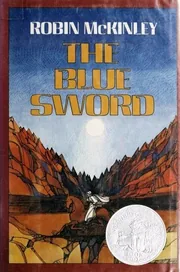
The Blue Sword is a fantasy novel for young readers by Robin McKinley, first published in 1982 and named a Newbery Honor book. It belongs to the children's shelf and runs to about 272 pages, with a heroine whose story combines adventure, a change of surroundings, and family ties.
Angharad Crewe, known as Harry, is a young woman who has recently lost her parents. She travels to a remote desert outpost in the colony of Damar, where her brother Richard is stationed with the Homeland military. There she meets Corlath, the king of the Damarian Hillfolk, and finds that she carries magical powers of her own. Her path leads to the Hillfolk, to the sword called Gonturan once carried by the Lady Aerin, and to the defense of Damar against invasion. Other figures in the story include Jack Dedham, Mathin, Thurra and Sir Charles, and the setting takes in the land of Damar and the place called Istan. The book has appeared in 32 editions, and it suits readers who like fantasy with a colonial frontier, war horses, and a girl at the center of the action.
She scowled at her glass of orange juice.
Characters
Angharad CreweCorlathLady AerinJack DedhamMathinRichard Crewe
Setting
DamarIstan
Themes
Fantasycolonieswar horsesElementary and junior high school
- Want to read 128
- Reading now 8
- Read 36
Most people shelving it are saving it for later.
Of 172 readers who put it on a shelf, 74% want to read it, 5% are reading it now, 21% have finished it and 0% stopped before the end.
By the numbers
- The median edition runs 272 pages. Counting about 275 words a page and an adult reading pace of 250 words a minute, that is about 5.0 hours of reading.
- Open Library tracks 32 editions from 24 publishers, the earliest dated 1982 and the latest 2016.
- On reader demand it ranks in the top 5% of the modern books in our catalog (15,152 of them).
- Libraries shelve it under Dewey [Fic] and Library of Congress class PZ-0007.00000000.M1988 Bl 2000.
 BookWard’s take
A desert-frontier fantasy where an orphan finds her destiny
The Blue Sword drops Harry Crewe into a colonial outpost and lets the story widen from there. The opening is slow: Harry's arrival and her place among the Homelanders come before the magic arrives, and some readers will want the book to get moving sooner. Once Corlath and the Hillfolk enter, the pace picks up, and the book earns its character depth through a heroine who changes by acting, not by explaining herself. The prose is plain but carries real description of land and horses, and the sentiment stays restrained for a book about destiny. Familiar tropes are present, the chosen one and the inherited sword, so it doesn't feel especially original. It is driven by story more than by anything else, tightly sized at 272 pages, and fully resolved.
At about 272 pages it is compact for a fantasy, which suits BookWard's taste for tight books.
Movement quickens once Harry meets Corlath and the Hillfolk, though the first stretch is measured.
A colonial desert setting and a horse culture freshen the chosen-one story, but the core is well-worn.
The language is clear and accessible with some lyrical touches, sitting a bit above BookWard's plainer taste.
Plot and Harry's inner growth drive the book about equally, slightly toward plot.
Despite war and loss, the book holds to courage and belonging, a hopeful outlook that fits BookWard.
A straightforward linear telling with no formal experiment, more conventional than BookWard's middle position.
The tone is earnest and serious with little comic relief, more solemn than BookWard's leaning.
War and invasion are present but handled at a level suited to younger readers.
Feelings run steady and contained, a moderate intensity.
See all 50 dialsEvery position, side by side with this book
Where it lines up
- EndingBookWard 8 · book 8
- LengthBookWard 1 · book 2
- Character depthBookWard 8 · book 7
Where it pulls apart
- OpeningBookWard 10 · book 4
- Familiar tropesBookWard 10 · book 4
- Internal logicBookWard 10 · book 7
At about 272 pages it is compact for a fantasy, which suits BookWard's taste for tight books.
Harry's quiet arrival at the outpost builds before the magic appears, a gentler start than BookWard prefers.
The orphan, the destined sword and the desert king are familiar fantasy shapes, so it leans on tropes more than BookWard likes.
The kelar and its rules are laid out coherently enough that events follow from them, close to what BookWard wants.
Movement quickens once Harry meets Corlath and the Hillfolk, though the first stretch is measured.
A colonial desert setting and a horse culture freshen the chosen-one story, but the core is well-worn.
Harry grows through what she does and chooses, which BookWard rewards even if the supporting cast is lighter.
Harry's arc and the threat to Damar reach a clear conclusion, in line with BookWard's taste for resolution.
Feeling is carried through action and landscape instead of lingering emotion, close to BookWard's preference for restraint.
The danger and war are in service of the story, not used for jolts, which matches BookWard's view.
This is a novel, so the nonfiction rigor dial does not apply.
McKinley's steady, assured storytelling has its own character, a little short of strongly distinctive.
This is a story-led adventure, squarely where BookWard's taste for story over ideas sits.
Much of Damar's history and the kelar is conveyed through scene and legend, with some plain explaining.
The long middle among the Hillfolk holds interest, though it moves at a deliberate pace.
The language is clear and accessible with some lyrical touches, sitting a bit above BookWard's plainer taste.
Plot and Harry's inner growth drive the book about equally, slightly toward plot.
Despite war and loss, the book holds to courage and belonging, a hopeful outlook that fits BookWard.
A straightforward linear telling with no formal experiment, more conventional than BookWard's middle position.
The tone is earnest and serious with little comic relief, more solemn than BookWard's leaning.
Easy to read for its age group, with a few invented names and customs to absorb.
The story stays close to Harry, so it is mostly a single viewpoint, narrower than BookWard's preference.
Events unfold in order, more linear than BookWard's middle ground.
A secondary-world fantasy with magic of the blood and a legendary sword, firmly in the fantastical.
A handful of central figures plus the Hillfolk gives a moderate cast, near BookWard's middle.
A personal journey set against the defense of a whole land, giving it real sweep.
Riding, training and battle outweigh introspection, tilting toward outer action.
Conversation carries a fair share of scenes but the book is not dialogue-heavy.
A bond with Corlath runs through the story but does not overtake the adventure.
Damar, Istan and the Hillfolk culture are far from the familiar, which BookWard enjoys.
An invented world with a long-ago feel, far from the present day that BookWard leans toward.
Published in 1982 and still read as a fantasy classic, so it has held up well.
A straightforward narration with no reason to doubt it, the opposite of BookWard's taste for unreliable.
Good and threat are fairly clearly drawn, so it is less ambiguous than BookWard prefers.
Desert landscape, horses and the Hillfolk's way of life are drawn with care, richer than BookWard's middle.
Few big reversals; the story follows the shape its setup promises.
A comfortable adventure with a young reader in mind, gentler than BookWard's taste for challenge.
War and invasion are present but handled at a level suited to younger readers.
Feelings run steady and contained, a moderate intensity.
Battle and threat appear but are not dwelt upon, a modest amount.
Nothing sexual on the page for this young readership.
Colonial rule and the struggle over Damar give it political weight without dominating.
Invented names and terms add a little density, but the language is largely plain.
The narration tells the story without pressing views on the reader.
Rooted in legend and inheritance, so it looks backward more than forward.
Courage, loyalty and duty are treated sincerely, giving it an idealistic cast that sits with BookWard.
Review written by BookWard, dial version 1, November 2026.
Who is The Blue Sword right for?
It suits young and middle-grade readers who enjoy fantasy adventure, and it holds up for older readers too. It includes war, invasion and some danger, handled at a level fitting its young audience.
Easy to read for its age group, with a few invented names and customs to absorb.
War and invasion are present but handled at a level suited to younger readers.
Feelings run steady and contained, a moderate intensity.
Battle and threat appear but are not dwelt upon, a modest amount.
Book CompanionThe Blue Sword: ideas, characters, themes
An orphaned girl in a colonial outpost discovers a magic and destiny tied to the land and people she never expected to belong to.
- Arrival in Damar. Harry Crewe travels to a remote desert outpost where her brother serves with the Homeland military.
- The Hillfolk king. Meeting Corlath, king of the Damarian Hillfolk, reveals that Harry carries magic of her own.
- The kelar. The Hillfolk's blood magic shapes destinies and drives the unfolding of the story.
- Gonturan. The blue sword once borne by the Lady Aerin becomes central to Harry's path.
- Defense of Damar. Harry's journey leads toward standing against an invasion of the land.
Characters
Angharad "Harry" Crewe
Heroine
A recently orphaned young woman who discovers her magic and a destiny in Damar.
Corlath
King of the Hillfolk
The golden-eyed ruler of the Free Hillfolk who recognizes something in Harry.
Richard Crewe
Harry's brother
Stationed with the Homeland military at the desert outpost.
Jack Dedham
Supporting figure
One of the people Harry encounters in the colony.
Mathin
Supporting figure
A figure among those who surround Harry's journey.
Themes
Finding a home and purpose among people you were not born to.
How inherited fate meets the decisions a person makes for herself.
The tension between the Homelanders and the people of Damar.
Facing danger and doubt to defend what matters.
The weight and gift of the past, carried by the Lady Aerin's sword.
Discussion questions
- Why does Harry find a sense of home in Damar when she did not expect to?
- How does the kelar shape the choices characters make?
- What does the book suggest about the Homelanders' presence in Damar?
- In what ways does Harry earn her place instead of simply inheriting it?
- How does the story use legend and the Lady Aerin's past to shape the present?
Personalize your Book Companion
This is the general edition. In BookWard, the Companion is written for you: your reading profile, your notes, and spoiler-safe to the page you are on.
Buy, listen or borrow The Blue Sword
Each link opens a search for this book on that store, in a new tab.
Read on a device
Borrow
Reviews and community
If you liked The Blue Sword
Kipling's jungle tales: short, vivid, and nothing like the cartoon
Wild MagicTamora PierceA girl who talks to animals finds her place and her power
The High KingLloyd AlexanderA fantasy finale where the hero's growing up is the real quest
SabrielGarth NixA necromancer's daughter, a bell-bound magic system, and a quest into death
Sources: Open Library.
Track The Blue Sword and find your next favorite
Add it to your shelf, rate what you have read, and BookWard will recommend what fits you.
Free to start. No credit card needed.