Best suited to adult readers and mature teens comfortable with a very long book.
1121 pages, about 17.5 to 26 hours.
A thousand-page plunge into feudal Japan, pulled along by intrigue. 55% taste match
The story
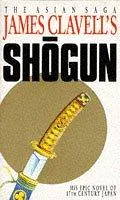
Shōgun is a historical novel by James Clavell, first published in 1975. It is set in Japan at the turn of the seventeenth century, during the closing years of the Azuchi-Momoyama period and the start of the Edo period. The story follows John Blackthorne, an Englishman who comes ashore in Nippon after being lost at sea. He finds himself in a closed society whose customs and language are unfamiliar to him, and he must work out how to live among its people.
The book draws loosely on real events and historical figures of the era, including the rival lords and warlords whose struggles shaped the country. Its settings include Anjiro, Osaka, Kyoto, Edo, Izu and Kyushu, with the lead-up to Sekigahara in the background. Samurai, the Catholic Church and the British presence in Japan all figure in the narrative, which blends adventure with feudal court politics. At over a thousand pages in its median edition, it is a long book, and it has appeared in 23 editions.
Blackthorne was suddenly awake.
Setting
JapanAnjiroOsakaKyotoEdo
Period
Tokugawa period, 1600-1868Edo period, 1600-1868Azuchi-Momoyama period, 1568-1600
Themes
HistorySpanish language booksWarlordsAdventure ficitonSamuraiBritish in JapanCatholic ChurchFeudal Japan
- Want to read 418
- Reading now 34
- Read 41
Most people shelving it are saving it for later.
Of 493 readers who put it on a shelf, 85% want to read it, 7% are reading it now, 8% have finished it and 0% stopped before the end.
By the numbers
- The median edition runs 1121 pages. Counting about 275 words a page and an adult reading pace of 250 words a minute, that is about 21 hours of reading.
- Open Library tracks 23 editions from 17 publishers, the earliest dated 1975 and the latest 2009, across 6 languages.
- On reader demand it ranks in the top 3% of the classic books in our catalog (8,749 of them).
- Libraries shelve it under Library of Congress class PS-3553.00000000.L365.
 BookWard’s take
A thousand-page plunge into feudal Japan, pulled along by intrigue
Shōgun drops an Englishman into a closed, unfamiliar Japan and lets him learn the rules the hard way. It opens with Blackthorne suddenly awake, and the pull is immediate. The hook is strong and the book moves briskly for its size, with court politics keeping the middle from sagging. Length is where I part company with it: at 1121 pages it is anything but tight. Character is a real strength, with several figures drawn in layers rather than as types, and the setting is vivid precisely because the world is so unfamiliar. Clavell leans toward explaining culture outright instead of showing it in scene, which is a mild irritation, but the payoff in immersion is large.
At 1121 pages it is about as long and sprawling as popular fiction gets, far from BookWard's short, tight preference.
Despite the size it keeps events coming through court maneuvering and danger, fairly close to BookWard's fast preference.
The collision of a shipwrecked Englishman and closed feudal Japan was fresh in 1975 and still feels distinctive.
Plain, workmanlike prose serves the story rather than showy language, close to BookWard's slightly plain leaning.
Plot and character carry nearly equal weight, with events driven by who people are and what they want.
The tone is hard and survival-minded, with survival and loss weighing more than uplift, below BookWard's mild hopefulness.
The telling is straightforward and conventional, a long linear saga rather than a formal experiment.
It is serious in tone, with little comic relief to lift the weight of the stakes.
Lives are cheap and cruelty is part of the social order, making this a fairly dark book.
Loyalty, desire and grief give it real emotional force without turning melodramatic.
See all 50 dialsEvery position, side by side with this book
Where it lines up
- Character depthBookWard 8 · book 8
- PaceBookWard 8 · book 7
- EndingBookWard 8 · book 7
Where it pulls apart
- LengthBookWard 1 · book 10
- Familiar tropesBookWard 10 · book 6
- ExpositionBookWard 2 · book 7
At 1121 pages it is about as long and sprawling as popular fiction gets, far from BookWard's short, tight preference.
It opens on Blackthorne suddenly awake in an alien place, which pulls you in quickly, matching BookWard's taste for an immediate hook.
The outsider-in-a-foreign-land setup is a known adventure frame, though the feudal Japanese setting freshens it for most readers.
Political moves and alliances follow cause and effect, so the intrigue holds together well, close to BookWard's airtight ideal.
Despite the size it keeps events coming through court maneuvering and danger, fairly close to BookWard's fast preference.
The collision of a shipwrecked Englishman and closed feudal Japan was fresh in 1975 and still feels distinctive.
Blackthorne and the lords around him are given motives and contradictions rather than being stock figures, which suits BookWard well.
A saga this large builds toward real resolution of its central struggle, broadly in line with BookWard's liking for closure.
Passion and loss are present, but the book leans on tension and consequence more than tenderness, so it only partly reads restrained.
Its violence and darkness grow from the harsh rules of the world, which BookWard rates as earned.
Not applicable to a novel, though it draws loosely on real history.
Clavell's storytelling has a confident, recognizable pull that stands out among historical fiction.
This is story-led: plot, rivalry and survival carry it, with ideas about culture arising from events.
Customs and politics are often explained to the reader directly, a mismatch with BookWard's preference for showing in scene.
Sustained political stakes keep a very long middle moving, though the page count tests that.
Plain, workmanlike prose serves the story rather than showy language, close to BookWard's slightly plain leaning.
Plot and character carry nearly equal weight, with events driven by who people are and what they want.
The tone is hard and survival-minded, with survival and loss weighing more than uplift, below BookWard's mild hopefulness.
The telling is straightforward and conventional, a long linear saga rather than a formal experiment.
It is serious in tone, with little comic relief to lift the weight of the stakes.
Unfamiliar names, customs and factions ask for attention over a long haul, though the prose itself reads easily.
The story moves among several perspectives and factions, giving it a wide, many-sided view of the conflict.
Events unfold in order across a short historical span, so the timeline stays linear.
It is rooted in a historical world, with no supernatural elements.
A large field of lords, retainers and foreigners fills the story, well beyond a small cast.
A struggle for control of a nation gives it an epic sweep, far beyond a small domestic tale.
Action and politics lead, while Blackthorne's inner adjustment runs alongside, so it tilts outward.
Negotiations, councils and clashes of will make conversation central to many scenes.
Personal attachments matter to the story but share space with war and statecraft, so romance is a strong thread rather than the core.
For most readers, closed feudal Japan is about as unfamiliar a setting as fiction offers.
It is set around 1600, firmly in the past.
Decades on, its immersive scope and reputation suggest staying power beyond its moment.
The narration is a straightforward third-person account, not one that misleads the reader.
Characters on every side act from understandable codes that clash, leaving right and wrong hard to pin down.
Settings, rituals and daily life are rendered in generous detail that builds the world.
It reads as a self-contained novel but belongs to Clavell's wider Asian Saga, so it sits in the middle.
Shifting alliances and betrayals keep the story turning, with plenty of reversals along the way.
It is absorbing but not soothing, asking you to sit with harsh customs and difficult choices.
Lives are cheap and cruelty is part of the social order, making this a fairly dark book.
Loyalty, desire and grief give it real emotional force without turning melodramatic.
What humor appears is dry and incidental rather than broad.
Combat and brutal punishments appear on the page often enough to feel significant.
Intimacy and desire appear in the story with moderate presence rather than dominating it.
Power struggles between rival lords are the engine of the whole plot.
Foreign terms and names add some density, but the English itself stays accessible.
The narration mostly lets events and characters speak, with limited editorializing.
It is a work of historical fiction that looks backward at a vanished era.
The world it shows is shrewd and unsentimental, where survival outweighs idealism.
Review written by BookWard, dial version 1, November 2026.
Who is Shōgun right for?
Best suited to adult readers and mature teens comfortable with a very long book. It includes violence, harsh punishments and sexual content.
Unfamiliar names, customs and factions ask for attention over a long haul, though the prose itself reads easily.
Lives are cheap and cruelty is part of the social order, making this a fairly dark book.
Loyalty, desire and grief give it real emotional force without turning melodramatic.
Combat and brutal punishments appear on the page often enough to feel significant.
Book CompanionShōgun: ideas, characters, themes
A shipwrecked Englishman must survive and prove his worth in a Japan whose rules, language and loyalties he does not understand.
- The outsider's view. Blackthorne's confusion becomes the reader's way into a closed society.
- Real history underneath. The novel draws loosely on actual events and figures at the start of the Edo period.
- Power as the engine. Rival lords and shifting alliances turn politics into the main source of tension.
- Cultures in collision. Samurai, the Catholic Church and the British presence pull against each other.
- A long, wide canvas. Settings from Anjiro to Osaka, Kyoto and Edo give the story a national scope.
Characters
John Blackthorne
Englishman lost at sea
The outsider who must learn a foreign world to survive.
Yoshi Toranaga
Powerful lord
A central figure in the struggle for control, drawn from Tokugawa Ieyasu.
Ishido Kazunari
Rival power
A political opponent in the factional conflict, drawn from Ishida Mitsunari.
Ochiba
Figure at court
A court presence tied to the contest over the future, drawn from Yodo-dono.
Themes
How people from different worlds misread and learn from each other.
What people owe to lords, faith and one another when interests collide.
How rivals seize, hold and use authority.
What a person will change or give up to stay alive in an alien place.
How one's own sense of right is tested by another society's code.
Discussion questions
- How does seeing Japan through Blackthorne's eyes shape what you notice and trust?
- Which character's sense of loyalty did you find hardest to judge?
- How much does knowing the story rests on real history change how you read it?
- Does the book treat its two cultures even-handedly?
- Where did the politics feel most gripping, and where did the length show?
Personalize your Book Companion
This is the general edition. In BookWard, the Companion is written for you: your reading profile, your notes, and spoiler-safe to the page you are on.
Buy, listen or borrow Shōgun
Each link opens a search for this book on that store, in a new tab.
Read on a device
Borrow
Reviews and community
If you liked Shōgun
A vast Civil War saga carried by one unforgettable heroine
PachinkoMin Jin LeeFour generations of a Korean family in Japan, told with patience
Lonesome DoveLarry McMurtryA vast Western that earns every one of its 945 pages
A Fine BalanceRohinton MistryFour lives, one flat, and the Emergency pressing in
Sources: Open Library.
Track Shōgun and find your next favorite
Add it to your shelf, rate what you have read, and BookWard will recommend what fits you.
Free to start. No credit card needed.