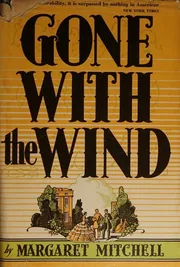
Gone With the Wind
by Margaret Mitchell · 1936
Best suited to mature teens and adults ready for a long, demanding read.
922 pages, about 14.5 to 21.5 hours.
A vast Civil War saga carried by one unforgettable heroine. 47% taste match
What it covers
Margaret Mitchell's Gone with the Wind is a historical novel first published in 1936 and winner of the Pulitzer Prize for fiction. It follows Scarlett O'Hara, the eldest daughter of a prosperous plantation owner, through the years of the American Civil War and the Reconstruction era. The story begins in Clayton County, Georgia, where the O'Hara family lives at Tara, and moves to Atlanta as the war reshapes the region. After Sherman's march devastates the countryside, Scarlett must find ways to climb out of poverty and keep going when her old life is gone.
The book belongs to the coming-of-age tradition and also counts as a war story and a story of survival, with women at its center. Its cast includes Rhett Butler, Ashley Wilkes, Melanie Wilkes, and Scarlett's parents, Ellen and Gerald O'Hara. Slavery forms part of the world the novel portrays. The title is taken from a poem by Ernest Dowson. With a median length of 922 pages and 363 editions, it is a long, widely reprinted work of American historical fiction set in the nineteenth-century South.
SCARLETT O'HARA was not beautiful, but men seldom realized it when caught by her charm as the Tarleton twins were.
Characters
Scarlett O'HaraRhett ButlerGeorge Ashley WilkesMelanie WilkesEllen O'HaraGerald O'Hara
Setting
Estados UnidosGeorgiaUnited StatesClayton CountyAtlanta
Period
1861-186519th centuryCivil War, 1861-1865
Themes
survivalslaveryBildungsromanhistorywar storiesUnited States Civil WarWomenPulitzer Prize Winner
- Want to read 738
- Reading now 64
- Read 81
Most people shelving it are saving it for later.
Of 883 readers who put it on a shelf, 84% want to read it, 7% are reading it now, 9% have finished it and 0% stopped before the end.
By the numbers
- The median edition runs 922 pages. Counting about 275 words a page and an adult reading pace of 250 words a minute, that is about 17 hours of reading.
- Open Library tracks 363 editions from 125 publishers, the earliest dated 1936 and the latest 2022, across 22 languages.
- On reader demand it ranks in the top 1% of the classic books in our catalog (8,749 of them).
- Libraries shelve it under Dewey [Fic] and Library of Congress class PS-3525.00000000.I972 G6738 1955.
 BookWard’s take
A vast Civil War saga carried by one unforgettable heroine
Gone with the Wind runs 922 pages, and it is a sprawling book by any measure, well beyond what a reader who prefers tight storytelling would expect to enjoy. What justifies the bulk is the depth of its central character. Scarlett O'Hara is drawn with real nerve and contradiction, and the story follows her from Tara in Georgia through war and Reconstruction. Her climb out of poverty keeps the story moving across a long stretch of history. The ending is the kind of resolution that lingers rather than ties everything off. This is also where some readers may part ways with it: it is a romantic, large-hearted epic, warmer and more sweeping than restrained fiction tends to be. It portrays slavery within its world, and its moral picture is far from simple, which deserves a thoughtful reader. Immersive and ambitious, it rewards patience.
At 922 pages it is long and sprawling, the opposite of the tight books BookWard favors.
Momentum carries across years of upheaval, though it is slower than BookWard's brisk taste.
A heroine this driven and flawed was striking in an epic of its kind, if less new today.
The writing is fuller and more flowing than plain, without being purely ornate.
Events matter, but they chiefly serve to reveal and test Scarlett's character.
Survival and endurance run through it, though loss and ruin weigh heavily.
It follows a conventional chronological arc through war and Reconstruction.
It is mostly serious, with only occasional lightness around Scarlett's vanity.
War, ruin and loss give it real darkness, balanced by Scarlett's drive.
Passion, grief and determination run high throughout.
See all 50 dialsEvery position, side by side with this book
Where it lines up
- Story or ideasBookWard 3 · book 3
- Character depthBookWard 8 · book 9
- Authorial voiceBookWard 9 · book 8
Where it pulls apart
- LengthBookWard 1 · book 10
- Familiar tropesBookWard 10 · book 4
- SentimentBookWard 8 · book 3
At 922 pages it is long and sprawling, the opposite of the tight books BookWard favors.
It opens straight on Scarlett and her charm, drawing the reader in early, which BookWard values.
Its romance and war-saga frame use familiar epic conventions, though Scarlett herself resists easy types.
Events follow from Scarlett's choices and the war's consequences, which holds together well enough for BookWard.
Momentum carries across years of upheaval, though it is slower than BookWard's brisk taste.
A heroine this driven and flawed was striking in an epic of its kind, if less new today.
Scarlett is vividly and unflinchingly drawn, which matches BookWard's love of deeply drawn people.
It leaves its central matters in motion rather than neatly closed, a little looser than BookWard prefers.
It is openly romantic and large-hearted, warmer than BookWard's restrained preference.
War and hardship are part of the story's fabric, not staged for effect, which BookWard respects.
It is a novel, so rigor is not its measure, though it is built on a real historical setting.
Mitchell's storytelling has a confident, unmistakable character that BookWard appreciates.
This is firmly story-led, driven by Scarlett's fortunes rather than an argument.
Historical background is woven in as well as explained, sitting in the middle of the range.
A book this long has slower stretches, though Scarlett's struggles keep it moving.
The writing is fuller and more flowing than plain, without being purely ornate.
Events matter, but they chiefly serve to reveal and test Scarlett's character.
Survival and endurance run through it, though loss and ruin weigh heavily.
It follows a conventional chronological arc through war and Reconstruction.
It is mostly serious, with only occasional lightness around Scarlett's vanity.
The length asks for commitment, but the storytelling is approachable.
It stays closely tied to Scarlett rather than spreading across many perspectives.
The story moves forward in order through the war years and after.
It is firmly grounded in real history and place.
A sizable cast fills Tara and Atlanta, from the O'Haras to the Wilkes family and Rhett Butler.
War, a ruined region and an era's upheaval give it an epic sweep.
Scarlett's thoughts and the surrounding events share the stage fairly evenly.
Scenes lean on conversation and sparring between characters.
Love and entanglement run through the story, with Rhett and Ashley central to Scarlett's path.
The antebellum and wartime South will feel distant to most modern readers.
It is set in the 1860s, well back from the present day.
It has stayed widely read and reprinted for generations, though its worldview shows its age.
The narration is a steady, authoritative guide rather than a deceptive one.
Its portrayal of the South and slavery raises complex, contested questions with no easy reading.
Landscapes, households and wartime scenes are richly rendered.
It is a novel, so it reads as pure narrative.
It is intimate and closely felt, close to Scarlett's own view.
It reads as a complete standalone novel.
Fortunes shift repeatedly as war and necessity upend Scarlett's plans.
Its depiction of the era makes it more challenging than comforting.
War, ruin and loss give it real darkness, balanced by Scarlett's drive.
Passion, grief and determination run high throughout.
Humor is mild and tends toward the wry.
War and its aftermath bring real violence, though the focus stays on Scarlett.
Romance is central, but the content is handled with period restraint.
War, slavery and Reconstruction make politics a constant backdrop.
Period speech and regional voices add some density but stay readable.
The narration carries a clear point of view on its characters and world.
It dwells on a vanished world and what its loss means.
It follows a pragmatic survivor more than an idealist, with a view of hard-won resilience.
Review written by BookWard, dial version 1, November 2026.
Who is Gone With the Wind right for?
Best suited to mature teens and adults ready for a long, demanding read. It depicts slavery, war and its aftermath in ways that merit thoughtful discussion.
The length asks for commitment, but the storytelling is approachable.
War, ruin and loss give it real darkness, balanced by Scarlett's drive.
Passion, grief and determination run high throughout.
War and its aftermath bring real violence, though the focus stays on Scarlett.
Book CompanionGone With the Wind: ideas, characters, themes
A spoiled plantation daughter must use every means she has to survive the ruin of her world during the Civil War and Reconstruction.
- Setting. The story begins in Clayton County, Georgia, at the O'Hara plantation, Tara, and moves to Atlanta.
- Historical backdrop. It spans the American Civil War and the Reconstruction era, from 1861 onward.
- Scarlett's journey. Young Scarlett O'Hara must claw her way out of poverty after Sherman's destructive march.
- Genre. It is a historical novel that is also a coming-of-age story and a war story.
- Recognition. It won the Pulitzer Prize for fiction and has sold millions of copies worldwide.
Characters
Scarlett O'Hara
Protagonist
The eldest daughter of a prosperous plantation owner who must fight to survive.
Rhett Butler
Central figure in Scarlett's life
A major presence in her story through war and its aftermath.
Ashley Wilkes
Figure in Scarlett's life
A key presence in Scarlett's heart and choices.
Melanie Wilkes
Part of Scarlett's circle
Closely tied to Scarlett and Ashley's world.
Gerald O'Hara
Scarlett's father
The plantation owner at the head of the O'Hara family at Tara.
Themes
What a person will do to endure when their old life is destroyed.
How hardship forces Scarlett to grow up and face reality.
The way the Civil War reshapes lives, land and fortunes.
The institution forms part of the world the novel portrays and invites critical reading.
Desire and attachment drive Scarlett's choices throughout.
The fading of an old order, echoed in the title's image of being swept away.
Discussion questions
- Is Scarlett a hero, a survivor, or both, and does the book want us to admire her?
- How does the novel's portrayal of slavery and the South shape the way you read it today?
- What does the title suggest about what the war sweeps away?
- Which relationships in the book matter most to Scarlett, and why?
- How does the book balance romance with the harsh realities of war and Reconstruction?
Personalize your Book Companion
This is the general edition. In BookWard, the Companion is written for you: your reading profile, your notes, and spoiler-safe to the page you are on.
Buy, listen or borrow Gone With the Wind
Each link opens a search for this book on that store, in a new tab.
Read on a device
Borrow
Reviews and community
If you liked Gone With the Wind
A Vietnam nurse's war, and the homecoming that nearly breaks her
ShōgunJames ClavellA thousand-page plunge into feudal Japan, pulled along by intrigue
Lust for LifeIrving StoneA long, devoted life of Van Gogh, told as fiction
The GoldfinchDonna TarttA huge, immersive novel about grief, a stolen painting, and consequences
Sources: Open Library.
Track Gone With the Wind and find your next favorite
Add it to your shelf, rate what you have read, and BookWard will recommend what fits you.
Free to start. No credit card needed.