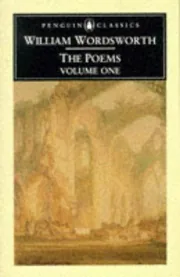
Poems
by William Wordsworth · 1807
Not to be confused with William Butler Yeats’s book of the same title (1895), or 2 more.
Suits teens and adults with some patience for older English verse; some selections are written with children in mind.
368 pages, about 6 to 8.5 hours.
Wordsworth's 1807 verse: nature, childhood and feeling in plain speech. 48% taste match
What is inside
Poems is a collection of verse by William Wordsworth (1770-1850), first published in 1807. It belongs to English poetry and draws on nature as a central subject, with some pieces concerned with love and others written with children in mind. The opening poem begins with a father speaking of his son, a boy of five.
Many editions of the book exist, and some of them reproduce manuscript material, including a British Library manuscript, Additional 47864. One scholarly edition sets out to present the surviving textual evidence for the shorter lyric and narrative poems Wordsworth composed between 1800 and 1807, the work that formed the core of the 1807 publication, which was issued as Poems in Two Volumes. The settings the poems touch on include England, London and the Lake District.
A typical edition runs to about 368 pages. The book suits readers interested in English poetry of the early nineteenth century, in Wordsworth's writing about the natural world, or in how his poems were drafted and revised across manuscripts and printed texts.
I HAVE a boy of five years old;
Setting
EnglandLondonLake District (England)
Themes
Gift booksSpecimensFacsimilesEnglish poetryChildren's poetry, EnglishPoetryManuscriptsNature
- Want to read 207
- Reading now 25
- Read 9
Most people shelving it are saving it for later.
Of 241 readers who put it on a shelf, 86% want to read it, 10% are reading it now, 4% have finished it and 0% stopped before the end.
By the numbers
- The median edition runs 368 pages. Counting about 275 words a page and an adult reading pace of 250 words a minute, that is about 6.7 hours of reading.
- Open Library tracks 372 editions from 193 publishers, the earliest dated 1807 and the latest 2010, across 2 languages.
- On reader demand it ranks in the top 8% of the classic books in our catalog (8,749 of them).
- Libraries shelve it under Dewey 821.71 and Library of Congress class PR-5853.00000000.D38 1975b.
 BookWard’s take
Wordsworth's 1807 verse: nature, childhood and feeling in plain speech
This is a gathering of short lyrics and brief narrative poems, not a book to read straight through in one go. Wordsworth wrote them between 1800 and 1807, and they turn on nature, childhood and the pull of memory. The voice is where it earns its place: the plain, speaking tone is unmistakably his. The feeling is restrained, stated simply rather than pushed. The poems have clearly lasted, having outlived their moment by two centuries. How quickly a given piece grabs you and how briskly it moves depend on the poem, though each is short enough to land fast and then end. It is quieter and more inward than much of what I usually reach for, and plot barely figures. Read in small doses, it rewards patience better than speed.
Around 368 pages in a typical edition, but built from many short poems, so it reads lighter than the page count suggests.
These are slow, contemplative poems meant to be lingered over, which runs against BookWard's quicker preference.
Writing about ordinary life and nature in plain speech was a real departure for English poetry of its day.
The language is deliberately plain for verse, with lyrical lift in places but little ornament.
Inner feeling and observation matter far more than events, so the book sits firmly on the character side.
Nature, memory and affection give the collection a mostly consoling, hopeful outlook.
It is a conventional collection of separate poems, with no experimental design.
The tone is serious and reflective, with little room for comedy.
The collection is largely gentle, with grief and loss touched on rather than dwelt on.
Feeling runs warm and sincere without tipping into heavy intensity.
See all 50 dialsEvery position, side by side with this book
Where it lines up
- Shock for effectBookWard 9 · book 9
- Authorial voiceBookWard 9 · book 9
- OriginalityBookWard 9 · book 8
Where it pulls apart
- LengthBookWard 1 · book 5
- OpeningBookWard 10 · book 6
- Familiar tropesBookWard 10 · book 6
Around 368 pages in a typical edition, but built from many short poems, so it reads lighter than the page count suggests.
Poems open by themselves and are short, so there is no long wait, though they ask for a settled mood rather than grabbing you.
Its nature and childhood themes now feel familiar, partly because later writers borrowed from them so heavily.
Each poem follows its own clear thread of thought; verse here is about feeling more than strict cause and effect.
These are slow, contemplative poems meant to be lingered over, which runs against BookWard's quicker preference.
Writing about ordinary life and nature in plain speech was a real departure for English poetry of its day.
Speakers and subjects are sketched with feeling, but this is not a book of developed characters.
Most poems close on a settled thought or image, though many leave a little room to reflect.
Feeling is often open and warm, yet usually kept in check by plain wording rather than pushed hard.
There is little shock for effect; any sadness comes quietly and is earned by the subject.
This is verse, not nonfiction, so rigor does not apply.
Wordsworth's plain, speaking tone is unmistakable and sits close to what BookWard values most.
Poems are driven by reflection and feeling more than by story, which leans away from BookWard's story-first taste.
Ideas are woven into images and speech, though some poems state their reflections outright.
Short pieces mean no long middle to sag, though quality and interest naturally vary from poem to poem.
The language is deliberately plain for verse, with lyrical lift in places but little ornament.
Inner feeling and observation matter far more than events, so the book sits firmly on the character side.
Nature, memory and affection give the collection a mostly consoling, hopeful outlook.
It is a conventional collection of separate poems, with no experimental design.
The tone is serious and reflective, with little room for comedy.
The language is clear, but verse and its older forms take more attention than prose.
Most poems speak from one voice, with only occasional other figures appearing.
Poems move simply, often looking back from the present, without elaborate time shifts.
The poems stay rooted in the real world of landscape, people and feeling.
Few figures appear in any one poem; the cast is small and individual.
The focus is intimate: a child, a field, a single moment of feeling.
Attention goes to thought and perception far more than to action.
Speech appears in places, but these are mostly spoken or reflective lyrics rather than conversations.
Some pieces touch on love, but it is not the book's main concern.
The England, London and Lake District settings are familiar and grounded rather than strange.
First published in 1807, this belongs well to the past rather than the present day.
Its attention to nature, childhood and memory has kept it readable long after its moment.
Speakers are straightforward and sincere, with no sense of trickery.
Poems often lean toward a gentle lesson or clear feeling, though not always a fixed one.
Landscape and natural detail are central, drawn with care and affection.
This is poetry, so nonfiction style does not apply.
The poems are intimate and drawn from personal feeling and observation.
A self-contained collection, though editions vary in contents.
There are few plot surprises; any turns are small shifts in thought or feeling.
It asks for patience and attention but is not provocative in its views.
The collection is largely gentle, with grief and loss touched on rather than dwelt on.
Feeling runs warm and sincere without tipping into heavy intensity.
Humor is rare and, where it appears, mild and dry.
Violence is almost absent from these quiet poems.
There is essentially no sexual content.
Politics sits in the background; the poems focus on feeling and nature.
Language is plain but older English and poetic form add some density.
The speaker's views and feelings are plainly voiced, giving the poems a clear personal stance.
Memory and recollection look backward more than forward.
A trusting, idealistic view of nature and childhood runs through the poems.
Review written by BookWard, dial version 1, November 2026.
Who is Poems right for?
Suits teens and adults with some patience for older English verse; some selections are written with children in mind. Nothing here is graphic or disturbing.
The language is clear, but verse and its older forms take more attention than prose.
The collection is largely gentle, with grief and loss touched on rather than dwelt on.
Feeling runs warm and sincere without tipping into heavy intensity.
Violence is almost absent from these quiet poems.
Book CompanionPoems: ideas, characters, themes
Poems gathers Wordsworth's shorter lyric and narrative poems from 1800 to 1807, turning to nature, childhood and feeling for its subjects.
- A collection, not a single story. The book is made up of many separate poems, so it can be read in any order and in small sittings.
- Nature at the center. The natural world, including the Lake District, is a main subject and source of feeling.
- Childhood appears early. The opening poem has a father speaking of his young son, setting a note of affection and attention to childhood.
- Lyric and narrative side by side. Short songs of feeling sit alongside brief poems that tell a small story.
- Editions differ. Some editions reproduce manuscript material, including a British Library manuscript, so scholarly versions show how the poems were drafted.
Characters
William Wordsworth
Author
The poet (1770-1850) whose voice and outlook run through every piece.
The father and his son
Opening poem's figures
The first poem begins with a father speaking of his boy of five.
Themes
The natural world as a source of feeling and meaning.
Early life as a time of clear, unspoiled perception.
How past moments stay with us and shape feeling.
Affection between people, touched on in some poems.
Everyday language used as a fit medium for serious poetry.
Discussion questions
- Which poem felt most alive to you, and what made it work?
- How does Wordsworth's plain language change the way feeling lands?
- What does the poet seem to value in nature?
- How do the poems about children differ from those about nature?
- Did reading in small pieces rather than straight through change your experience?
Personalize your Book Companion
This is the general edition. In BookWard, the Companion is written for you: your reading profile, your notes, and spoiler-safe to the page you are on.
Buy, listen or borrow Poems
Each link opens a search for this book on that store, in a new tab.
Read on a device
Borrow
Reviews and community
If you liked Poems
Keats's early verse: lush, musical, and unlike anything tidy
Letters to a young poetRainer Maria RilkeLetters on solitude, patience and the work of writing
A month in the countryJames Lloyd CarrA short, quiet restoration of a wall painting and a man
WaldenHenry David ThoreauTwo years by a pond, and a case against busyness
Sources: Open Library.
Track Poems and find your next favorite
Add it to your shelf, rate what you have read, and BookWard will recommend what fits you.
Free to start. No credit card needed.