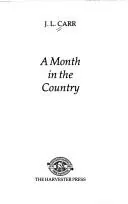
A month in the country
by James Lloyd Carr · 1980
Suits mature teens and adults who enjoy quiet, reflective fiction.
111 pages, about 2 to 2.5 hours.
A short, quiet restoration of a wall painting and a man. 63% taste match
The story
A Month in the Country, first published in 1980 by James Lloyd Carr, is a short historical novel set in the North Riding of Yorkshire in England. It takes place in the years after the First World War and follows Birkin, a young veteran who steps off a train with his kitbag and heads for a small village church.
Birkin has been hired to uncover and restore a medieval wall painting from the fourteenth century that has only recently come to light. He carries the effects of shell-shock from his time in the trenches, and it has set him apart from people who hold to conventional ways. As he works on the painting, he gets to know the villagers and the rhythms of country life around him. The book deals with the work of art restoration, the lingering mark of war, and the slow recovery that comes with time spent in a quiet place. When the task is done, Birkin leaves the village, carrying both regret and a steadier sense that he can carry on with his life.
WHEN THE TRAIN stopped I stumbled out, nudging and kicking the kitbag before me.
Setting
North Riding of Yorkshire (England)
Themes
Art restorersMural painting and decoration, MedievalConservation and restorationWorld War, 1914-1918VillagesVeteransMedieval Mural painting and decorationCountry life
- Want to read 97
- Reading now 13
- Read 24
Most people shelving it are saving it for later.
Of 134 readers who put it on a shelf, 72% want to read it, 10% are reading it now, 18% have finished it and 0% stopped before the end.
By the numbers
- The median edition runs 111 pages. Counting about 275 words a page and an adult reading pace of 250 words a minute, that is about 2.0 hours of reading.
- Open Library tracks 25 editions from 19 publishers, the earliest dated 1980 and the latest 2014.
- On reader demand it ranks in the top 10% of the modern books in our catalog (15,152 of them).
- Libraries shelve it under Dewey 823.914 and Library of Congress class PR-0000.00000000.
 BookWard’s take
A short, quiet restoration of a wall painting and a man
At 111 pages, A Month in the Country is about as tight as fiction gets, and a reader who loves short books will find a lot to like here. It wastes nothing. Birkin's shell-shock and the slow work of uncovering a medieval painting carry the whole thing, so the characterization matters most, with restraint close behind: the war's mark is felt rather than announced. The pace is deliberately slow, and the opening builds gently rather than grabbing you, which is where I part ways with the book a little. What it offers instead is a settled ending, a sense of healing earned in a quiet place, and a voice that feels its own. Read it for atmosphere and feeling, not for plot.
At 111 pages it is exactly the kind of tight, spare book BookWard favors.
The pace is slow and unhurried, a long way from BookWard's preference for momentum.
The pairing of art restoration with post-war recovery is distinctive, though the overall shape is a gentle, familiar one.
The language is controlled and clear, with some richness, but never ornate.
Almost nothing happens in a plot sense; the book is carried entirely by Birkin's inner recovery.
Birkin leaves with sorrow but also a steadier confidence, so the book closes on healing rather than despair.
It runs in a conventional line from arrival to departure, with no formal experiment.
A serious, reflective book, with little comic relief to speak of.
The war's trauma lingers under the surface, but the book itself is calm and gentle.
Feeling runs deep but quiet, built from regret, friendship and recovery.
See all 50 dialsEvery position, side by side with this book
Where it lines up
- LengthBookWard 1 · book 1
- Character depthBookWard 8 · book 8
- EndingBookWard 8 · book 8
Where it pulls apart
- OpeningBookWard 10 · book 4
- PaceBookWard 8 · book 2
- Familiar tropesBookWard 10 · book 8
At 111 pages it is exactly the kind of tight, spare book BookWard favors.
It opens with a veteran stepping off a train toward a village church, a calm start rather than an instant grab.
A damaged veteran finding healing is a known arc, but the restorer's craft and the quiet setting keep it fresh.
A simple, self-contained setup in which every event follows plainly from the last, with nothing that strains belief.
The pace is slow and unhurried, a long way from BookWard's preference for momentum.
The pairing of art restoration with post-war recovery is distinctive, though the overall shape is a gentle, familiar one.
Birkin's shell-shock and the way it sets him apart are drawn with real care, matching BookWard's taste for deep characters.
Birkin finishes his task and leaves with a measure of confidence, a clear close that suits BookWard well.
The war's lingering mark is handled with restraint, which is how BookWard likes feeling to be treated.
Any darkness comes from the aftermath of the trenches and is earned, never used for effect.
This is a quiet, distinctive novel with a voice that has kept it in print and in conversation for decades.
It leans toward story and character, following one man through one task, rather than arguing a set of ideas.
The restoration and the village life unfold in scene rather than being explained to the reader.
At this length there is little room to sag, though the gentle rhythm keeps momentum low throughout.
The language is controlled and clear, with some richness, but never ornate.
Almost nothing happens in a plot sense; the book is carried entirely by Birkin's inner recovery.
Birkin leaves with sorrow but also a steadier confidence, so the book closes on healing rather than despair.
It runs in a conventional line from arrival to departure, with no formal experiment.
A serious, reflective book, with little comic relief to speak of.
Short and plainly told, it asks for patience and attention rather than hard work.
The story stays close to a single man's experience of one month.
Events move forward in order across the month of the restoration.
Entirely grounded, in a real English village and a real kind of work.
A small cast made up of Birkin and the villagers he comes to know.
Intimate in the extreme: one man, one church, one painting, one month.
The weight sits on Birkin's feelings and recovery rather than on outward action.
Conversation with the villagers matters, but the book is not driven by talk.
Romance is a minor thread; friendship and healing are the main concerns.
A post-war Yorkshire village and a medieval painting restorer's trade are unfamiliar ground for most readers.
Set in the years after the First World War, written in 1980, so firmly rooted in the past.
Its themes of recovery and quiet craft keep it fresh well beyond its first publication.
The story is told straightforwardly, with no sense of a narrator hiding the truth.
Birkin is judged by the conventional villagers, and the book leaves that judgment open rather than settling it.
The church, the painting and the countryside are evoked with attention and care.
A standalone novel.
There are few surprises; the interest lies in mood and feeling, not reversals.
Gentle in tone, though it asks you to sit with the long shadow of war.
The war's trauma lingers under the surface, but the book itself is calm and gentle.
Feeling runs deep but quiet, built from regret, friendship and recovery.
Humor, where it appears, is mild and understated.
The trenches are only an aftereffect here; the page itself is peaceful.
Sexual content is minimal.
The war's aftermath shapes the book, but politics is not its subject.
Plain, accessible English with no heavy dialect to wade through.
The narration observes quietly and lets the reader draw the conclusions.
It looks back at the war and its mark, even as Birkin turns toward his own future.
A hopeful belief in the healing power of work, place and friendship, without sentimentality.
Review written by BookWard, dial version 1, November 2026.
Who is A month in the country right for?
Suits mature teens and adults who enjoy quiet, reflective fiction. It deals with war trauma and its lingering effects, but in a gentle, restrained way.
Short and plainly told, it asks for patience and attention rather than hard work.
The war's trauma lingers under the surface, but the book itself is calm and gentle.
Feeling runs deep but quiet, built from regret, friendship and recovery.
The trenches are only an aftereffect here; the page itself is peaceful.
Book CompanionA month in the country: ideas, characters, themes
A young war veteran uncovers a medieval wall painting in a Yorkshire church and, over one month, begins to recover from the war.
- The arrival. Birkin steps off a train with his kitbag and walks to a small village church to begin his work.
- The commission. He has been hired to uncover and restore a fourteenth-century wall painting that has only recently come to light.
- The mark of war. Shell-shock from the trenches has set him apart from people who hold to conventional ways.
- Village life. As he works, he makes friends in the village and settles into the rhythms of country life.
- The departure. When the task is done he leaves, carrying both regret and a steadier confidence that he can go on.
Characters
Birkin
Protagonist
A young veteran of the First World War, living with shell-shock, hired to restore the painting.
Themes
Healing from trauma through time, work and a quiet place.
The lasting mark the trenches leave on those who survived.
The slow, careful labor of bringing something old back to light.
How a person set apart finds friendship and acceptance in a small community.
Discussion questions
- Why might the author pair art restoration with a man's own recovery?
- How does the book show the effects of shell-shock without dwelling on the trenches?
- What does Birkin gain from the village, and what does he leave behind?
- How do the villagers' conventional views shape the way he is seen?
- Does the ending feel earned, and what does Birkin carry away with him?
Personalize your Book Companion
This is the general edition. In BookWard, the Companion is written for you: your reading profile, your notes, and spoiler-safe to the page you are on.
Buy, listen or borrow A month in the country
Each link opens a search for this book on that store, in a new tab.
Read on a device
Borrow
Reviews and community
If you liked A month in the country
A governess's plain, unsparing account of wealthy households
Out of the DustKaren HesseA Dust Bowl girl's grief, told in spare, searing verse
PoemsWilliam WordsworthWordsworth's 1807 verse: nature, childhood and feeling in plain speech
John of JohnDouglas StuartA returning son, a stern father, and a croft full of secrets
Sources: Open Library.
Track A month in the country and find your next favorite
Add it to your shelf, rate what you have read, and BookWard will recommend what fits you.
Free to start. No credit card needed.