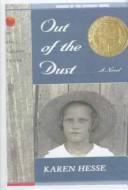
Out of the Dust
by Karen Hesse
★ Top 25 book of 1997 · #15 on Best Books of 1997
After a terrible accident leaves her scarred and her mother gone, Billie Jo struggles through the Oklahoma dust bowl. Told as a series of poems, her story explores grief, a silent father, and the search for peace.
Best for: Teen readers who enjoy verse novels about loss, hardship, and Depression-era life
Out of the Dust is #15 on BookWard's Best Books of 1997, out of 28 1997 books that cleared our data bar.
What Out of the Dust is about
Billie Jo lives in the Oklahoma panhandle, where the Dust Bowl keeps crops from growing and makes food more expensive. Her father wanted a boy, and named her Billie Jo. She finds her freedom at the piano, playing alongside local musicians. Told in short poems dated from January 1934 to December 1935, the novel follows a year when one terrible accident changes her family and her own hands.
In the aftermath, Billie Jo and her father grow distant, each carrying grief and guilt in silence. She tries running away, and another woman, Louise, begins to matter to her father. The spare verse keeps the tone quiet and honest rather than sentimental. It is a Newbery Medal winner, well suited to young readers and anyone who likes a short book about hardship and slow healing.
Out of the Dust on the Best Books of 1997
Out of the Dust came out in 1997. Of the 28 books first published in 1997 that met BookWard's data bar, it ranks #15 on our Best Books of 1997 list.
Why it made the list: 180 readers have shelved it on Open Library; readers rate it 4.1 out of 5 (16 ratings). The list ranks each year’s books on how many readers have picked them up, how highly readers rate them, and how many are reading them right now.
Nearby on the 1997 list
- Sex and the City Candace Bushnell, #13
- A Walk in the Woods Bill Bryson, #14
- Cat & Mouse James Patterson, #16
- The Partner John Grisham, #17
See all Best Books of 1997 Best books by year
More years: Best Books of 1996 Best Books of 1998.
The numbers behind it
- Readers: 138 want to read it, 19 are reading it now and 23 have read it, according to Open Library.
- Ratings: 4.1 out of 5 from 16 Open Library ratings.
| Signal | This book (0 to 100) | Weight |
|---|---|---|
| Reach | 29 | 55% |
| Reader love | 75 | 25% |
| Being read right now | 54 | 20% |
Questions about Out of the Dust
When was Out of the Dust published?
Out of the Dust by Karen Hesse was first published in 1997.
Was Out of the Dust one of the best books of 1997?
Out of the Dust is #15 on BookWard's Best Books of 1997, out of 28 1997 books that cleared our data bar. 180 readers have shelved it on Open Library; readers rate it 4.1 out of 5 (16 ratings).
Why is Out of the Dust on the Best Books of 1997 list?
180 readers have shelved it on Open Library; readers rate it 4.1 out of 5 (16 ratings).
More of the best books of 1997
- Harry Potter and the Philosopher's Stone J. K. Rowling, #1
- Rich Dad, Poor Dad Robert T. Kiyosaki, #2
- Guns, Germs, and Steel Jared Diamond, #3
- The Adventures of Captain Underpants Dav Pilkey, #4
- The Power of Now Eckhart Tolle, #5
- Into Thin Air Jon Krakauer, #6
See the full Best Books of 1997, the Top 100, or new books on Rising.
How we know
This page uses public data: Open Library reader counts and ratings, and Wikipedia page views for recent years. The description is paraphrased from real source text. Rankings reflect reading interest, not quality or sales, and can be affected by data gaps. Lists update monthly.
It suits upper elementary and middle grade readers and works well for older readers too.
Depends on the edition you pick.
A Dust Bowl girl's grief, told in spare, searing verse. 70% taste match
 BookWard’s take
A Dust Bowl girl's grief, told in spare, searing verse
Out of the Dust is a verse novel, and that form is its whole engine. Each dated poem gives Billie Jo's life in Oklahoma a lean, immediate shape, so the book moves briskly and holds back from sentiment even while its subject is grief. The opening hooks quickly, and the book is about as short as books get. Hesse earns the darkness because it comes straight out of the Dust Bowl and a family tragedy rather than being added for effect. The prose is plain on the surface but compressed, and the voice is distinctive. It is more driven by character than by plot, and Billie Jo is drawn with real depth in very few words. A quick read that hits hard.
Told entirely in short dated poems, it is among the briefest ways to read a full two-year story, which suits BookWard's taste for tight books.
Short poems move quickly from event to event, though the mood is deliberately weighted and unhurried.
A children's novel in free verse about the Dust Bowl is a distinctive form for the subject, which BookWard values.
The language is plain and stripped back, with poetic compression rather than ornament.
The weight sits on Billie Jo's inner life and her bond with her father more than on a plot machine.
The tone is heavy with loss and hardship, though it moves toward some peace.
A novel told as dated poems departs from the standard prose novel layout.
The mood is grave, with humor playing almost no role.
It deals with a mother's death and a family's struggle against ruin, though framed for young readers.
Loss and guilt run strong through the whole book.
See all 50 dialsEvery position, side by side with this book
Where it lines up
- LengthBookWard 1 · book 1
- SentimentBookWard 8 · book 8
- Shock for effectBookWard 9 · book 9
Where it pulls apart
- OpeningBookWard 10 · book 8
- Familiar tropesBookWard 10 · book 8
- Internal logicBookWard 10 · book 8
Told entirely in short dated poems, it is among the briefest ways to read a full two-year story, which suits BookWard's taste for tight books.
It opens with Billie Jo's own birth in a few lines, pulling you into her voice almost immediately.
A Depression-era girl's story could be familiar, but the verse form and the specific accident keep it from feeling formulaic.
Cause and effect hold firm: the dust, the accident and the strained household follow from one another without contrivance.
Short poems move quickly from event to event, though the mood is deliberately weighted and unhurried.
A children's novel in free verse about the Dust Bowl is a distinctive form for the subject, which BookWard values.
Billie Jo's guilt, anger and longing come through in few words, and she feels fully drawn.
It follows Billie Jo to the end of 1935 with a sense of arrival rather than leaving her situation hanging.
Grief is rendered in spare, controlled lines instead of swelling emotional language, which sits well with BookWard.
The central accident is devastating but grows directly out of the family's circumstances, so the darkness is earned.
This is a novel, so the nonfiction rigor dial does not apply.
Billie Jo's first-person verse has a clear, individual sound that is hard to mistake for anyone else's.
It is firmly story-led, built around one girl's experience instead of an argument.
Events and feelings are shown through Billie Jo's moments, with little explaining, which BookWard likes.
Short poems keep the momentum steady, so there is little room for a middle to sag.
The language is plain and stripped back, with poetic compression rather than ornament.
The weight sits on Billie Jo's inner life and her bond with her father more than on a plot machine.
The tone is heavy with loss and hardship, though it moves toward some peace.
A novel told as dated poems departs from the standard prose novel layout.
The mood is grave, with humor playing almost no role.
The verse is accessible and quick, aimed at younger readers, so it asks little effort.
Everything comes through Billie Jo alone.
Dated entries run in order from January 1934 to December 1935.
Entirely grounded in real Depression-era Oklahoma.
A small circle of family and neighbors surrounds Billie Jo.
The story is intimate, centered on one family and one farm, even against a vast disaster.
Billie Jo's thoughts and feelings drive the telling more than outward action.
The poems are mostly narration and reflection rather than exchanged speech.
The focus is family and grief, not romance.
The Dust Bowl panhandle will be an unfamiliar setting for many readers, but it is vividly established.
It is set in the mid-1930s, firmly in the past.
Its themes of loss and resilience travel well beyond its 1997 publication.
Billie Jo narrates directly and honestly, with no sign of unreliability.
Guilt and blame are tangled and painful, but the book does not play them as a puzzle.
Compact poems still conjure the dust and landscape in telling detail.
Fiction, so this dial does not apply.
Fiction, so this dial does not apply.
A standalone verse novel.
The story follows a steady line with few surprises beyond the central accident.
The grief and hardship are heavy, though the format keeps it manageable.
It deals with a mother's death and a family's struggle against ruin, though framed for young readers.
Loss and guilt run strong through the whole book.
Humor is largely absent.
The central accident is painful but not dwelt on graphically.
There is essentially no sexual content.
The Depression shapes everything, but the book is not a political argument.
The language is plain and easy to follow.
Billie Jo's feelings color everything in her narration.
The story looks back on a past era and its sorrows.
Hardship is faced squarely, with a tentative hope rather than naivety.
Review written by BookWard, dial version 1, November 2026.
Who is Out of the Dust right for?
It suits upper elementary and middle grade readers and works well for older readers too. It deals with a mother's death after a burning accident and a child's guilt, which may need sensitivity.
The verse is accessible and quick, aimed at younger readers, so it asks little effort.
It deals with a mother's death and a family's struggle against ruin, though framed for young readers.
Loss and guilt run strong through the whole book.
The central accident is painful but not dwelt on graphically.
Book CompanionOut of the Dust: ideas, characters, themes
A girl in Depression-era Oklahoma must find a way forward through loss, guilt and a ruined landscape.
- Told in verse. The novel is made of dated poems running from January 1934 to December 1935.
- A birth and a name. It opens with Billie Jo's birth, and her father naming her as if she were a boy.
- The Dust Bowl. Failed crops and drought make life in Joyce City harder and food more expensive.
- A family tragedy. A kerosene accident changes Billie Jo's life and badly burns her hands.
- Music and recovery. Billie Jo plays piano, and her injured hands threaten the thing that comforts her.
Characters
Billie Jo
Narrator
A girl growing up in the Oklahoma panhandle who carries guilt and loss.
Billie Jo's father
Parent
A farmer whose relationship with his daughter becomes strained after the accident.
Billie Jo's mother
Parent
Expecting another child when the story begins.
Arley Wanderdale
Musician and friend
Plays music with Billie Jo and speaks plainly about her hands.
Themes
How loss reshapes a young person and a family.
Carrying responsibility for something that cannot be undone.
Enduring drought, dust and economic hardship.
Creative work as comfort and identity.
What goes unsaid between a father and daughter.
Discussion questions
- Why might Hesse have chosen verse rather than prose to tell this story?
- How does the dust act as more than a backdrop?
- How does Billie Jo's relationship with her father change over the book?
- What role does music play for Billie Jo?
- Is Billie Jo's guilt fair, and how do others respond to it?
Personalize your Book Companion
This is the general edition. In BookWard, the Companion is written for you: your reading profile, your notes, and spoiler-safe to the page you are on.
Buy, listen or borrow Out of the Dust
Each link opens a search for this book on that store, in a new tab.
Read on a device
Borrow
Reviews and community
If you liked Out of the Dust
A short, sharp memoir that treats sanity as a question
Flowers for AlgernonDaniel KeyesA mind opens up in progress reports, and the cost comes with it
Petit paysGaël FayeA Burundian childhood breaks apart as history reaches the street
John BarleycornJack LondonJack London's candid, argumentative memoir of drink and his long struggle
Find your own best books
Add what you have read, rate it, and BookWard will recommend what to read next.
Free to start. No credit card needed.