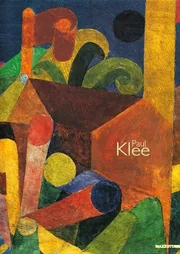
Suited to teens and adults interested in art and its history, especially those curious about modern painting.
134 pages, about 2 to 3 hours.
A compact look at Klee, from Blaue Reiter to the Bauhaus. 57% taste match
What it covers
This volume on Paul Klee (1879-1940) belongs to the biography and art-book category, first published in 1930 and running to about 134 pages. It looks at a painter who took part in the avant-garde movements of Germany and Switzerland in the 20th century. His path runs from the Blaue Reiter group through his years teaching at the Bauhaus and on to the Surrealism of the late 1930s. Throughout, he drew on poetry, literature and above all music as a way of thinking about painting.
The book follows his working relationships with August Macke and Alexej von Jawlensky, as well as his partnership with Wassily Kandinsky. It also touches on his family, including his son Felix Klee, and on Hanni Bürgi and the Bürgi family. Subjects covered include the psychology behind the work, nature as an aesthetic idea, and theater as a motif in his art. Material connected to collections and exhibitions, among them the Zentrum Paul Klee and the Öffentliche Kunstsammlung Basel, places the work in Bern, Switzerland and Germany.
Characters
Bürgi FamilyKlee family
Setting
BernCaliforniaGermanySan FranciscoSwitzerland
Period
20th century
Themes
Catalogues raisonnésPsychologyTheater in artArt collectionsExhibitonsÖffentliche Kunstsammlung BaselZentrum Paul KleeCatalogs
- Want to read 403
- Reading now 33
- Read 20
Most people shelving it are saving it for later.
Of 456 readers who put it on a shelf, 88% want to read it, 7% are reading it now, 4% have finished it and 0% stopped before the end.
By the numbers
- The median edition runs 134 pages. Counting about 275 words a page and an adult reading pace of 250 words a minute, that is about 2.5 hours of reading.
- Open Library tracks 150 editions from 111 publishers, the earliest dated 1930 and the latest 2008, across 9 languages.
- On reader demand it ranks in the top 4% of the classic books in our catalog (8,749 of them).
- Libraries shelve it under Dewey 709.24 and Library of Congress class N--6888.00000000.K55 A4 1990.
 BookWard’s take
A compact look at Klee, from Blaue Reiter to the Bauhaus
At 134 pages, this slim volume on Paul Klee (1879-1940) is short enough to read in a sitting, which is a point in its favor. It traces a painter through the German and Swiss avant-garde, from the Blaue Reiter group to his teaching years at the Bauhaus and on to the Surrealism of the late 1930s. The steady thread is Klee's habit of thinking about painting through music, poetry and literature, and that gives the book a distinctive angle and a real sense of an individual sensibility at work. It leans toward ideas rather than narrative, with prose that explains the work outright instead of dramatizing it. It also sets him beside Kandinsky, Macke and Jawlensky, so the circle of figures stays small and the reading stays focused. A good pick if you want a tight, thoughtful introduction.
At 134 pages it is brief and focused, which suits BookWard's love of tight books.
A short volume moves briskly through decades of work without lingering long on any one stage.
Reading painting through music and poetry gives it a fresher angle than a standard survey.
Art writing sits in the middle, clear and informed without turning ornate.
It follows a life and a way of seeing more than a chain of events.
The tone is creative and engaged, leaning mildly hopeful about what art can do.
This is a serious study of art with little room for comedy.
It is gentle, concerned with art and creative life rather than grim material.
The feeling comes from the work and its beauty, kept fairly measured.
See all 50 dialsEvery position, side by side with this book
Where it lines up
- LengthBookWard 1 · book 1
- SentimentBookWard 8 · book 8
- Shock for effectBookWard 9 · book 9
Where it pulls apart
- OpeningBookWard 10 · book 5
- ExpositionBookWard 2 · book 8
- Story or ideasBookWard 3 · book 8
At 134 pages it is brief and focused, which suits BookWard's love of tight books.
Its path from Blaue Reiter through the Bauhaus to Surrealism follows a clear, coherent line.
A short volume moves briskly through decades of work without lingering long on any one stage.
Reading painting through music and poetry gives it a fresher angle than a standard survey.
It draws Klee through his collaborators and family, giving some depth though the focus stays on his work.
A survey of a finished career closes by completing its arc rather than leaving questions hanging.
Art criticism of this kind tends toward analysis over sentiment, which fits BookWard's restraint.
There is no shock for effect here; the interest comes from the work itself.
Its catalogue and collection ties point to documented, careful scholarship rather than loose anecdote.
Klee's own idea of painting as music gives the book a recognizable character, though it stays measured.
It is led by ideas about art, color and music more than by a plotted story.
A book of this type explains the work directly rather than staging it in scene.
At this length there is little room to sag, and each artistic phase has its own purpose.
Art writing sits in the middle, clear and informed without turning ornate.
It follows a life and a way of seeing more than a chain of events.
The tone is creative and engaged, leaning mildly hopeful about what art can do.
This is a serious study of art with little room for comedy.
Accessible in length but asks some attention to art-historical terms and movements.
It centers on Klee and his circle, so the perspective stays narrow.
It deals with real people, real paintings and documented movements.
A handful of key figures like Kandinsky, Macke and Jawlensky keep the cast small.
It is an intimate portrait of one painter's working life more than a sweeping history.
It dwells on how Klee thought about painting, favoring his inner reasoning over external action.
Romance is a minor strand, with only the Bürgi family connection touching personal life.
The German and Swiss avant-garde of the early 20th century will feel unfamiliar to many readers.
It looks back at the early 20th century rather than the present day.
Klee's work and ideas about art keep their relevance well beyond their moment.
A plain, reliable authorial guide leads the reader through the material.
Questions of artistic interpretation are open, though the book is not a moral argument.
Describing paintings means rich attention to color, form and image.
It blends biographical narrative with analysis of the art, tilting a little toward analysis.
It offers some personal touches through family but stays largely a studied account.
It stands alone as a single volume on one artist.
A life study offers few surprises beyond the turns of his career.
It invites you to see painting differently, a mild but real intellectual stretch.
It is gentle, concerned with art and creative life rather than grim material.
The feeling comes from the work and its beauty, kept fairly measured.
Humor is rare and dry when it appears.
There is essentially no violence on the page.
The subject matter carries no sexual content.
Politics sits in the background, with the focus on art rather than argument.
The language is plain, with only some art-historical terms to learn.
It interprets Klee's work, giving it a modestly opinionated stance.
It looks back on a completed career and its place in art history.
Klee's belief in art's organic harmony gives it a mildly idealistic streak.
Review written by BookWard, dial version 1, November 2026.
Who is Paul Klee right for?
Suited to teens and adults interested in art and its history, especially those curious about modern painting. Nothing in it is sensitive, though some art-historical terms may need looking up.
Accessible in length but asks some attention to art-historical terms and movements.
It is gentle, concerned with art and creative life rather than grim material.
The feeling comes from the work and its beauty, kept fairly measured.
There is essentially no violence on the page.
Book CompanionPaul Klee: ideas, characters, themes
Paul Klee approached painting as a kind of music, drawing on poetry and literature to capture its organic harmony.
- Avant-garde roots. Klee took part in the expansive avant-garde movements of Germany and Switzerland, beginning with the Blaue Reiter.
- Bauhaus years. His teaching at the Bauhaus is a central stage in the path the book follows.
- Toward Surrealism. His work reaches the Surrealism of the late 1930s as the final phase of the story.
- Music as a model. He turned to poetry, literature and above all music to think about what painting could be.
- Key partnerships. Collaborations with August Macke and Alexej von Jawlensky, and above all Wassily Kandinsky, shaped his career.
Characters
Paul Klee
Subject
The painter whose life from 1879 to 1940 is traced across the avant-garde.
Wassily Kandinsky
Partner
The abstract expressionist with whom Klee had his most famous partnership.
Felix Klee
Son
Klee's son, who appears in the family side of the story.
Hanni Bürgi
Family connection
Linked to the Bürgi family, who appear among the people around Klee.
Themes
The idea that visual art can share the rhythm and harmony of music.
How the natural world shapes Klee's sense of beauty and form.
How partnerships with other artists pushed his work forward.
The recurring use of theatrical motifs within his imagery.
What the work reveals about the mind behind it.
Discussion questions
- How does thinking about painting as music change the way you look at an image?
- What did the Bauhaus years add to Klee's work compared with the Blaue Reiter period?
- Why might his partnership with Kandinsky be considered his most important?
- How do family and personal connections shape a reading of an artist's work?
- What does a short survey gain, and lose, compared with a longer biography?
Personalize your Book Companion
This is the general edition. In BookWard, the Companion is written for you: your reading profile, your notes, and spoiler-safe to the page you are on.
Buy, listen or borrow Paul Klee
Each link opens a search for this book on that store, in a new tab.
Read on a device
Borrow
Reviews and community
If you liked Paul Klee
Leonardo's own pages, mirror-script and margin sketches, put before you
SiddharthaHermann HesseA slim, musical parable of one man's search for wisdom
InfluenceRobert B. CialdiniSix levers of persuasion, laid out with evidence and field work
The botany of desireMichael PollanA plant's-eye view of us, one apple at a time
Sources: Open Library.
Track Paul Klee and find your next favorite
Add it to your shelf, rate what you have read, and BookWard will recommend what fits you.
Free to start. No credit card needed.