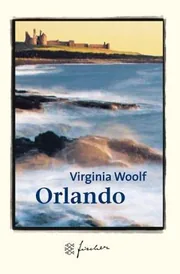
Orlando
by Virginia Woolf · 1928
Best suited to mature teens and adults comfortable with literary, allusive prose.
226 pages, about 3.5 to 5.5 hours.
A poet lives three centuries and changes sex along the way. 56% taste match
The story
Orlando is a fantasy novel by Virginia Woolf, first published in 1928 and subtitled as a biography. Its central figure is a poet who begins as a young nobleman born into wealth and rank in Elizabethan England. The story follows this character across roughly three centuries, during which Orlando becomes a woman and keeps living into the modern era. Along the way the poet encounters major figures from English literary history, so the book works as a satirical tour through that tradition as well as a tale of one long life.
Woolf drew on the family history of Vita Sackville-West, the aristocratic poet and novelist who was her lover and close friend. The novel deals with gender identity, sex roles, and the lives of the English nobility, and it has drawn extensive attention from scholars of women's writing and of gender and transgender studies. At about 226 pages in a typical edition, it has appeared in 453 editions.
HE-for there could be no doubt of his sex, though the fashion of the time did something to disguise it-was in the act of slicing at the head of a Moor which swung from the rafters.
Setting
EnglandInglaterra
Themes
TranssexualsTextual CriticismLiteratureMujeresHombresMenFacsimilesHistoria
- Want to read 413
- Reading now 23
- Read 48
Most people shelving it are saving it for later.
Of 484 readers who put it on a shelf, 85% want to read it, 5% are reading it now, 10% have finished it and 0% stopped before the end.
By the numbers
- The median edition runs 226 pages. Counting about 275 words a page and an adult reading pace of 250 words a minute, that is about 4.1 hours of reading.
- Open Library tracks 453 editions from 150 publishers, the earliest dated 1928 and the latest 2024, across 14 languages.
- On reader demand it ranks in the top 3% of the classic books in our catalog (8,749 of them).
- Libraries shelve it under Dewey 823.912 and Library of Congress class PR-6045.00000000.O72 O8 1948.
Read it
The text of this edition is free to read online.
2 ebook providers carry it and a scanned copy is on the Internet Archive.
 BookWard’s take
A poet lives three centuries and changes sex along the way
Woolf's 1928 novel follows Orlando, born a young nobleman in Elizabethan England, who becomes a woman and keeps living into the modern age. It is a satirical tour of English literary history dressed up as a biography, and it is as original as books get; I'd put it near the very top for sheer invention. The real pleasure is the voice: the mock-biographer's playful, confiding tone is unmistakable. The book is also fantastical and funny, and it moves quickly at about 226 pages, which suits my liking for a lean read. Expect it to be driven by ideas more than by story, with little in the way of explanation and a distinctly ornate prose style. Familiar tropes hardly come into it, because the book mocks the conventions it borrows. A brisk, inventive, genuinely strange classic.
At about 226 pages it stays short for the span of history it covers, which fits BookWard's love of tight books.
Years and even decades pass in a paragraph, so it moves briskly, though the playful digressions keep it from racing.
A mock biography of an immortal, sex-changing poet is unlike almost anything else, matching BookWard's taste at the top.
Woolf's sentences are lyrical and richly worked, more ornate than BookWard's usual preference.
Events are driven by Orlando's shifting identity as much as by plot, so character and incident share the lead.
The tone is buoyant and celebratory about freedom and change, leaning hopeful, which fits BookWard well.
The biography framing, time-leaping chapters and satirical narration are more experimental than conventional storytelling.
The mock-biographical tone is playful and satirical throughout, comfortably on the funny side, which BookWard enjoys.
Despite its subject matter the mood is light, witty and lyrical rather than grim.
Feeling is present in love, loss and longing, but filtered through irony and restraint.
See all 50 dialsEvery position, side by side with this book
Where it lines up
- Shock for effectBookWard 9 · book 9
- LengthBookWard 1 · book 2
- Familiar tropesBookWard 10 · book 9
Where it pulls apart
- Internal logicBookWard 10 · book 3
- Story or ideasBookWard 3 · book 8
- OpeningBookWard 10 · book 7
At about 226 pages it stays short for the span of history it covers, which fits BookWard's love of tight books.
It opens straight into a young nobleman's Elizabethan world with a confident narrator, though it eases in rather than grabbing at once.
It borrows the biography form only to twist it, so familiar tropes become material for satire rather than a crutch.
A person who lives centuries and changes sex follows dream logic and whimsy, far looser than BookWard's airtight preference.
Years and even decades pass in a paragraph, so it moves briskly, though the playful digressions keep it from racing.
A mock biography of an immortal, sex-changing poet is unlike almost anything else, matching BookWard's taste at the top.
Orlando is drawn with real interior life and wit, though the book values the idea of the character over psychological realism.
The story arrives at a clear modern-day close, resolved enough to satisfy while keeping its playful spirit.
The warmth is real but wrapped in irony and wit, so it rarely tips into sentimentality.
Its audacity is intellectual rather than gory; the strangeness is earned by its themes, which BookWard appreciates.
This is a novel, so the nonfiction rigor dial does not apply.
The teasing, learned, confiding biographer's voice is unmistakable and carries the whole book, an easy match for BookWard.
The book exists to play with ideas of gender, time and literary history, more than to deliver a conventional plot.
The narrator freely explains, comments and digresses in an open mock-biographical manner, which runs against BookWard's love of showing.
The brief length and constant invention keep energy up across its sweep, with few dull stretches.
Woolf's sentences are lyrical and richly worked, more ornate than BookWard's usual preference.
Events are driven by Orlando's shifting identity as much as by plot, so character and incident share the lead.
The tone is buoyant and celebratory about freedom and change, leaning hopeful, which fits BookWard well.
The biography framing, time-leaping chapters and satirical narration are more experimental than conventional storytelling.
The mock-biographical tone is playful and satirical throughout, comfortably on the funny side, which BookWard enjoys.
Dense, allusive prose and literary references reward attention, though the book is short and playful enough to stay approachable.
Everything is filtered through one mock-biographer's account of a single protagonist, so viewpoint is narrow.
It spans roughly three centuries in leaps, making time one of the book's central playthings.
A character who lives for centuries and changes sex belongs to fantasy, treated with a straight face.
Orlando dominates, but a parade of literary figures and court acquaintances passes through the centuries.
It sweeps across three hundred years of English history, giving it grand scale despite its brevity.
Orlando's reflections, moods and sense of self are the heart of the book, more than external action.
Narration, commentary and description carry most of the book, with dialogue used sparingly.
Love and desire recur in Orlando's life, but they serve the larger themes more than driving a central romance.
Elizabethan court life and later English eras are likely to feel remote, though the narrator makes them vivid.
Written in 1928 and set from the Elizabethan age to its present, it is firmly rooted in the past.
Its questions about gender and identity keep it widely read and studied, giving it lasting reach.
The biographer narrator is wry, selective and playful about his own authority, a gently unreliable guide.
The book questions rigid rules about sex and class without handing down tidy verdicts.
Landscapes, costumes and eras are rendered in rich, sensuous detail throughout.
It stands alone as a single novel.
Orlando's transformations and leaps through time deliver surprises, though the tone is more whimsical than plot-twisty.
It invites readers to rethink gender, history and biography, a gentle but real challenge.
Despite its subject matter the mood is light, witty and lyrical rather than grim.
Feeling is present in love, loss and longing, but filtered through irony and restraint.
The wit is arch and satirical, sitting between dry and broad.
Violence is minimal and not a focus of the story.
Desire and gender are themes, but the treatment is witty and non-explicit.
Questions of gender and social role are central, handled through satire rather than polemic.
Long, ornate sentences and period allusions make it denser than plain prose, without heavy dialect.
The narrator offers constant opinions, jokes and asides, making the book strongly opinionated.
It surveys centuries of the past while arriving at the modern era, looking slightly forward.
The book celebrates fluid identity and creative freedom with an idealistic spirit.
Review written by BookWard, dial version 1, November 2026.
Who is Orlando right for?
Best suited to mature teens and adults comfortable with literary, allusive prose. It treats gender and desire thoughtfully and non-explicitly, which some readers may want to be aware of.
Dense, allusive prose and literary references reward attention, though the book is short and playful enough to stay approachable.
Despite its subject matter the mood is light, witty and lyrical rather than grim.
Feeling is present in love, loss and longing, but filtered through irony and restraint.
Violence is minimal and not a focus of the story.
Book CompanionOrlando: ideas, characters, themes
A poet who lives for centuries and changes sex becomes a vehicle for satirising English literary history and rigid ideas about gender.
- A biography that is not one. The subtitle promises a biography, but the book uses the form playfully to mock how lives and histories are written.
- A life across centuries. Orlando begins as a young nobleman in Elizabethan England and lives on into the modern era.
- A change of sex. Orlando becomes a woman partway through, a transformation the book treats as a matter of life rather than catastrophe.
- A tour of literature. Along the way Orlando meets key figures from English literary history, turning the novel into a satirical survey.
- Rooted in friendship. The story draws on the family history of Vita Sackville-West, Woolf's lover and close friend.
Characters
Orlando
Protagonist
A poet born a young nobleman in Elizabethan England who later becomes a woman and lives into the modern era.
Themes
How selfhood relates to, and exceeds, the roles assigned by sex.
The social expectations placed on men and women across different eras.
How a single life can span centuries and how eras shape what a person can be.
The satirical tour through English writing that runs under the story.
The privileges and customs of the aristocratic world Orlando inhabits.
Discussion questions
- Why might Woolf have chosen the form of a biography for such a fantastical story?
- How does the book treat Orlando's change of sex, and what does that choice say about identity?
- What does the satirical tour of literary history add to the story of one life?
- How does the narrator's voice shape your trust in what you are told?
- Why has this novel drawn so much attention from scholars of gender and transgender studies?
Personalize your Book Companion
This is the general edition. In BookWard, the Companion is written for you: your reading profile, your notes, and spoiler-safe to the page you are on.
Buy, listen or borrow Orlando
Each link opens a search for this book on that store, in a new tab.
Read on a device
Borrow
Reviews and community
If you liked Orlando
A million-year-old mystery, chased by five seekers across the stars
It Lasts Forever and Then It's OverAnne de MarckenA dead woman walks west with a crow in her chest
Poor ThingsAlasdair GrayGray's Glasgow Frankenstein, where the narrator may be lying
This Is How You Lose the Time WarAmal El-MohtarTwo enemy agents, one letter, and a war across time
Sources: Open Library.
Track Orlando and find your next favorite
Add it to your shelf, rate what you have read, and BookWard will recommend what fits you.
Free to start. No credit card needed.