It suits babies and preschoolers as a bedtime read-aloud, and it often moves older readers and parents as well.
32 pages, about 0.5 to 0.5 hours.
A lullaby that follows one family across a lifetime. 52% taste match
About the book
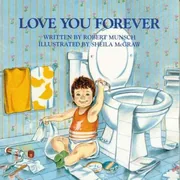
Love You Forever is a children's picture book by Robert Munsch, first published in 1986 and illustrated by Sheila McGraw. It runs about 32 pages and is aimed at the baby and preschool audience. The book follows a mother and her son from his infancy through his boyhood and into adulthood. She rocks him as a newborn, and each night she goes to his room to hold him and sing a short lullaby promising that she will love him always. His youthful behavior tries her patience at times, yet the nightly ritual continues, and she keeps returning to his bedroom even after he has grown up and moved away.
As the years pass, the mother grows old and frail, and the roles of parent and child shift. The son takes up the lullaby himself, and later he sings it to his own newborn daughter, so the song moves from one generation to the next. The story centers on maternal and paternal love, growing up, aging, and the bond between parent and child.
Munsch wrote the story after he and his wife lost two babies to stillbirth. It began as a song he sang silently for them, and it grew into a full story during a performance at the University of Guelph.
A mother held her new baby and very slowly rocked him back and forth, back and forth, back and forth.
Themes
Children's Books/Baby-PreschoolParent and childLoveAgingPicture books for childrenMothersGrowthPaternal Love
- Want to read 252
- Reading now 7
- Read 65
Most people shelving it are saving it for later.
Of 324 readers who put it on a shelf, 78% want to read it, 2% are reading it now, 20% have finished it and 0% stopped before the end.
By the numbers
- The median edition runs 32 pages. Counting about 275 words a page and an adult reading pace of 250 words a minute, that is about 35 minutes of reading.
- Open Library tracks 39 editions from 17 publishers, the earliest dated 1986 and the latest 2020, across 4 languages.
- On reader demand it ranks in the top 2% of the modern books in our catalog (15,152 of them).
- Libraries shelve it under Library of Congress class PS-8576.00000000.U58L68 1986.
 BookWard’s take
A lullaby that follows one family across a lifetime
Love You Forever is a 32-page picture book that does something rare for its size: it covers an entire life. A mother rocks her son, sings the same short promise each night, and keeps coming back to his room as he grows, leaves home, and she grows old. It is about as tight as books get, and it hooks you right away because the ritual is established from the first pages. Where I part company with it is sentiment, since the book leans openly into feeling rather than restraint. What lifts it is the sweep of time, a whole lifespan folded into a few pages, and the way the song passes from one generation to the next. Munsch wrote it after losing two babies to stillbirth, and that origin gives the simple refrain real weight.
At 32 pages it is about as short as a book can be, which matches BookWard's love of tight storytelling.
A lifetime moves by in a few pages, so it never lingers, though the repeated song gives it a gentle rhythm.
The premise is simple, but tracing a parent-child bond from infancy to old age in one picture book feels fresh.
The language is plain and rhythmic, written to be read aloud to very young children.
The story is driven by the relationship and its changes over time more than by events.
It faces aging and loss yet ends on love continuing, leaving a warm, hopeful note.
A repeating lullaby woven through a life story is a neat device, though the form stays conventional.
The boy's exasperating youth brings some light moments, but the tone is mostly tender.
Aging and the mother's decline appear, but they are handled gently for a young audience.
It is built to move readers, and the final scenes hit hard for many adults.
See all 50 dialsEvery position, side by side with this book
Where it lines up
- LengthBookWard 1 · book 1
- EndingBookWard 8 · book 8
- Shock for effectBookWard 9 · book 9
Where it pulls apart
- Familiar tropesBookWard 10 · book 5
- SentimentBookWard 8 · book 2
- Character depthBookWard 8 · book 3
At 32 pages it is about as short as a book can be, which matches BookWard's love of tight storytelling.
The nightly lullaby ritual is in place from the opening pages, so it grabs a young listener at once.
Parental love is familiar ground, though spanning a whole lifetime in a picture book gives it a distinctive shape.
The cycle of mother, son, and granddaughter follows a clear, consistent pattern with nothing that contradicts itself.
A lifetime moves by in a few pages, so it never lingers, though the repeated song gives it a gentle rhythm.
The premise is simple, but tracing a parent-child bond from infancy to old age in one picture book feels fresh.
Mother and son are drawn in broad strokes as roles in a cycle rather than detailed individuals, which is the form's limit.
The song passes to a new generation and the cycle closes cleanly, which BookWard values.
The book embraces tenderness openly, so it sits far from BookWard's preference for restraint.
Nothing here is for effect; the one sad turn is part of the cycle of life and feels earned.
This is a picture book of fiction, so rigor does not apply.
Munsch's repeated refrain gives it a recognizable, singable voice that stays with a listener.
It is told as a story of one family, though the idea of generations carrying love forward drives it.
The feelings are shown through the nightly ritual rather than explained, which suits BookWard well.
At 32 pages there is no room for a middle to sag; every page carries the same steady momentum.
The language is plain and rhythmic, written to be read aloud to very young children.
The story is driven by the relationship and its changes over time more than by events.
It faces aging and loss yet ends on love continuing, leaving a warm, hopeful note.
A repeating lullaby woven through a life story is a neat device, though the form stays conventional.
The boy's exasperating youth brings some light moments, but the tone is mostly tender.
It is made for babies and preschoolers and asks almost nothing of the reader.
The story stays close to the mother and then the son, with no shifting perspectives.
It leaps from infancy to adulthood to old age, compressing a whole life into a few pages.
Everything is grounded in ordinary family life and a bedroom at night.
Mother, son, and later a granddaughter are all it needs.
It is intimate, set largely in a bedroom, though it spans generations.
Feeling and quiet gesture matter more than action in this book.
The lullaby is nearly the only spoken line, so dialogue is minimal.
Love here is between parent and child; romance plays no part.
The setting is a familiar home that any family would recognize.
It was published in 1986 and the family setting feels broadly timeless rather than of a date.
Parent and child love across generations is a theme that does not age.
A plain, straightforward storyteller tells it with no tricks or hidden angles.
The message about unconditional love is stated clearly with no ambiguity.
Illustration carries the scenes while the text stays spare and brief.
The story is told warmly and close in, never from a detached distance.
It stands alone as a single picture book.
The cycle of life is gently signaled, so there are few surprises.
It comforts young listeners, though the passage about aging can give adults pause.
Aging and the mother's decline appear, but they are handled gently for a young audience.
It is built to move readers, and the final scenes hit hard for many adults.
The mild humor about a rascally boy is gentle and slightly broad.
There is no violence in the story.
No sexual content appears anywhere.
The book has no political content.
The language is plain and simple enough for the youngest readers.
The narration leans a little toward affection but stays mostly neutral.
It looks both back and ahead as the song passes to the next generation.
It holds an idealistic view that love can endure through every stage of life.
Review written by BookWard, dial version 1, November 2026.
Who is Love You Forever right for?
It suits babies and preschoolers as a bedtime read-aloud, and it often moves older readers and parents as well. The later pages deal with an aging, ailing mother and imply her death, which may prompt questions from young children.
It is made for babies and preschoolers and asks almost nothing of the reader.
Aging and the mother's decline appear, but they are handled gently for a young audience.
It is built to move readers, and the final scenes hit hard for many adults.
There is no violence in the story.
Book CompanionLove You Forever: ideas, characters, themes
A mother's nightly lullaby turns into a promise that outlasts her and passes to her son's own child.
- A lifetime in 32 pages. The book moves from a newborn to a grown man and an aging mother in very few pages.
- The lullaby as a thread. The same short song returns throughout and ties each stage of life together.
- The nightly visit. The mother keeps coming to her son's room even after he is grown and has moved away.
- Roles reverse. As the mother grows frail, the son takes up the song and holds her as she once held him.
- The cycle continues. The son sings the lullaby to his newborn daughter, so the love is handed forward.
Characters
The mother
Parent at the heart of the story
She rocks and sings to her son through every stage of his life, even when he tries her patience.
The son
Child who grows into a parent
He moves from a rascally boy to a man who sings the lullaby back to his mother.
The granddaughter
Newborn at the close
She receives the lullaby from her father, showing the cycle will go on.
Themes
Love that continues no matter how difficult the child is.
How care and traditions pass from parent to child and on again.
The shift from caring for a child to being cared for in old age.
The stages a child passes through on the way to adulthood.
The story grew from grief and ends on love carrying on.
Discussion questions
- Why do you think the mother keeps visiting her son's room even after he grows up?
- What changes when the son begins singing the lullaby to his mother?
- How does the song help tie the different stages of life together?
- What do you make of the ending, with the lullaby passed to a new baby?
- Knowing Munsch wrote it after losing two babies, how does that change the way you read it?
Personalize your Book Companion
This is the general edition. In BookWard, the Companion is written for you: your reading profile, your notes, and spoiler-safe to the page you are on.
Buy, listen or borrow Love You Forever
Each link opens a search for this book on that store, in a new tab.
Read on a device
Borrow
Reviews and community
If you liked Love You Forever
A short, plain-spoken memoir about learning how to live from a dying teacher
The Last LectureRandy PauschA dying professor's farewell, told with humor and a lot of heart
A Dog's PurposeW. Bruce CameronA dog's four lives, told with warmth and no apology
ChrysanthemumKevin HenkesA gentle, funny picture book about a name worth keeping
Sources: Open Library.
Track Love You Forever and find your next favorite
Add it to your shelf, rate what you have read, and BookWard will recommend what fits you.
Free to start. No credit card needed.