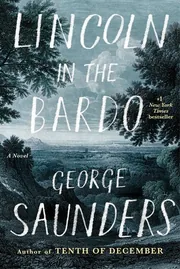
Lincoln in the Bardo
by George Saunders, Amir Tsukerman · 2017
Best for mature teens and adults comfortable with an experimental form.
426 pages, about 6.5 to 10 hours.
A grieving president, a graveyard of ghosts, and a daring form. 66% taste match
The story
Lincoln in the Bardo is a 2017 historical novel by George Saunders, and it is his first full-length novel. It is an experimental work of biographical fiction that blends a real moment from the Civil War era with ghost story elements and an exploration of grief.
The story opens in February 1862, when the war is less than a year old and President Lincoln's eleven-year-old son, Willie, falls ill in the White House and dies. He is buried in a Georgetown cemetery in Washington, D.C., and the president is said to have returned to the crypt on his own to hold the boy's body. From that episode the novel moves into a supernatural purgatory, called the bardo in the Tibetan tradition, where ghosts gather, complain, quarrel, and perform strange acts of penance while a struggle develops over Willie's soul. The book centers on a father's loss and the bonds of family, and it reaches across the divide between the living and the dead. It runs to roughly 426 pages in its median edition.
Setting
United StatesGeorgetown (Washington, D.C.)
Themes
PresidentsGriefPurgatoryNew York Times bestsellerNew York Times reviewed18.06 Anglo-American literatureHistoricalGhost
- Want to read 89
- Reading now 3
- Read 33
Most people shelving it are saving it for later.
Of 125 readers who put it on a shelf, 71% want to read it, 2% are reading it now, 26% have finished it and 0% stopped before the end.
By the numbers
- The median edition runs 426 pages. Counting about 275 words a page and an adult reading pace of 250 words a minute, that is about 7.8 hours of reading.
- Open Library tracks 21 editions from 12 publishers, the earliest dated 2017 and the latest 2019, across 3 languages.
- On reader demand it ranks in the top 6% of the recent books in our catalog (6,647 of them).
- Libraries shelve it under Dewey [Fic] and Library of Congress class PS-3569.00000000.A7897 L56 2017b.
 BookWard’s take
A grieving president, a graveyard of ghosts, and a daring form
George Saunders builds his first full-length novel on a single real episode: Lincoln returning alone to hold his dead son. The book is stranger and funnier than that sounds. Its structure is the main event, a chorus of voices stitched together in fragments, which gives it an unmistakable authorial voice and real originality. The cast is large, yet the pace stays brisk and the opening pulls you in fast. Readers who want airtight internal logic will find it here too, since the bardo has its own consistent rules, and the book keeps to them. The emotion lands hard without turning sentimental, and the darkness feels earned, not used for shock. It asks a little more effort than a straight historical novel, but the payoff is a story that stays in the mind.
At 426 pages it is mid-length on paper, and the fragmentary form reads quicker, though it sits above BookWard's love of the short.
The short, clipped voices keep things moving, a little under BookWard's quick pace but never dragging.
Few novels look or read like this one, and that originality is exactly what BookWard rewards most.
Plain, quick lines mix with lyrical bursts, so the prose is a bit richer than BookWard's usual middle.
The drive comes from grief and what the ghosts want, so character leads, as BookWard prefers.
Loss is the subject, but the book finds tenderness and a measure of release, tilting slightly hopeful.
The novel is stitched from fragments and many voices, far more experimental than BookWard's usual taste.
The ghosts gripe and bicker in ways that are often funny, lightening a very sad premise.
Death and a haunted afterlife make it serious, but the tone stays humane, so it is only mid-dark.
Grief and love drive the book, making its emotional pull strong and close to the surface.
See all 50 dialsEvery position, side by side with this book
Where it lines up
- Character depthBookWard 8 · book 8
- Familiar tropesBookWard 10 · book 9
- PaceBookWard 8 · book 7
Where it pulls apart
- LengthBookWard 1 · book 5
- OpeningBookWard 10 · book 8
- Internal logicBookWard 10 · book 8
At 426 pages it is mid-length on paper, and the fragmentary form reads quicker, though it sits above BookWard's love of the short.
A boy's death and a father's visit to the crypt set the story moving at once, which suits BookWard's taste for fast openings.
A ghost story built from a chorus of voices and a Tibetan-tradition afterlife steers well clear of the usual historical-novel tropes.
The bardo runs on its own consistent rules for the dead, which fits BookWard's preference for internal logic that holds together.
The short, clipped voices keep things moving, a little under BookWard's quick pace but never dragging.
Few novels look or read like this one, and that originality is exactly what BookWard rewards most.
Even brief ghost voices come through with distinct griefs and regrets, and Lincoln's loss is drawn with real depth.
The struggle over Willie's soul reaches a clear resolution, in line with BookWard's liking for endings that close.
Grief is at the center, yet it is handled with humor and restraint, close to BookWard's preference.
The strangeness and the darkness serve the story about loss, so the book earns its grimmer moments.
Saunders has one of the most recognizable voices in fiction, and this book makes it the whole engine.
It is led by story and character, with ideas about grief and attachment woven in, matching BookWard's story-first lean.
The dead reveal themselves through their own speech and quarrels, not through explanation, as BookWard likes.
The patchwork of voices keeps energy up throughout, with little chance for a slack stretch.
Plain, quick lines mix with lyrical bursts, so the prose is a bit richer than BookWard's usual middle.
The drive comes from grief and what the ghosts want, so character leads, as BookWard prefers.
Loss is the subject, but the book finds tenderness and a measure of release, tilting slightly hopeful.
The novel is stitched from fragments and many voices, far more experimental than BookWard's usual taste.
The ghosts gripe and bicker in ways that are often funny, lightening a very sad premise.
The fragmented form takes some getting used to, so it asks more of the reader than a plain narrative.
A whole chorus of ghosts and historical voices tell the story, many more viewpoints than BookWard's usual.
The main action is tightly set around the days after Willie's death, so time stays largely linear.
A ghostly purgatory is the setting, so this sits far toward the fantastical end, past BookWard's middle.
A crowd of ghosts fills the cemetery, giving a much larger cast than BookWard's usual comfort zone.
The story stays close to one family and one cemetery, an intimate frame despite the Civil War backdrop.
Most of the weight sits in grief and the thoughts of the characters, not in outward action.
The story is carried by voices speaking and arguing, which fits BookWard's appetite for dialogue.
Romance is not a part of this book, which centers on a father's love for his son.
The bardo is an unfamiliar place with its own customs, in line with BookWard's taste for the unfamiliar.
It is set in 1862, firmly in the past, which sits well away from BookWard's present-day lean.
Grief and the love of a parent are lasting subjects, so it should hold up over time, as BookWard prefers.
The ghosts' penances and failings are mixed, giving a middling moral picture closer to clear than ambiguous.
Detail is conveyed through the ghosts' accounts and vivid fragments, leaving the setting well drawn.
The story is told close to its characters' hearts, personal and not detached, as BookWard likes.
It stands alone as Saunders's first full-length novel.
The struggle over Willie's soul brings some turns, though the book is more about feeling than plot surprise.
The form and the subject of grief push the reader, which suits BookWard's liking for a challenge.
Death and a haunted afterlife make it serious, but the tone stays humane, so it is only mid-dark.
Grief and love drive the book, making its emotional pull strong and close to the surface.
The humor is bickering and absurd, closer to broad than dry, within BookWard's middle.
Sexual content is minimal and does not drive the story.
The Civil War frames the novel, but the focus stays on a family's loss over political argument.
The varied voices of the dead can be dense and period-flavored, adding some language difficulty.
The narration is spread across many voices, so no single one dominates, which keeps it fairly neutral.
The book looks back on a historical moment, though its themes of grief carry forward.
It balances sorrow with compassion and some grace, so it is mildly idealistic.
Review written by BookWard, dial version 1, November 2026.
Who is Lincoln in the Bardo right for?
Best for mature teens and adults comfortable with an experimental form. It deals with a child's death and grief, which some readers may find heavy.
The fragmented form takes some getting used to, so it asks more of the reader than a plain narrative.
Death and a haunted afterlife make it serious, but the tone stays humane, so it is only mid-dark.
Grief and love drive the book, making its emotional pull strong and close to the surface.
Book CompanionLincoln in the Bardo: ideas, characters, themes
A father's grief for his dead son opens a ghostly purgatory where the dead struggle over a boy's soul.
- A real moment. The novel grows from the historical fact that Lincoln returned to his son's crypt to hold the body.
- The bardo. The setting is a transitional state drawn from the Tibetan tradition, where ghosts linger and quarrel.
- A chorus of voices. The story is told through many speakers and fragments instead of one narrator.
- Humor and horror. The ghosts are both comic and unsettling, balancing laughter with dread.
- A first novel. It is George Saunders's first full-length novel, published in 2017.
Characters
Abraham Lincoln
The grieving president
A father in the middle of the Civil War who returns to his son's crypt.
Willie Lincoln
The lost son
The eleven-year-old whose death and soul sit at the heart of the story.
Themes
How loss shapes a parent and lingers past death.
The bonds that hold across the divide between living and dead.
The strange acts the ghosts perform as they linger.
The struggle over whether a soul moves on.
The Civil War as a backdrop to private sorrow.
Discussion questions
- Why might Saunders tell this story through a chorus of voices instead of one narrator?
- How does humor change the way the book handles grief?
- What does the bardo setting add that a realistic graveyard would not?
- How does a real historical moment shape a fantastical story?
- What do the ghosts' penances say about the way people cling to the past?
Personalize your Book Companion
This is the general edition. In BookWard, the Companion is written for you: your reading profile, your notes, and spoiler-safe to the page you are on.
Buy, listen or borrow Lincoln in the Bardo
Each link opens a search for this book on that store, in a new tab.
Read on a device
Borrow
Reviews and community
If you liked Lincoln in the Bardo
Four mothers, four daughters, and the stories between them
Watership DownRichard AdamsRabbits flee a doomed warren in a fully imagined epic
Angel DownDaniel KrausOne unbroken sentence carries five soldiers and a wounded angel
The End of EverythingM. John HarrisonA strange Kent tideline, and an object that won't hold still
Sources: Open Library.
Track Lincoln in the Bardo and find your next favorite
Add it to your shelf, rate what you have read, and BookWard will recommend what fits you.
Free to start. No credit card needed.