Updated November 2, 2026 · reading data through October 2026
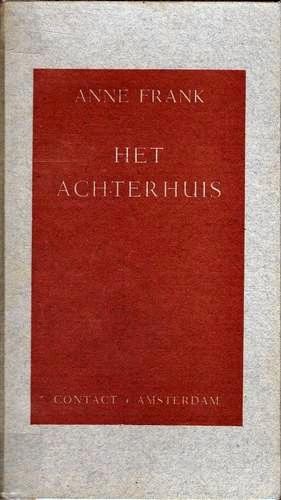
Het Achterhuis
by Anne Frank
Hidden with her family in a concealed Amsterdam annex during the Nazi occupation, a teenage girl records her fears, petty quarrels, first love, and dreams of becoming a writer. Her candid voice turns a wartime hiding place into an unforgettable portrait of humanity. Read the full description
Best for: Readers of history and memoir, and anyone studying or teaching the Second World War
Het Achterhuis is #64 on BookWard's Top 100 books for November 2026, with a BookWard Score of 60 out of 100.
BookWard review of Het Achterhuis
4 of 5 stars 4.1 out of 5, from 145 reader ratings
BookWard rates Het Achterhuis 4.1 out of 5. That is the average of 145 reader ratings on Open Library (4.21), adjusted toward the typical book so that a small number of ratings cannot inflate it. Beyond the rating, it is #64 on BookWard's Top 100 books; 2,433 readers want to read it, 190 are reading it right now and 231 have finished it. Its adjusted rating is higher than 68% of the books on the Top 100.
How this rating works
BookWard’s rating is calculated, not hand-scored. We take the average rating readers have given the book on Open Library and adjust it toward the typical book: adjusted = (n × average + 25 × 3.8) ÷ (n + 25), where n is the number of ratings. A book needs at least 50 ratings to be rated. The rating reflects how readers received the book, not whether it is right for you. Your own ratings on your shelf are private and are not part of this number.
Het Achterhuis: reading interest over the past 12 months
Sources: Open Library’s public reading-log and ratings data (dump of 2026-10-31), Wikipedia page views and Wikidata. Monthly counts are exact; they show relative interest among readers of these public sources, not total readership.
Ranked against the other books on this list, Het Achterhuis’s reading interest has run from #62 to #96 over these 12 months. Interest rank blends shelf adds, Wikipedia page views and rating activity, each compared with the other 99 books that month.
Shelf adds by month
Het Achterhuis was added to Open Library readers’ shelves 406 times in the past 12 months, peaking in October 2026 with 71 (110% above its monthly average of 34). Over the latest three months (Aug 2026 to Oct 2026) shelf adds were up 92% on the three months before. 83% of the adds were “want to read”, 7% “currently reading” and 10% “already read”.
Want to read Currently reading Already read
What the data says about Het Achterhuis
- Moderate swings. Monthly shelf adds averaged 34 with some ups and downs.
- Busiest and quietest months. October 2026 was its busiest month (71 adds), about 3.9 times its quietest, June 2026 (18).
- Against its genre. It had 41% fewer shelf adds than the average Biography book on this list.
- Share of the list. It accounts for 0.4% of all shelf adds recorded for the Top 100 over these 12 months, #82 of 100.
- Its age. First published in 1944 (82 years ago), it is older than 88% of the books on the list.
Each finding is computed from the public data above and shown only when the numbers support it.
Het Achterhuis on the Top 100: rank history
| Month | Rank | Score |
|---|---|---|
| November 2026 | #64 | 60 |
| September 2026 | #66 | 60 |
Is Het Achterhuis rising or falling?
Holding steady Its weekly, monthly and yearly ranks are close together, so interest is steady rather than spiking.
On Open Library, Het Achterhuis ranks #79 this week, #129 this month, and #141 over the past year. A longer bar means a higher position. Comparing the three windows shows whether readers are arriving faster than the book's long-term pace. Readings as of 2026-11-02.
Why Het Achterhuis made the Top 100
Het Achterhuis made the list mainly on momentum (+22.2 points) and reader love (+15.3 points). Its smallest contribution is rising (+0.4). The BookWard Score blends five public signals, each scored from 0 to 100 and weighted as shown.
The reading-now, rating and rank signals come from Open Library’s public data, not from BookWard’s own readers. The score measures reading interest, not quality or sales. How the score works.
Open Library reader stats for Het Achterhuis
Source: Open Library public reading logs, as of 2026-11-02. BookWard’s own monthly snapshots are added to the picture, and anonymous BookWard reader data will be layered in as the community grows.
More readers have Het Achterhuis open right now than 25% of the other books on this list. These counts come from one public source, so they show relative interest rather than total readership.
Where it sits among Biography books
It is #3 of the 3 Biography books on this month’s list.
About Het Achterhuis
What it’s about
Het Achterhuis is the diary of Anne Frank, who lived from 1929 to 1945. The title is named after the hiding place on the Prinsengracht during the Second World War. Through her entries, a young Jewish girl describes confinement, fear, family life, and the ordinary hopes of growing up, all in a voice that is intimate, candid, and often moving.
First published on 25 June 1947, it has become one of the most widely read books in the world, and since 2009 it has been listed on UNESCO's Memory of the World register of documentary heritage. It will matter to anyone wanting to understand persecution through one person's eyes, and it is a natural choice for teenagers and adults alike.
At a glance
- First published
- 1944
- Genre
- Biography
- Length
- about 285 pages (the median across its editions)
- Languages
- editions in 21 languages listed on Open Library
- Editions
- 294 on Open Library
- Places covered
- Netherlands, Amsterdam, De guo
From Open Library and Wikidata public records. Missing rows mean the records do not list that fact.
Themes
- Hiding in wartime
- Growing up
- Hope
What reading it is like
Intimate, honest diary entries from a teenager.
At about 285 pages it is a medium-length read: roughly 6 hours at an average reading pace (about 250 words a minute, 300 words a page). Audiobook and edition lengths vary.
Good to know
Written from 1942 to 1944 in Amsterdam and first published in Dutch. Editions vary.
The premise
A teenage girl writes candidly about daily life while her family and several others hide in a concealed set of rooms in Amsterdam during the Nazi occupation. Her diary captures both the fear of confinement and the ordinary concerns of growing up.
What you’ll get
- An intimate firsthand view of wartime hiding
- A vivid, honest teenage voice
- A lasting human perspective on history
You might skip it if you want a fast, plot-driven story rather than a personal, reflective account that you know ends in tragedy.
Pairs well with: Man's Search for Meaning
Keep exploring the chart
Also on the chart at #63 and #65
More Biography on the Top 100
Questions about Het Achterhuis
What rank is Het Achterhuis on the Top 100 books?
Het Achterhuis is #64 on BookWard's Top 100 books for November 2026, with a BookWard Score of 60 out of 100.
Is Het Achterhuis rising or falling?
Holding steady. Its weekly, monthly and yearly ranks are close together, so interest is steady rather than spiking. On Open Library, Het Achterhuis ranks #79 this week, #129 this month, and #141 over the past year.
Why is Het Achterhuis on the Top 100?
Het Achterhuis made the list mainly on momentum (+22.2 points) and reader love (+15.3 points). Its smallest contribution is rising (+0.4).
How many people are reading Het Achterhuis right now?
Open Library's reading logs show 190 readers currently reading Het Achterhuis, 2,433 who want to read it and 231 who have logged it as read (as of 2026-11-02). These are counts from one public source, not all readers.
How much interest has Het Achterhuis had over the past year?
406 Open Library shelf adds in the past 12 months (peak October 2026, 71); latest three months up 92% on the prior three. Figures come from Open Library and Wikipedia public data.
Who is Het Achterhuis best for?
Readers of history and memoir, and anyone studying or teaching the Second World War.
Ask a question about Het Achterhuis
Ask about this book's chart history, reading interest, or who it is for. Answers come from this page's data and can be wrong.
Answers are AI-written from BookWard’s own help content and can be wrong. Please do not share personal information: questions and answers may be saved and, if they are useful, shown on this site without your name.
How we know
This page is built from public data: Open Library’s dated reading-log and ratings dumps, Wikipedia page views, Wikidata, and BookWard’s own monthly Top 100 snapshots. The interest rank blends shelf adds (45%), Wikipedia page views (30%), rating activity (10%) and, for months where a snapshot exists, BookWard’s own score (15%), each as a percentile among the Top 100 books. Every month shown is real data; nothing is estimated. Rankings reflect reading interest, not quality or sales, and can be affected by data gaps. Last updated November 2026. Read the full methodology.
Widely read by teenagers and adults, and plain enough in style for younger readers.
285 pages, about 4.5 to 6.5 hours.
A girl's real diary from hiding, alive on every page. 58% taste match
 BookWard’s take
A girl's real diary from hiding, alive on every page
Anne Frank's diary is the account of a young Jewish girl living in hiding during the German occupation of the Netherlands, named for the annex on the Prinsengracht where she and others sheltered. It is a real document, not a constructed story, and that shapes how it should be read. The voice is among the most distinctive you will find: quick, funny, self-aware, unmistakably one person. The people in it are deeply drawn, since Anne observes those around her, and herself, with unusual candor. It is short, and the day-to-day entries keep it moving. Where it parts from the kind of book I tend to prize is the ending. A diary cannot offer a neat resolution, and what it leaves open is part of its weight.
At 285 pages it is compact and quick to get through, though not as short as BookWard's strongest preference.
Short daily entries keep things moving, though the confinement gives it a slower, enclosed rhythm than BookWard favors.
A firsthand, teenage account from inside a hiding place is a rare vantage point, and BookWard values that freshness.
The writing is clear, conversational and unadorned, closer to plain than ornate, in line with BookWard's leanings.
Events are limited by hiding, so the book runs on personality, relationships and Anne's inner growth, which suits BookWard well.
Fear and hope sit side by side, and Anne's stubborn optimism gives it a more hopeful pull than its setting suggests.
The diary form with letters and dated entries is a looser shape than a standard novel, a small departure from convention.
It is mostly serious in its stakes, though Anne's teasing and sharp humor surface often and lighten the mood.
The situation is grim, yet Anne's day-to-day voice keeps much of the page warm, so it lands mid to dark.
Fear, boredom, joy and longing run through it, giving it real feeling, though Anne usually writes it plainly.
See all 50 dialsEvery position, side by side with this book
Where it lines up
- Shock for effectBookWard 9 · book 9
- Familiar tropesBookWard 10 · book 9
- OriginalityBookWard 9 · book 8
Where it pulls apart
- EndingBookWard 8 · book 1
- OpeningBookWard 10 · book 6
- LengthBookWard 1 · book 3
At 285 pages it is compact and quick to get through, though not as short as BookWard's strongest preference.
It opens as a birthday diary addressed to an imagined friend, engaging but not a hard grab, a little gentler than BookWard likes.
Because it is a real life written in real time, it avoids the stock patterns that fiction about this period can fall into.
Entries follow from one another and from the situation in hiding, so the account holds together well.
Short daily entries keep things moving, though the confinement gives it a slower, enclosed rhythm than BookWard favors.
A firsthand, teenage account from inside a hiding place is a rare vantage point, and BookWard values that freshness.
Anne draws the people sharing the annex, and herself, with sharp, unsparing, affectionate detail, which BookWard rewards.
The diary stops rather than concludes, leaving its ending open, which runs against BookWard's liking for full resolution.
Anne is emotional but usually frank and self-mocking rather than syrupy, though readers bring plenty of feeling to it.
Its darkness comes from real circumstances rather than staged effect, which is exactly how BookWard likes it earned.
Anne's voice is vivid, witty and entirely her own, a quality BookWard rates very highly.
It leans toward lived story and daily life over argument, though reflections on belief and growing up thread through it.
Anne mostly narrates events and moods directly in her own words rather than staging scenes, so it explains more than BookWard prefers.
Daily routines and confinement bring some quieter stretches, but Anne's observations keep the pages lively.
The writing is clear, conversational and unadorned, closer to plain than ornate, in line with BookWard's leanings.
Events are limited by hiding, so the book runs on personality, relationships and Anne's inner growth, which suits BookWard well.
Fear and hope sit side by side, and Anne's stubborn optimism gives it a more hopeful pull than its setting suggests.
The diary form with letters and dated entries is a looser shape than a standard novel, a small departure from convention.
It is mostly serious in its stakes, though Anne's teasing and sharp humor surface often and lighten the mood.
The language is easy and direct, so it asks little of the reader beyond emotional attention.
Everything is filtered through one writer's eyes, a single viewpoint where BookWard leans toward many.
Entries move steadily forward in time, a linear account, while BookWard is comfortable with more shifting.
It is entirely grounded in real events and a real place, more so than BookWard's usual taste.
A handful of people share the annex, giving a small, tightly observed cast.
Though set against a world war, its focus is a few rooms and a handful of people, firmly intimate.
Anne's reflections on herself, her family and her feelings dominate, with little outside action on the page.
Anne mostly reports and reflects rather than staging long exchanges, so conversation stays light on the page.
A first love becomes part of Anne's story, present but not what drives the book.
For many readers the hidden annex in occupied Amsterdam is a closed and unfamiliar setting, which BookWard enjoys.
It belongs to the early 1940s, firmly in the past, though it remains widely read.
Its place as one of the most widely read books, and its UNESCO listing, show how lasting its pull has been.
Anne writes candidly about herself and others in her own diary, a trustworthy witness rather than a slippery one.
Anne's questions about people and goodness are left open, though the wrong done to her and her family is plain.
Anne sketches rooms, routines and people with enough detail to feel present, without lingering on scenery.
It reads as a personal, story-like record rather than an analysis, well toward the narrative end.
This is a first-person account of one girl's own life, as close and personal as writing gets.
It stands as a single, self-contained diary.
A diary of ongoing life has few plot reversals, so surprises are modest and mostly emotional.
It is hard to read with a clear eye, since readers know what surrounds Anne even when she does not.
The situation is grim, yet Anne's day-to-day voice keeps much of the page warm, so it lands mid to dark.
Fear, boredom, joy and longing run through it, giving it real feeling, though Anne usually writes it plainly.
Her humor tends toward the observant and teasing rather than broad, closer to dry than slapstick.
The violence is mostly kept offstage and felt as threat and fear rather than shown directly.
Anne writes frankly about growing up and her body, but sexual content stays very limited.
War, occupation and persecution frame everything, though Anne writes about them as lived experience rather than argument.
The language is plain and conversational, with no dense or dialect-heavy passages.
Anne is outspoken about the people around her and about herself, an openly opinionated narrator.
Anne dreams about a future after the war even as she records the present, but the book itself is anchored in its moment.
Anne keeps believing in people's goodness despite everything, which gives the book an idealistic streak.
Review written by BookWard, dial version 1, November 2026.
Who is Het Achterhuis right for?
Widely read by teenagers and adults, and plain enough in style for younger readers. It deals with persecution, fear and the real fate of those involved, so it is worth discussing with younger readers.
The language is easy and direct, so it asks little of the reader beyond emotional attention.
The situation is grim, yet Anne's day-to-day voice keeps much of the page warm, so it lands mid to dark.
Fear, boredom, joy and longing run through it, giving it real feeling, though Anne usually writes it plainly.
The violence is mostly kept offstage and felt as threat and fear rather than shown directly.
Book CompanionHet Achterhuis: ideas, characters, themes
A teenager keeps a diary while hiding from persecution, and in doing so records both a historical catastrophe and the ordinary work of growing up.
- A diary with an audience. Anne writes to an imagined friend, which gives the entries a confiding, conversational warmth and shapes how openly she speaks.
- Life in the annex. The hiding place on the Prinsengracht is where the book is set, and its limits define the daily routines she records.
- Growing up in confinement. Anne's changing ideas about herself, her family and the people around her run alongside the larger events of the war.
- A small group under pressure. Several people share the hiding place, and Anne watches how closeness and fear shape how they treat one another.
- A text that outlived its writer. First published in 1947, the diary became one of the most widely read books in the world and is listed by UNESCO.
Characters
Anne Frank
Diarist and narrator
A young Jewish girl in hiding whose frank, funny and searching entries make up the book.
Otto Frank
Anne's father
The head of the family sharing the hiding place, a steadying presence in Anne's account.
Peter van Pels
Fellow resident of the annex
One of the others in hiding, whose relationship with Anne becomes part of her story.
Auguste van Pels
Fellow resident of the annex
One of the people living alongside the Franks in close quarters.
Fritz Pfeffer
Fellow resident of the annex
Another person in hiding, sharing the cramped space with Anne and the others.
Themes
How Anne works out who she is while living under extraordinary constraint.
The reality of life for Jewish families in occupied Netherlands as it presses on daily life.
Anne's insistence on imagining a future even when the present offers little reason.
How a small space and a small group shape moods, conflicts and routines.
The diary as a way of making sense of experience and leaving a record.
Discussion questions
- How does Anne's choice to address an imagined friend change what and how she writes?
- What does the book gain from being a real diary rather than a constructed story?
- How do you read the way Anne describes the people sharing the annex, and does her view change?
- Why do you think the diary has been read so widely and for so long?
- How does knowing what surrounds Anne, even when she does not, shape your reading?
Personalize your Book Companion
This is the general edition. In BookWard, the Companion is written for you: your reading profile, your notes, and spoiler-safe to the page you are on.
Buy, listen or borrow Het Achterhuis
Each link opens a search for this book on that store, in a new tab.
Read on a device
Borrow
Reviews and community
If you liked Het Achterhuis
A Dust Bowl girl's grief, told in spare, searing verse
John BarleycornJack LondonJack London's candid, argumentative memoir of drink and his long struggle
Girl, InterruptedSusanna KaysenA short, sharp memoir that treats sanity as a question
The Color of WaterJames McBrideA son's memoir, and his mother's own voice breaking through it
Track Het Achterhuis and find your next favorite
Add it to your shelf, rate what you have read, and BookWard will recommend what fits you.
Free to start. No credit card needed.