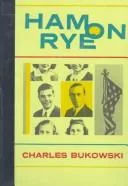
Ham on Rye
by Charles Bukowski · 1982
It suits mature readers, generally adults and older teens.
288 pages, about 4.5 to 6.5 hours.
A blunt, funny, bruising Depression-era boyhood in Los Angeles. 58% taste match
The story
Ham on Rye is a novel by Charles Bukowski, first published in 1982. It belongs to the tradition of semi-autobiographical fiction, drawing on the author's own early life through Henry Chinaski, a narrator who serves as his alter ego. The story is told in the first person and opens with a memory of being under something, the earliest thing the narrator can recall.
The book follows Chinaski from his earliest years through adolescence. It begins with a difficult childhood in Germany and moves to Los Angeles, where much of the story unfolds during the Great Depression. Along the way it covers his teenage years in high school, his troubled relationship with his father, and his first encounters with drinking and with women. It also shows him finding books at the Los Angeles Public Library, including the work of D. H. Lawrence. The tone mixes dark humor with a blunt, unadorned style, and the subjects include teenage boys, alcoholism, writers and literature, and the bond between fathers and sons. This edition runs to about 288 pages, and the book has appeared in 11 editions. It suits readers drawn to coming-of-age stories set in Depression-era California and to fiction built on an author's own history.
The first thing I remember is being under something.
Setting
Los Angeles (Calif.)
Themes
Teenage boysAlcoholicsAuthorsLiteratureFathers and sons
- Want to read 133
- Reading now 6
- Read 40
Most people shelving it are saving it for later.
Of 179 readers who put it on a shelf, 74% want to read it, 3% are reading it now, 22% have finished it and 0% stopped before the end.
By the numbers
- The median edition runs 288 pages. Counting about 275 words a page and an adult reading pace of 250 words a minute, that is about 5.3 hours of reading.
- Open Library tracks 11 editions from 8 publishers, the earliest dated 1982 and the latest 2015.
- On reader demand it ranks in the top 4% of the modern books in our catalog (15,152 of them).
- Libraries shelve it under Dewey 813.54 and Library of Congress class PS-3552.00000000.U4 H3 2001.
 BookWard’s take
A blunt, funny, bruising Depression-era boyhood in Los Angeles
Ham on Rye follows Henry Chinaski from a joyless childhood into a ragged adolescence in Depression-era Los Angeles, and it never softens a single edge. The voice is its great strength: flat, funny, and unmistakable. There is almost no sentiment to cushion the blows, and the restraint is part of what makes them hurt. The prose is plain on purpose, and the humor is dry and dark, which makes the cruelty land harder. It is character-driven rather than plot-driven, built from episodes rather than a tightly engineered story, so the ending is less a resolution than a stopping point. The coming-of-age frame is an old one, but the execution is not, and the book asks little of you beyond a strong stomach.
At 288 pages it is compact and moves briskly through its years, a good fit for BookWard's taste for tight books.
It moves in short, quick episodes, though the rhythm is more drifting than driving.
The structure is well worn, but the voice and the lack of any redemptive polish feel distinct.
Plain, stripped-down sentences with no ornament, which is part of its force.
It is driven by Chinaski's character and circumstances rather than a plotted arc.
The outlook is bleak, with only faint glimmers in books and stubbornness.
A straightforward chronological sweep through a life with no formal tricks.
The dark, deadpan humor runs throughout, though the subject matter stays serious.
Abuse, poverty and loneliness fill the pages, so the content is dark.
Feeling runs beneath the flat delivery, hitting harder because it is held back.
See all 50 dialsEvery position, side by side with this book
Where it lines up
- Character depthBookWard 8 · book 8
- SentimentBookWard 8 · book 9
- Authorial voiceBookWard 9 · book 10
Where it pulls apart
- LengthBookWard 1 · book 4
- Familiar tropesBookWard 10 · book 7
- Internal logicBookWard 10 · book 7
At 288 pages it is compact and moves briskly through its years, a good fit for BookWard's taste for tight books.
Chinaski's voice grabs from the first page, though the opening memory is quieter than a thriller hook.
The coming-of-age shape is familiar, but the unsparing detail and refusal to sweeten it keep it from feeling stock.
Events follow naturally from the boy's circumstances, so the world feels coherent even when it is chaotic.
It moves in short, quick episodes, though the rhythm is more drifting than driving.
The structure is well worn, but the voice and the lack of any redemptive polish feel distinct.
Chinaski is drawn from the inside with unflinching honesty, which BookWard rewards.
It closes without a neat resolution, more a pause in a life than a tied-off story.
Almost nothing is sentimental; hardship is reported flatly, which suits BookWard's restraint.
The brutality is present, but it mostly serves the portrait of a damaged childhood rather than existing for effect.
Not applicable to this novel.
Bukowski's blunt, deadpan narration is instantly recognizable and the main reason to read.
It is a story of one boy's life, told through incident rather than argument.
Experience is shown through scene and memory, with little stopping to explain.
Episodic structure keeps interest up, though some stretches repeat the same notes.
Plain, stripped-down sentences with no ornament, which is part of its force.
It is driven by Chinaski's character and circumstances rather than a plotted arc.
The outlook is bleak, with only faint glimmers in books and stubbornness.
A straightforward chronological sweep through a life with no formal tricks.
The dark, deadpan humor runs throughout, though the subject matter stays serious.
Easy to read in language and structure, with the difficulty lying in the subject matter.
Told entirely in the first person through Chinaski's eyes.
It moves forward in order from earliest memory through adolescence.
Entirely grounded in a recognizable Depression-era Los Angeles.
A modest circle of family, schoolmates and acquaintances orbits the narrator.
Intimate and personal, focused on one boy's household and neighborhood.
Leans toward the narrator's inner reckoning and observation more than outward adventure.
Conversations and confrontations carry a good share of the book without dominating it.
Women appear as part of his awakening, but romance is not the center.
Depression-era Los Angeles will be unfamiliar to most, though the human story is recognizable.
Set in the 1930s and early 1940s, written in 1982, so firmly rooted in the past.
Its portrait of an outcast adolescence has kept its bite over the decades.
Chinaski tells it straight, and his account is candid even when unflattering.
There are few clean lessons; right and wrong blur in a harsh household and a harsh world.
Detail is spare and functional rather than lush.
A standalone novel that works without any other Chinaski book.
Life unfolds without engineered surprises.
Not a comforting read; it asks you to stay with ugliness and cruelty.
Abuse, poverty and loneliness fill the pages, so the content is dark.
Feeling runs beneath the flat delivery, hitting harder because it is held back.
The humor is dry and understated rather than broad.
Physical violence, including beatings and fights, appears regularly.
Sex and desire feature in his adolescent discoveries, in a frank but moderate way.
The Depression frames the story, but the book is about a life, not an argument.
The language is plain and conversational, with no dense dialect.
Chinaski's attitude colors everything, making the narration pointedly opinionated.
It looks back at the narrator's past rather than ahead.
A cynical view of family, school and society runs through the book.
Review written by BookWard, dial version 1, November 2026.
Who is Ham on Rye right for?
It suits mature readers, generally adults and older teens. It contains frank depictions of violence, alcohol use, sexual content and strong language.
Easy to read in language and structure, with the difficulty lying in the subject matter.
Abuse, poverty and loneliness fill the pages, so the content is dark.
Feeling runs beneath the flat delivery, hitting harder because it is held back.
Physical violence, including beatings and fights, appears regularly.
Book CompanionHam on Rye: ideas, characters, themes
A semi-autobiographical portrait of Henry Chinaski's brutal, lonely boyhood and adolescence in Depression-era Los Angeles.
- The narrator. Henry Chinaski is Bukowski's thinly veiled alter ego, telling the story in the first person.
- From Germany to Los Angeles. The book begins with a difficult childhood in Germany before moving to Los Angeles.
- The Great Depression. Much of the story unfolds during the Depression, shaping the family's hardship.
- Fathers and sons. His troubled relationship with his father is one of the central threads.
- Books and drink. Alongside first encounters with alcohol and women, he discovers D. H. Lawrence at the Los Angeles Public Library.
Characters
Henry Chinaski
Narrator and protagonist
Bukowski's alter ego, an outcast following his early years.
Chinaski's father
Parent
A figure in a troubled father-son relationship that shapes the boy.
Themes
Feeling cut off from other people, family and peers alike.
The strained, damaging bond between a boy and his father.
Drinking as both escape and early sign of what's ahead.
Literature offering a way out of a bleak life.
How the Depression shapes daily life and possibility.
Discussion questions
- Why might Bukowski give his alter ego a different name rather than telling it as straight memoir?
- How does the flat, unadorned style affect the way you react to the cruelty?
- What role do books and the library play in Chinaski's life?
- Is Chinaski a sympathetic narrator, and does that matter?
- How does the Depression setting shape the characters' choices?
Personalize your Book Companion
This is the general edition. In BookWard, the Companion is written for you: your reading profile, your notes, and spoiler-safe to the page you are on.
Buy, listen or borrow Ham on Rye
Each link opens a search for this book on that store, in a new tab.
Read on a device
Borrow
Reviews and community
If you liked Ham on Rye
Spare, restless Lost Generation novel that trusts what it leaves unsaid
Im Westen nichts NeuesErich Maria RemarqueA short, unsparing war novel that still lands hard
Full Dark, No StarsStephen KingFour tight novellas about retribution, with no comfort offered
John BarleycornJack LondonJack London's candid, argumentative memoir of drink and his long struggle
Sources: Open Library.
Track Ham on Rye and find your next favorite
Add it to your shelf, rate what you have read, and BookWard will recommend what fits you.
Free to start. No credit card needed.